
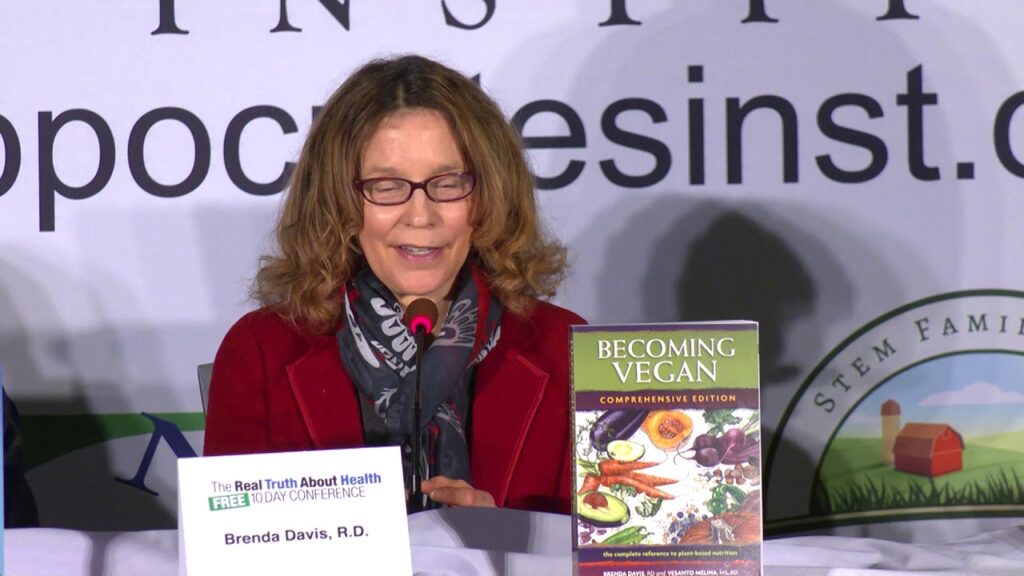
The World’s Top Nutrition And Lifestyle Doctors Explain The Latest Research On How To Dramatically Reduce Your Chance Of Getting A Disease While Maintaining Your Optimal Weight And Health: Part 4 with Milton Mills, M.D., David Katz, M.D., Brenda Davis, R.D.
Connect with The Real Truth About Health:
http://www.therealtruthabouthealth.com/
Passionate believers in whole food plant based diets, no chemicals, minimal pharmaceutical drugs, no GMO’s. Fighting to stop climate change and extinction.
Please support the sponsors of our conference
http://www.therealtruthabouthealthcon…
okay so I would like to ask three questions and have each of you try to answer it with just three minutes and this way we could move through quite a bit of material so I realized that a lot will be sacrificed and answering giving answers that are only three minutes but for the point of this panel we’re looking for three minute answers
I also want to mention that dr. Katz will be leaving at 4:00 the panel will continue until 4:30 okay the first question the first three questions that I’d like to ask first regarding african-american health there was a study that said community dwelling black Americans is compared with White’s had low levels of total 25 hydroxy vitamin D and vitamin D binding protein resulting in similar concentrations of estimated bioavailable 25 hydro hydro hydroxy vitamin D racial differences in the prevalence of common genetic polymorphisms provide a likely explanation from this observation
so the question I guess is for African Americans do they need to take make any special considerations regarding lifestyle or vitamins or minerals or is there anything different that they should take into account um that affects them more than our white people
a second question someone complained to me about Brenda Davis last night they said I’m disappointed in Brenda Davis and I said how come I said well first of all she’s thin and she’s pretty and she’s healthy and she’s not representing what’s really happening for a lot of women who were in their 40s 50s and 60s and you asked her twice about the menopause question and Pam popper and the reality is this is a big deal that again women are being told that they should be thin with flat stomach you know high libido lots of energy and the reality for with with pre menopausal menopause is there’s a sick if acun emotional hormonal things going on and the question again is is this something that’s affecting a small percentage of women or is this a gigantic issue that’s just not talked about because it’s just you know it’s just blown off so or it’s just not being adequately validated for women that this is significant things are going on how they should deal with it
and then the third question is what work please explain the results of the health professionals follow-up study why do you like this study so those are the three first questions
I guess I’ll start with the question about african-american health and d3 first of all I’m kind of glad this question came up because it gives me a chance to metaphorically scream at the top of my lungs it’s not a vitamin it’s not a vitamin it’s not a vitamin it’s a hormone okay they we were all duped into calling 125 dihydroxy council for all a vitamin when the dairy industry decided that they were going to artificially spike their products with this hormone to entice people into purchasing them
and again it is it is a hormone that we all would make if we were running around butt naked in the Sun as we were supposed to be okay but since we decided to leave equatorial areas on this earth and move to northerly climates where you would freeze to death or certainly freeze parts of your Anatomy off if you ran around without any clothes we we can’t do that we have to wear clothes we have to remain indoors and as a result we don’t get the sun exposure that we need to make the enough of the hormone to keep us in good health
so the question is how much should we should we be making and that or how much should we have within our system oh I gotta keep this to three minutes let me say this if we were running around naked on the Savannah in Africa we probably make upwards of 10 to 20 thousand international units of d3 a day I’m not suggesting that anyone take that much but I think everyone should be taking about 2,000 IU’s a day because it’s not only important for bone health it also affects our mood and our immune function
so that is true of everyone but it’s particularly true of darker skinned people because that means that it takes us longer and more sun exposure which again we don’t get because of where we live to make the hormone so we need to be sure that we’re taking an adequate supplement it’s not and means that there’s anything wrong the plant-based diet because it’s an artifact of how we choose to live
all right I I’m gonna jump in on the Brenda question she looks about half her age she’s very attractive as she is thin she’ll have to deal with the rest so I apologize on Brenda’s behalf and then I actually wanted to talk about the vitamin D question as well amen it’s a hormone what I’d like to a pen because I think I think you covered that beautifully Milnes is the fact that vitamin D is why we have different skin tone in the first place because if you live in an equatorial climb as we did at our origins the origins of our common family then darker skin protects you somewhat against the equatorial Sun and leaves you able to make sufficient vitamin D as you move away from that level of sun exposure you actually have to be more efficient at making vitamin D
and and this was work done I think it was Penn State and it was published in 2015 but there were specific genetic mutations linked directly to vitamin D metabolism that explained our skin pallor problem so you know essentially having a lack of skin pigment is the mutation from our common origins and it related specifically to the advantage in vitamin D manufacture as we moved away from our native equatorial home so it’s configured into the great human diaspora
there’s there’s a link really between our often sad inability to see that we’re one family and the metabolism of vitamin D which I find quite fascinating but we if you want to sort of think of it this way at the origins of our common family we were all dark-skinned and we were equatorial and all the rest was mutation and happenstance I love that and and it’s so true and and we need to recognize it so we just need to recognize it
I will address I guess oh I’ll say in my defense I you know I wish I had a picture of my mom to show you she’s 82 years old and she’s been making good lifestyle choices her whole life and I mentioned before she still weighs about the same as she did when she got married almost well over 60 years ago and these are choices I we can choose to take care of ourselves and I know I inherited some really good genes in my mom didn’t have really symptoms of menopause either
and I know that women do suffer even when they make good lifestyle choices and I don’t want to discount that at all the the honest answer is I really don’t know enough I’m not a medical doctor about the more challenging cases and you have a propensity towards really suffering through menopause I would try a lot of different things varying the exercise making more dietary shift some all of those things taking care of stress getting more sunshine all of that and and trying to to see what you can do and if all else fails you can visit your doctor and try other things
but but I I think it’s really important especially as a vegan you know the the the reality is vegans are on trial in the eyes of the world and when we blow it we send a really strong message that others are justified in slaughtering animals for food because then they think that they need it so I’ve been trying for a lot of years to do the best I can to set an example of health that may I mean my goal is to climb a mountain when I turn 100 I really want to prove to the world that not eating animal products will be an advantage to humankind
so that having been said I will address the health professionals follow-up study and I’m sure David knows a lot more about this than I do but this is a study that that is a sort of a partner study to to the Nurses Health Study which was on about 280,000 women there were three cohorts one in 76 one in 89 and one in 2010 and they’ve been followed for many years and the health professionals follow-up study was about fifty thousand men and again following to see who develops what based on various lifestyle choices
and both of these studies have been also combined in a number of of write-ups and I can tell you this is not one study these are literally thousands of reports based on these cohorts and these cohorts having formed and nutrition policy and and the the outcomes have been really quite profound so we’ve learned a lot about how smoking impacts health how alcohol consumption impacts health why we need to eat more fruits and vegetables and and why red meat and processed meat may be damaging or at least that they are damaging and so in sugar and and so on
so so these are I think are very important studies because they’ve given us information about very large populations and and what protects health and what doesn’t and they come from Harvard as as you probably know and you may want to add a little bit onto good answer
Brenda and yeah just a little bit so the question was why do we like it I don’t know who said we did like it or if we all do like it but if we like it I think you know the issue is there is no well let me ask you something anybody do carpentry or use tools of any kind is there any one tool that’s right for every job and anything you can think of right science is the same so methodology and science is a toolkit and the best way to answer a given question is the tool that’s matched to the question
the tools of science or different ways of asking and answering questions so I what I like about the health professionals follow study the Nurses Health Study other large cohort studies is they provide a view from altitude you’re never going to get with a randomized control trial so we should get the answers we can from our CTS but what happens to large populations over 30 years and more you can’t randomly assign people to eat different ways for the next 30 years nobody’s willing to play so what I like is they populate an important gap they provide the view from altitude
I think when we’re telling you what we like about methods it’s also important to acknowledge limitations and one of the concerns about cohort studies is they’re not as good at proving cause and effect they show association now sometimes that’s the same as causality it’s not it’s important to distinguish and the other issue is and there’s some legitimacy here it’s too bad Walter will it’s not here because maybe he would argue effectively against this but there is the concern of so-called data dredging
so we’ve got a hundred and fifty thousand people we’ve asked them about all kinds of things for thirty years we can test any hypothesis Under the Sun maybe we’re interested in the correlation between your favorite color and athlete’s foot and we find in our data set that you know people who like chartreuse tend to be particularly prone to athlete’s foot who cares right so there’s the risk of hey we’ve got a huge massive data we can ask it anything and some of what issues from that and this is a perennial concern in epidemiology can be absolute nonsense
the best way to safeguard against that is to make sure that you’re posing good sensible defensible questions in the first place and that the association’s you’re exploring are supported by other kinds of evidence and are mechanistically plausible when the health professionals follow-up study is used that way and it usually is it’s a tremendous asset
okay the next three questions are one warrant humans originally hunter-gatherers who killed an eight wild animals to survive isn’t that what all people did until a few thousand years ago and if that’s the case then doesn’t a mean that was supposed to eat similarly the second one is explain what the seventh-day Adventist Health study was and what its conclusions were and was this study an important study and the third is are there any negative Studies on whole food plant-based studies that show let’s say an increase in dementia
sometimes I asked speakers off the record if there’s any you know what happens to people in the long run and I did once in the lobby of this hotel have a talk with Gabriel Cousins and he said that there was some plant-based people that did get dementia and I said are you concerned about this and you know he wasn’t didn’t he didn’t say like oh you totally protected if he’d plant-based he was saying that there was a concern so are you concerned that we don’t have enough long-term data and maybe maybe there’s a concern about dementia that we don’t understand guess I don’t want to be confusing I guess the question to you is are there any negative Studies on whole food plant-based diets specifically with dementia
I I’m gonna go first just to get out of the scrum that’s that’s going to ensue so I think the other two questions are a little fraught but I thought you know as Joel said I’ll go with veganism and dementia for $100 because all the others are above my paygrade so III think there’s a there’s a huge glaring confounding issue here right first we really can’t talk about diet type and not consider diet quality you know it is possible to have a plant exclusive diet that’s really bad
I’m aware of no evidence whatsoever showing any association between heightened risk of dementia with a high quality plant predominant or plant exclusive diet quite the contrary lower risks of every major chronic disease lower risks of cognitive decline lower risk of dementia but the glaring confounding issue everybody knows about the b12 concern if you’re not getting v12 from animal sources not that it has to come from there it really originates in the soil
this was nicely addressed in the game-changers documentary b12 does get into plants theoretically we could get it there are animals or the middlemen but the fact is we’re not getting sufficiently concentrated doses b12 deficiency becomes particularly common with advancing age because to metabolize b12 that we ingest we need something called intrinsic factor secreted from the stomach the stomach’s ability to secrete intrinsic factor and make b12 absorbable declines with age and in particular people who have what’s called gastric atrophy
that combination of nominal levels of b12 intake which were maybe just enough and declining levels of intrinsic factor can lead to b12 deficiency b12 deficiency produces a neurological condition mimicking senile dementia of the outside MERS type if you detect it early it’s totally reversible with supplemental b12 but if you don’t it actually becomes a permanent form of cognitive impairment
so I think the only argument of concern about a high quality plant exclusive diet and either cognitive decline or dementia is the b12 issue it does become more of a concern with advancing age but provided you’re getting enough b12 and with advancing age are having b12 levels check to make sure you’re absorbing it properly there’s absolutely no reason why there should be any risk whatsoever [Applause]
okay let me just say a few words about dementia as David was alluding to we don’t have a quote-unquote gold standard definitive answer because no one has done a particular study to address just a TIF issue so the best we can do is make inferences from the data that we do have and I can tell you I’ve been to Loma Linda several times both for conferences and also because I am seventh-day adventists and there are not you know elderly people laid out in the street like speed bumps because they’re all demented
so I don’t think there is a higher prevalence of dementia in that population which is the longest-lived population in the United States so now granted they’re not all vegans which is one of the reasons again we don’t have the definitive answer but if you look at the things that tend to cause dementia they are the same kind of factors that tend to cause heart disease high blood pressure strokes and so on so it if one may infer from that that by avoiding those risk factors you will lower your risk for dementia but again until we have you know a certain body of accumulated data we can’t say for sure but I didn’t tell you I’m putting my money on a plant-based diet
now I haven’t said that let’s talk about what we should be or what we used to eat first of all none of us were there and none of the people who tend to write and make suppositions about what humans used to eat were there so here again we have to make inferences and part of the problem in my opinion with much of the work that has been done from an anthropological perspective on human diets were done by Western European men who basically had their heads in the wrong part of their Anatomy
they came to this issue with the assumption that meat was important for human physiology human development for human survival and nothing could be further from the truth i when I gave my lecture on diet and design I specifically addressed the fact that because of our small stomachs and our inability to eat carrion the maximum number of calories that we can get from a package of animal protein is limited furthermore we can’t utilize any of that protein over and above whatever our daily needs consist of and that’s gonna be a very small percentage
so from that perspective it is a complete waste of time to spend hours and hours and hours and risk injury chasing around animals trying to kill them to hunt them when you don’t really get a nutritional benefit from it if you understand what I mean not in equatorial areas however if you decide to move up to places where plant to die off during the winter time and there is no plant food available then you have a reason that you have to eat animals because or if you move into what I call a marginal environments a a scrub desert environment where the types of plants that grow there are not plants that humans can easily eat and assimilate then you start hurting so that you use animals to transform that roughage into a form that you can’t access
but all of that was late in human history and human civilization and the point is by the time we were smart enough to do these things we had already been given a suite of organs and physiology by our plant-eating ancestors so at that point it doesn’t matter what we do I mean I can get on an airplane and fly through the air at 600 miles an hour but I better not jump out of it because if I do I’m gonna die that does not mean I can fly it just means I can use technology to overcome my anatomic and physiologic limitations
so the the point is again I said this yesterday even the best predators on this planet can and I’m sorry for the put facing the microphone can only make a kill every 7 to 10 days human beings can’t even get anywhere near that efficient and furthermore if we do manage to kill a large bodied animal most of it will go to waste because it will start to rot before we can consume it so again hunting is not an effective survival strategy for people living in equatorial areas
however if you’re living in the Arctic are you living somewhere where the body will freeze and not right then it does become useful but again by that point what you what you are adapted to eat is moot because we’re adapted to eat plants but you learn to utilize other animals to get your calories if what I’m saying is making sense to you so humans were never hunter-gatherers at best we were gatherers and occasionally we hunted but even in modern Stone Age tribes eighty to ninety percent of the calories are provided by the gathering efforts women the men are whatever they bring home actually is pretty immaterial
if you think about it because if I took away 80% of the food that you would eat say between now and June you still be here but if I only I mean she’s if I took away 20% of the food that you will eat between now and June you still be here probably maybe a little thinner but you still be here if I took away 80% you’d be dead so my point is that humans have always subsisted and survived on plant foods primarily
yo did the Adventist State but first I want to add a little bit in defense of the nutritional anthropologists if you look carefully at some of the studies especially Melvin Conner and Boyd Eaton there are two studies where they actually provided I think a reasonable guesstimate of what people during Paleolithic times actually consumed they say very clearly during the first 80% of the Paleolithic period we were plant eaters it wasn’t until the last 20% that people started moving north and and began to hunt more
but even then and even for those people they still ate a lot of plants and that is validated when you look at their estimates of what humans actually consumed they estimated that humans consumed somewhere between 70 and 150 grams of fiber per day so the the 70 at the low end that was the people that were doing more of the hunting 150 plot where people do so it really be called gatherer hunter poopers exactly it’s a 150 grams of fiber a day you need to leave a lot of time it’s far great amount of fiber
it’s a far greater amount of fiber than the average of vegan eats and we need to recognize that a lot of wild plants are three to four times more concentrated in fiber than our cultivated plants that we bred to be more palatable to the to us and and so that’s something that factors in but but I think the point here is that if you look at the numbers vitamin C intakes were five or six hundred milligrams the guesstimate potassium seven to twelve to ten thousand milligrams those numbers vegans don’t see generally
they and and those are nutrients that are concentrated in plant foods so these folks were eating a lot of plants and and a one thing that I did at one point when I first looked at that nutritional anthropology I thought to myself there is no way that people eating a so-called Paleo diet today are even coming close to what true Paleolithic man actually consumed so I did the math I did the math and I took three days worth of recommended paleo menus from the most popular paleo website and I analyzed the diets and then I did the same for a purely exclusively plant-based diet three days of recommended menus analyzed and then I compared them to the Paleolithic estimates
and the the paleo folks had three nutrients or four nutrients that were actually closer to true Paleolithic people than the vegans and they were vitamin A cholesterol zinc and I think I’d forget protein of course protein about thirty percent of calories from protein the vegans had I think 13 nutrients closer to a true Paleolithic diet than what people are calling paleo today so I think we are actually eating a plant exclusive diet closer to a true Paleolithic diet than people who I what I don’t get is why paleo people trying to eat paleo are so focused on trying to get that 30% of calories from protein but they don’t carry anything about getting the 70 to 150 grams of fiber or the 5 to 600 milligrams of vitamin C
so and then somebody else did the math you did the math in terms of if everybody on this planet eat paleo tell that story I will so I’ll come that in a second I actually want to jump on the nutrient bandwagon because there’s something really fascinating here so you may not all remember this but there was a time when the recommended daily allowance for folate was 200 micrograms a day it was doubled to 400 grams a day because of decisive epidemiologic evidence that the higher intake of folate around the time of conception massively reduced the risk of neural tube defects a kind of birth anomaly congenital anomaly at the same time and totally independently this exact work that Brenda siding Mel Connor Boyd Eaton and others using and you know that you’re wondering how do they know about nutrients
so they’re studying dental wear patterns they’re also studying copra lists which are fossilized fecal remains archaeological remains and so forth so you know triangulating every source of evidence they can but this same body of evidence suggested that our native Paleolithic intake of folate was about 400 micrograms a day it was stunning that the epidemiology totally independent was looking for the right answer for health and it was a bull’s-eye on the estimate of what our native intake level was and that’s happened with several other nutrients as well so really interesting
so I you know I think what Dad did to does have relevance but I agree it becomes a pop culture fad where you pick one element out of the the so called story that you like you focus on that you lose the big picture in terms of space so I did this calculation for a column in Huffington Post some years ago you can look at multiple sources in the Anthropology literature how much space do you need to make a living as a hunter-gatherer so I looked at all the credible sources I could find took the average and multiplied it by seven point eight billion which was the number of Homo sapiens on the planet at that time has gone up slightly sins and my calculation was that for the current population of the world to live that way would require 15 times the surface area of the planet including all of the oceans the polar caps and the Sahara Desert so good luck with that
I just want to pop in for just a minute because you’re absolutely right about Boyd Eaton and his colleagues but they are really sort of the second wave of anthropologists who’ve come but who came back looked at what these original anthropologist were saying and said you know what these guys need more fiber in their diet and because Boyd Eaton published a very famous paper called the seed eaters I think no I’m sorry that was Clifford jolly forgive me but he did an analysis of wild foods that were eaten by Stone Age tribes in Africa and compared them to the plant foods that they ate and what he ended up with was the wild animal foods had a calorie content of 1.41 calories per gram and the wild plant foods had a calorie content of one point two nine calories per gram
now if you remember your arithmetic and you can round up and round down you’ve got one point three versus one point four statistically that really is no significant difference in calories but when you look at the nutrient content of those foods people who were getting their calories and nutrients from plant foods would be much better off than people who are running around chasing stuff they were unlikely to catch and again that argues that people living in Equatorial areas were much more likely to spend their time getting high quality plant foods than wasting their time chasing animals that they again were very unlikely to catch and also highly likely to become injured if they tried to catch it
and a lot of these anthropologists have come up with these ridiculous theories that well the way humans hunted was we quote ran animals to exhaustion first of all thank you okay I would love to see somebody run an antelope to exhaustion I’m waiting to see that but from a metrics standpoint that is a losing strategy because that means you are going to expend and especially collectively thousands of calories chasing an animal that at most you can extract maybe three or four hundred calories from as an individual that is a complete waste and that is a calorie sync that if you do that day after day you’re going to end up starving to death
so that no existing predator on this planet ever has has in the past or currently uses the strategy of running animals to exhaustion that’s that’s foolish it is actually stupid because it’s just a monumental waste of energy you you look at extant predators they will chase animals for maybe three four hundred yards if they don’t catch up to them they leave them alone because they know better than to waste their time and energy then some other researchers at all well humans ate they scavenge they scavenge from carcasses on the Savannah really people end up in the ER every Thanksgiving from poorly cooked turkey and they’ve got ranges at home that cost thousands of dollars you’re trying to tell me that these people were scavenging off rotting carcasses on the Savannah that is complete male bovine fertilizer okay it’s it’s in and in and you ask why why do people come up with these ridiculous series is because they have a misplace understanding of the importance of animal foods animal foods are not important for our survival they are not necessary and I don’t think that early human ancestors in equatorial regions wasted their time hunting not until they moved up north developed hunting cultures and then brought them back into Africa
we’re seeing a lot of time on the question but it’s a really interesting question so just a little bit more we’ve invoked Boyd Eaton’s name a couple of times and Boyd and Mel Khanna really are sort of the founding fathers of our modern understanding of Paleolithic nutrition Boyd also happens to be a dear friend and a lovely gentleman and I’d like to commend something to your collective attention in 2015 in Boston Walter Willett and I were privileged to co-chair a conference called old ways common ground
so old ways which is a nonprofit was the convener and the goal was to look for the common ground among very divergent views in nutrition so we had some ardent advocates of plant exclusive eating but we invited the Palio experts Boyd was there I had the privilege of introducing avoid eating to neal barnard for example so I mean there were some really interesting interactions at the conference but if you google old ways common ground you’ll find all of the conference materials and among them you’ll see a presentation by one of the world’s leading authorities on the Paleolithic diet explaining why modern-day humans need to eat a lot less meat or maybe none and that adds something really important to this dialogue because it’s not just us inside our temple preaching to one another it’s really powerful when you have somebody else from a very different camp say these guys are right [Applause]
and I I will I guess finish up this round with the Adventist Health Study so again the Adventist Health Study is is not just one study it’s multiple hundreds of studies the first Adventist it was called the Adventist mortality study which actually compared seventh-day Adventists with the general population in California and what they found is the Adventists lived longer and had less disease
so then they did the Adventist Health Study one which looked at the possible reasons why the Adventists actually had less disease smoking less exercising more eating healthier plant more plant-based diets and all of that and then the Adventist Health Study too came along and it began in 2002 and it followed about 90 it is still following it’s following about ninety six thousand individuals from North America the United States and Canada and they look at meat-eaters semi vegetarians pesco vegetarians lacto-ovo vegetarians and vegans and they end of course it’s you know it’s a study where they’re looking at health outcomes over time and what they found is they found a lot so there have been a lot of reports
so where heart disease is concerned it was very very interesting because cardiovascular disease was about forty two percent lower among health conscious of vegans versus health-conscious omnivores controlled for smoking and drinking and exercise and all of that it for lacto-ovo vegetarians it was about twenty three percent lower however female vegans didn’t enjoy any advantage over the female omnivores and that to me was a bit of a mystery dr. Michael Orlick was the lead author on this study and I asked if there was an explanation for that and I had a theory my my theory is that I don’t know if it’s it’s correct or not but I I think that there’s much less of a difference between and maybe you could chime in on this Milton between the female vegetarians vegans and omnivores then there may be between the male’s because from my experience in the Adventist world I see even the omnivorous women not eating very much meat where the men may eat quite a lot more and so they would enjoy an even greater advantage going vegan then would the WIMP woman the women
and michael Orlick he’s there there number number of possible explanations and he said basically we really don’t know but that did you want to chime in on that well I would say that I think that your impressions are probably certainly correct to an extent and moving in the right direction I also just want to throw out one other little tidbit that when you look when they looked at at least an Adventist Health Study 1 cancer risk the Adventists had lower risk for all cancers except prostate cancer and one of the reasons is because most of them most of them are lacto-ovo and the primary risk factor for Quran state cancer is dairy consumption at least that’s my theory
yep and in the fantasy Health Study – I they they they factored they looked compared vegans and lacto-ovo vegetarians and vegans were at an advantage as far as I can recall where cancer is concerned the vegans had about 16% lower rates and the lacto-ovo vegetarians I think it was 8 percent compared to similar health-conscious omnivores they looked at diabetes vegans had 62% less diabetes and the lacto-ovo vegetarians I think it was 34% or so less they looked at kidney disease and it was about half to two percent less kidney disease among lacto-ovo vegetarian and vegans combined they looked at longevity and the vegans had a 15% advantage over the 15% lower mortality the lacto-ovo vegetarians had about 9%
so so these studies are are very to me I like the study because we’re seeing long-term outcomes in health that are favorable for for people eating plant-based so I like that but we we I mean if you look at Epic Oxford and I didn’t mention yesterday and I should have mentioned the latest 2019 study that that has looked at cardiovascular disease they found aid about 22% reduction in cardiovascular disease for for vegetarians but the vegetarians had about a 20% increased risk of hemorrhagic of strokes which were mostly hemorrhagic strokes and so I think we need to do more investigation and and you may have an explanation for that but at this point I think we need a little bit more search to look at that
well so a couple quick comments first when you hear about and rended by the way is remarkable and and you could play the let’s see of Brenda’s right game with all these statistics that she throws out you trust me she’s always right so she actually knows all these numbers it’s crazy but she’s a lot of these numbers are relative risk so if you have a 23% increase in the risk of X and the 22% reduction the risk of why you’re still obligated to ask well what was the baseline risk of X what was the baseline risk of Y right
so you could increase the risk of something you could double the risk that could mean that you know it goes from one in two to two and three you know it could be a very high risk but if your risk at baseline is one in a million and you double it it’s two in a million it’s still very unlikely to happen the hemorrhagic strokes that that Brenda just referenced are very uncommon relative to ischemic strokes so there was a slight increase in risk in the vegans but at a very low baseline the absolute risk there was really very tiny
the other thing I just want to leave you with what I hope is a bit of pithy wisdom from the world of statistics and logic absence of evidence is not evidence of absence so what Brenda cited for the Advanta study was that the vegan women did not seem to have an advantage relative to omnivorous or vegetarian lacto-ovo vegetarian women in the same population that may simply be a lack of statistical power because if you match for smoking and you match for sleep and you match for stress and you match for spirituality and you match for lifestyle and everybody’s diet is a pretty high quality and everybody’s taking very good care of themselves then the difference attributable to just the differences in their diet in terms of health outcomes is going to get smaller and smaller and smaller as each other important element in the health equation becomes standardized across the group
doesn’t mean there isn’t a difference but as the difference you’re looking for it gets smaller you need an ever larger cohort and more time to find it and the fact that you didn’t find it may simply mean group wasn’t big enough you didn’t have enough time for that because they were matched on so many parameters that the outcome differences were that what was left that you know sort of the the residual of all that and it may be fairly small it may still be quite meaningful keep in mind that you know if something only affects one in in a hundred thousand people you know there’d be many thousands of cases in the u.s. each year in a population of 300 million so even small risks may translate into a lot of very unhappy families at the end of a given year but those risks may be very hard to spot even if you have a thousand people in your study even if you have five thousand you might need a hundred thousand people in your study for a long time to find those small differences
I just want to throw out a couple of thoughts I agree with you David that the the way Brenda has these statistics memorized is it’s actually encouraging because it suggests that yeah your brain is gonna be cool on a plant-based diet but another reason I think that they may not have seen differences in the women in particulars because as you know when it comes to plant-based Adventists there’s the number of vegans is much smaller than the number of lacto-ovo vegetarians and given that women are already at lower risk for heart disease that would mean that you would need a lot more women to actually power the study well enough to see the differences that were there so that’s probably an artifact of just kind of study design and population
but the question I want to ask both of you briefly is when that Oxford data came out suggesting there may be a small increase in hemorrhagic stroke there was a lot of discussion about the statistical analysis and the suggestion that the analysis was flawed and that that’s why they got those incongruous results suggesting that vegans were more likely to have a hemorrhagic stroke what do you guys think of that do you think that the way the data was analyzed was suspect
you know I should be able to answer based on my training but I don’t remember the statistical method my recollection though is that it was a relative risk of an extremely small baseline and the error bars were wide so I remember looking at it and shrugging my shoulders thinking 22% variance in a very low baseline risk this is going to get to stored in the media because there’s a massive reduction in something that’s common and a slightly lesser increase in something that’s rare and the error bars are wide meaning we’re not even really sure that it’s happening it’s just barely significant so you know it was sort of borderline fluke
I didn’t notice any problem with the methods per se other than the methods were translated by the media into a false equivalence this gets better this gets worse but we were talking about massively different levels of baseline risk something common got a lot better and something very rare may have gotten a little worse that that’s that’s not an equivalence and and I have no idea all I can say is I trust Paul Appleby the statistician for epic Oxford he has tremendous amount of experience and I highly doubt that he would make that kind of error as far as I can tell the methods were fine the message was badly pulled
okay these three questions the first one is for dr. Katz dr. Katz you worked in the university community for most of your adult life many of us trust and like universities should we assume universities or unbiased caring institutions who provide benevolent benevolent scientific information to the world for the sake of bettering humanity or are there financial conflicts of influence conflicts of interest influencing the information they report please explain if when we hear about a study or information coming from a university if we should assume it’s unbiased and accurate
second question where do the largest strongest animals on this planet get their protein from is it true that they are all vegans or herbivores what does this have to do with human health and number three are there risks to low cholesterol gabriel cousins says low cholesterol is associated with greater depression according to studies that he has seen
these are all for me no those were all for all briefly just the first us feel just the first one just just are our universities unfailingly unassailably unimpeachably ethical and wonderful yes of course ya know so it’s silly universities are institutions with lots of people in them and there there certainly ought to be participation in the principles of academia and academia ought to foster the of truth and understanding it ought to foster a diversity of perspectives and methods and it ought to foster transparency
but human beings have biases and those biases influence the work we do and quite frankly some biases are more lucrative than others so even if the university is committed to being unassailably ethical what if some of your researchers are asking questions that more readily result in grant funding than others what if those asking questions that the beef industry likes just for instance are more readily funded than those asking questions of interest to the zucchini growers and what if the fact that those with interest related to the beef industry get funded more advances them in the academic hierarchy so they attain the status of full professor department chair tenure and have more leverage at the university and carry with them their native human bias
now you know has this tarnished the reputation of the university or is just this the normal course of human machination I you know I would argue that it’s a bit of both I think we really need to recognize that institutions can be motivated by a diversity of interests universities are interested in money like people are individuals all have biases biases don’t make us bad they really just mean we’re human they’re things we like and prefer what I think you have to require in all cases is evidence of egalitarianism a willingness to ask a variety of questions a willingness to support a variety of pursuits
what worries me is if there’s a strong link between an institution and to give an agenda and you know that the question is timely because as I shared with you yesterday I was here fresh from some Diet Wars particularly related to processed meat and the latest development in the back-and-forth tussle there is that the Chancellor of Texas A&M University which is a land-grant University with ties to big agriculture and the beef industry among other things the Chancellor of Texas A&M sent a letter to Harvard University the president asking that Frank you Walter Willett and I all be investigated for opposing the guidelines telling you to all keep eating processed meat so it appears that Texas A&M doubled down on these very misguided guidelines
so I would argue there appears to be a bias at the level of the whole institution Walter Frank and I for those of you interested all said yes let’s by all means have Harvard University investigate so you know compared to most institutions universities are our temples of you know the concerted effort to pursue truth but they’re flawed institutions because human beings run the show and human beings are all flawed so you know I think at the end of it all you know they’re better sources than most but caveat emptor you need to know who are these people what do they have to say where does their funding come from do they always produce the same answer to just one question have they devoted their entire career to one funding source would they be able to change what they’re talking about and not have it hurt them
the message is coming out of Harvard about diet could be anything under the Sun and Harvard would be fine it appears to me that if the research coming out of Texas A&M didn’t favor meat it would be harmful not only to the individuals but to the University that’s pernicious
I’ll take terrestrial mammals for 300 there is no question that the largest strongest terrestrial mammals on this planet are now and always have been complete plant eaters and there are reasons for that nature only provides enough energy for animals that size who live in large groups through plant foods you simply cannot bio concentrate into the bodies of other animals and support a large number of predators so yes the largest strongest animals are strict herbivores they are now always have been
but even more importantly and equally interesting all large bodied social mammals living in large groups are strictly herbivores and again it’s because of energy dynamics and so that again argues for human beings being strict herbivores and I always like to point out to people that you know we humans are odd creatures we are in love with the romance of killing so we tend to idolize predators and things that seem to have a lot of power but when we got ready to build our civilizations we didn’t hook our plows and our wagons and our coaches to lions tigers and bears we hitched them to horses and auxins and elephants because only they had the strength and the stamina to do the work that needed to be done so as I once heard this young man say if you want to be strong as an ox you need to eat like one
so I’ve got the depression from low cholesterol question you may both want to address this but I’ll say this if we look at populations around the world and look at populations who have very low cholesterol levels like some of the rural Chinese for example that you know we know have very low low low cholesterol levels I have never seen any evidence that they have greater amounts of depression in fact I I think it may be the opposite but I don’t know and you may want to weigh on this no I think you’re absolutely right find it
yeah so the issue is why is your cholesterol low one of the things to note is that acute illness lowers cholesterol when people get admitted to the hospital almost inevitably their cholesterol drops severe infection will lower it and so you know one of the issues here is temporal sequencing is there something wrong with someone causing their cholesterol to be low and that’s why they’re depressed and that’s why their cholesterol is low and it’s not the low cholesterol causing the depression and I completely agree at the population level if you shift the bell curve for cholesterol we tend to see much better mental health in whole populations that generally have much lower cholesterol than prevails in the u.s.
if you’re talking about somebody who is living in a culture like ours where average cholesterol is much higher than it should be specifically LDL but also triglycerides and then you’re using medication to lower the cholesterol well you know you you really change the equation it’s no longer just cholesterol and mental health it’s pharmacology and cholesterol and the reason you needed the pharmacology and mental health it’s a much more complex equation
I think the only proviso to add to all of this as we know there is a lot of cholesterol in the brain the brain is a fatty organ and cholesterol is certainly important to brain development so you know that this argument took hold I think because there is a plausible biological pathway by which cholesterol deficiency could impair brain function and conceivably affect both cognition and effect but I think that’s very unlikely if not unheard of with regard to lifestyle I think the only way that that becomes a real concern is with medication that may interfere with certain specific biochemical pathways that’s possible it is possible that some of the highly effective drugs that interrupt cholesterol biosynthetic pathways could have an effect on FX we’d have to allow for that what’s the remedy you know healthy lifestyle for the most part will help you not need those medications in the first place and will defend you against depression as well
I want to start off by sort of channeling Bill Clinton he said he famously said it depends on what your definition of is is and what I’m referring to it depends on what your definition of low is the problem is that all most or all of the values we have for what’s normal in Western countries are taken from what are what is in my opinion a sick population people who are eating animal foods that have artificially driven up their cholesterol levels have artificially spiked their ferritin and iron levels and then when we compare vegans to a plant-based people to these populations we said oh my god you’re at risk for deficiency oh my god your level is so low no the level in my opinion is really where it needs to be
and the idea that you will have because you have very low cholesterol levels you’re going to somehow be demented again I think is put the rest by the Adventist Health Studies 1 & 2 because even when I was a lacto-ovo vegetarian granted I didn’t eat a whole lot of cheese and stayed away from dairy for the most part because I was lactose intolerant and trust me you wouldn’t want to be around me if I drink milk but my cholesterol level was like down around 116 which I think most people will guy that’s gonna low so I I think I don’t think that that’s a real thing I think that people are looking for reasons to attack or call plant-based diets into question and to do it by suggesting that we need more cholesterol is like saying that we need more smoke in our lungs and that’s why we need to bring back cigarettes it’s just crazy
okay these next three questions one tell us about this study showing the reduction in cardiovascular disease when women substituted beef with beans second question is it true that all protein is made by plants that no animal is able to take nitrogen out of the air and incorporate it into an amino acid and that only plants can do that so any protein you get from an animal source is a secondhand plant protein and third what test should we get to make sure we are healthy where do we start should we get a blood test a urine test a stool test a hair analysis test a bone density test if we as concerned about our health and want to go to the doctor and save let’s see what’s going on with me where do we start what should we do
okay I’m gonna snatch up that protein question before anybody beats me to it and the answer is only plants make protein and when I say that I mean only plants have the ability to take nitrogen atoms from the air break them apart redo chemically reduce them and then incorporate them into the amino acids that ultimately make up all proteins any protein you get from an animal source is in one way or another recycled plant protein now animals can take these plant proteins and deconstruct them and reconstruct them into different amino acids but ultimately that nitrogen came from a plant so truly only plants make protein and you can take that to the bank
I think I would just add just to qualify the statement that that only plants make essential amino acids okay so there’s an ability to build proteins and animals but only plants so the thing that you need to remember is so many people say about quality of protein and you must eat animal products to get the essential amino acids they all come from plants plants make them it’s where they come from it doesn’t make any sense to me it really defies rationality to assume we can’t get them from plants it’s where they come from so just to add that
all right so folks I want to point out what these two sneaky Devils just did they both ganged up on one question and left the other two of them for me just so we’re clear on that all right fine then so in terms of all the tests you ought to do let’s make this one short refer to the US Preventive Services Task Force best evidence-based repository of what tests actually produce a likelihood of benefit for you should you get a total body scan no will you identify tests you might want to do for specific reasons that are beyond this yes but if the question is what should everybody have done at what age varying by sex and health risk and so forth this is the best evidence-based repository of those guidelines anywhere on the planet the US Preventive Services Task Force let’s just leave that one there rather than get into minutiae about all kinds of separate tests
and then the other question was about the 2010 study by Bernstein at all about the test the one the two things that I would say that all vegans should have tested when unity’ doctor make sure they check your b12 level make sure they check your d3 aka I mean I can’t say vitamin A I’m sorry your d3 level so to make sure that you are replete and both those so whatever else they do make sure they check those two things good advice
so the the other question was about this study this was 2010 study Bernstein at all out of Harvard Nurses Health Study cohort what was interesting about this so this was looking at variations in protein sources in the diet and cardiovascular disease and what makes it interesting because there’s a lot of literature on that and I think you’ve gotten our collective opinion on the topic this was very food specific so it looked at so if if people eat poultry instead of red meat what happens to heart disease and if they eat fish instead of poultry and if they eat fish instead of beef and that if they eat beans instead of poultry and beans instead of fish and beans instead of beef
there’s a really nice chart in the middle of the paper showing the magnitude of risk reduction with every one of these substitutions measured in terms of the rates of cardiovascular disease in this this study was exclusively in women there’s no reason to think it would be much different in men but it showed that all of the substitutions you would expect caused reductions in cardiovascular disease but by far and away you go down this plot and you’re looking at bigger and bigger and bigger differences by far the most massive risk reduction was the substitution of beans for beef which also offered the advantage of tremendous benefit to the planet massively less water utilization massively less greenhouse gas emissions
almost all the other substitutions in the chart are in accord with what you would expect so fish was better than beef that may be the one that was a little least clear but I think was a very small sell in the study was beans replacing fish this questions come up a number of times at the conference what about fish but it looked like that substitution favored beans as well and again just to repeat what I’ve said before eating fish is certainly bad for the fish whatever the effects are on the people so you can kind of just see the magnitude of benefit associated with all of these individual food sub tutions which is a nice level of granularity to superimpose on the high level message that we should be getting our protein exclusively or at least overwhelmingly from plants
so next three questions is one why have obesity rates increased in the United States so much in the last 50 years second question is people often say to avoid carbs the word carb very specifically which which of the exact carbs that we should eat name the actual each named them by name each being each grain name it so it clear and the number three a lot of what we’re talking about at this conference is obesity heart disease cancer diabetes all these statistics one of the reasons we have this conference is there’s a feeling of urgency that there are some very uncomfortable statistics that are uncomfortable to deal with but I’ve read that in the last 50 years that the sperm counts have gone down by 60% 60%
I’ve also read that the rate of autism is increased and then that we used to have we had a speaker named Beth Lambert who wrote a book called a compromised generation saying that you know years ago 12% of kids had childhood illness and now it’s at 54% just any thoughts on what’s going on and then you know there’s an increase with kids with allergies and asthma and ADHD and autism so any thoughts about just the general what these statistics mean I mean what what is going on is it chemicals or just you know what what are your thoughts on those statistics those are the three questions
well I’m going to take the easy question I want to talk about carbs because I think people are terribly confused about carbs quite often carbs you know we always seem to have the macronutrient villain of the decade and this decade it seems to be carbs have been blacklisted a lot of people I think number one what what people need to understand is the relative percent of macronutrients if we’re within sort of the necessary ranges really don’t matter as much as people think they do if the sources of those macronutrients are healthy
when you’re getting your nutrients from whole plant foods whether or not you’re consuming ten percent fat or 20 percent or 30 percent probably doesn’t matter as nearly as much as the quality of that macronutrient the same is true for carbohydrates so one of the reasons carbohydrates have such a bad name is because probably 80 or 90 percent of the carbohydrates people in this country consume are consumed in the refined form so so what does that mean what are refined carbohydrates we’ll take a whole plant food remove almost everything of value to human health and then before you eat it add a bunch of things we know are relatively pathogenic like the cheapest fat though the cheapest sugar assault colors flavors all of that and then eat the stuff and that’s you cannot possibly achieve optimal health and doing that
so there are two categories of refined carbohydrates there are refined sugars like what we see in soda which are what 47% of the sugar Americans consume comes from soda and there are refined complex carbohydrates are starches and when we refine starch as we’re talking about white flour and white rice and cornstarch and so forth and these don’t come packaged with fiber or phytochemicals or antioxidants or plant sterols or stanols or any of the things that need to be associated with carbohydrate to ensure optimal health and so we don’t need reduce our carbohydrate intake per say we need to get rid of refined carbohydrates
and and it’s not even a matter of simple versus complex carbohydrates because simple carbohydrates can be very healthy when they come from fruits and vegetables and complex carbohydrates very healthy when they come from beans and starchy vegetables so what we need to be doing is really very simple eating food in its whole form before it’s stripped of everything of value and and we’ve added a bunch of harmful components to it and so that’s one of the reasons it makes sense to eat a whole food plant-based diets carbohydrates are not the enemy
the average intake in Blue Zones and it ranges hugely in Blue Zones but the average is about 62% of calories from carbohydrates with a high of 80 or 85% in Okinawa and a low of maybe 40% in Korea greece and then averaging around 60 or 65 in the you know loma linda and the Nicoya Peninsula in sardinia so it’s all over the place but generally we know that some of the healthiest people in the world look at the these the tsunami is it Germany in Britain Bolivia right so they consume what 72 percent of calories from carbohydrates where are those carbohydrates coming these are the people with the lowest rates of heart disease on the planet the carbohydrates are coming from plantains they’re coming from beans they’re coming from Whole Foods and that’s the key
I just have one glib comment to piggyback on to that remember I told you the only white things at your dinner table should be the tablecloth and the people eating dinner and maybe cauliflower that’s good I that may be better than what I was gonna say which is everything from lentils to lollypops is carbohydrate do you really want to reach summary judgment about all that but I’ll pivot from Brenda’s beautiful answer Milton’s pit the addition to to the obesity question then I’ll leave Milton to answer the question about every ailment Under the Sun which was question three so good luck with that one
you know why did obesity get so bad since you know 50 years ago why doesn’t everybody have it as the question because so you know for starters you know we’re really good at gaining and storing weight as a safeguard against a rainy day it’s just sort of built into our metabolism you know that what’s abnormal is the fact that there are excess calories available constantly our ability to turn that into an energy reserve is normal everything Brenda described about food processing relates directly to the obesity problem of the last half century
we invented multiple varieties of junk and called them food we invented fast food we invented drive throughs we invented suburban sprawl then we invented the internet and smartphones and social media so that all we ever need to do is move our thumbs and see how popular we are today and you know all forms of physical activity or being expunged from our crazy hectic stressful lives almost everybody is on the seafood diet I see food and I eat it food is ubiquitous and as if that weren’t all bad enough corporate America tells us on a daily basis America runs on Dunkin it’s like a confession you want to know why everybody’s fat we’re here to tell
and then we know from Michael Moss salt sugar fat we knew from the Chicago Tribune before that that there is a premium placed on the engineering of food that maximizes the calories it takes to feel full so we are constantly exposed to hyper palatable foods designed by people who literally get paid a bonus if they can make you eat more than they than you should and we have all of these so-called labor saving technologies that intrude into our day and make it ever harder to fit the native amount of motion back into our days and on and on it goes so it’s a perfect storm
and and the other critical thing to note is that we seem to wring our hands you know you could ask the question why are we so subject to obesity the left’s of 50 years again the amazing thing is that anybody is holding out but the other issues we wring our hands epidemic obesity we’ve tried so much and you know why hasn’t it gotten better you’ll hear the argument we cut fat and got fatter so that was wrong no we never cut fat we got advice to cut fat but in America we don’t like to cut stuff there are two ways to reduce the percent of calories you get from fat the sensible way and the American Way
the sensible way would be to actually eat a bit less fat the American Way is to say hey how about if I just eat more of everything else all of those hyper processed carbohydrate I’ll grow the denominator the percent of calories I’m getting from fat will go down that’ll look good that’s what we did that’s actually what the data show we did the same thing when we got foolish enough to think the problem was we picked the wrong macronutrient let’s cut carbs now right so you know until we grow up and start embracing the importance of the actual foods we eat and overall diet quality there are innumerable ways to eat badly and play into the hands of big food and corporate profit
so you know those of us trying to fix obesity over the last half century have been bailing a sinking ship with pipettes while corporate America has been flooding the boat with a fire hose we’ve never even tried to fix epidemic obesity and to just touch on what David said before I get to the impossible question it’s even worse than then then he described because what’s very interesting is that over the last 30 to 40 years corporate America culture has really just sort of embraced this money making that sort of dynamic that it’s all about increasing dividends share value market share and when you think about it the the the number of people in the US population is relatively fixed
the number of people alive today in the United States is not significantly different from the number of people who are alive 50 years ago so the question is if you are McDonald’s and you want to make more money and you finally saturate the country with you know these golden arches what do you do the number of people that you can potentially sell to is fixed well you start making each individual item bigger so I know that when I was a kid a McDonald’s hamburger it was like this big had a thin little patty two pieces of bread and maybe some cheese now you’ve got double triple a quarter pounders with three kinds of cheeses bacon and God knows what else on one burger
it used to be that a pizza was some bread with some cheese and and tomato sauce and you know some toppings now you got cheese in the bread cheese on top of the bread and cheese in the box it’s it’s so people are finding ways to stuff more calories into each individual item and that’s coupled with as he said this this this culture where we’re moving less and less and less and and yeah and the end result is rather predictable
but to move on to this question of why are people getting sicker and why are we seeing you know more and more illnesses some real some just made up by pharmaceutical companies to sell you nonsense 9:24 is not a thing okay I have noticed that and perhaps you guys have too that when you were kid that in your classes that was maybe one kid who was a little bit off but by and large everybody else was cool nowadays something like 30% of kids on medication people have you know fibromyalgia and this and that and I do think that these ailments I’m not gonna cause them to count diseases i do think these ailments are real
but the question is where are they coming from how many of you kind of see a show of hands soft food Inc okay for those of you who’ve not seen it it streams on Netflix go home and watch it one of the things that they that really struck me in that documentary was they talked about the yield in corn per acre that has happened over the last hundred years and I don’t remember unfortunately I don’t have Brenda’s brain so I don’t remember the exact numbers in terms of how many bushels they used to get from an acre at the beginning of the 20th century versus the latter end of it but the yield I think had at least tripled
so think about this ladies and gentlemen you still have the same amount of dirt with you know X amount of minerals and you know nitrogen and whatever else in that dirt but now you are growing three times as many plants out of it that means that those plants themselves are going to be nutrient deficient okay and they they they make them look pretty by jazzing them up with petrol chemical fertilizers to make them grow and look nice and big but they are empty in terms of calories then what do they do they turn around and take this corn and feed it to farm animals
you see people think that when they’re eating you know beef or chicken that they’re eating the beef and chicken that their ancestors from several hundred years ago ate no those animals were actually roaming in the environment actually eating real plants getting adequate nutrition you are now eating animals that have been fed nutrient depleted corn okay it gets worse than that these animals are also given what’s called growth enhancing technology which are series of steroid implants and other hormones and chemicals to make them grow faster because of course the faster and more cheaply you get an animal to market weight the better your profit margin
so people are eating animals whose tissues are loaded with a bunch of synthetic hormones and chemicals and that and then are baked at baseline nutrient depleted and I think that that is showing up in our bodies by the fact that our bodies are screaming out and agony for the micronutrients and even macronutrients that they’re missing because they are eating what is essentially depleted garbage and it’s showing up in a thousand different ways that is my opinion I don’t have proof of that but that’s the best way I can put this together
yeah I do understand why we’re here but I’m under wonder if I might expand the vo there’s a great answer but it’s not all about only food of course and I I have five children and you know and so you know I’ve got kids in the sort of the Millennial group and unbelievable amounts of mental anguish in that group and you know they’re concerned about a planet in peril they’re concerned about our divisive politics and and you know the principles of our democracy you know they’re facing existential threats and and that’s affecting them they’ve been born into an uncontrolled experiment involving the Internet and social media everything about the nature of communication and human interaction has changed I think all of that is part of the mix you know what’s happening above the neck is relevant to everything below
and then I’d wanted to throw in an anecdote because I agree with everything you said Milton but the youngest of my five kids is my son and there’s an interesting anecdote about Gabe from many years ago I was giving a talk at Dartmouth Gabe was 5 at the time he’s now turning 21 and he got restless during my talk he’s driving my wife crazy and my remedy was to propose that he stopped torturing his mother run up the stairs out the door along the Carter in the other door down the stairs and come back to his seat and sit still stop fidgeting so he did that and I kept talking he came back sat down gave me a sort of cheeky in-your-face look dad and took off again and when he came around the second time he didn’t sit down he just waved and kept going and two kids got up and took off after him and then when the three of them came around basically every kid in the audience under the age of 12 and people were there with their families to go so we now have 30 kids running laps around the audience
a program was born that day we called it ABC for fitness activity burst in the classroom we developed this at the Prevention Research Center we studied it we made it freely available it’s in thousands and thousands of schools and the ideas you could basically integrate bouts of controlled physical activity throughout the school they have it add up thirty minutes make the kids better behaved better learners and healthier into the bargain but in the aftermath of that experience with my son and all the years of studying and deploying that program I developed a rant the proper remedy for rambunctiousness in children is recess damn it not ritalin we take naturally rambunctious kids bulkan two chairs all day long so they can grow up to become adults we can’t get off couches with crowbars and when they complain about it we medicate them that’s horribly wrong
you’re absolutely right I was horrified to learn that kids don’t have recess anymore I’m like are you kidding me we live for recess yet when when I was in school okay
I’ve three more questions um one just some blood types need animal products there’s a book that’s saying that there’s different foods for different blood types and that’s one question one question to which we might have touched on in a different panel but again how do we keep strong bones how do we prevent osteopenia and osteoporosis and how about arthritis and if our bone density tests say are good and our calcium levels are good does that mean that we don’t have to worry about vitamin D levels so it’s really bad question about bones and then the third question is how many high quality studies support the claim that you have an 80% less lifetime risk of chronic disease if you avoid tobacco achieve a healthy way to healthy diet and stay physically active
to do some blood types need animal products yes thank you because that’s the one that makes me get apoplectic and start throwing things at the wall all right I’m glad we got a big group here so I can explain this it’s not gonna be the last time but not but at least you guys will know and you can tell everybody you know where did blood type come from so people actually the mistake that people have been led into believing is that the term blood type tells you something about your particular genetic makeup and it doesn’t how many people in the audience have type O blood yeah so do I don’t look like most of y’all
the way the blood typing system was developed was when they started transfusing blood between humans they would get away with it for a couple times and then they would notice that a patient would have a catastrophic anaphylactic reaction and died and when they did an autopsy they found out that much or most of their blood had hemolyzed and so that quickly made them realize you know what there has to be some sort of antigen or protein on the surface of some of these red blood cells that the person received the transfusion was reacting to so they look for it and guess what they found a protein and they named that first one a
but in continuing to examine people’s blood they found a different type of protein and that second one they named B but they realized that the majority of people don’t have any proteins on their red blood cells and they were gonna call that zero but they said you know what to remain consistent we’ll call it oh that’s all that means whether or not you have proteins on your bustles and you know they did additional research and got the Rh factor which was a different kind of protein but the bottom line is it just refers to whether or not your red cells carry proteins on their surface or not because that that’s the Rh factor that’s a it’s a different type of approach and antigen okay but the bottom line is it doesn’t have anything to do with your particular genetic makeup
and the guy who wrote the blood type book basically used this kind of logic he said that the majority of the people who develop ulcers have type O blood and ulcers are caused by excess acid acid is used to digest meat therefore people with type O blood should eat diets that are high in me okay excuse my language there no kids present number one human beings do not digest meat with stomach acid we justify I don’t know Adventist could say that but I’m not supposed to we digest it with pancreatic enzyme so we don’t make enough stomach acid to actually digest meat like say a lion or tiger or and so forth
secondly we now know that most ulcers are not caused by acid overproduction but in fact are caused by infection with h pylori so helio back to pylori it’s a bacteria so it has nothing to do with acid overproduction and the bottom line is since the majority of human beings on the planet have type O blood the majority of people with any kind of disease are gonna have type O blood so the logic was completely flawed through and through it is utterly worthless and bogus please if you have that book have a book-burning party and never ever open it again [Applause]
yep that’s about right yeah Peter D’Adamo was a nice guy is a nice guy meant well I think but yeah load of rubbish so there were two other questions one about bone health you wanna do bone health yeah and the other was you know how consistent is the literature showing an 80% variance in the rate of all major chronic disease if you don’t smoke eat well and are physically active and that question may originate from stuff that I say routinely because I routinely know having been obligated on numerous occasions to look at the vast expanse of relevant literature writing textbooks this is one of the most stunningly repetitive drumbeats in all of the peer-reviewed literature
there are studies in the u.s. there studies in Europe there studies in Australia there are studies in men their studies in women there are prospective cohort studies retrospective cohort studies there are short-term intervention studies and people who already have established risk factors for chronic disease their primary prevention studies secondary prevention studies studies focused preferentially on cardiovascular disease studies focused in particular on cancer absolutely amazing how often when the question is how much can we alter the incidence the occurrence over time of major chronic diseases the point estimate is about 80% if you go from getting these three things wrong to getting these three things right exposure to tobacco diet quality bad changing to good and sedentariness moving to physical activity
now the 80% variance you know to achieve that full benefit I reduced my risk of ever getting heart disease cancer stroke diabetes and maybe dementia to by eighty percent across the board presupposes that you’re going from pretty bad at baseline to really good if you’re starting out pretty good and just a little better obviously the net reduction in your personal risk won’t be the 80% but what the literature does is give us that view from altitude and there’s absolutely no question diet quality bad exposure to tobacco lack of physical activity fix them definitively fix them move away from tobacco exposure altogether optimize your diet be routinely in motion physically active as a matter of routine eighty percent reduction in the risk of all major chronic disease and premature death
it’s a stunningly consistent literature what it would be tedious for me to do here now with nothing for you to look at is throw out specific citations but I would tell you that if you want to start populating this with literature you really need to remember just one study actual causes of death in the United States that published in JAMA in nineteen ninety three and if you found that paper actual causes of death in the United States it would then lead you to the mother lode you would say you know look for related papers and what you’d find is unbelievably consistent affirmation of those same findings that tobacco poor diet lack of physical activity collectively account for 80 percent of premature death and chronic disease in this country across a vast expanse of literature and if somebody wants a whole batch of specific citations find me after be happy to share it with you
and the final question is bones so I I like to talk about bones I’ll tell you I my mother developed osteoporosis in her early 50s I think she was about 50 when she got diagnosed and she has managed to maintain her bone density she’s now 80 to really well with increased physical activity and and eating healthfully my my family doctor was concerned about me because of the family history and because I hadn’t consumed milk in 20 plus years this was about ten years ago and and he did because I was a fairly small white female just a lot of potential risk factors
so we had the bone mineral density scan done and when I went back to his office to get the results I can still remember him opening up my file and his jaw dropped he just went and he said I don’t believe this he said and you haven’t had dairy for how many years and it was because my bone density was so high they couldn’t plot it it was there was an arrow at the top of the chart it was two and a half standard deviations above normal for my age osteoporosis is two and a half standard deviations below and and so so he said he said I don’t know what you’re doing but whatever do you’re doing just keep doing it
and I can tell you what I’m doing I am very committed to physical activity and physical activity is what you do to tell your bones they need to stay strong so I do exercise as often you know really pretty much a daily basis I don’t do it three days a week it to me if I were a physically active person in my daily job maybe three days a week would be enough but I’m not I tend to sit at my computer and I get up for bursts do some push-ups or whatever jumps or whatever I can do to keep myself moving but on a daily basis I do at least 60 minutes of physical activity
so maybe it’s a cross-country ski or skating or running or or something outdoors and maybe it’s a spin class or a boot camp at least twice a week I do an hour long challenging weight class and I try to do a couple of yoga classes a week for flexibility and so on and and so I think though that is you know number one key component is physical activity then in in terms of diet it it’s osteoporosis is not a dairy deficiency disease as the dairy industry would like to have us believe they went to great extremes in terms of their advertising in Canada for sure I can remember one advertisement they had this was back in the 80s that said oh yes it’s true that people in Africa only eat you know you know so much calcium they don’t drink milk but they eat bugs do you want to be a barbarian like them and eat bugs go right ahead it was just for me it was beyond belief it was it was Mizzou could go and I was outraged I was absolutely outraged
and and they they they convince people that dairy is an essential food and again it defies rationality that the milk of another species would be necessary for you know for us or for any other species imagine a dog needing a cat’s milk or it just doesn’t make sense the milk of every species is is beautifully designed to support the growth of their young into you know whatever for a human for the human species normal Nursing is two to four years after that time our lactase hour lactase production tends to wane now there’s some people who have lactase persistence because they you know many generations of dairy consuming but seventy percent or so of the world’s population has some degree of lactose intolerance to me a food guide in the United States or in Canada that includes dairy as an essential group is racist
and and and so you know there were many of us that if very gently encouraged Health Canada to take a different approach and we used to that strongly and and many other things as well just the evidence as it stands and so now Canada’s Food Guide does not have a designated dairy group it has half the plate is fruits and vegetables a quarter of the plate is grains and a quarter of the plate is foods that are more concentrated in protein and that includes a I think they have a small little container of yogurt but but there are some meat and poultry and fish but it is at least half of the items there are tofu and beans and nuts and seeds and they actually encourage in the guide to choose plant protein choices more often the beverage that is shown is water and that’s our new food guide which is really encouraging to me
so that is not to say calcium is not important of course calcium is important but so is magnesium and potassium in terms of of minerals there there are several minerals that are important boron that are important to bone health there are many vitamins not just vitamin D vitamin D is critical for the absorption of calcium but vitamin K and vitamin A and there are lots of nutrients that are vitamin C that are important folate that are important to bone health protein is important to bone health because it’s part of our bone matrix essential fatty acids are important fruits and vegetables are strongly correlated to improved bone health
so they’re MIT this is a multifactorial disease people who are exposed to a lot of sunshine they get a lot of physical activity they eat a whole food plant-based diet tend to have a little bit better bone health than people who are smoking and drinking and eating a refined diet and at a desk all day so these are this is a multifactorial disease so how do people who are plant-based get enough calcium without drinking milk and again just to drive this point home yes cow’s milk has 300 milligrams of calcium per cup but moose milk has 600 it doesn’t make it any central food
so there are other places we can get calcium and if you look back in Paleolithic times people did not milk any other animals to get calcium that that would have been impossible so where did they get it will they got an estimated thousand 1500 in some you know publications it even says up to 2000 milligrams of calcium a day without a single drop of cow’s milk they got it from mainly from wild plants and we you know if you eat a healthy X plant exclusive diet you might you know get if you’re including a variety of nuts and seeds so chia seeds are high in calcium almonds have a reasonable amount sesame seeds you’re eating some beans the the higher calcium beans are white beans and great northern beans and black turtle beans and soy beans of course you’re eating maybe even some some of the greens with with the greens it’s very you need to be eating the lower oxalate greens to get calcium because spinach and beet greens and Swiss chard have a lot of oxalate so you don’t absorb as much calcium from those greens but greens you actually absorb 42 to have 60 plus percent of the calcium from those foods as opposed to about 32 to 34 percent from from cow’s milk
so if you eat a mix of of plant foods you’ll probably be eating and you eat enough calories maybe six seven hundred milligrams of calcium now what do we need well the the IOM the Institute of Medicine says a thousand to twelve hundred for adults depending on your age so so how do we boost that I mean we can certainly be choosing better within each food group but we can also consume some fortified foods or or tofu that that is precipitation with calcium or some fortified almond milk or soy milk or other non-dairy milk with 300 milligrams per serving just like cow’s milk only and the the vitamin D is added as well so I’ve always strived to meet at least that thousand milligrams a day and that is not an impossible thing to do
folks I just want to chime in to bid you all a fond farewell I’ve got to catch my trip out of here when I said catch me after it’ll have to be via email I did want to let you know as well that Brenda Davis is an Android there’s just no other explanation but I leave you in the excellent hands of my colleagues here
I I just wanted to add on to what Brenda was saying that nature does not build adult skeletons in any animal with mother’s milk during the periods of time that a any species young is exclusively nursing those babies are pretty much inactive because milk is primarily a growth medium it is not meant to build big skeletons by the time these animals get up and start moving and they are actually eating their natural diet and the majority of the calcium that goes into their skeleton comes from the food that they eat not their mother’s milk so the idea that milk is the appropriate way to get calcium is belaid by nature because that is not how nature does it in any mammalian species
so we’ve got to get this programming and marketing nonsense from the dairy industry out of our minds dairy products are a horrible way to try and get your calcium the Harvard Nurses Health Study show and the data from around the world show the people that and populations that consume the most dairy are at the highest risk for bone fracture and part of the reason I think that the recommendations for calcium intake are so high in Western countries is because they assume that these people are going to be eating animal protein and therefore losing a lot of calcium in their urine and they tell and they therefore uptick the intakes to try and offset that but bottom line you don’t need dairy and you should avoid it if you really want strong bones [Applause]
just one quick clarification when you say exercise do you mean resistance exercising like weightlifting to build bones generally we for bones we need weight-bearing exercise so so what would count would be doing weights of course but also doing things like pounding so running doing step classes doing yeah jump rope jump rope is actually one of my favorite activities because it’s a this little tiny piece of equipment you can put in your bag and you can get a heck of a workout in 10 or 15 minutes of jumping rope so it’s a really good way of going about it
now exercises like swimming you know cycling you don’t get as much of that pounding it they’re wonderful exercises you’re still stressing if you’re working hard but it’s not quite equal in terms of what it’ll do for your bones compared to a harder pounding kind of exercise and even walking at a brick brisk pace can be very helpful to bones and not only just to bones but when we were doing the research in the Marshall Islands we could not believe the difference we saw in our participants blood glucose measures if they walked after they ate and it doesn’t even have to be that brisk after eating it’s just not laying down or sitting down they’re moving their bodies so this is a really valuable thing for people to be doing just trying not to sit after meals but trying to get a even know 10 or 15-minute walk in okay
what about trampolining rebounding I think that I mean you’re not gonna get quite as much pounding because you’ve got a little bit of that softness there but I still think it would be a good very good activity yeah okay so people are gonna listening to you and they’re very um influenced by what you’re all saying they’re gonna go home and someone was just on the internet and this is what they read and this is something they read that has a lot of people watching this is what they’re gonna read what the Chris Kresser says
there’s not a single study that shows that among relatively equivalent groups of people vegetarians are vegan that of regular relatively equivalent groups of people vegetarians or vegans have a lifespan advantage he says that even if we’re saying that processed meat red meat increases the risk of cancer by 18 percent it’s not showing up in any of the total mortality data he says according to a new editorial published in the journal nutrition the author reviewed 19 meta-analysis 9 observational trials and 10 randomized controlled trials and found no consistent association between saturated fat intake and heart disease
what’s more the American Heart Association has distorted cherry-picked evidence to support its ongoing recommendation to limit saturated fat in the diet in the American Heart Association’s recent meta-analysis which they used to justify their Dietary Guidelines they included studies that didn’t meet their own inclusion criteria and were riddled with co-founding factors and they excluded studies with no convincing reason that didn’t find an association between saturated fat and heart disease
there’s also the rather uncomfortable problem that recent meta-analysis have found the total dairy milk high-fat dairy cheese butter eggs and unprocessed red meats are not associated with cardiovascular cardiovascular disease outcomes dairy products are the only category of food that consistently contains more saturated fatty acids than other types of fat polyunsaturated and monounsaturated so if saturated fats cause heart disease then why don’t we see strong between full-fat dairy and heart disease
also several studies including a recent large review including a half a million participants have shown that saturated fat intake is inversely associated with stroke risk in this meta-analysis every 10 gram a day increase in saturated fat acid in saturated fatty acid intake was associated with a 6 percent decrease in the risk of stroke so as you can see we don’t have anything close to a consensus on the relationship between saturated fat and heart disease and the same is true for the relationship between animal foods in general and other health outcomes
the saddest thing about this is for me is that this consistent constant focus on consensus and appeal to Authority and all the fruitless debates the kemal Evette distract our focus from the most important factors first the overall quality of our diet is far more important than the specific amount of any particular macronutrient fat carbohydrate or food red meat dairy that weed and second there’s no one-size-fits-all approach we absolutely must stop assuming that there is one single diet that will work for everyone we know through both research and clinical experience that that isn’t true yet this is still the overwhelming focus of nutritional science and dietary guidelines
it was Chris crecer who is a chiropractor who writes a lot he was on the Joe Rogan podcast got a million views he’s uh he debated the guy who from game-changers he debated Joe Kahn so he’s got an influence and this is what he wrote okay first of all the Blue Zones data puts the kibosh on all of that nonsense but you know what whoever wrote that he has my permission to eat all of the saturated fat and red meat and processed meat he could possibly consume in a single day you know forgive me for being so glib but I said before I refuse to relitigate these things time and time again
the advocates Health Study which has been going on for years and shown a consistent longevity advantage for people who are plant-based the Harvard the studies out of Harvard the the nurses and physician health Sunday’s the blue zone data it is complete just rants it BS for some troll to be sitting up here citing a bunch of garbage studies trying to confuse people if he wants to eat dead animals and saturated fat have at it dude the rest of us are gonna be over here living on life and having a good time [Applause]
well you know you can you can find almost anything when you do a PubMed search and it is true that epic Oxford didn’t find a significant difference in longevity there there was a study back in 1999 that was a meta-analysis and they didn’t find any significant advantage for plant-based eaters versus omnivores who were similar health conscious individuals even though the whole group was much healthier than the general population they found a 5% advantage for the vegetarians but it wasn’t significant and then another study in 2012 had a similar result it was a meta-analysis and the vegetarians had nine percent lower risk of mortality but again it wasn’t statistically significant
epic Oxford didn’t find a statistically significant difference in mortality although the total mortality of the entire cohort was half that of the general population now with the Seventh day Adventist the Adventist Health Study – there definitely was a significant difference found and and I mean they were they were comparing similar health conscious omnivores with with lacto-ovo vegetarians and vegans and the difference was really very significant so I think that I think that over time one of the I think one of the issues is is diet quality a lot of people eating vegetarian are not eating a high quality diet and even eating vegan are not necessarily eating a very high quality diet
and as we as the research continues to unfold we may see we may see studies coming out looking at people eating truly whole food plant-based diets and I believe as those studies come out more and more we will see bigger and bigger advantages for people eating plant-based I I think it’s very unfortunate when when we’ve got people like dr. Walter Willett and dr. David Katz who are some of the leading epidemiologists in the world dr. Walter Willett with over 1,700 papers he’s the most quoted epidemiologist in the world he has literally torn apart piece by piece the studies that Chris Kresser is is quoting they were highly flawed and and and they just ignore that somehow they were very highly flat
as a matter of fact just to give you an example the you know the Chowdhury study they they were comparing people in various countries so they compared people in in Finland and people in the States and people in Japan but they didn’t compare the people in Japan with the people in Finland so when they compared people in Finland consuming a 14% of calories is sucked from saturated fat with people consuming 15 or 16 they didn’t really see much of a difference in cardiovascular disease risk and nor did the people in Japan when they compared people eating 4% or 5% or 6% but had they actually compared the people in Finland with the people of Japan bingo they would have seen a very big difference the one study that showed a big difference was was epic Oxford which actually fairly compared the omnivores with the vegans and there there was a very significant difference in card vascular disease risk so I think we need to be very very careful and I think they’re cherry-picking and they’re not cherry-picking very well
so I mean the the evidence as dr. Katz said is absolutely overwhelming in in in in terms of how beneficial plant-based diets are and and the American Diabetes Association and American Heart Association and all of these different groups that are urging people to get away from the saturated fat and eat more unsaturated plant foods you know foods that are higher in unsaturated fats they’re not pulling this stuff out of the rear ends if you look at the presidential report from 2017 which is the American Heart Association presidential report the ACC the American College of Cardiology if you look at their reports they’ve taken the leading people in in these are the the world’s authority on cardiovascular health and they’ve examined every study that’s ever been done to to to come up with what they know will provide the public with the greatest protection and so yes the ACC and the aaj say not more than five to six percent of calories from saturated fat well that’s what the average vegan gets good luck getting that when you’re eating a lot of high fat dairy products
so I think we just need to be very very cautious of of what people who have that agenda are saying the the other thing I’d like to add is that we also have to make sure we pay attention to a functional capacity and I’ll give you a very brief little anecdote I was years ago I was arguing with this woman our well it descended into an argument at work about the benefits of plant-based eating and she says oh my grandfather ate everything he ate meat all the time and he’s lived to be I think he was 83 at the time and I’m like well you know some people have resistant genes under that well a couple weeks later she came in depressed and like what’s gonna well my grandmother’s having a really hard time cuz you know my grandfather’s bedridden and incontinent and she’s having to do all this work by herself I’m like this was the paragon of virtue are you holding up as an example of what a good life eating meat will give you someone who’s demented bedridden and incontinent that is not living
so again when we look at the quality of life between plant-based people and meat eaters again what studies have been done have been those that have been done have consistently shown that people who are plant-based have need your medications if any require fewer doctor of doctors visits and are more functional and living a fuller life and quite frankly I don’t think land up in a hospital bed with bed sores and a diaper on is living and I think I think dr. Mills hit the nail on the head in and this is the key with the Blue Zones is not only do they have more centenarians than anywhere else in the world but when people hit ninety or a hundred years of age they are actually still productive they’re still walking up mountains they’re still going to their gardens
I remember reading when Dan Buettner went to to Okinawa to interview one of the centenarians a hundred-year-old man as he was driving up to the house this this centenarian lived with his 70 year old son as he drove out up to the house he sees this man walking up the door briskly with a bunch of gardening tools over his shoulder pair of shorts and he’s walking toward the garden and he ran over to him and he said I’m here to interview your father and the man said my father he was the hundred-year-old man and that’s the point okay
so I’d like to ask dr. Mills these two questions one how does the breast milk of humans compared to that of animals that eat other animals versus animals that he plants and what does this say about the type of food humans were designed to eat and the second question is how does the bite force teeth in saliva or difference in species that eat other animals verse those that eat plants and then for Brenda I’d like to ask you about three things um how do we one lose weight how do we to avoid migraine headaches and three how do we avoid chronic kidney disease and other kidney issues
I can answer the migraine headaches don’t watch Fox News I’m sorry I couldn’t resist that okay [Laughter] I Steve I’m sorry but the okay the human breast milk human breast milk has the lowest protein content of any milk of any mammal mammalian species on the planet and the reason is that proteins are building blocks proteins are meant to build our body’s tissues enzymes they build structures in the body they aren’t used for energy they and they aren’t stored as proteins they are merely used to build tissue in one form or another so it’s like building a house
if you wanted to build a house and you plan to do that build that house by yourself you would not need a semi full of building materials pulling up to your lot and you know every other day or once a week because you could not utilize all those building materials on the other hand if you had a whole building crew then you wouldn’t need that much building materials to keep up with the rate at which you’re probably putting your house up and because human beings are so slow growing we don’t need a lot of protein human beings are the slowest growing animal on the planet no other material mammal certainly takes 20 years to reach maturity and because we’re so grown so slow growing we don’t need a lot of protein and that also translates as we move through the rest of our lives that we do not need a ton of protein unless you’ve been you know injured and received a crush injury in a car accident or you’re trying to build yourself up for you know some Olympic weightlifting competition but even then the fact is the amount of protein you’ll be able to utilize on a daily basis it’s gonna be relatively fixed
so in general human beings have very low protein needs and that translates into what we should be eating what we should be eating really is we need to supply our brains when you look at human breast milk relative to the milks of other animals the remarkable thing is that even for very large animals we have much more sugar and our I say we but I should say human women have much more sugar in their breast milk than you find in other species why is that it’s because humans have huge brains and debate and even a human baby as small as it is relative to the infant’s of other species has a huge brain I mentioned before that every day 25% of the calories that you burn in a given 24 hour period are utilized by your brain alone your brain accounts for only 3 percent of your body weight but it uses 25% of the energy you burn and 20 percent of the oxygen you utilize on a daily basis that’s how metabolically active it is
that’s why what we need are the complex and and whole carbohydrates that Brenda was talking about earlier we don’t need a ton of protein we need fuel for this massive computer that we carry around our necks that utilizes only sugar and that’s what we should be taking in primarily is carbohydrate with a little bit of protein and a modest amount of fat [Applause]
yeah okay so I guess I’ll the first I’ll do is weight loss well it’s it’s really simple when we consume too many calories and move too little it’s it’s a you know it’s that equation of over consumption and under activity we’re store say when we when we have excess weight on us we’re actually de storing the excess right and so we have to figure out how do we get rid of the excess we’ve stored and that means taking in fewer calories than we need or burn burning more you know burning more energy and but it’s it’s then that that seems simple on paper but it’s not that simple for a lot of people because we all have different metabolisms
and I can tell you that some people are are created to be very metabolically efficient they don’t need a lot they they’re really the the folks that would survive famine if we had a famine and they they tend to to need few calories and their ancestors may have been the the folks that that were in a canoe for three days trying to find a little bit of food and they didn’t have a lot of access to food so they need it to be able to hang on to their calories really well to be able to survive and and for those kind of people living in an environment of abundance or overabundance they get fat more quickly than other people they they pack on pounds easily
other people that are just sort of that Longley lanky hollow leg kind of people can eat a lot and I know I I know for myself I’m sort of somewhere in between but I have a friend who’s you know about a hundred and three pounds if she’s soaking wet and she’s just a little bit shorter than me but she can eat almost twice what I eat and and that isn’t fair but that it’s not because we all love to eat we want to be able to eat a lot but the reality is is that some people just can’t eat as much as others without gaining weight and so how do we manage to reduce our calories without reducing the volume of food we’re eating so that we can still enjoy a wonderful meal
and the way that I do it especially when she’s at my house is is I have really big portions of non starchy vegetables so I have a lot of salad I have a lot of Brussels sprouts and all I fill my plate with non starchy vegetables and then I have a more moderate serving of the the starchy vegetables the grains the beans the beans I tend to be more liberal with because of the amount of fiber and I don’t think they’re a problem and and so but the more concentrated calorie sources like the really starchy foods and the very high fat foods I’m more moderate within my intake so I’ll I’ll put a smaller portion of walnuts in my breakfast bowl then saying my husband would who’s six foot three and a hundred and seventy pounds so he he can just have a little bit more of those things and so that you need to really figure out how to be able to eat a lot without taking in so many calories that’s helpful
the other thing is do not drink your calories if you’re one of those people that that can’t get rid of weight because your your appetite control center does not register liquid calories the way it does solid calories so drink water and then the other thing I would say is and this go is goes completely against what I learned going through you know nutrition program at school we were taught don’t weigh yourself every day scales are for fish you shouldn’t be doing that it will just skurd to all of that and in fact in the last 10 years the studies have been really clear people who weigh themselves everyday maintain their weight over their lives at a to a much narrower range than people who are not doing that and why it’s very simple again if I step on the scale in the morning and my weight is up a pound and a half or two pounds I’m not gonna feel so good about having that extra serving of dessert that day it just that causes you to reign in a little bit and what you’re doing and so daily weighing I think is a really good idea for most people
and so then my second question was about bite forces and saliva and whether or not various animals had enzymes in their saliva so the the fundamental thing to understand is that carnivores do not chew their food and if you’ve ever fed a dog meat you’ve noticed this they’ll just get us a hunk and they swallow it I when I you see me there’s a kid my mom would give me scraps of chicken they go feed our dog I was so afraid he was gonna choke to death cuz I’d throw something out and he just and but that’s the way they eat because meat is actually broken down very quickly very easily by enzymes and acid and you don’t need to chew it plant food on the other hand is full of fiber which we can’t we don’t have enzymes that digest so we’ve got to rip those plant cells apart so that our digestive enzymes can get at the nutrients inside
and that’s what chewing is for chewing is to break up the plant material and expose it to digestive enzymes and as a result a lot of herbivores have enzymes in their saliva that began breaking down carbohydrates as we’re chewing and there’s a large celery gland right in front of our ear called the parotid a celery gland that makes an enzyme called salivary amylase and that enzyme starts breaking down carbohydrate as you’re chewing your food and in terms of bite forces if you’ve got to break bones and slice through tough hides you need to develop tremendous bite forces and as a result all carnivores have bite forces somewhere between 400 to over a thousand pounds per square inch they could literally bite through your arm the best we can do as humans is about a hundred and fifty pounds per square inch which again as you probably know will let you crack open a walnut but not a Brazil nut
and and and that’s just it we don’t have not only don’t we have the bite force we also don’t have the jaw mechanics and again for those of you who have not seen the lecture on humans as I need meat it’ll be available from this lecture but it’s also on YouTube and what it points out is that carnivores jaws close in a vertical fashion the teeth slide past each other vertically but what that means is that they can come down on a bone and exert tremendous force to crack that bone apart so that they can swallow half a leg and and not have a problem and parenthetically that’s where adult carnivores get their calcium from dissolved bones from the animals EE [Applause]
heywhat down and i definitely not an expert in migraines but that’s the next question and I think for for many people for for a lot of women it’s a it’s hormonal it comes at the time of the month when they menstruate and it gets better as they go through menopause even in men I’ve seen it get better as they get older it’s interesting but for a lot of people I think migraines are associated to food sensitivities and for many people it’s things like aged cheese and red wine and things like that some people it’s chocolate
my husband has a strong history of migraines in his family and he he discovered the source of his migraine when I was over in the Marshall Islands for eight months and he was there with me he came home about three months before I did and during that entire time he didn’t buy oranges or lemons or limes and then I got home and the first thing I did was buy up a bag of oranges and he ate two and he got a terrible migraine he knew it was either me or the migraine so we were hoping it was the oranges and it was thankfully but but it says for some people it’s things that you might not even suspect and so I think working with someone who could help you with an elimination diet or something like that makes good sense because migraines are not very pleasant and and there definitely is a familial component his father had brutal migraines his sister has terrible migraines so and I’ve never had a migraine in my life so you may want to add to that
No yeah I mean again I’m not a neurologist so again I’m not an expert on migraines but as Brenda was pointing out there are a number of different triggers for migraines and it just depends on the individual but what I did want to throw out was I did have red an article recently and unfortunately I don’t again not being like my friend here I don’t have all of the details in stuck in my mind cuz I didn’t pay very close attention to it but the gist of it was that ions like potassium and magnesium can help stabilize cell membranes and forestall migraines and so and those are again trends that are found in very high levels in plant foods and there was a suggestion that being plant-based could help decrease the severity and frequency of migraines for that reason but of course that would only work with people whose migraines were triggered by deficiencies in those things
Neal Barnard has a wonderful book called foods that fight pain and he has a great section in that on migraines and goes through many of the foods that are problematic for for various people so I would recommend that as well okay so a neal barnard okay so we’re down to the last four minutes of a 10-day conference people are you know had a good experience they’re positive they were motivated now tomorrow they drive over to this supermarket they get a shopping cart they walk in what exactly should they buy if they would for the next week want to take live the way you live go take them through the aisles tell them exactly what to buy tomorrow so that they could live and eat and feed your family well what would they need to do could walk through the aisles with them specifically
gosh you know I might work all the time so I’m not the best person but let’s say I had a fairy god-person who gave me like a gazillion dollars and all I did was shop I would I would go through the bean aisle and I would get several different varieties of beans because one I love beans too I think they are incredibly healthy get a couple of varieties of whole grain rice I love wild rice and as well as brown rice specifically bros Maddie brown rice because it has really extra-long grains would load up on the salad I’ll admit I tend to use the salad mixes I like to spring mix cuz guys radicchio dark green lettuces and dandelion greens some Tomatoes other vegetables give me some hummus and some rice crackers for a quick time snack and maybe a couple of gardening products well actually I really prefer field roast sausages because they’re really made from ground up plants and chop them up and you can put them in a stew or some of the other vegetables and then some fruit get my berries make my fruit smoothies and some oranges and stuff to snack on
and I’ll I guess trying to think of how to go about this but I’ll kind of explain the way that my diet looks and then what I would need to get so I I purchase grains in bulk so I would buy ten pounds at the time and I would buy I’m not gluten sensitive so I love chemic berries spelt berries I love black barley which is barley with a little pigment in it purplish black we eat lots of quinoa a little bit of wild rice but all one of the things that I always do is is I always have a bowl of grains in the fridge and I always have sometimes I of cooked grains and I always have a jar on the counter of sprouted grains like that I the the barley the black barley sprouts beautifully the kamut berries sprout beautifully and then the the beans and so one of the things I do for breakfast bowl is if I cook grains I’ll cook lentils right in with the grains to boost the protein iron zinc all of that and so but I always have a bowl of beans in the fridge as well which makes for instant meals
so for breakfast my breakfast looks like this it’s so I might have I just had dr. Michael clapper at my house for three days and so what we did for breakfast was the first thing I did was I just braised in in water some brussel sprouts and broccoli and some dark greens like kale and then we squeezed lemon on and a little balsamic vinegar and some herbs and that was our first course for breakfast then and we had a good-sized plate each and then the second course is a breakfast bowl and this is my absolute favorite thing for breakfast so a breakfast bowl I always start with a whole-grain and a sprouted green so I might have some camu berries and some sprouted barley and then it’s got the lentils in there as well and then I have a lot of fruit so I’ll have maybe depending on the season if it’s winter it’ll be cut up apples and bananas but lots of berries and I freeze about maybe 3 to 200 pounds at least of fruit in the and and I so I do and I D hydrate some as well but so I have I’ll have blueberries often if it’s winter they’re from the frozen state but I’ll have always have berries in the mix and then I like creamy so my creamy will either be cashew pear cream or and I do can my own pears so I can about 30 or 40 jars of pears just in water and then and so pear cream or chia pudding which is just unsweetened milk I’m just saying if you really are a cyborg and so chia pudding or a homemade unsweetened yogurt something creamy and then on top of that I do a seed mix which I keep in the freezer it’s chia seeds ground flax seeds hemp seeds pumpkin seeds and chopped up Brazil nuts for the selenium so you don’t have to take four jars out I take two I take the seed mix and the walnuts and that’ll go on and then I love a little crunch as well so I make a dehydrated granola the dehydrated granola and then some sort of unsweetened milk on top and it is just yummy so that’s breakfast and but it’s not that hard because the thing is is you’ve always got the the prepared stuff in the fridge it’s just a quick assembly in the morning honestly I have all my jars my pear cream or my chia pudding or whatever’s on the top and and they and the fruit and so it’s not really a big process michael Klapper thoroughly enjoyed our breakfast
and then my lunch is always a giant salad so and I always keep a bowl it’s about this big with a lid glass bowl full of salad in the fridge so I make it ahead and it lasts about three days so I don’t put stuff that will go bitter or whatever that can get at it at the end so I have a big salad and I try to cover all the colors of the rainbow so I try to get something orange and something red and something purple in that bowl and then that goes on to my plate some sprouts on top and then I always include something that’ll fill me up some quinoa or some steamed butternut squash or something like that and then the beans or some sort of baked little tofu cubes or tempeh cubes and then I make and I always keep in the fridge a homemade dressing that’s not our seed based because I want some fat to help to absorb all of those wonderful nutrients so it might be a lemon tahini dressing or it might be a hemp seed dressing or cashew whatever dressing so cashew roasted red peppers another one I like so so some sort of dressing
and that dressing can also be used for my favorite dinner which is just a dinner bowl and so you have your grains you have all your steamed veggies then you have your your whatever beans or tofu or whatever you’re having like that on top then a few sprouts and then your sauce and and so that’s a very typical of my diet our dessert is often my husband I like just to have a some fruit and maybe a couple of nuts we would crack open or some nut butter with that I do do treats once in a while so it’ll be something like I even do at Christmastime and Easter I make these little Easter eggs are the Turtles you know those Carmel turtles they’re so good and all it is really is the Carmel is made from either cashew butter and dates or pine nuts and dates a little vanilla and that caramel looks like caramel and it tastes amazing it’s not sickeningly sweet like caramel and so you you know you’ve got your nuts you’ve got you a little bit of caramel freeze it solid and then you just brush it with a really good-quality dark chocolate and so for the special occasions you can do a treat like that and that’s that’s how I do it
I try when I was in Kelowna we had organic produce delivered to our doorstep I haven’t found quite the same in Calgary but but you can try to procure as much organic as you can and I drink water that’s what I drink NT herbal tea so it’s now clear that the secret to vegan health is to clone this woman and and and if you’re ever Calgary you can come over and try it for yourself
Oh Michael Gregor’s my next guest so he’ll get you’ll get the treat okay then I’m expecting an invitation that’s something okay I mean okay I want to make a couple of quick announcements first just in general if anyone has any questions and issues you can go to the real truth about health conference or the real truth about health calm and go to contact and you can email us and we’re available to communicate okay next Michael is gonna come off on stage just tell you about our highlight package before we go
we hope that everyone who valued this whether you’re online or in-person will get it if you happen to be in person you’re gonna get a $75 gift certificate choosing our store a third regarding the replace of this number one right this second the last nine days are on YouTube so right the second if you go to youtube the last nine days are on and tomorrow this will be on it does cut off the last half hour you could only do 12 hours on YouTube it’s an uncut version we’ll leave it up for about another week you can look at it or you can wait um if you go to our website we haven’t used sign up for the conference you’ll be signed up for our email list and then in some time in about April May we’ll start releasing every full video one a day for about 80 days and then we’ll go to a day with the shorter versions
um if you don’t if you want a simpler way to do it and you want the highlights and the transcriptions and the main points and a 10 minute version of everything then please get our highlight package it’ll be quite a lot easier and you’ll enjoy it more but it is available the way I’m saying and then finally I would just say that there’s a lot of intense things discussed during the 10 days I don’t know if you all heard it so I hope you’ll all play a very big part in trying to make the biggest difference you can or whatever way you can we’re very concerned about the planet we’re concerned about 5g wireless GMOs will concern about factory farms were concerned about pesticides and I hope everyone is gonna do whatever they can to make a difference we have an extra large portion of vegan ice cream and vegan cookies I want to thank them and then just give Michael a minute to make an announcement so thank you to Brenda and dr. Mills