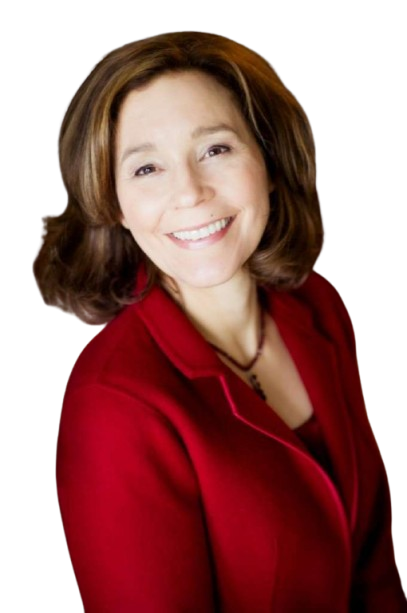
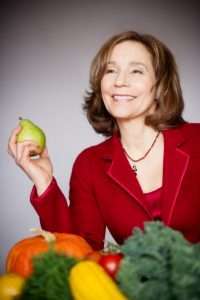
Brenda Davis, Registered Dietitian, is one of the leading plant-based pioneers and an internationally acclaimed speaker. She is widely regarded as a rock star of plant-based nutrition and was referred to as “The Godmother” of vegan dietitians by VegNews.
Brenda has been a featured speaker at medical, nutrition, and dietetic conferences in over 20 countries on 6 continents. She is a prolific writer and a sought after consultant. She has authored many videos and hundreds of PowerPoint presentations. Her most recent works include Plant-Powered Protein (Brenda Davis, Vesanto Melina, and Cory Davis, 2023), Nourish: The Definitive Plant-based Nutrition Guide for Families (Shah and Davis, 2020), Kick Diabetes Essentials (Brenda Davis, 2019), and The Kick Diabetes Cookbook (Brenda Davis and Vesanto Melina, 2018). Nourish won gold in the 2020 Nautilus Book Awards and was also a Canada Book Award winner. Her vegan nutrition classics, Becoming Vegan (Comprehensive Edition and Express Edition) were also multiple award winners.
Brenda has been a featured speaker at medical, nutrition, and dietetic conferences in over 20 countries on 5 continents. Her most interesting adventures include a personal consult and lecture for a member of the royal family (and his staff) in Saudi Arabia with colleague, Dr. Michael Greger
As a prolific nutrition and health writer, Brenda has authored/co-authored 12 books with nearly a million copies in print in 15 languages. Her most recent works include Nourish: The Definitive Plant-based Nutrition Guide for Families (Shah and Davis, 2020)
Brenda’s hectic schedule leaves limited time for consultations. She has helped numerous people reverse diabetes and learn learn to eat for optimal health. Her personal and professional life goals are one in the same – to make this world a more sustainable, more health supportive, and kinder place.
Brenda Davis, registered dietitian, is one of the leading plant-based pioneers and an internationally acclaimed speaker.
In this episode, Brenda Davis RD will be looking at the SDA studies highlighting what nutrients we are needing to focus on when on a vegan diet and why! We are also discussing the new US Guidelines and why scientists are worried about the outcome in the next five years!
On this episode of the Panther Pulse Podcast, we’re thrilled to welcome Brenda Davis, RD—a world-renowned dietitian, speaker, and best-selling author—who has dedicated her career to transforming lives through nutrition.
Brenda has been a featured speaker at medical, nutrition, and dietetic conferences in over 20 countries on 5 continents. Her most interesting adventures include a personal consult and lecture for a member of the royal family (and his staff) in Saudi Arabia (with colleague, Dr. Michael Greger), a lifestyle intervention demonstration project for the medical community in Lithuania (with colleague, Dr. John Kelly), and serving as the lead dietitians in a diabetes intervention research project in the Marshall Islands. On her last trip to the Marshall Islands (November 2017), she developed a nutrition education curriculum for kindergarten through grade 6 and trained teachers in all public schools
Brenda Davis, registered dietitian, is a leader in her field and an internationally acclaimed speaker.
She has worked as a public health nutritionist, clinical nutrition specialist, nutrition consultant and academic nutrition instructor.
Brenda is co-author/author of thirteen award-winning, best-selling books – Plant-Powered Protein (2023), Nourish (2020), Kick Diabetes Essentials
Brenda Davis, RD, is an internationally recognized registered dietitian, nutritionist, and bestselling author with decades of experience in plant-based nutrition.
Brenda speaks on a wide variety of topic and across the globe. check out her past events page for some of the many locations and topics
We have added 10 recent PowerPoint Slide Presentations in pdf format and as a bonus a series of Recipes for balanced nutrition throughout the day.
Over 200 videos featuring Brenda Davis RD. Also includes videos where Brenda Davis RD is a key panel member
Brenda Davis is an authoritative, entertaining and passionate speaker. She has presented at nutrition and health conferences in over 20 countries on 5 continents. Book her for your next medical, nutrition or health conference; for employee seminars or for lectures to the general public. Lecture Fee Schedule: $2500* per day + expenses. * fee is negotiable for non-profits. Please contact Brenda directly to discuss fees for services.
Brenda does corporate consultations as time allows. A wide range of services are available: Staff training Development of nutrition policies/recommendations Nutrition intervention seminars Media consultations Product development consultations Group seminars (see Lectures and Seminars) Scientific writing/editing nutrition-related materials Contact Brenda for availability and fee structure.
Brenda is devoting more time as a team member in a variety of projects creating large curriculums. These have included video's Power Points and Curriculum Development for Living Light Culinary School, The Food Revolution Network, Veg Health and Diabetes Undone and Sustainable Diet. Contact Brenda if you have a project in mind.
Brenda does very limited personal consultations as time allows. Brenda’s recommendations for excellent one-on-one consults:
Any diet that is poorly planned will be missing nutrients, vegan or otherwise. In vegan diets, the nutrient of greatest concern is vitamin B12. The more restrictive the diet, the more of an issue this becomes. Plant foods are not reliable B12 sources, not even fermented foods, sprouts, mushrooms, seaweeds, spirulina, sprouts, or raw plant foods. We obtain little or no true vitamin B12 from these, and we may obtain inactive analog forms of B12 that are worse than useless because they fail to meet human requirements and can interfere with the action of true B12. The only reliable sources for vegans are supplements and fortified foods. Vegans eating unprocessed, whole food or raw diets need to take a B12 supplement. Although B12 is efficiently recycled, eventually it runs out, and this can happen in 6 months for some individuals and 6 years for others. Although people make B12 in their intestines, most is produced in the large intestine, but absorbed in the small intestine, so insufficient amounts make their way to the bloodstream. If people are using 3 or more servings of fortified foods such as soymilk, meat analogs, B12 rich nutritional yeast and fortified cereals, they are likely getting enough, but it is still a good idea to take a weekly 1000 mcg supplement – just to be on the safe side. If fortified food use is limited, take 1000-2500 mcg 2-3 times a week – seniors are often advised to take 500-1000 mcg daily. I would suggest using cyanocobalmin or both methylcobalamin and adenosylcobalamin. If using methylcobalamin and adenosylcobalamin, it is best to take it daily. Those who are B12-deficient need to take at least 1000 mcg/day – better still would be 1000 mcg twice a day or 500 mcg 4 x day. The IOM recommends that everyone over 50 NOT rely on animal products as B12 sources. This is because our ability to cleave B12 off the protein it is bound to in animal products diminished as we age. So everyone over 50 – vegan, vegetarian or omnivore should rely only on fortified foods and supplements for vitamin B12.
Certainly, other micronutrients such as iron, zinc, calcium, vitamin D and iodine can also be issues in poorly designed plant-based diets. The nutrition challenges commonly faced by vegans are relatively easy to overcome – my new books, Becoming Vegan: Express Edition and Becoming Vegan: Comprehensive Edition were written specifically to help individuals avoid any potential pitfalls.
Absolutely. All of the essential amino acids are made by plants, so it makes sense that we can get them from these foods. Most vegans meet the recommended intakes for protein. For those who get sufficient calories (not a worry for most of us), and consume a reasonable mix of plant foods, including some of the more protein-rich choices such as legumes, soy foods, whole grains, seeds, and nuts, protein is not typically a worry. However, protein is a legitimate concern for some groups of individuals:
The best plant-protein source is legumes. Most of us did not grow up eating beans, lentils and tofu, so it is common for Western vegans to drop meat from the diet and not to replace it with protein-rich plant alternatives. Some people end up living on pasta and bagels, or worse yet, fries and soda. While protein can be an issue for some individuals, it is relatively easy to ensure sufficient intake. Simply including legumes in the daily diet, and other protein-rich foods such as seeds, nuts, whole grains and non-starchy vegetables, will do the trick, especially if fat and sugar intakes are kept very moderate.
To boost protein, think about a source of protein for each meal. For breakfast, if you are using almond milk or other non-dairy beverages with low protein content (1-2 grams per cup), boost the protein content by blending every quart with about a 1/2 cup (125 ml) of hempseeds. This makes the milk much creamier, but also much higher in protein and trace minerals. Add hempseeds, sunflower seeds, soft tofu to your smoothies. Try scrambled tofu or even beans and greens for breakfast. At lunch and dinner, always include a protein rich legume choice – lentil soup, black beans on your salad, tofu or tempeh in your stir-fry, etc. Snack on protein-rich foods such as pumpkin seeds.
A few health advocates have suggested that the body doesn’t adequately convert vitamin K1 to K2 and that people require dietary sources of vitamin K2. While vitamin K1 serves blood-clotting processes and activities such as bone building, vitamin K2 is needed for protection against heart disease, arthritis, and cancer.
Although vitamin K2 has a wider range of biological activity, individuals with a healthy, normal supply of gut bacteria are well-equipped to convert K1 to K2. Scientific evidence supporting a requirement for a direct source of vitamin K2 is lacking, and the IOM doesn’t suggest that any direct intake of vitamin K2 is necessary. However, people who’ve had significant antibiotic therapy and are concerned about a temporary loss of ability to convert K1 to K2 can obtain a vegan source of vitamin K2 by taking a supplement or consuming natto. Natto (fermented soybeans) contains 23 mcg of vitamin K1 plus 941 to 998 mcg vitamin K2 per 100 g (a little more than ½ cup).
“Brenda’s knowledge of nutrition in general, and its relationship to diabetes, in particular, is unparalleled. Her research is thorough and meticulous and her synthesis of the science is nothing short of masterful. How do I know this? Because based on her knowledge and advice, our family changed our diets and my father completely reversed type 2 diabetes from which he had been suffering for over two decades, not to mention also reversing heart disease and other ailments…
My appreciation for you and your leadership is of the highest order. Your enthusiasm, can-do attitude, physical stamina, sensitivity to your cultural environment, exhaustive knowledge of your subject and the passion with which you deliver your message are truly an inspiration. I thank the good Lord for the privilege of working alongside of a person of your caliber.
Your talk was life changing for me. It answered every possible question I had about becoming plant-based diets. I am 55 years old and have a few health problems that will benefit from the changes you suggested. You are an inspiration to me and I can’t wait for your next book on eating a plant based diet. Once again, thank you for your incredible talk, I wish I had taken my vegetarian friend with me as the information would have been invaluable to her.
Copyright © 2026 Brenda Davis RD. All Rights Reserved.
Made with ❤️ in the Shuswap by inTechrity