
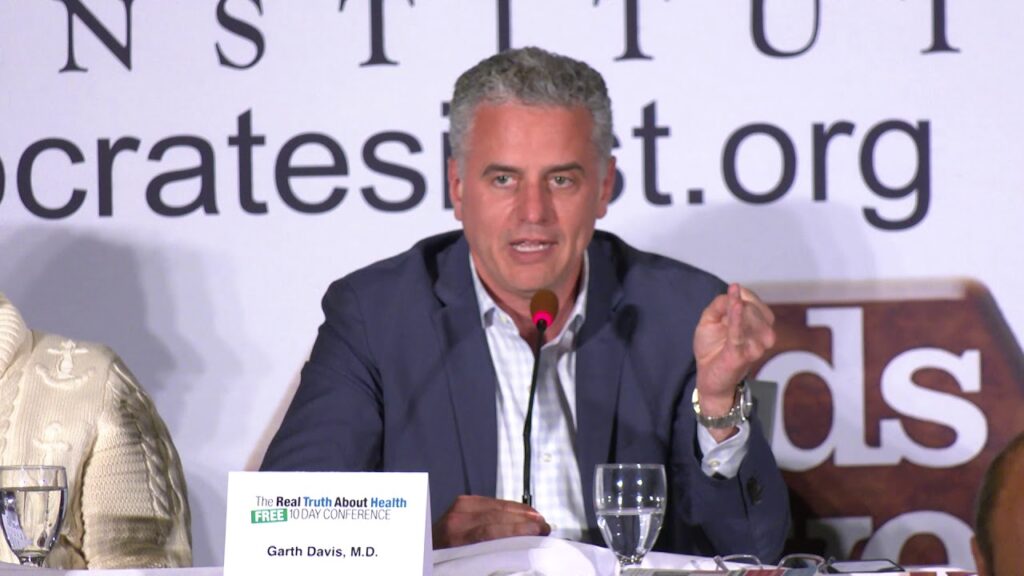
The World’s Top Nutrition And Lifestyle Doctors Explain The Latest Research On How To Dramatically Reduce Your Chance Of Getting A Disease While Maintaining Your Optimal Weight And Health: Part 3 with Pamela A, Popper, Ph.D., Milton Mills, M.D., Garth Davis, M.D., David Katz, M.D., Brenda Davis, R.D., Joel K. Kahn, M.D.,
Connect with The Real Truth About Health:
http://www.therealtruthabouthealth.com/
Passionate believers in whole food plant based diets, no chemicals, minimal pharmaceutical drugs, no GMO’s. Fighting to stop climate change and extinction.
okay i would like to throw out i don’t know if anyone has a pen here i guess we could give you pens and paper i don’t know how good everyone’s memory is but i’d like to ask six questions and let each of you pick the question you’d like to answer so each person answer one if someone would like to comment on someone else that’s fine but i’d like to throw out six questions and then please comment on whichever one you are most drawn to and if you want to raise your hand if you want a pen and paper we’ll get someone to get it to you
just get a pen and paper okay here are the six questions first question michael moss author of salt sugar fats said that every major u.s food company designs food we can’t stop eating please explain this question two there was a study from march 4 2014 by selma tassel morgan levine that showed animal protein caused a 75 percent increase in death and a 400 increase in cancer over an 18-year follow-up and these findings were not okay with the 18-year follow-up and we please explain this that was the second question
third question explain what the epic oxford health study was and what its conclusions were and was this an important study fourth question should we eat bone broth fifth question in the 1950s why were there 10 times more people in loma linda california who live to over a hundred than there were in los angeles and six is it true that the egg industry sponsored 92 percent of this egg studies since 1990
let me quickly repeat this the first question was michael moss saying that um the major u.s food companies designed food that we can’t stop eating please explain it the second one was selma tassels morgan levine’s studies shown that animal protein caused a 75 increase in death and 400 increase in cancer over an 18-year follow-up the third is explain what the epic oxford health study was and what its conclusions were the fourth was should we eat bone broth the fifth is why were there 10 times more people in low melinda who lived to over 100 than los angeles and the sixth was is it true that the egg industry sponsored 92 of the egg studies since 1990
as a goal we would um try to answer each of these questions in three minutes or less and whoever wants to go just hit the button talk and then i i don’t know whether you want us to go in order i’ll do question one okay whatever chocolate food you want to all right question one michael moss so quickly moss is a pulitzer prize-winning investigative journalist wrote salt sugar fat came out i believe in 2013 thereabouts has since written another book hooked and salt sugar fat was excerted in a new york times magazine cover story entitled the extraordinary science of addictive junk food so you can just google that get the whole article get it read it
but the interesting thing about moss telling us how the food supply is willfully engineered to be addictive is that he was not the first almost 10 years earlier there was a four-part expose in the chicago tribune entitled obesity obesity the oreo and us the fourth entry in the four-part expose was where there’s smoke there may be food research too that story was that three million pages of documents were acquired under subpoena by the state attorney’s general in a class class-action lawsuit against big tobacco what these investigative journalists were surprised to discover was documentation that had previously been proprietary showing that the holding company altria was parent to both kraft and philip morris and that craft scientists and philip morris scientists had been given marching orders to work together here’s the functional mri machine you both use it on the philip morris side we want you to figure out what to put into cigarettes to get young people hooked and on the craft side we want you to figure out what to put into food so people can’t stop eating what we sell them until their arm gets tired from lifting it to their mouths four part expose chicago tribune ten years later michael moss pulitzer prize in tow tells us the same story again
every major food company us around the world has teams of scientists functional mri machines and marching orders to design food people can’t stop eating because it lights up the appetite center and the hypothalamus like a christmas tree and we health professionals are busy preaching portion control so first of all you should be outraged where is the outrage right i mean we’ve been told it’s hiding in plain sight your food supply is willfully engineered to make you fat and diabetic for the sake of corporate profit where the hell is the outrage but secondly there’s a very simple remedy eat whole foods they can’t muck around with whole foods [Applause]
hit the button oh i’m sorry i’ll take bone broth for 100 sorry we didn’t get instructions on the button um yeah i grew up in a home where chicken soup was fairly holy um there is i’m aware somewhere in the medical literature a short study that suggests if you have a viral illness chicken soup may shorten the duration of it i would argue it’s probably the carrots and the parsnip but we don’t have much then bone broth for reasons i’m not completely clear has screamed into the integrative medicine functional medicine naturopathic world and as you know from any vitamin or health food store there’s rows and rows of turmeric bone broth they’re all dried powders cacao brome bath you know the natural inclination is to go to the medical literature and at least three months ago last time i looked there remained a single article it was chicken bone bone broth you can also do it organic romero and the only thing they reported was that the lead content of the broth was very high because we all store lead in our bones and if we cook them long enough whether they be human i don’t suggest a calf of cow chicken and such it will apparently release lead now all the companies claim they test and that they can verify i don’t know if all the companies but some of the companies actually are aware of the article and verify it beyond that therapeutic it’s testimonial and you don’t throw out testimonial but you ask what’s the mechanism i mean collagen is created in the body linus pauline taught us from vitamin c and lysine we get vitamin c and lysine from whole fruits and vegetables we can make collagen on plant diets maybe make it more efficiently on plant diets and whatever collagen is in the bone broth has to be broken down by enzymes into their more constituent parts to be absorbed then the body’s going to use those parts for whatever it’s needed it isn’t like it’s earmarked goes right back to your skin and takes your wrinkles away it’s not quite that nano a nettle bot uh right to your uh forehead or some such thing uh you know botox broth might be a better idea so i’m skeptical
on the other hand you can make amazing vegetable mirepoix i’m stealing a wife of david cat’s term catherine cats and such but you can make beautiful broths from vegetables i think i i’d recommend that highly to any of my patients it’s just one of those things it’s a huge industry you know people talk about just to disgust you tail to snout use of animals part of that is there’s higher glycine in the hoofs if i’m going to make you all get nauseated and throw up but apparently you might actually access some more nutrients uh to improve your collagen internally with that approach but i’ll eat from the beginning to the end of the carrot without reservation but not the pig or the cow but i say no it’s bogus
uh i guess since we’re at this end of the table i’ll take the epic oxford question um epic oxford uh keep about six inches from the mic epic epic oxford uh was a study uh out of the uk that followed about 65 000 individuals recruited them between 1993 and 1999 i believe and they actually these were all relatively health-conscious individuals comparing meat-eaters with semi-vegetarians with pesco vegetarians with lacto-ovo vegetarians and vegans and what this study essentially did they were controlling these were all health conscious individuals they were controlling for how much people smoke how much alcohol they drink how much they exercise to make it a very very fair comparison and then they follow these individuals and are still following these individuals so have been following them for many years to see who develops what diseases
and one thing that i need to say is the vegetarians in this particular cohort i don’t think we’re eating really a whole food plant-based diet they weren’t terribly conscious about their b12 intakes not terribly conscious about iodine intake so i don’t think it was an ideal plant-based diet for the plant exclusive or vegan participants in this study but what the study has found is that generally the vegetarians and particularly the vegans are the leanest of all dietary categories that the vegans had about 40 percent fewer cataracts the vegetarians about 30 percent fewer than similar health conscious meat eaters they had less heart disease around 30 percent less and depending on which of their studies you look at uh they had about 19 the vegans had about 19 percent less cancer lacto-ovo vegetarians not quite so much uh and then they they also um had uh had uh less uh uh diabetes this is a new study from 2019 following epic oxford i think it was 43 percent uh lower diabetes uh and no i think it was 30 i just looked at it this morning for the first time i didn’t know it existed prior to that so but a significantly but what was interesting is the pesco vegetarians actually had less lower risk of diabetes in this particular study than than the vegans and that wasn’t the case for heart disease the the pesco vegetarians weren’t at any advantage over the non-vegetarians for heart disease
i could go on diverticular disease was 72 percent lower among the vegans it was 27 percent lower among the lacto-ovo vegetarians compared to similar health conscious meat-eaters and so i think that this was an important study it has i i think it’s very similar to the adventist health study too which gives us a good indication of the potential advantage of of plant-based diets compared to omnivorous diets
i could tackle i guess the adventist health to climb on that because the epic oxford did have some distinct differences with the adventist health and it’s been mentioned in several of the review studies because they did have b12 deficiencies that caused homocysteine deficiencies that probably affected their their heart disease and you got to understand what they do i mentioned some of this in my talk but when they do these studies and you hear them take control for one of the advantages of a plant-based diet is that we are leaner as as was mentioned but they control for that so in other words there was a part of the epic study that showed that they had less colon cancer but they controlled for weight and then there wasn’t a difference because weight’s an independent factor so you got to keep these things in mind
the interesting thing about the adventist health so what was the question why in l.a is do people diet at an earlier age than the loma linda in the 1950s why were there 10 times more people in loma into california who lived to over 100 than they were in los angeles right so this was where we first started understanding about the adventist health group um or the adventists in general or adventists in general as it’s supposed to be said at that time that study was all about smoking they noticed that the adventists who’s any adventists out there none oh we got a few there we go oh yeah hey well don’t let me tell you what your religion says but um but but the general idea is that your body’s the temple of the soul right and it’s so that you should treat it appropriately it’s a vessel of god and therefore you don’t smoke and so the original adventist studies were a look at the difference between smoking and not smoking but the interesting thing is they started saying well this is such a healthy group of people what else could we learn from them and that’s where the adventist one and then adventist two health studies came where they actually did prospective studies of these people it was a prospective registry where they then started doing studies looking at the data and then they started separating people between light meteors versus uh vegetarian versus pescatarian versus vegan and once again similar to the epic but even stronger there was an advantage to plant-based diets which may be another reason it wasn’t just the smoking it was also the plant-based diets that made them live longer
okay my question is to address the finding that over an 18 year period people who ate the most animal protein had a 75 percent increase in total mortality so that’s death from any cause which would include driving into a telephone pole while texting um and a four-fold increase in cancer so what can we conclude from that
well let me approach this question from a different direction if i put up a picture of a cow a horse and an elephant and ask you what’s their natural diet you would all say plants then i would ask you what time in their life do they eat animal protein some of you would say never others of you after thinking a bit will say oh when they’re babies when they’re nursing and that’s the point for plant-based species animal protein is a growth stimulant and a growth signal it turns on a suite of growth genes called tor jeans that actively tell your cells to try and grow and multiply and enlarge that’s wonderful if you’re a baby if you’re an adult it’s a terrible thing because your cells should be quiet they shouldn’t be trying to grow and so what ends up happening is they turn into tumors over time hence the increase in cancer
but it also causes metabolic dysregulation which can ultimately result in higher levels of inflammation which will lead to uh heart disease diabetes and a host of other problems and actually make you stupid enough to text while driving so the bottom line is and the other other points about this is that if you’re eating a lot of animal flesh it’s displacing healthier things from your diet such as fruits vegetables grain whole grains and also fiber and why is fiber important because we now understand with the gut brain connection that a healthy microbiome is critically important to having a healthy mind and to lowering your risk of depression anxiety and a host of other problems so the sum total is that if you have an animal food based diet you’re going to die and you’re going to die we’re all going to die but you’re going to die sooner and you might die in a lot of pain from an avoidable cancer
okay my question had to do with the egg studies after 1990 and basically the first thing i’ll say is the agricultural groups in our country are very wealthy and they have great business partners at the federal government and that’s part of our problem in this country we don’t have regulators and companies and industries that are regulated we have business partners who join forces with agriculture and um and and drug companies and that sort of thing to to do their bidding essentially so anyway to get to the point um the federal government every once in a while assesses what it’s investing research dollars in and two issues that have pretty much been decided at one point in time are smoking i mean we pretty much know smoking’s not good for you and spending a lot more federal dollars and researching it is useless because i don’t think we’re going to come up with some study that says it’s great right and the other one was cholesterol that there’s a direct relationship between dietary cholesterol plasma cholesterol direct relationship between plasma cholesterol levels and cardiovascular disease and coronary artery disease so the fed stopped investing money in research and that gave the egg board a very good opportunity to take advantage of that gap so they started funding research and study design is really important and it’s something that you have to look at because you can design a study to show almost anything you wanted to show if you do it right and so what some of the egg studies ship did was they took people who were eating already a high cholesterol diet and there’s such a thing as cholesterol saturation where added cholesterol in the diet is not going to so much increase your plasma cholesterol anymore and then they added eggs to these people’s diet low and behold their cholesterol didn’t go up and they reported that eating eggs didn’t increase your plasma cholesterol well then what they did is a meta-analysis of their of studies and they use the cutoff point the year that they started funding studies so the inclusion criteria guaranteed that the meta-analyses would show that you could safely eat eggs lots of them actually and you wouldn’t have to worry about plasma cholesterol and so that’s just one of the ways in which agricultural groups misbehave in terms of twisting the the evidence to make people think that foods that aren’t safe actually are safe to eat just in almost unlimited quantity if you choose to [Applause]
okay i’d like to ask another set of six questions for each of you to answer one and to please try to make it a three-minute answer question number one tell us the information that was published in 1959 showing that if you grew up in japan you have a cholesterol of 120 and you almost never see a heart attack if you move to hawaii your cholesterol rises to 180 and your heart attack risk triples and then you move to los angeles your cholesterol is now 210 and you have 10 times the heart attack risk than you had when you lived in japan that’s question number one question number two tell us about the 2014 study by harvard researcher morgan levine where she looked at 6 000 people prospectively where she concluded that if you’re an animal protein eater you would is this the same exact question i asked okay sorry let’s skip that okay it’s question two in the year 2000 the world health organization after looking at eight hundred papers with twenty two world experts reported eighteen percent increase in cancer risk from eating processed red meat please tell us more about this number three um it was mentioned that the journal of the american college of nutrition said intake of fish was correlated positively with the increased risk of diabetes please tell us more about this question four how did finland in the 1970s go from having the highest heart attack rate in the world to dramatically lower question five tell us more how dean ornish showed increased telomeres activity after only three months on a plant-based diet and what does telomere activity why does telomere activity matter and question six do we need to is there a reason why we have to be 100 plant-based so those are the six questions if everyone would answer those in three minutes
i’ll i’ll take the last one um well and then you can cut you’re gonna have something to say i know and we might just have to agree to disagree and we’re still going to be friends i promise so so the the question of 100 plant-based we talked a little bit about this type of issue last night and the and i appreciated dr katz’s comments on this on this that if you look at the blue zones um you have some adventists in the blue zones who are vegan but there are also adventists who are pescetarians and vegetarian and and so not all of them are vegan and then if you look at where the other blue zones are they almost all eat some animal food and some a little bit more than you might imagine and so what i’m taking away from this is not that i think animal food is required in the diet that’s not the point that i want to make at all what i am saying is that veganism is not required and i think that when we draw a line in the sand and say look the price of admission to our club where we eat well is that you have to make this extreme change which a lot of what we do seems very extreme to other people i don’t what i do doesn’t seem extreme to me but it’s not about me it’s about the uninitiated person sitting in des moines iowa right now watching this on the feed who’s saying i want to improve my diet i want to improve my health but i have to deal with the practicality of what i’m willing to do and we have very good research right now about the science of change that shows that there are two criteria that people consider when they’re getting ready to make a change of any type and this includes diet and you know if you swear at work and all kinds of things that people try to change one is that they have to think that it’s going to benefit them and the second thing is they have to see themselves doing it and so we have never drawn that line in the sand first of all because we think it’s a bit scientifically disingenuous for the general population to say if you don’t do this there’s no hope for you to be healthy i don’t think that that’s true and second of all because we have to be very careful that we don’t win the battle and lose the war
one last thing i’ll say about this and i know we’re trying to keep these to limited time um one of the things about my company that is a little bit different than some of the other uh practices that you might hear about we’re a membership organization and some of our people have been members for 25 years this is our 25th year in business and so we get a chance to see what happens to people over a very very long period of time and one of the things that we look at of course is health change i mean if you used to have migraines and you don’t have them anymore we’re pretty excited about that right but the other thing that we look for is compliance in other words what kind of journey has this been for you did you do this for two weeks and quit and then resurface six months later and start again and we have some people who do that or did you do this and maybe it wasn’t perfect but you sustained it over a very long period of time and gotten better incrementally over time a lot of our people do that and they even become accidental vegans and so all in all looking at our data for over a hundred thousand people in 33 countries we think that this let’s not draw lines in the sand and make this harder than it needs to be let’s do the level of restriction it takes to get people on the path to health and then hopefully keep them engaged to the place where they may do more later but i have heart attack patients who aren’t vegan who’ve gone 19 20 years without an event they’re not back on their cholesterol meds their blood pressure is normal and i’ll take less than perfect for a long time of that rather than the cycling in and out that i see people doing all the time
okay i’m going to address that same question and i’m going to start off by saying that i agree with you 100 that we have to meet people where they are because we all learned in chemistry that the likelihood that a reaction will go forward depends on how low you get the activation energy and if you make people think they got too high i’m out in the climb they’re not going to do it but that’s a really separate question from is there benefit to excluding all animal foods from the diet and the problem i have with the way a lot of researchers address and approach this question is they will make what i consider to be a disingenuous statement by saying well we don’t have any evidence that being a hundred percent vegan is better than being mostly vegan and they’re right we don’t have that evidence because nobody’s done the studies yet but that doesn’t mean that it’s not true and we’ve got to be careful because nobody’s ever done a placebo-controlled double-blind study to prove that mothers love their children but we know they do okay so you know a study is not the answer for everything necessarily
to answer this question of whether or not a strictly healthy whole food plant-based diet is ultimately better than a mostly whole food plant-based diet with a little bit of animal food is going to take 20 maybe 30 or 40 years and i’m not sure if anybody’s actually doing that study yet but it definitely needs to be done but we don’t have to wait for the study to make some inferences because we have enough scientific principles and enough evidence that point us in the right direction the study he just asked about the 18-year study looking at those who ate the most animal food died they crapped out they had more cancer what does that tell you is animal food good for you no it’s not um it’s it’s like jumping off a a building if we did a study had 100 people jump off a 10 story building all of them would die if we had 100 people jump off a two-story building 98 of them would survive so do we conclude that jumping off buildings is not bad for you no it’s just you don’t get as much damage at jumping from two stories as you do from ten but you still get damage and that’s what the evidence in my opinion shows us about animal foods it turns on genes that cause cancer it increases inflammation in the body animal protein residues in the colon are are basically rotted by the microbiome to release toxins that when absorbed into the bloodstream go alter blood brain barrier chemistry make you more prone to depression anxiety and they actually interfere with the action of oligodendrocytes and can alter brain chemistry so yeah we may not have definitive proof but we got enough evidence pointing in the right direction that i can say to someone my recommendation is that you do all plant-based but i don’t have that proof yet but that’s where the evidence is pointing
i i could um i’ll take the w.h.o with the cancer and they’re the the thing you hear about a lot with the processed meat being a class one carcinogen meaning it almost certainly is a carcinogen and red meat being a 2a based on 800 studies that they looked at and this has been a very interesting thing it’s been hotly debated and it gets a little bit into what milton was saying because a lot of the the criticism of the world health organization’s findings or that a lot of these studies were what people say is correlation and not causation because they’re epidemiology studies and in epidemiology you are looking at a group of people over a long period of time and looking at their diet habits and yes there are all kinds of other factors now in research i don’t people don’t seem to understand this we have statistical methods to try to control for these things so it’s called multivariate regression analysis we take a big group like this whole group here and we’re going to look at cancer but if you’re smoking that’s an independent cause of cancer so all of you that smoke you get left out of that that study in that equation and so as as dr mills was saying we’re never going to have a prospective randomized controlled trial where we randomize someone to red meat or no redmi and follow them for 20 years to see whether or not they get cancer it’s just not going to be done it would be impossible to be done so we do have to rely understand there were no randomized controlled trials that showed us that smoking is bad for us that was all based on epidemiology and correlation you can’t just have one study of correlation but you start getting many and the world health organization looked at over 800 and you start seeing this correlation over and over again and you have mechanistic studies in other words we know that red meat and processed meat increase igf-1 and we know that’s a risk factor for getting cancer we know that when you cook meat you get heterocyclic amines and that is a risk for cancer we know that there is advanced glycated end products when you cook meat and that’s a risk factor for cancer we know that new 5gc that’s present in meat and that gets incorporated into our cells could possibly increase cancer there’s a lot of possibilities in goods but it all comes together into a recommendation from a group of absolute experts on this topic more expert than we are sitting up on this on this panel that came to the conclusion after a lot of research and these aren’t vegans that said that red meat and processed meat could definitely increase cancer
i will just keep this moving down the line here so the 1959 study was not japan honolulu and los angeles as advertised it was japan honolulu and san francisco it was the nihosan study and this was a migration study one of the early epidemiologic landmark studies that attempted to unbundle the influence of genes versus lifestyle the one thing that makes this both interesting and complicated is that this wasn’t just a change in lifestyle this was a change in culture and so there are a lot of variables in flux and one of the things we like to do in science is compress the number of variables they’re in motion at one time so we can extract from studies attribution what was responsible for causing the results that we saw so when you do a migration study lots of things are changing but essentially the the takeaway message from altitude was japanese people living in japan traditional japanese diets traditional japanese lifestyle very low rates of obesity heart disease almost all cancers not quite all cancers there’s actually a relatively high rate of gastric cancer in japan but certainly overall cancer much lower than the us overall better health with a move to honolulu and that was just the migration pattern so a lot of people who are on their way to the mainland u.s park for a while in honolulu the diet the lifestyle the culture were somewhat intermediate somewhat hybridized between a japanese influence and a us influence rates of chronic disease all this bad stuff that is so routine here in america wound up being intermediate between the homeland in japan and mainland u.s and then the migration pattern completed itself and these groups came over to san francisco in particular hence the name of the study where rates of chronic disease approximated those of all the rest of us living here so the particular value of the niho nihosan study was to say the japanese are not defended against american diseases by being japanese it’s not japanese genes that are protecting them because the people that wound up in mainland america had the same genes that they started with but they had our diet they had our lifestyle and they wound up with all of our diseases
i’ll dovetail onto that with uh ornish’s studies and uh certainly i i guess one of the sayings you may have heard before is uh is our genes um uh determine uh you know may affect our risk of disease maybe five percent the rest is determined by diet and lifestyle so uh it’s a really diet and lifestyle the genes may load the gun but diet and lifestyle pull the trigger and ornish’s studies he did i mean you’re very familiar with dean ornish’s studies on on you know the lifestyle heart trial in 99 1990 in heart disease reversal but he also did a series of studies beginning in 2008 2005 another in 2008 and and carried them on looking at men with prostate cancer and what would happen if they were provided with a similar kind of diet and lifestyle he used in in the lifestyle heart trial and one of the one of the first things um that was reported is that your that basically jeans could be turned on or off by changing your lifestyle so so your genes are not your destiny if you will um but that the way you live could turn on cancer preventative type genes and turn off cancer-promoting genes and this was quite a revelation i would say at the time and he went on to show that that you could also affect the length of the um these little things at the ends of our chromosomes called telomeres which essentially predict our longevity and of course as we age one would expect the length of these telomeres would get a little shorter and in fact what happened when these folks were put on this diet and lifestyle program is they actually got slightly longer so you could actually you know again change your destiny by changing your lifestyle i think these studies were very important and they opened a lot of doors for scientists in terms of looking at health and disease a little differently
i want to give a shout out to david katz i was in honolulu two weeks ago lecturing for the vegetarian society hawaii and i spoke about the neo-sand study and i thought it was a japanese word event great sushi and i realized now it’s honolulu san francisco and i thought it was hiroshima but nagasaki you know everything and i said at the feet of david katz anyways i will uh happily tackle finland um you heard if you were at walter will dr will’s talk he mentioned the venerable name of ansel keys phd phd because they had two of them uh and studies he did called the seven country study and that launched in 1958 one of the sites picked to compare dietary patterns versus other societies like okinawa like crete like some american communities was east finland called north korea he’s feeling the north korea it’s confusing but it was known to be a pocket of potential heart disease and a very high fat diet specifically as they evolved to study high saturated fat diet and it turned out by the late 60s about 10 years after the seven country study was launched that it was pretty clear that the highest heart attack rate in the western world was in east finland a budding russia and their diet was very heavy in sausage and very heavy in butter and had a saturated fat rate that approached 30 percent of calories were from saturated fat to the point that 40 45 50 year old men were having heart attacks at a rate unprecedented and when men have heart attacks they often just drop dead it’s a special thing we do better than women um it’s many gifts we have to end up dying earlier than women so there was this massive public health study they found this guy with the cutest name of pukapeska uh an md in the public health sector young man who took on the uh the onus of going to food companies can we sneak beans in the sausage let the women know god forbid don’t tell the men when they go out in the fields can we you know change the butter to margarine on the store shelves they did recommend quitting smoking that sometimes gets brought up as a criticism it wasn’t just the food it was a comprehensive lifestyle change and within five years the heart attack rate had dropped 80 to 85 percent well if you live in west finland you say i want to be part of it so they extended the con to study to the entire country and they ultimately showed and it continues to this day you know major and significant reductions in heart attack rates but it’s extended to overall life span and certainly cancer cases too not 80 to 85 percent but cancer is somewhere in the 50 or so range so you know many of us point to it as one of the most you know instructive of public health measures by changing diet to really change measurable and important lifestyle measures there’s this beautiful graph of just drop drop drop drop drop and heart attack rates over five years so north korea david perhaps the anals of internal medicine has as sabotage i don’t know all right so just to just a great answer by joel just to append something so the north korea study is currently run by pukapeshka’s successor irki vartyan and we were privileged i met erke in lithuania we were privileged to actually have him come over and speak at the american college of lifestyle medicine meeting so the story is beautiful and it lasts a very long time over a span of almost half a century rates of heart disease in north korea dropped 82 percent average life expectancy went up a full decade one of the more stunning examples of community-wide effective public health intervention in the world but alas this age of alternative truth social media echo chambers misinformation and the well-funded machinations of the beef industry have caused the finish to begin doubting all the things that americans are doubting so you know maybe meat is really better for me right big fat surprise and all of that so irkey reported that actually after all those many years of stunning and luminous benefit from their intervention that young finns were starting to increase their intake of meat and their intake of saturated fat and for the first time in half a century they saw the mortality curve going back up we have to be very careful never to take for granted the gains that we’ve achieved because famously familiarity breeds contempt
we’re seeing that by the way i don’t know how this audience is going to feel about this comment i will take my chances just the same it’s clearly off topic but we’re seeing that with vaccines vaccines are one of the more stunning advances in all of public health history and yet when you get comfortable with the fact that you don’t have to worry that your kids are going to get poliomyelitis every spring when nobody gets smallpox you start to worry more about vaccines than the dreaded diseases that vaccines prevent until you get a new dread disease like the coronavirus and then everybody’s wondering when there’ll be a vaccine but we tend to do that we get complacent about our gains and then we start to shift our perspective until we’re imperiled again so sadly some of those gains in north korea are in peril can i can i ask you i was at that lecture where they where they talked i was interested and maybe you could come or wanted to comment they were so it seemed like they thought that the margarine shift was the biggest part of that i was very impressed at the acl meaning that they were all into how the margarine seemed to shift and the other thing i wanted in this uh in this change that i knew was happening they seemed to say that there was an abutting [Music] area in finland that was eating mainly meat and doing better than north korea that’s how it started do you know if there’s any truth to that so so i i just have the benefit joel of having been at the lecture so as joel mentioned they did a lot of things car so they focused on reducing smoking they focused on reducing sodium intake they focused on reducing saturated fat and then much of the replacement was with polyunsaturated fat from plant sources honestly i think if they had reduced saturated fat with any healthy alternative they would have witnessed much the same benefit but i think irky and others were kind of subscribed to the mediterranean diet notion so you know i think ansel keys also ansel keys by the way you know everybody associates his name with a low-fat diet he actually he practiced a mediterranean diet he advocated for a mediterranean diet he really was focused on reducing saturated fats and we outlived all of his critics yeah absolutely yeah but um bukapeshka and irkey vartana were sort of disciples of ancel keys so i think they may have had an early focus joel maybe you can speak more to this on benefits of replacing saturated fat with unsaturated fat that was the purpose of the margin and obviously this was not trans fat containing margarine right i remember them saying that but they were very proud of their questions but they did achieve multiple changes in lifestyle i think i agree with joel i think that’s a good thing at the end of that you’re not able to say okay how much exactly of this benefit was related to salt versus saturated fat versus tobacco yeah but you know they sort of lined up all the bad stuff knocked it all down and added 10 years to life expectancy you sort of say after that who cares who cares right it was all about that they fixed it all
okay i’d like to ask another set of questions and i try to answer each one in three minutes okay first question how much protein do we need for growing children what should they eat to make sure they get enough protein is there a way that we could not get enough protein are you positive that kids and adults don’t need animal products to get enough protein uh you know it’s a funny thing i am definitely brainwashed in other words i’m 100 plant-based and i’m still every now and then if someone says it loud enough i think i don’t know that’s what i was told when i was little and it’s uh it’s been answered 100 times but it still sometimes seems like uh something i’m not confident number two do you recommend cholesterol lowering drugs in any cases why or why not question three how does human anatomy compare with those animals that are designed to eat other animals like a lion versus those that are designed to eat plants like an elephant question four thomas seifried professor at boston college spoke last year at the real truth about health conference he said that glucose and glutamine were the foods of cancer so does that mean we should avoid all glucose and how would we even avoid glutamine if we wanted to question five a lot of what you’re saying about prevent weight loss about obesity diabetes heart disease seems to make sense but what about dementia will lifestyle prevent alzheimer’s the way it prevents heart disease and question six is what is candida and how do you get rid of it so the questions again the first one was getting enough protein the second was cholesterol lowering drugs the third was how does human anatomy compare with those animals that are designed to eat other animals fourth was thomas c seifried saying the foods of cancer are glucose and glutamine question five was how do you prevent dementia and question six is what is candida and how do you get rid of it
i’ll go first and i’ll talk about um dr seaford’s lecture in his work um and i have written a lot about this uh i invited dr seaford to speak for the first time in at one of our conferences about um i think it was four or five years ago and dr campbell was the speaker also and as soon as i announced it you know i get a lot of hate mail and nasty comments and some of it’s amusing some of it not so much but people are like i can’t believe you invited dr seyfried to come and speak with dr campbell and how can you put these two people together and that they’re diametrically opposed and they don’t have the same ideas and are you going to become a paleo person i mean it was just absolutely insane like i got close to a thousand emails like this well the first thing that i’ll tell you is that um uh the saturday night of our conference dr c fried and dr campbell were in my hospitality suite until 2 30 in the morning talking it’s one of the most fat interesting conversations i’ve ever heard they’re not as diametrically opposed as you might imagine and i went home that night i thought you know if i die in my sleep tonight this is the way i’d like to spend the last few hours of my life it’s very interesting but um dr steve reed’s work is based on um otto warburg’s uh research in the 1940s he was a jewish researcher in and germany and uh the reason why he didn’t end up in the camps is because hitler had a polyp on his vocal cord and he thought he might need some cancer researchers sometimes so he never sent the jewish cancer researchers some of them to the camp so anyway he toiled away in nazi germany and made a discovery that all cancer cells were the same regardless of where they were located in the body and that they all took up glucose at a more rapid rate they probably they didn’t respire normally so speed ahead and a guy by the name of peterson picked up warburg’s work at hopkins and then seafred picked it up and um he wrote a very interesting textbook called cancer as a metabolic disease and one of the things that he talks about in the book is the potential for managing cancer some types of cancer the way that you manage type 1 diabetes you die with it not of it handled properly you could live till the end of your life and he’s focused on people who have forms of cancer that the people don’t have long enough to live to use alternative approaches or integrative approaches or just diet to try to resolve so if you have slow developing chronic lymphocytic leukemia you can often eat your way out of it we have a lot of people who have but if you have glioblastoma you’re likely to be dead in eight months and there’s just not enough time to do much and the treatments don’t work you’re going to be dead in eight months whether you get the treatments or not and he’s been successful in using a ketogenic diet with some of these people um who have literally death sentences and um one of his patients he reported on a case report when he was in columbus about a patient who lived for seven and a half years after her diagnosis of glioblastoma which is that just doesn’t happen he’s got quite a few like that now and he’s set up an institute to work with doctors who want to learn how to do this so i think the the point is that we have to make sure that we’re looking at the application of diet to cancer without such a one-size-fits-all lens i talked about that last night i think it’s important that we not do what medicine has done which is try to slot everybody into this if you have this we this is what we do for all cancer patients this is what we do for all heart patients so when i’m dealing with somebody who has terminal cancer like treatments don’t work you don’t have very long to live i think that seaford’s approach is a reasonable approach when you’ve got somebody who has stage two breast cancer i think that would be insane okay so i think that there’s a lot more i could say about it and you know i could probably talk to you for three or four hours but steve would have tranquilizer darts to keep that from happening so so we’ll just leave it at that there’s a lot of legitimacy to using certain strategies that deprive cancer cells of glucose for very long periods of time and that’s that is not diametrically opposed to the way that we would approach a person with cancer that is far less aggressive at a much earlier stage and etc
you know i i totally agree with your approach and we have to look at different things but i think safely has two patients that have been successful no more than two i think he’s got an n of two which to me is not science i he i i attended a you guys have seen me do this before i attended a lecture of his where i just was like oh my god this is ridiculous because it was such speculation and anecdote on two people most of it was rat studies it’s based on this idea that cancer cells first of all you can’t extrapolate treatment of cancer to prevention of cancer those are two different things secondly he’s done nothing to prove the effectiveness of his treatment except provide two anecdotal reports so what i see a lot of times in receipt in researchers i think we all see it is where they lose the force for the trees definitely cancer cells depend on cancer he may be right but i’d like to see a little bit more evidence before it’s taken by the vast public to say oh my god sugar is the cause of cancer because that’s not true
well i have to respond to that okay yeah that he i’ve listened to his lectures for a long time he was at our conference last year also and he spent about 90 seconds of the two hours he talked on those two patients so there’s a lot more to this than that his textbook is 400 pages with 3 000 references and i think that before we get into the weeds about it people should read that book all right it’s tough to read it’s really it’s very in the weeds it is it is in the weeds but the point that he’s making i think that we have to step back and look at the point that he’s making he actually talks about plant-based diets he did and then the conference i went to i started asking these things because i said well come on igf-1 stimulates cancer oh yes it definitely does but you’re telling people to eat meat no no no i’m not telling people to eat meat yeah i think it gets lost in the message though but the other thing too is that in the united states there he is working on doing a study but in the united states an irb is never going to approve a study that randomizes glioblastoma patients to a keto diet versus radiation which will kill them so everybody who’s making interesting discoveries we have dr koh coming to our conference this fall she’s another one who’s been ostracized by the cancer community if you have an interesting idea about cancer that has some promise you’re never going to get a chance to try it in this country so the only thing that you can do look at what esselstyn did he never could have gotten his study approved either so he basically said listen if you show up and say you want me to help you with diet and cardiovascular disease i’d like to be able to use your data okay with you all right great so we don’t have to randomize and of course he gets beat up all the time because there’s no control group either well the control group is what happens to people who don’t do this and in the case of glioblastoma they’re all dead if anybody lives it’s an anomaly right so what he’s basically doing is training doctors around the world to do this where there’s a lot more freedom to practice differently and also making the information available hoping that enough people on their own might do it and then submit their case reports to join the others and that’s the only way he’ll ever be able to prove it but the basic premise of what seafred is talking about is that all cancer cells are the same they respire abnormally and and if you treat that and there are different ways of treating it including fasting you’ve talked about fasting fasting intermittent fasting to potentiate chemotherapy we’ve used that with a lot of people with great results a keto diet for somebody who’s eight months from death various ways to address the metabolic abnormality of cancer cells so i agree with you that there are limitations to his work but they’re they’re not self-imposed i just want people to understand that there’s a difference between hypothesis and theory those are two different things well i understand that but if you’re the person with glioblastoma you don’t really care much about that you’re just looking for something that might help you because nobody in oncology’s got any ideas for you at this point yeah but the the problem i have with safer is not that it’s not the glioblastoma patient it’s the extrapolation of his work to this whole support of ketosis diet and some kind of idea that ketosis prevents cancer which it does not do yeah and so that’s that’s what really bothers me
and besides if you really want to look at evidence-based research for a nutrient fueling cancer there’s much more evidence for methionine fueling cancer than there is sugar very good studies prospective randomized trials in conjunction with chemotherapy but very strong evidence that methionine which is very heavy in animal products right and remember that the keto people are grasping for anything that they can including the misinterpretation of other people’s work they misinterpret campus work right we can talk about it and say oh yeah this is interesting they misinterpret that and take it as ketosis prevents kids right welcome as you’re gonna say it’s been a long time since i watched saturday night live and that kind of back and forth on the news jane curtin and such i was starting to think the same uh that was good good discussion
well let’s shift to something less controversial people are not lions and people are not horses either so i was in the game changers and corresponded significantly with the directors and producers and you know overall is very good documentaries though are about making a point and when you’re making a point particularly when you’re trying to rectify a misperception and in the case of the game changers the misperception is if you want to be a badass you’ve got to eat meat you want to be big and strong you’ve got to eat meat if you want to be a supreme athlete you have to be i’m nervous that’s false you can fuel the supremes of human performance on a plant exclusive diet so i think i think the movie made that point very effectively but when you’re making a point sometimes there is a tendency to tell just part of a full story because that part better makes your point so any of you see it game changers so you know there’s this segment in the middle where they’re talking about anatomy and they compare the human anatomy to a lion and the lion’s gi tract is shorter and all of that and okay we’re not lions that’s true lions are obligate carnivores we are not what they didn’t do was continue the comparison and say okay here’s an obligate herbivore like a horse and we’re not that either i have a horse my horse actually horse is colic periodically you know they’re very vulnerable gi tracts my horse did some years ago wound up having surgery and they extracted 15 feet of his intestine and i was warned by lots of people in the horsey world that he would never recover fully he did they just need to be given the opportunity he’s perfect but that’s my point he lost 15 feet of intestine and neither of us can tell that doesn’t tend to happen with people you lose 15 feet of your intestine it makes a hell of a big difference so we’re not horses either we’re in the middle we are clearly anatomically physiologically omnivores and i don’t think anybody should be reluctant or ashamed you know what that means it means we’ve got choices and then it’s up to us to make good choices and as we’ve been discussing extensively the good reasons to choose plant-based diets include not just our own health but kinder gentler treatment of our fellow creatures and good stewardship of the planet make good choices
okay alex i want to present the alternative for you on that um there are profound differences between of course strict carnivores like lions and uh um the type of herbivores that horses are and the type that humans are but the remarkable thing is that if you look at the human gi tract and compare it to that of a horse they look remarkably similar and what’s really interesting and really important is to understand that animals that are designed to subsist on a diet of other animals have to have a specific suite of anatomical adaptations that make that possible number one hunting is inherently inefficient even the best designed predators on the planet will only make a kill in the wild on an average of 7 to 10 days that means a study that was done in the isle of national royale um national park in can and canada show that one of the largest wolf packs were unsuccessful 95 of the time they went out to hunt that meant that 95 of the time they tried to get a meal they didn’t get it so the question is what in god’s name could allow an animal to miss 95 percent of its meals and still survive as a species how can these predators eat once every seven to ten days and still not only live but have enough energy to reproduce and raise their kids and then you know make it till they can uh have another another meal
well one of the biggest things is that they have giant stomachs they have stomachs that allow them to eat 30 percent of their body weight at a single meal that would mean that a person who weighs 150 pounds could eat 45 pounds of food at a single meal nobody can do that the fact is that from elephants down through rabbits all herbivores actually eat about 3.3 percent of their body weight every day that actually includes humans if you weigh the amount of food a human eats over the course of the day it will come out to be roughly 3.3 percent of the body weight uh depending on whether or not they’re overeating and and blowing up to the size of a michelin man so but this is important because it means it has implications for not only our physiology but also and this is where we’ve really dropped the ball on the kind of research we should be doing in trying to understand human disease um so that we’re told that we’re omnivores everybody’s been told that that’s a lie because the true omnivores in nature not only have physiologic anatomical adaptations to both procure and consume animal food and plant foods they also have physiologic adaptations so for instance you look at a bear a bear can literally not eat for six months come out of the den find a rotting deer carcass eat you know 30 percent of its body weight of that a deer carcass and be perfectly fine do do you know what happened to concentration camp victims when these camps were liberated by allied soldiers and these starving people were given food many of them died because when they were given this massive uh uh uh concentrated load of of of very osmotically active food it caused a massive shift of fluid from their already depleted bodies into their digestive tract they got diarrhea went into circular cortex circulatory collapse and died that’s why when you go into the hospital you have bowel surgery and you stop eating the surgeons insist that you start to refeed yourself in a step-wise fashion because herbivores have atrophic digestive tract meaning your gut cells only mature if they’re constantly exposed to food if you stop eating they stop maturing if they stop maturing they lose the ability to uh hold water and and prevent water from translocating from your circulatory system into your digestive tract they lose their ability to to to do that whole absorption thing that they do and i’m kind of sort of shortening it uh it’s a little more complicated than that but it the differences between carnivores and herbivores actually even comes down to a sub cellular level and what i mean by that there is a suite of enzymes in mammalian evolution that has been conserved throughout uh evolution and but where they’re found within cells depends on the animal’s diet so in carnivores these enzymes are found exclusively in the mitochondria where they are used for gluconeogenesis well why is that because carnivores don’t eat a carbohydrate so any carbohydrate they have they’ve got to make and their gluconeogene enzymes are turned gluconeogenesis mean making new glucose are turned on 100 of the time all day every day if you are a plant eater you’re eating plenty of starch and glucose so you don’t need to have a full-time gluconeogenesis going on but what you do need is you need the ability to detoxify plant alkaloids because plants don’t want to be eaten and they load up their tissues with all of these compounds like caffeine and some other more sinister ones that when animals eat them can either make them sick or kill them so if you are dependent on plants you have to have the ability to detoxify these compounds that’s why you can’t feed your pets like aspirin and other medicines that or or you can’t give cats uh um onions because it’ll cause hemolytic anemia and things like that they can’t handle those compounds and so in strict herbivores these enzyme systems are found exclusively in cellular organelles called lysosomes in by design omnivores like bears and raccoons that are designed to eat both plant and animal foods you find okay i get it half in in the mitochondria half in the lysosomes where are they found in humans exclusively in the lysosomes as they are in all strict herbivores mic drop
all right i guess i’ll take the uh protein question uh since that’s been kind of my area of interest um so how much protein do we need well the rda did a series of studies and reviews of these over many many years which i had a catalog in my book um they came up using nitrogen utilization studies so you measure how much nitrogen you take in how much nitrogen you put out to kind of come up with an idea of how much nitrogen we need and then you then build a normal curve you know what a normal curve is right so some people needed a certain amount other people needed a certain amount they wanted to make sure that people got but before they give a recommended daily allowance they want to make sure that enough people got all the protein that they needed uh in order to get proper utilization and not get what’s called catabolic where you’re breaking down and so they recommended roughly 56 grams for an adult male 46 for a female now you got to remember that’s two standard deviations above the normal because they want to make sure they got everybody or over 90 of the population so probably we need less than that less than those recommendations but to be safe those are the not those are not the minimum you need that’s the be safe we got you covered 56 grams per ml 46 grams per female mit kind of came out with a study saying that wasn’t an effective way of looking at this and they looked at something called muscle protein stimulation studies using a radioactive labeled amino acids and that utilization and that brought the number up a bit though they never provided much studies showing that we were deficient at those levels in fact people eat way more than that 56 grams for a male and 46 grams for a female depending on whether you look at the nhanes data or what you’re looking at it’s 70 to 100 sometimes 120 bodybuilders are going for 180 over that 56 grams and the muscle protein studies are basically get us that formula usually here which is 0.8 grams per kilogram lean body mass not your weight but what your lean fat free mass is um people have now say 0.8 per pound or 0.8 per total weight which is inaccurate so people are way over eating both the rda’s recommendations and even the the the further studies if you’re exercising yes you need more how much oh my god there’s about 10 million studies on this and a lot of argument in the exercise physiology world they’re saying between 1.8 and 2.2 seems to be the same there’s no difference there’s some study saying 1.6 grams per kilogram lean body mass there’s a lot at 1.2 i will tell you if you’re an olympic athlete and you’re trying to get that 0.5 seconds in order to get the gold maybe you need slightly more but when you look at the studies showing the increased protein and not look at muscle protein synthesis but rather look at actual muscle size or actual weight lifted it makes such a minuscule difference that i don’t know why you would take on the risk of higher protein for that tiny little minuscule difference so typically i go with if you’re an athlete 1.2 grams per kilogram lean body mass not your weight if you’re a regular person going about your day walking normally i like the rda and i think it works well as far as can you get enough on a plant-based protein is that enough obviously it’s enough there’s uh very good studies on long-term vegans as we’ve talked about showing that they actually live longer and unless you’re getting the only studies i’ve seen with protein deficiency have all been kenyan studies and things like that where you’re living with people at subsistence eating nothing but cereal barely getting their protein and if they do they’re getting it basically with low calories too in my practice and i don’t know if any prac anybody’s seen anybody suffering from low protein that wasn’t low calories has anybody ever seen that before i i just haven’t seen it so oh and as far as as far as children are concerned they can certainly do it too the only thing i caution with children is you got to make sure that children are eating a varied diet protein is very important you do need protein it’s so important it happens to be in just about everything we eat so you can get it with plants but you got to make sure that they are getting the more plant concentrated proteins such as legumes so if you’ve got a kid who doesn’t want to eat legumes at all and doesn’t want to eat any nuts at all well you got a little bit of an issue where you do need to make sure they’re getting enough protein [Applause]
i’ll just continue on the protein conversation because i i have i i completely agree with with everything you said but i i would simply add that um that i i have seen a couple of instances where people aren’t getting quite enough protein and so one is in teenagers who often are become very passionate about animal rights and and the environment which is a wonderful thing but they kind of do a switch from eating burgers and fries and coke to just eating the fries and coke and and so they’re eating an awful lot of sugar and an awful lot of fat and on some occasions i’ve seen some getting 20 to 30 grams of protein a day and for a growing teenager that’s not enough so they need to add in more concentrated protein sources such as legumes and tofu and and things like that nuts and seeds and so forth um the second group of course we know about people not getting enough calories like people with eating disorders but the other group that that that may not get enough protein are people that are eating pretty much exclusively fruit and some fruits have a very low protein concentration so on average people probably need you know around 10 percent of calories from protein depending on the person but many fruits are much lower than that so it’s possible in that situation and i’ve seen it on a number of occasions people doing a raw diet where it’s it’s mainly fruits some vegetables and a lot of oils and in that case they they need to add more nuts and seeds they may need to add some sprouted lentils and things like that
brenda what was their phenotypic presentation i mean how you present how are you diagnosing them with protein deficiency uh so so what we often see in in the in the raw food folks i mean in children sometimes you just see them not not thriving as they should but in in the other folks we see hair loss uh and and this is really quite common in the raw world where people really start losing a lot of hair their nails aren’t growing well or they they have problems with them they have problems skin problems their skin almost looks thin and and weak and and so we have to remember that protein is uh and we see bone loss and i know that that is a bit of a controversial subject but of course protein is necessary for building the matrix of bones and so you can be too lone and in fact there was an adventist health health study 2 study looking at 65 000 women that found that those eating a few legumes had a much higher rate of risk fracture than those eating more legumes and getting more protein in their diet so there is a a sort of a level at which below you don’t want to go too much below and um so i’ve i’ve working with raw food people i i have seen that and when we add a little protein to the diet they they tend to overcome some of these issues
i i want to joel before you take on another question two references to add to this protein discussion and one anecdote one of the references is by christopher gardner at stanford university really nice report advances in nutrition about a year ago making perfectly clear that all plants contain all of the essential amino acids that’s just sort of been a myth in nutrition for a very long time we followed that up working together with others and wrote a paper arguing for a modernization of the definition of protein quality because we talk about the quality of protein independently of the quality of the food and that misleads people and so the idea that meat is high quality protein if you look at the concentration amino acids but if the meat is going to make you more prone to death and disease and not do any favors the food is not high quality and if you can get all those same proteins the levels you need from plants that are actually good for you and good for the planet and all of that that’s a higher quality source of protein the anecdote just very quickly is last night uh before my panel i wanted to get something to eat in the lobby and they had a quinoa salad at this little atrium restaurant out here i said okay well that looks okay and the uh the server asked me uh would you like protein with that it’s actually that is my least favorite question yeah uh quinoa is a pretty good source of protein actually and she said yeah so that the quinoa was the source of protein gardner was pretty interesting at acl through his diet and looked and he actually went and looked at it did he have any because he was eating a plant-based diet did he have any amino acid deficiencies and he couldn’t find that he had a single amino acid deficiency but the the meat based industry is starting to jump on this terminology of protein quality assuming that having higher leucine is therefore good for you but we know that higher leucine increases igf-1 and stimulates mtor which leads to uh possible cancer and aging and so having more of a certain amount of amino acids not necessarily better
david you want cholesterol drugs or do you want dementia you can take your topic i don’t care no i don’t i i i took another you took you know horses lions no no no no i’ll take dimensions because i’m speaking about cholesterol drugs tomorrow but but do i want cholesterol drugs or dementia no no but thank you for asking i wanted you to read into what you wanted to read into it um can you prevent dementia was basically the question um yeah and i’m not a neurologist but one has to be familiar while red and we are all concerned about our memory and where we left our car in the parking lot um there was a splash about three four years ago a scientist out of the buck institute of san francisco and then a book called the end of alzheimer’s that was embraced very quickly by the functional medicine community of which i’m a member but i don’t agree eye-to-eye with all the idea that there are 36 holes in the roof of your house if you’re starting to lose your memory that’s the analogy and you can plug each and every one of them some with fitness some with diet that favors a ketogenic diet in this approach and a whole lot of supplements from hooper zine to vin positin and on and on it quickly became a franchise and the author of the book profited quite nicely he did publish a scientific paper but it’s not alzheimer’s it’s at best something called mci mild cognitive impairment that may progress on but may not progress on to the clinical diagnosis of alzheimer’s nine of ten patients showed some improvement uh and then there was a business and there hasn’t been much follow-up publication a number of my friends in the detroit community did train in this kind of franchise of brain health they basically have all abandoned it it was very expensive for patients it was very complex and there really hasn’t been a good foundation to show that it actually prevented alzheimer’s on the other hand within a few months out came the scherz-eyes alzheimer’s solution you may have known that book i think it’s a wonderful book with the neuro program of nutrition and exercise and optimized mind body and other features there some mind games but they certainly do not claim that they prevent dementia in fact most reasonable scientists don’t believe at this point we actually know that anybody can prevent it there is a inherited risk called apoe i have a practice full of people who’ve inherited a rather adverse apoe4 for that 20 years earlier in life than on average you may start to have some memory issues and there seems to be an advantage to a low saturated fat diet which is perhaps our community and lower alcohol consumption but these are trends we don’t really know that all for sure um you know the general trend is that a lot of cognitive impairment is cardiovascular impairment it’s microcirculation it’s vascular dementia and certainly this theme out of the chicago healthy aging project and other is that optimal blood pressure optimal blood sugar optimal blood cholesterol regular fitness good sleep avoidance of smoking uh and i would say embracing a whole food diet largely of plants would be wise but i think there’s science to come before we say we you know have certainly beat down alzheimer’s i don’t think anybody really claims that yet
i’ll say just tying in the question we didn’t do the general data statins don’t cause alzheimer’s if anything they’re neutral and may have a slight advantage if your cholesterol is 300 and there’s no other mechanism to bring it down uh the latest meta-analysis are fairly you know reassuring okay i’m going to ask six more questions um in this case yes yes um joel how much glucose dysregulation have you seen with statins because i i’ve seen the fair a fair amount in in clinic yeah so there’s you know good question and there is um no direct understanding why there’s been an observation uh it may be a mitochondrial toxin is the common statement whether simvastatin is the most uh glycemic of statins it used to be called zocor and some of the others are more favorable as mentioned whether coenzyme q10 at least in one lab study protected the mitochondria and this response has been mentioned but there’s very little data on it actually i mean there’s the databases that suggest if you’re a healthy person in your place than a statin the likelihood you’re going to see a major shift in your insulin sensitivity and actually develop diabetes is very low but if your hemoglobin a1c is 6.2 and your waistline is 43 inches and your diet is not optimal it may push you a couple points up on measures and you will fulfill criteria of type 2 diabetes offset by what i’ll talk about tomorrow at least some data to suggest it prevents the number one killer men and women in high risk subsets like previous heart attacks and post bypass and such in my own clinic i’m concerned i’m not a aggressive statin user but they need to be pulled out now and then and i have stopped people’s statins and you always can for a couple months repeat the hemoglobin a1c it wanders down i won’t say it’s you know amazingly potent intervention to stop and reassess but i will and and uh you know very often three four times a week reintroduce it and you get pretty adequate balance between cardiovascular risk reduction and not elevating the blood sugar i think it’s a real deal though
okay so i have more questions and i guess for time’s sake if we could keep them to two minutes that would be ideal okay so the first question is do plant-based eaters or vegans have to be especially careful to get enough vitamin d dha epa iodine taurine vanadium chromium and omega-3s is there any risk in getting all of these from supplements as opposed to food that’s question one question two is uh dr khan you’ve said i’ve been inside the heart fifteen thousand times and i’ve never scooped sugar out of a blocked artery i scoop cholesterol out of blocked arteries please explain this question three what does the science say about fish consumption and health does fish raise our tmao levels and why does this matter does fish have mercury in it and why does this matter question four are there any whole food plant-based foods we should avoid such as potatoes certain high oxalate green vegetables nightshade vegetables peanuts cashews which supposedly are not really raw because they have to be heated because that’s how they get them brian clement from hippocrates says black beans are very hybridized and very hard to digest people have been saying brown rice has grown in areas where there’s high arsenic so are there any whole food plant-based diets that are not on your list to say go ahead with question five how do you prevent and treat urinary tract infections and question six um it was said uh 21 international organizations including the world health organization american heart association american college of cardiology institute of medicine all say eat as little saturated fat as possible they couldn’t be more clear and these are high brow organizations not associated with the vegan movement 21 out of 21 groups say the same thing please explain this a little more so one more time first question was on the supplement second was dr khan third was on fish and tnao fourth was on whole food plant-based foods that we might want to avoid fourth was your fifth was urinary tract infections and the sixth was the 21 out of 21 groups
i’ll go first and i want to talk about the foods to avoid the the first thing is this issue of hybridization comes up a lot and if you were to go to the grocery store and say i would like for you to point me in the direction of the area of the produce section where the non-hybridized foods are there are none and this is a good thing for the most part in fact the reason why there was a potato famine that killed a million people in ireland was because there was only one kind of potato that was grown there and had they been hybridizing potatoes and there were lots of varieties of potatoes people would have just eaten the potatoes that weren’t hit by the blight all right and so um hybridization has been going on since the beginning of agriculture and breeding plants together like tomatoes with tomatoes and soybeans with soybeans to come up with bigger tomatoes like my father after he retired got involved with the osu horticulture department he got a master’s degree in horticulture and they were breeding something that ended up being the mortgage lifter tomato this guy invented it because he lost his job and he helped pay off his mortgage with these tomatoes but anyway they were they were designed to be like the size of a slice of bread so that you’d have one slice of tomato that really held its form and there’s yeah it was cool and there’s nothing to matter that tastes really great so so the first thing is discarding a food because it’s hybridized you’ve got nothing left to eat we need to hope that there are new hybridized foods coming out all the time that can meet the needs of the population around the world the problem is people confuse this with genetic modification and they’re not the same thing all right that’s not the same thing um i think the the biggest without going into all these individual foods because steve wants to keep us to two minutes and we’re doing such a good job following your directions have you noticed that um but the the problem with the foods to avoid list is that this goes back to this one size fits all i mean people write books about gluten is bad well you know what if you have celiac disease it’s really bad all right and if you have certain types of autoimmune disease it’s probably good to stay away at least from high gluten foods but not the rest of the world if you go into anaphylactic shock when you’re exposed to peanuts you should not eat them but i don’t and so there’s no reason for me to not have peanut butter once in a while so i think it’s very important that we not try to come up with hit lists of plant foods that we’re not supposed to eat because most people can eat most of them without any problem at all so first of all if you have a food allergy i mean if you eat strawberries and your tongue swells up and you can’t swallow do not eat them all right but that’s not an indictment of strawberries and everybody should stay away from them so in the interest of time i won’t say more but there’s lots more to the topic okay [Applause]
i’ll take fish for 400. i when when when patients or conference attendees ask me the question well what about fish if i’m feeling flippant i’ll say well what about them but the question i typically asked them i said let’s say you were someone or an animal that had to eat lungs that’s all you could eat would you eat the lungs of an animal raised in a coal mine and everybody scratches up their face of course not because it’d be filthy they’d be full of coal dust and tar and god knows what else well the oceans are filthy they are loaded we dump sewage and all sorts of industrial wastes and toxins in them and fish have to filter that to breathe so fish tissue is actually some of the animal tissue that has the highest loads of toxins of anything someone can put in their body so that is a problem and it’s not just the mercury it’s also pcbs it’s pesticide residues i mean you name it on and on down the line but also because of all of the fertilizers we are dumping into the oceans we are creating these algae blooms that where these toxic algae uh blooms release these toxins into the water that are also taken up by fish and studies have shown that people from certain areas who eat a lot of fish are at higher risk for developing what is colloquially known as lou gehrig’s disease or als it’s what stephen hawking had it’s generally a relentlessly debilitating and ultimately fatal neurologic disease and there’s also some suggestion from certain studies that these algal toxins are also related to parkinson’s and possibly dementia risk but the bottom line is fish flesh is animal flesh and as garth has pointed out as we’ve talked already higher intakes of animal tissue correlate with increased mortality a higher risk for cancer because it turns on cancer genes not to mention the fact that it you have all of the cancer-causing compounds that comes from cooking the fish and then of course it does increase tamo which is another toxin and so the bottom line is let the fish swim and be happy and eat your plants
i don’t i i don’t feel strongly about it how do i treat utis with antibiotics is yep thank you there actually was a report in the last two weeks again of lower uti rates and vegetarians i didn’t read the study in detail and some of it is handling the chicken in the kitchen and the same oh yeah yeah exactly so but i guess and there’s built-in infection again i think i mentioned this a bit on my talk today don’t food is medicine but it is not the only medicine and there will be times that we need lipitor and there are times that we need antibiotics and i have seen some very very sick people who refuse to use medicines until it was almost too late so don’t get into that idea that western medicine is absolutely terrible it’s not it’s good at sick care it’s not good at health care but it’s good at sick care yeah great i made the same point earlier yeah yeah we have we have the opportunity to rely on diet and lifestyle as primary medicine and everyone can benefit and then a lot fewer of us will need a lot fewer medications but when we happen to need one it’s a good thing that we have them rates of stroke have declined primarily because of effective treatment of hypertension which is genetic sometimes some people eat optimally they’re still hypertensive effective drugs that they tolerate well maybe the difference between having a stroke and not so yeah i completely agree there uh there are only a couple questions left i guess one of the remaining ones was that 21 of 21 august organizations cite a link between higher intake of saturated fat and higher rates of heart disease and other bad stuff uh yeah that’s because it’s true that’s it [Applause]
no i wanted to say something about the utis so you know being a little bit glib but you know for example um last night on the panel colin you know i think argued against saturated fat placing the the emphasis on animal protein i i’m a pragmatist so you know yes i do believe the evidence regarding the mechanistic adverse effects of saturated fat i also believe the mechanistic adverse effects of animal protein but we eat foods and and the simple fact is that we get our excessive animal protein and our excess of saturated fat from all the same sources i think one of the ways to sidestep a lot of unnecessary controversy generate a lot more light and quite a bit less heat is to talk about foods which i think is the native predisposition of this group anyway when we say whole food plant-based we’re talking about whole foods okay then what are the foods diets made up predominantly or exclusively of vegetables fruits whole grains beans lentils nuts and seeds and water when you’re thirsty and then frankly you’re avoiding the animal protein you’re avoiding the saturated fat you fix a host of ills fixate on any one nutrient there are still ways to get the foods wrong and you know let’s be clear you could be strictly vegan on a diet of coca-cola and cotton candy that wouldn’t make it a good idea right so saturated fat’s not the only thing wrong get the foods right the nutrients tend to sort themselves out
i just wanted to add something about the uts and that is that i agree you have a uti you give an antibiotic but we get people in our office who have six utis a year and they take antibiotics again and again and nobody ever stops to say why do you keep getting these utis and so um and and plus you know you do this for three or four years and antibiotic resistant bacterial infections are life-threatening and we have to be more conscious of that i think in medicine um so you can deal with utis a little bit differently and you have to by the time somebody’s had 24 rounds of antibiotics that’s not fixing anything and in fact the next one comes more often so we look at hydration we look at we look at using plant antimicrobials and with very high dose probiotics to restore um to to address the infection without more antibiotics um and also to restore the immune system which has been completely wiped out of the microbiome which has been completely wiped out and adds increased susceptibility and then high using cranberry juice not from concentrate with mixed in with raw honey because raw honey has antibacterial properties and there are studies in medical journals about this so drinking cranberry juice you have to sweeten it with something anyway or a lot your lips will wrap right around the bottle it’s so sour so so if you do these things it takes some time but we have people who’ve had five to six utis a year for five and six years and wiped it out like they never have another one again and so i think one time antibiotic don’t worry about it but if it’s repetitive you have to say something’s going on here and before we uh really make do some damage with the antibiotics we should look at why and fix that
just a quick thing on the saturated fat because it comes up a lot and you’ll you will hear about the study which is called the siri torino study which was the study that really started all the saturated fat doesn’t cause heart disease it was sponsored by industry as you might imagine but they did a kind of a simple trick they they took a bunch of different it was a meta-analysis they looked at a bunch of different studies you got to understand these studies they’re trying to show a relation between saturated fat or lack of relation between saturated fat and heart disease they controlled for independent risk factors of heart disease one of those being cholesterol so you understand the problem here if you control for cholesterol one of the methods that saturated fat causes heart disease is by raising cholesterol so again if i take this big group of people and i say everybody in you that are out here that have high cholesterol leave the room i’ve kind of eliminated all the people that are being affected by saturated fat and so therefore i’m kind of you know making the game play in my favor which is what they did with that study and how we started with this whole weight saturated fat isn’t bad for you
yes uh well i i know we have two minutes per question and the question that i’m taking is not a two-minute question so i might just pick a a little fraction of the question and that was the one about uh specific nutrients like vitamin d and dha and what other ones were there in that vitamin d dha epa iodine taurine vanadium chromium and omega-3s yes yeah no um so we’ll do omega-3s and vitamin d maybe i i i’ll i’ll tackle three as quickly as i can um i’ll start with iodine because that’s a really quick one uh what we know is is that uh this is a very critical nutrient a lack of which is uh certainly uh the leading cause of mental retardation in children in the world uh so that’s something we need to take care of
the the key sources in the diet are generally uh fish and seafood and dairy products because we use iodine to clean the teats of the cows and and so i mean we iodized salt to help prevent these kinds of deficiency in the population and a lot of vegans don’t like to use iodized salt and so we do especially in europe see much higher rates of iodine insufficiency in in those populations so what we need to do is figure out a reasonable source of iodine for people and that would be i mean certainly people who are willing to use iodized salt or just um iodine supplement or certainly seaweed because seaweed is loaded with iodine now so loaded that you can easily reach the upper limit of 1100 micrograms of iodine uh eating a lot of seaweed and and one one of the foods that i would avoid in the plant-based world is hajiki because of the hajiki is a very very high in in heavy metals and so it it many countries avoid against its use for that reason so anyway um uh you know if you’re using seaweed as your primary source of iodine it’s maybe a tenth of a teaspoon of kelp kelp is super concentrated in iodine um and and if you’re using nori it’s about one and a half sheets of nori for 150 micrograms you can use i think it’s about a gram of wakami or a rami so those are all reasonable options for for iodine and vitamin d
well certainly the sun is the very best source of vitamin d unfortunately there are a lot of people that live in very cool climates that are not exposed to any warm sunshine for several months of the year and some are rich enough to go to hawaii or other lovely spots to get sunshine but not not everyone is and for those people i think that it’s a reasonable thing to supplement with vitamin d now vitamin d for the omnivorous population the main sources are fish and eggs and and of course milk that’s been fortified with vitamin d we are fortifying some of the non-dairy milks with vitamin d but still not people people probably don’t consume enough of those to to meet their their needs so it is reasonable to have a vitamin d supplement in that case um and then the dha epa omega-3 fatty acids is a huge debate within the plant-based world right now as many people know there’s a segment of the the the leadership of the sort of plant-based movement who are saying that we probably should not be taking direct sources of epa and dha so here’s what we know we know that vegans have low levels of epa and dha we know that epa and dha are very biologically active essential long-chain omega-3 fatty acids um technically they’re not considered essential there may be conditionally essential if you can’t convert alpha-linolenic acid there’s a series of elongations and desaturations that that allow us to produce epa and dha in young women that conversion can be quite efficient where there was a study in the uk showing about 36 percent of ala was converted to either epa dpa or dha and it was about 21 to epa and about 9 to dha which is really quite remarkable but if you think about it a young woman has to be prepared to um grow a a baby and a brain and so uh i can imagine that there they would have um reasonable conversion ability in young men it was a sixteen percent uh conversion about i think eight percent to epa 8 to dpa and nothing to dha and so you know to be honest we don’t know what ideal really is we don’t know if vegans absolutely need to be taking pre-formed there are very few sources of pre-formed long-chain omega-3 fatty acids in the plant kingdom seaweed has a little bit of epa no no dha but what a lot of people don’t know is that epa and dha are not made by fish they are made by micro algae and these are tiny plants in the ocean and that’s where fish get them at some point along the food chain and so many people are are now culturing these uh microalgaes to be able to provide people who don’t eat fish with a direct source of epa and dha do we need it we don’t know however what we do know is that it that that some people have increased needs pregnant and lactating women so they it may be an advantage to get a little bit more and we also know that some people have a reduced production of the desaturates enzymes responsible for the conversion so for example people with diabetes and hypertension people who come from regions where for generations fist fish was a major staple within their diets they may not produce as much and so for those individuals it may make sense to boost intakes a little bit with a direct source of epa and dha so there’s still controversy there’s still a lot we don’t know in my opinion i don’t think it’s an unreasonable thing to take a small amount a couple of times a week that would sort of approximate what fish eaters might get eating fish a couple of times a week and and certainly we do need to make sure we’re getting enough alpha linolenic acid and and this is the plant omega-3 that that we find mainly in chia seeds and flax seeds and and hemp seeds and walnuts and we also about half of the fat in leafy greens is omega-3 but the fat in greens is so dilute it’s not a very rich source of fat so you would have to eat like a horse or a cow to get enough you would want to be eating about 20 to 40 cups of leafy greens a day to get 2 to 4 grams of omega-3 so so it’s we need to supplement that with some more concentrated sources omega-3s and i think i’ll just leave it at that
brenda i want to append something quickly i think i mentioned last night i agree with my friend walter willett about almost everything we we do have one at least one small disagreement walter mentioned last night for those of you who are here that we shouldn’t worry at all about omega-6 fatty acids and no matter how much we get it doesn’t matter it’s actually strong research in the lipidology literature tom brenna in particular who was at cornell now at ut austin done studies showing that a very high intake of omega-6 interferes with that pathway you just described so the conversion of ala to dha in particular is actually effectively blocked by a very high intake of omega-6 so where are you going to get a very high intake of omega-6 expressed oils used in processed foods so lots of corn oil lots of soybean oil safflower sunflower so in general these may be okay but if they make up a big part of your diet they effectively block the pathway make it more likely that your dha levels are going to be very low yes and in defense of walter will it um i think what we’ve we’ve found more recently in the in the literature is that whereas we used to think omega-6 was very pro-inflammatory that we’re seeing that it’s not so pro-inflammatory however we do need to put a lid on omega-6 because it can see that it’s the same enzymes that convert the omega-6s and the omega-3s and if we get a lot of omega-6s that preferentially yeah convert the omega-6s and you get a reduction of conversion of omega-3s of up to 40 to 60 percent when you eat a lot of omega-6s omega-6 is you’re talking safflower oil sunflower oil corn oil grape seed oil so you’re not wanting to be consuming traditionally soybean but but you have so if you’re mostly eating whole foods and getting your fats from there or if the oil you use preferentially is extra virgin olive oil you avoid this problem anyway so the whole food approach is effectively a solution to the omega-3 excess yeah so i agree what walter focused on was inflammatory effects but the fact is an imbalance in excess of omega-6 may have some adverse metabolism particularly for people who are not consuming direct sources of epa and dha like vegans so it’s much less of an issue for omnivores who are consuming direct sources if they’re eating fish there are other dietary factors that can slow conversion as well trans fatty acids saturated fats a lack of specific nutrients certain vitamins and minerals and protein alcohol so we need to be consuming a well-balanced diet to maximize conversion we know aging can reduce conversion so as we get older we convert less efficiently gender there there are lots of factors that can affect uh conversion ability so yeah thank you
one thing i want to add about this i appreciate your saying brenda about we are not clear on this about this omega-3 situation and an epa and dha and i think this is an important clarification because we have some people in our movement who are basically making claims that um the lower levels of dha for example in vegans is a dangerous thing it’s already been decided this is going to lead to disaster we’re all going to be demented or something like that and this is a ridiculous statement to make we simply don’t know and i think that when we don’t know we should say we don’t know because when we go out there with a great deal of bravado and make a claim about something that’s patently false what you’re hoping is that there’s not a smart person in the room who knows that it’s patently false and i don’t think you can build a business or promote a movement that is dependent on not smart people listening to your message so i appreciate that clarification um the other thing is you mentioned about diabetics for example having lower levels and what we see is people who have who are sick have lower levels of a lot of things there’s a good deal of evidence that lower vitamin d levels are more a function of people being in poor health than anything else there’s one very good study that illustrates the point lots of them but this one’s really crystal clear people arriving at an emergency room in georgia hyperglycemic enough that they had to go to the hospital their vitamin d levels were 12.3 when they got there and as soon as their glucose levels stabilized they went up to 27.3 all right so you can see the foolishness of doing intervention with vitamin d for diabetics thinking it’s somehow going to make them better because diabetics have low levels of vitamin d so i think when we look at at which comes first is it the low vitamin d that’s contributing to the disease or the disease that has caused the low d or the low dha whatever we have to be careful that we’re actually looking at what is causing what before we go off the deep end and say oh my gosh you’re eating a vegan diet you have to take these supplements or you’re pre-diabetic so if you take these supplements it’s going to somehow help you so i think that clarification needs to be made
do you got vitamin d to try to decide whether or not someone needs vitamin d one of the primary roles of vitamin d is to allow calcium absorption in the intestine so i look at parathyroid hormone do you guys look at parathyroid hormone to see whether or not their vitamin d is actually affecting their calcium does anybody else do that am i the only one who checks parathyroid they’re only if they’re hyper calcium makeup we’ll check it but i mean if they’re normal calcimic but they’ve got a high parathyroid hormone that means their body because you could be normal calcium it can still be low in calcium and so then i say okay well your vitamin d needs to be supplemented in that situation i don’t yeah no two minutes on sugar and heart disease uh i had an opportunity to make this statement that was quoted on the joe rogan experience september 2018 that i’ve been in heart arteries as an interventional cardiologist fifteen thousand times and i’ve never scooped out sugar because you can actually do a procedure and scoop out plaque 1913 was the first year nichikau identified that in atherosclerosis there is cholesterol then we fed mice high cholesterol diets they developed plaque that led in many other data points and i think 11 nobel prizes to what’s been called the cholesterol hypothesis that serum cholesterol has a relationship to the development of the number one killer men and women very seminal in this data was ansel keys you’ve heard his name a couple times dr willett showed a slide from the seven country study i’ll show another one tomorrow at lunchtime um and that was the leading hypothesis and if you think the food wars are ugly now at times in the 1960s came an englishman named john yutkin who had a contrary view it’s sugar it’s not cholesterol dr ansel keyes published a paper about sugar and atherosclerosis where he uh castrated a scientist as well as any scientist can cancerate their fellow scientists looking at every data in the world and saying uh it’s hardly sugar compared to the potency of uh cholesterol and plaque cholesterol in the serum and the dietary influences that raised that all that percolated along until a couple years ago when we did find out that there were a few scientists not ansel keys that did actually take some money from the sugar industry to taint the conclusion of a very sophisticated paper in the new england journal medicine in 1965 that probably four people in the world read but it just really dirtied the waters uh the importance of animal foods contributing to raising cholesterol and the importance of added sugar well we do know in cardiology and nobody reviews us better than kim williams there are certainly epidemiologic studies that high levels of added sugar in the diet are associated with high levels of coronary disease sugar sweetened beverages is it that we gain weight and we become pre-diabetic diabetic and we become hypertensive and our triglycerides go up and become insulin resistant or is it that sugar is directly toxic there’s very little data that sugar’s directly toxic to coronary arteries it’s an indirect mechanism but the only reasonable conclusion and the joy of a whole food plant diet is it’s naturally low in cholesterol in fact it’s absent it’s naturally low in fats generally and it is certainly naturally low in added sugars if you avoid donuts and cookies so they you know food quality matters you’ve heard that over and over and so does sugar content not fruit though we all love fruit i think three minutes okay
uh dr katz had previously let me know he would be stepping out a little bit early okay continuing i have five more questions um that each of you can answer one of them the first one is how do we protect our thyroid gland against thyroid issues number two what do you recommend for people with acid reflux number three what do you recommend for people who have eczema number four do you recommend mammograms and if not do you recommend thermographies and number five what type of treatment would you advise for someone diagnosed with cancer so the five questions again where the first one was about your thyroid second about acid reflux third about eczema fourth about whether you should get mammograms on a regular basis or at all or thermography and the fifth one is what type of treatment would you advise for someone diagnosed with cancer i’m gonna leave dr katz with those five questions
can i i’ll talk about reflux since i’m actually a reflux surgeon so i do a lot of reflux um and uh the reflux is a complicated disease it is amazing how many people have it uh almost everybody a lot of it has to do with physiology with weight with our diets there’s been some very good studies showing plant-based diet helps the reason plant-based diet helps is because it’s low in saturated fat saturated there’s a muscle at the end of this esophagus called the lower esophageal sphincter it is loosened by several things it is loosened up by saturated fat caffeine alcohol so that’s why after dinner a lot of people get really sick uh and get heartburn workup and treatment of this is very complex we start with lifestyle changes like i do with everybody plant-based diet again not vegan or vegetarian necessarily but a whole food plant-based diet low saturated fat low caffeine low alcohol keep the bed elevated i do use the medications there’s been a lot of debate lately over whether ppi’s which are nexium priolisek omeprazole there’s been some debates over whether they may contribute to all kinds of things such as dementia osteoporosis things like that the data is very circumspect that they do that though who wants to be on a pill all of your life certainly lifestyle changes and getting your weight under control helps there are certain people where reflux is so bad that just about everything causes them to get severe heartburn if they bend over food comes up in their mouth that’s a different story we do tests for that i will do a scope where i put a camera down their mouth do they have irritation do they have changes in the esophageal mucosa that suggests that this acid reflux is really bad because that can lead to cancer in fact there’s a been a huge increase over the last 20 years in esophageal cancers of the reflux type instead of the old type which is squamous cell and a lot of those have to do with this changes in the esophagus called barrett’s changes so if people have that then we start getting more aggressive that’s when we start talking about surgeries to combat reflux so i have kind of a whole protocol that starts with lifestyle changes medicines if needed if you get really severe problems we do endoscopy we put a little very smart little uh device inside the esophagus that measures how much acid is coming up so i could get a quantitative score if it’s very high then we may suggest surgery to fix that oh yes um dr mills was mentioning h pylori h pylori is a bacteria that causes not necessarily reflux but it causes gastritis like an irritation in the stomach and we’ve had a huge increase in h pylori uh that has been both documented in the literature but i have been seeing it like crazy in in my patients and that will give you symptoms of reflux but it’s not true reflux it’s just irritation of the stomach we do treat that with an antibiotic regimen that is now becoming resistant so it’s a little bit scary with the changes for h pylori it used to be that we had very good control of it with antibiotics but now it’s down to 70 percent one comment about the h pylori um the humans have lived with h pylori for hundreds of thousands of years and eradicating it i think is not necessarily the best thing because now we know that when you’re sterile from h valoria it increases your risk of inflammatory bowel disease and reflux um ironically is that sometimes the reason why people are treated yeah that’s why i don’t actually do biopsies unless i see a problem because we have found h pylori but there’s no gastritis so what do you do with that and some people are inclined so i don’t do a biopsy unless i actually see inflamed stomach and then i’ll treat it only if there’s inflammation
i’ll take mammography here’s the problem with mammography it does not reduce the risk of dying of breast cancer bottom line and the only reason to have a screening test is either that it’s going to prevent a morbidity of some sort or it’s going to prevent early death so what you do get when you have mammograms routine mammograms and i’m talking about screening purposes here is you find a lot of things that you really would be better off not knowing about like ductal carcinoma in situ which is not cancer it’s a risk factor for cancer by itself it doesn’t mean very much but it gets treated like cancer lumpectomies increasingly number of women getting mastectomies often radiation treatment and hormonal therapy i mean it’s astounding how much over treatment there is the worst part about it is that these women then become survivors who would have been survivors five years they would have lived five years anyway and it makes the cancer industry look like it’s doing a whole lot better because you take a bunch of people who don’t have cancer you treat them as if they have cancer and the numbers get better and they’re all out racing for the cure in the whole nine yards it’s just a despicable distortion of what should be going on
thermography is no better in fact if anything it suffers from more inclination to find even smaller abnormalities that are meaningless and there’s such inconsistency in the way that the thermograms are read no two people come up with the same answer the longer they look at various images the worse that they get so the studies are pretty abysmal one just real short story i’ll share with you i was driving to work one morning and i turned on the radio i don’t know what i was what station but somebody was talking on a talk show talking about the race for the cure in central park and she was a famous person i don’t know who she was but she was in charge of it she was like the figurehead person and the person interviewing her said tell me your cancer story and she said well i had a mammogram last february and it was clear and then in september i found a lump and it turned out to be stage three cancer so fortunately i had this happens all the time so it’s an interval cancer these are the ones that grow in between mammograms so unfortunately thanks to modern medicine you know i had treatment and chemotherapy and now i’m fine well it’s a year later i don’t think we know she’s fine yet but in any case at the end of the interview after all about the race in the in the park this this sunday that the interviewer says what advice do you have for women and i just almost drove my car off the road she said well you know how we are we always want to take care of everybody but ourselves and so take the time and go get that mammogram you know it’ll save your life and i thought listen lady you just told everybody about how you found the cancer a few months after the mammogram told you you were clear and and it doesn’t save your life so here one last thing i want to say about this one of the most insidious things about all this screening that we do with the exception of cervical cancer screening which really does work is people drink the medical kool-aid and think that they’re protected all right so basically what happens is they get their mammogram results back and it’s clear and they think you know what somewhat in the back of the mind eating cheese pizza and having wine for dinner every night is working out pretty well for me along with sitting on the couch i’ll do it for another year and then i’ll go get tested and i’ll see you if i’m still getting away with it and that has we’ve got to stop doing that a clear mammogram is not first of all it doesn’t mean anything but the second thing is this type of incessant screening is giving people a very false sense of security about their health and it’s a very disgeneous destructive thing that we’re doing
i i will say this because in a prior entity i used to be a breast surgeon and i quit because i could not stand the mammogram but it wasn’t it wasn’t any kind of insidious i was cutting breasts out medical legally like as soon as you get that mammogram and it says you’ve got this you have to cut it out because otherwise you will be sued the lawsuits in breast surgery and i could not stand all the na we did it turned out we were looking back at our data and we found two i i think it was like six percent actual breast cancer of all the biopsies and breast tissue that i was taking out and so it’s a tough world i don’t know the right answer i mean mris are extremely sensitive extremely sensitive so they will pick up the cancer but they will also pick up a hundred other things that aren’t cancer right and i found myself whittling away it was breasts until i was like gosh you should just get a mastectomy also i didn’t get sued so i quit thank you
um so i’d like to talk a little bit about the the cancer question first of all i think it’s important to understand we talk about cancer as though it’s one thing and cancer is not one thing cancers arrive in different tissues and uh cancers of different tissues have different characteristics so you have blood cancers like leukemias which are very different from solid uh masses and you and even within the category of solid tumors a solid tumor in your lungs carries a very different prognosis from a solid tumor in the testes of the prostate uh and so on so the number one thing we have to understand is that you know cancer is not just one disease and you can’t just assume that one approach is going to fit every type of cancer now that being said the question was well how do you treat cancer what would you recommend all right in the interest of transparency i am a critical care doctor not an oncologist so one of the first things that we do is look for an oncologist i respect it to refer the person to but the the what the question i think is getting at is what do i think is the best approach to it and i want to share some some stories from some people that i’ve met to kind of illustrate what i think um two years ago i went to um i was invited to ireland to speak at the red fest afterwards i met this young man uh he’s greek he told me um that he had been in the greek army training for the olympics uh he was lifting weights he was 400 meter runner and he thought he had to eat not you know mainly red meat which is what he was doing until he started noticing uh abdominal pain blood and stool went got worked up and he had stage three colon cancer a large mass with evidence of metastasis um and i was expecting him to say i then had surgery and changed my diet that’s not what he said what he said was in essence i eventually became completely raw vegan i did not do surgery i did not do chemo i did not do radiation and over a six to eight month period the tumor regressed and all the cancer markers went to zero and at that point he was seven years out he effectively cured himself with diet change
um last february i met a woman down in alabama who in 1996 was diagnosed with stage 3 breast cancer stage 3 breast cancer according to conventional medical dogma is a death sentence women are told we can treat you we’ll give you a lumpectomy or a mastectomy followed by radiation and chemo which will buy you some time but eventually the cancer is going to come back and it’s going to kill you she had a pecan sized lump that was removed and 11 of 17 lymph nodes were positive for the cancer she had stage 3 breast cancer she decided that after her lumpectomy she was going to go completely vegan she went raw vegan for about uh at least six months and over that time her uh tumor markers went to zero and as i said this was 1996 this woman is down there teaching uh plant-based classes in alabama um i just met an uh another woman who was diagnosed with stage three colon cancer three years ago she actually went to the hypocrisy institute uh i think she had the initial master move but then she became completely vegan again the she was raw for about eight months before she started weaning uh cooked foods back in and she’s three years out and by all parents is cancer-free met another gentleman who in night in 2013 was diagnosed with stage four liver cancer told dude you got six months get your life together because you’re not going to be here he went to see a vegan practitioner in washington dc and put them on a vegan diet again raw for a minimum six months and frank is here still alive cancer-free i guess seven years out now so what i’m saying is that there clearly is great power within uh plant foods to help treat cancer
now can i tell any given individual that this is going to cure your cancer no but what the data do show and this is just general medical data that those who change their diet post diagnosis given all cancers to a diet that includes more or mostly plant foods and you know fruits and vegetables that it will increase their overall survival it also increases uh time to recur their cancer-free survival so we know even within the conventional medical literature that plant foods are having an effect and there are these anecdotal admittedly anecdotal cases that i just mentioned are people who actually uh by all appearances were able to cure themselves of cancer by uh using a plant-based diet my point is this plant foods have power they have potent anti-cancer properties this we know i’m sorry i got my chin down this we know from again a number of different studies we need more research we need to figure out what the hell is happening in these people who do have these cures and what is it about particularly a raw plant food diet that seems to have such bioactivity against cancer cells and if anybody came to me with cancer i would talk to them about the various options uh conventional modalities um whether like if i had been in emmanuel’s that’s the greek gentleman’s shoes i would have said cut out what you can cut out and then i’m going to be going raw but he was bold enough to just do it with diet alone obviously it’s each individual’s decision but whatever they did i would strongly urge them to be on a strictly plant-based diet because we know that animal protein and animal food feeds cancer and the analogy i use is if your house catches fire it makes no sense to have the fire department in the front yard pouring water on it while you’re in the backyard throwing kerosene into the house it’s just gonna eventually burn down and so when you get a cancer you’ve got to stop doing the things that are feeding those cancer cells causing the inflammation that’s driving the cancer and that’s an animal food-centered diet
but i would say this because of course i say that but as a cancer surgeon and having done certain man please go and see an oncologist and don’t say that you know if an oncologist was here they would go crazy with the anecdote on the colon i’ve seen people come in and oh my god had they just gotten the colon surgery done earlier they would have lived a longer life as i said i would have done the surgery and i’m not i’m not recommending this don’t take this i’m saying that what it shows is that plant foods have power against cancer but that i would never like and i said yeah the first thing i would do is recommend someone i just want to make sure that i’m an oncologist he said i respect it yeah but you know it has to be the individual’s decision i mean if you look at ornish’s study with prostate cancer he took the blood of the vegans and dripped it on the auger jail cells and killed them so there’s definitely an advantage to vegan diet but there’s again there’s certain there’s certain diseases if i got pancreatic cancer i’ll try anything right give me what you got i do i used to do a surgery where we cut out the pancreas i wouldn’t get that done but there are certain surgeries colon cancer and breast cancer that are very treatable now the the the rates of cancer death from breast cancer and colon cancer are going down dramatically with some of our treatments if i had glioblastoma yeah maybe i would have say what should i do but uh but there are situations where i definitely would still go and see an oncologist i also know of a vegan woman who had stage four ovarian cancer which is essentially uniformly fatal she had the debulking surgeries she had the intraperitoneal chemotherapy she did all of that plus she went raw vegan and she is like at least 12 years out which is again anecdotal but unheard of so my fundamental point is just to say plant foods have power and that whatever modality of treatment you use you got to make sure that being 100 plant-based is part of it great
there not to be the debbie downer there was a published study in the urology literature two weeks ago of 400 men with prostate cancer which is about four times larger i think four times larger than dr ornish’s study published in 2005 the setup was if plants are so good the control group should try and eat five and the intervention group shouldn’t try and eat 10 servings a day there wasn’t any difference in outcome recurrence but they didn’t ask they were going to reduce they didn’t ask them to reduce dairy so it may be that that’s not enough right but uh it is you know it is out there and the headlines are all over that uh vegetable heavy diet had no impact on cancer it’s just brand new and still relevant
thyroid two minutes maybe one minute i’m not an endocrinologist however you know there’s hyperthyroidism graves disease and autoimmune disease maybe you’ve been radiated as a child there are people that take excess iodine and drive the thyroid into a kind of a manic state so if you’re supplementing with iodine it’s about 150 micrograms a day not 15 grams a day as one of my patients recently just did and induced hyperthyroidism but the relationship between diet and grey’s disease i don’t think is well known autoimmune diseases may be sick gut plant diets may be better for leaky gut these are all concepts i don’t think it’s been tested hypothyroidism studied in the adventist health study where again they segregated vegan versus lacto-ovo versus pesco vegetarian versus omnivores was lower the most common thyroid disease hypothyroidism was less frequent in the vegan population and though melinda um you know there’s one woman who ate four pounds of bok choy a day reported in the literature that developed goitrogen and mixidima coma severe hypothyroidism don’t eat four pounds of bok choy a day apparently there’s not a lot of cases even though there’s a whole lot of discussion about cruciferous vegetables and thyroid health i mean it’s it’s the rainbow it’s rotate it’s don’t eat any single food to access would be a pretty good principle just one thing i’ll add to that high high estrogen levels are related to um hypothyroidism that is an autoimmune and so the relationship between eating a plant-based diet is that even before the weight loss starts the estrogen levels come down and i think that’s one of the mechanisms for the positive effect and maybe xeno estrogens all that you’re getting from animal products directly
and i i think the last item on the menu here is eczema and eczema is definitely not my area of expertise i could take a stab at it and say that i think we need a very anti-inflammatory diet and make sure we’re not eating things we’re sensitive to and i think pam you could probably say a lot more about it but anti-inflammatory diet of course means you want to reduce pro-inflammatory foods like you know meat with a lot of heme iron for example and anti-inflammatory foods colorful fruits and vegetables lots of herbs and spices fermented foods green tea all sorts of other uh plant matter and uh in a very unprocessed form and i think that’s what we’ve been talking about that’s all what we’re trying to do uh but certainly for some people i’m sure it’s just a sensitivity to some food and it could be almost anything and so it’s it’s not always easy to figure out what it is an elimination diet may be the answer but uh i think you could probably add a lot more
i’ll just add a couple of things the food first of all eczema is a pretty good predictor of future autoimmune disease so if you can stop it it often prevents more bad things from happening the two food intolerances that are most common is dairy and gluten and if you take those foods out of the diet follow brenda’s guidelines for an anti-inflammatory diet and take high-dose probiotics usually you can get rid of it and people who are compliant do get rid of it and often that’s just the end of their immune dysfunction journey thank you you use a special probiotic like when you say high-dose probiotic what are you using well it depends on the person um if you’re gonna if you’re a practitioner and you’re gonna use these in practice i always tell people find a company that you have confidence in that doesn’t put their stuff on the shelves because the longer it sits the more it degrades it really doesn’t have much to do with refrigeration as much as time on the shelf so we found a company in canada that ships the stuff to us like next day but do you order like a certain like in your eczema patient a certain microbiome and yeah well it depends on what’s going on with them so for example a really gassy bloated person if you give them a high-dose probiotic with with some type of prebiotic in it they’ll they won’t be able to leave the house they’ll be so miserable so you do have to tailor the product and to the person in terms of um what you what you recommend to them
what about bacterial strains yeah yeah yeah you start with a with the two strain product because the bifidobacteria and lactobacillus are the two strains that seed the gut in the beginning so we get some of these people who’ve had 24 rounds of antibiotics and they’ve taken prednisone and they take nsaids every day i mean they have there’s nothing down there you know so for those people we start with if they’re in really bad shape and uncomfortable from the gi perspective we’ll start with a low dose two strain product and then work our way up from there to until we get to medical food you know but um best i think it’s best to get these from practitioners who have confidence and suppliers who do studies on their products i don’t like structure function claims i like companies who do research on their products do you use uh fecal transplants well you can’t really use fecal transplants in the united states legally unless you have those leather to treat c diff um we’ve had people go to thailand and get fecal transplants because they had the money to do it unfortunately there’s a lot of pressure on the fda from the drug companies who finance the fda to not allow this to go forward there’s really not much that can go wrong one study that was done on autistic children for example showed that fecal transplant within 12 weeks allowed for something like 14 months of within just a few weeks 14 months of developmental gain because autistic children have it’s a gastrointestinal problem to a certain extent so it should be allowed it should be available to everybody but the fda is doing everything they can to make sure that it’s not and i have physician friends who are gastroenterologists who would be happy to do fecal transplant on lots of patients but are just not allowed to
okay um one minute on these answers we did not adhere to the one minute steve so these these are really one minute for real this is almost a yes or no question just to get these in yes or no no more than one minute should women going through menopause take hormones or bioidentical hormones or any type of medicine to help them that’s question one question two should we avoid heating oils do they turn into carcinogens when you heat an oil in other words should you put your olive oil on your sat on your quinoa after it’s cooked as opposed to cooking with it question three what is an acrylamide does it mean that we shouldn’t eat cooked food question four do you recommend colonoscopies question five do you recommend we learn from some of these companies about our genes and our dna that’ll analyze analyze our dna and genes to let us know about potential health issues just one minute on each
yep on the colonoscopies yes on the colonoscopies yes and the colonoscopy but there is cola guard if you’re very low risk and have had a negative colonoscopy so we’re still evolving that there’s not a single randomized trial that has ever shown that colonoscopy reduces the risk of dying of colon cancer and the canadians took it off their list in 2016 as a result i would tell you that i have saved people’s lives like you cannot believe with colonoscopy like unbelievably and a vegan too i believe you i mean like so much so that i can’t like they wouldn’t die i understand that i’m getting a colonoscopy next week but here’s but here’s the thing what we have to what we have to do is put the right data in front of the patient and let them decide and it would be disingenuous to say that colonoscopies reduces the risk of dying of colon cancer because there are no studies saying that and it is okay to say there are no studies saying it somebody may still opt to get the colonoscopy because of family history or whatever but the bottom line is it is important to tell people the truth that’s all i’m saying i’m sure you have the colonoscopy does save some lives and by the way there are people out there every time i give a talk somebody stands up and says my sister-in-law’s best friends neighbors cousins mothers her she it saved her life to have a mammogram i believe that’s true but when somebody is sitting in front of you saying should i do it i think we have to put data in front of the front of them and let them i mean there’s some good data with coal guard but but with with colonoscopy i mean i can’t tell you i could take out a tiny little polyp so easily a big mass that it will grow into is frightful i agree and uh i’ve got a long history of coal i i can’t get your colonoscopy i can’t emphasize i would i don’t even like get your colonoscopy
i’ll take the gene i’ll take the gene question in one minute um you know there’s certainly no randomized studies that indicate your health will be better and you’ll live longer if you have extra samples drawn from saliva blood or whatever i am a participant research study in san diego at something called human longevity inc they published results in a very prestigious journal last week called preceding national academy of science suggesting a more aggressive approach identified earlier disease and leads to better outcome it’s a hypothesis it’s called precision medicine if you knew your genetic risk was higher for renal cell carcinoma for colorectal cancer alzheimer’s would you make some changes or see a genetic counselor but it’s a hypothesis and i think we don’t know i mean i’ve been through it you can now get some a panel of cancer genes heart disease pharmacogenetic genes for 200 by spitting in the cup it was two thousand twenty thousand just a couple years ago so it’s being priced down where it’s possible for many to do it it’s your own do you wanna know do you not wanna know do you wanna know if your your gun is loaded and you have to be careful not to pull the trigger or not and they’re partly it’s what we call shared decision making with patients i favor it i do a lot of it
i guess i’ll address eating oil first of all if you do use oils um they have a smoke point and so all oils are not created equal whenever an oil smokes you are producing products of oxidation that are potentially carcinogenic so acroleins aldehydes all sorts of things and so you you really don’t want oils to smoke for a lot of oils especially if they’re fresh pressed oils with a lot of particles in them they smoke at a very low temperature including coconut oil by the way that’s an organic more natural cook there are particles that will smoke at a much lower temperature than a more refined oil so if you’re cooking really and truly probably best if you use oils to not cook them but if you are cooking them don’t let them get to a smoke point bioidentical ammonia [Applause]
i’ll take hrt um i don’t recommend it and bioidentical hormones are no have not been proven to be safer and a new study just came out there are lots of studies this is just one more that but this one shows that if you take hormones either estrogen by itself progesterone and estrogen combination whatever it is it increases the risk of breast cancer in a dose-dependent manner the longer you take it the higher the risk and i’ve never had anybody sitting in my office who said you know i know i have breast cancer now but all those years without hot flashes it was so worth it nobody says that so um i i don’t think it’s a great idea if women are so miserable that they have to do this for a short time keep it on a very short strength the sooner you’re off of it the better in my opinion
okay if everyone would take make a 10 second closing statement thank [Laughter] [Applause] only you not too much say it again eat food only plants not too much eating things eating dead things will make you dead so eat plants and live ditto thank you guys and i’ll i’ll just leave you with saying that i’ve enjoyed the privilege of meeting so many of you and being part of the panel and getting to know my co-speakers and and thank you steve for the amazing work you’re doing