The Most Important Message About Health You Haven’t Been Getting
with Brenda Davis, R.D., David Katz, M.D., T. Colin Campbell Ph.D., Caldwell B. Esselstyn Jr, M.D., Walter C. Willett, M.D., Pamela A, Popper, Ph.D., Alan Goldhamer, D.C.,
Connect with The Real Truth About Health:
http://www.therealtruthabouthealth.com/
Passionate believers in whole food plant based diets, no chemicals, minimal pharmaceutical drugs, no GMO’s. Fighting to stop climate change and extinction.
i i will say amen to everything dr willett just said and actually that goes for everything dr willett will say too the the one thing that i would append to walter’s comments is he is the lead author of the eat lancet commission report on diet people and the planet and if you’re not familiar with that please get familiar with that it maps out the boundaries we have to honor if we want a sustainable diet what i would add to those great comments is that diet is at the confluence of everything that matters most personally to the public all of its intimate effects all of its ecosystem effects and it reverberates through current events coronavirus traces its origins to the flaws in a global food system incursions into fragile ecosystems inequitable distributions of food and reliance on bush meat in certain markets that’s probably what resulted in exposure everybody seems to think to bats where this virus originated not it goes but essentially failure to honor the value of a plant predominant food supply worldwide maldistribution inequities failure to develop a fair and sustainable agricultural system is probably the reason for this current global public health emergency it’s certainly one of the key reasons diet is as walter willett indicated is a crucial component of everything going on with the climate diet is the reason that we’re burning down the amazon so we can graze cattle to satisfy the global demand for beef diet is the reason that we’re burning down the rain forests in borneo so we can replace them with palm oil plantations so on the one case it’s an appetite for beef on the other it’s an appetite for processed food and palm oil and then of course diet is the single leading cause of premature death in our culture there was an op-ed in the new york times on august 26 of 2019 entitled our food is killing too many of us it was by darius moserfarian dean of nutrition at tufts and dan glickman former secretary of agriculture of the united states they cite the evidence in that op-ed in the new york times that diet is the single leading predictor variable of all-cause mortality and all major chronic disease so it’s the explanation for ravaging the planet it is a clear and present danger for us and our families in terms of our health and its effects reverberate from coronary artery disease to coronavirus so i think on behalf of all of us i thank all of you for having enough interest in the topic to be here on a friday night
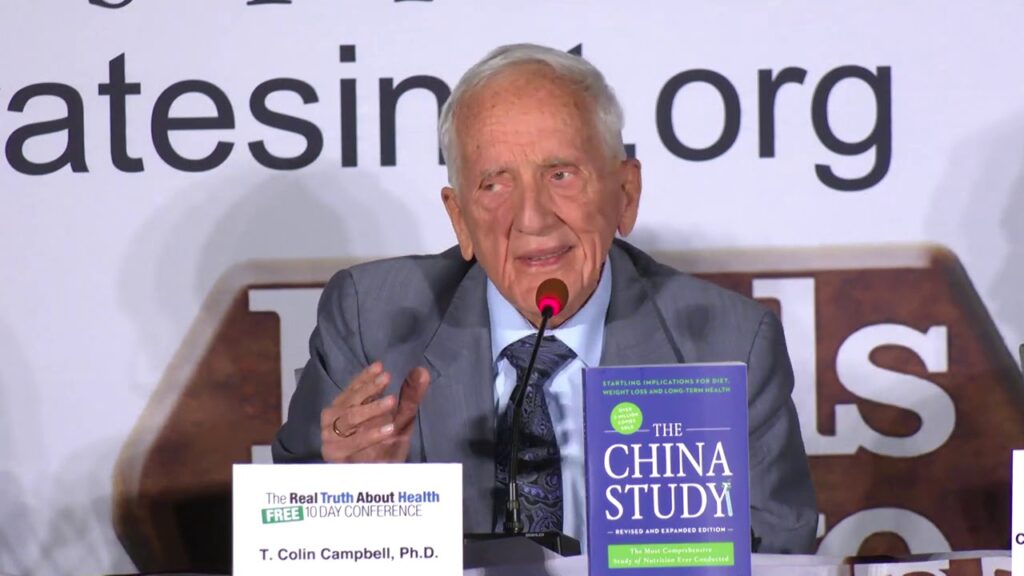
i can jump push the button if i can jump in here um i agree with what you just said dr katz um you know the whole question concerning environment cost of health care all being related to what we choose to eat i like your word confluence i think you just said i just had an opportunity i’ve been in this business as some of you know as i said today for 65 years since my graduate studies that’s counting my graduate studies yeah you and i are in the same boat ash is my senior by three months in any case i i uh some years ago i represent the field of nutrition as i explained and i have to tell you being in the field of nutrition is tough that concept of nutrition which i call i defines the expression of food you know sort of biochemical metabolic and so forth uh that concept of nutrition uh i find very troubling in the sense that it’s so confusing for so many people yet at the same time the power of nutrition to actually express itself in a way of creating health is really really impressive at least what i’ve seen emerge over those years and along the way i i just had the whole idea of of uh confusion struck me some years ago you know about 20 40 50 years ago i guess but it’s troubled me you know why why is it so difficult for the public to get to know it’s not just the public it’s we and the professors as well why is it so difficult to really get a handle on what nutrition really means i mean all we need to look at is all the claims that are going on here and there and stores and everything else the media to realize it’s a troubling concept and i would argue that until we can somehow convey what this means to the public so everybody gets to know it better in a simple way so they can actually use an effective way that’s what we need to do to sort of reach into some of these problems i’ve recently had an opportunity to think about writing a book again which i’ve done and the the this goes to that question concerning why are we so confused i find that to be a fascinating subject and so i in the book i’ve had the opportunity going back and look at the history back to the 1700s looking for the roots of why we think what we think look for the roots of why we are so troubled with this concept because nutrition as a sciences i don’t believe my medical colleagues here will disagree with me nutrition is not really effectively taught in medical schools i think it’s best point number one and uh i’ve often wondered why there there’s a discord between nutrition and let’s say clinical practice quite a discord the medical system doesn’t i think appreciate it very much partly because the professionals are not being taught the subject but in history i’ll leave it just as this in history i think i found something very exciting and that is the way we sort of started thinking about how food works through nutrition way back in the 1800s and on through that period and there were two prominent ideas at that time one was that it was a that the whole idea of food being related to disease was said to be a constitutional effect constitutional effect really an interesting word whole bodies involved all that sort of thing the alternative was the idea that is locally formed locally treated locally caused so the true concept the local theory of disease and the constitutional nature of disease once you get into exploring that particular concept then you can see the roots of why we got to where we got now because we tend to think of such small little particles or small little ideas about the whole the whole subject thank you so we tend to think instead of saying but think of the whole we’re always going for little bits and pieces to carve out some particular information for ourselves or maybe for some other purposes and i just find this concept of nutrition now i’m really sold on the idea it is a whole listing and i like the word w in front of that word it’s a holistic effect where it’s infinitely complex mechanistically of course but in reality once you realize how to to look at this system sense in a system sense that we can get fairly simple ideas out of it and that’s where i get very excited about the whole food plant-based diet but because it is after all at the end of the day it is our eating plants not using uh not not using livestock for example which is at the root of the environmental issues we all know um and uh cost of healthcare is just it starts expanding like it’s all starting with the idea of just really understanding what does that concept really mean it’s something more than this nutrient that nuclear this disease that mechanism it’s the whole thing working together in a very systematic way
i’ll follow up on press the red buttons when you’re done so that you’re not what’s that i’ll follow up on on dr campbell’s comments which i agree with everything that’s been said here um the confusion about nutrition and um the message that people get about nutrition i’m probably i think i am the only person here who came from a business background before i was involved in health care and there’s some value in that because you look at things through different lens like how how much traction are you gaining in the marketplace how are you convincing people how many can or people are you convincing and i think that we have a marketing problem we need to solve and a messaging problem that we need to work on and um i said last night that i think part of this is making sure that we focus on the things we have in common instead of the things that we differ on and i think the other thing is figuring out how to take a cohesive message that is attractive to the public making them want to jump on board now we have the best story in the world this is the best story in medicine what we have right here that you can without any expense at all in fact your grocery bill will go down if you do this you can go to the grocery store and make meals like you’ve always been doing nothing really changes much except the content of the food and you can prevent and reverse diseases like heart disease and diabetes and some cancers and that sort of thing if you could put this in a pill i gave a lecture in denmark last year that if i could put this information in a in the form of a pill i’d have the biggest richest drug company in the world you would all want to invest in it and so would everybody else but the problem is the messaging because people aren’t getting the message so i think what we have to do is is really work on how we’re conveying what we’re conveying to the public in a way that makes them want to come in and join us and i think that that involves targeting different populations of people with different messages this is what you do when you’re in business testing messaging working together actually for the purpose of not only furthering research but furthering how we message this to the public so that we gain traction faster dr fuhrman said last night that his estimate of the number of people who are actually eating an optimal diet is about two and a half percent of the population not just a plant-based diet but people who are really doing it right i’ll give you another statistic that might blow your mind even more and that is that right now the data show that 85 percent of people who’ve adopted a plant-based diet did it for ethical reasons not health reasons which tells us the message isn’t getting through so when you have the best product in the world think of it if it was a drug that we’re trying to market and you’re not selling it to the public our problem is not that the research isn’t right and the problem isn’t that what we’re doing doesn’t work and the problem isn’t that the results speak for themselves or the science is on our side our problem is messaging and i think that we should be having conferences among ourselves to not debate the science but to figure out how to sell this to the public and i think that’s maybe the most important thing we have to deal with