The Best Diet to Prevent Heart Disease, Diabetes, Strokes, Obesity, Chronic Kidney Disease and Other Major Diseases with Brenda Davis, R.D., Gabriel Cousens, M.D., Joel Fuhrman, M.D., Kim Williams M.D.
Connect with The Real Truth About Health
http://www.therealtruthabouthealth.com/
Passionate believers in whole food plant based diets, no chemicals, minimal pharmaceutical drugs, no GMO’s. Fighting to stop climate change and extinction.
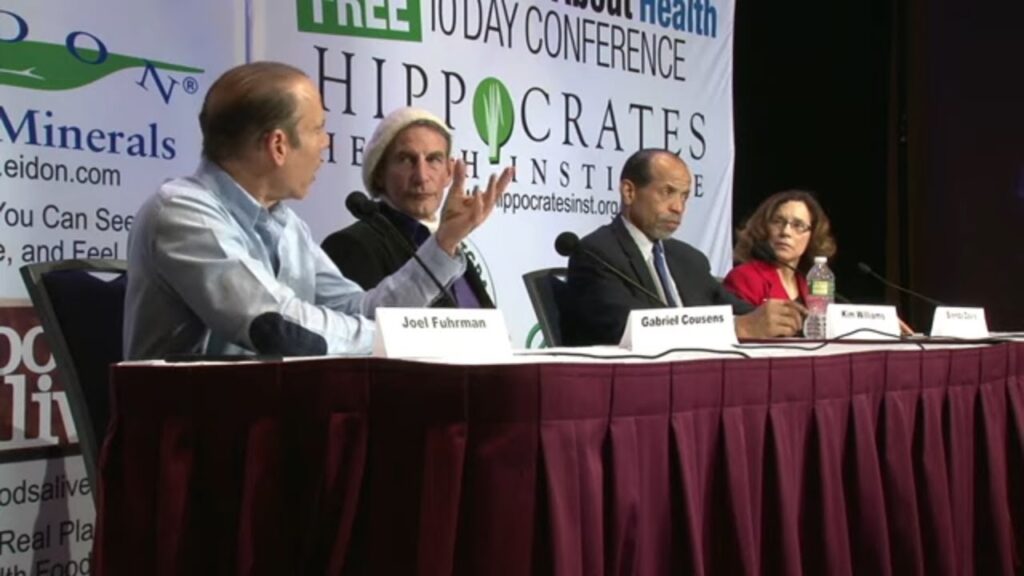
and I’d like to introduce you to the people on this panel I am NOT gonna read BIOS because I read that did that for their individual lecture so just tell everyone who everyone is
first person here is a brenda davis and brenda has spoken at our conference before her YouTube videos as some of the highest viewed videos that we have and she offers us um she’s fighting hard for us she reads all the data all the studies and puts it together so it’s easier for her so I’d like to welcome brenda davis
dr. kim williams the past president the american kardi College of Cardiology we feel very fortunate to have a cardiologist who also is an expert in nutrition reads all the studies and is willing to spend his time this is not the most profitable way for a cardiologist to spend their time to come to the real truth about health the conference this is purely for you there’s no incentive other than someone who’s truly on your side and wants you to be aware of this information so thank you dr. Williams
um dr. Gabriel Cousins um he has not only someone who reads the literature but he also has spent many many years at his Tree of Life rejuvenation Center in Arizona where people came to him he monitored them tested them and fed them a specific diet so when he talks about diabetes it’s not a theoretical thing it’s what happened year after year every single year for a very long period watching the real effects on people from eating his diet
so he is someone with very specific and valuable knowledge and we’re very grateful that he’s been willing to see us so dr. Gabriel Cousins and many of you are familiar with dr. joel Fuhrman he has spoken before he’s had the highest-rated video the highest viewed videos of any videos we’ve ever done um a lot of people relate I mean it seems like this should be thousands of doctors doing exactly what he’s doing saying the exact thing he’s saying so it he’s very unique but he shouldn’t be it seems like what his message should be the same thing that everyone says but we’re very fortunate to have someone that has been devoted to helping us get this information straight so dr. joel Fuhrman
okay so I’d like to ask a question that I know already there’s a difference of opinion and let’s start by saying that there’s been it’s been people in the kedo and the paleo community specifically I saw a Joe rogue Rogan podcast with dr. Joel Khan and Chris kraut chris Kresser Crowder presser and they were arguing whether saturated fat and cholesterol dietary saturated fat and cholesterol led to higher actual levels of dietary fat and cholesterol and whether that actually led to a higher rate of death and Chris kress who was saying um just because you eat cholesterol or saturated fat it doesn’t mean your blood cholesterol goes up and even if it did there were nine studies on longevity and there was no connection between cholesterol and death
so I asked this question last weekend to Alan Goldhamer Michael clapper Brian Anna Marie Clemente and who was on the panel Michael clapper Pam popper and very clearly they was saying that higher cholesterol and higher saturated fat was correlating negatively with people’s longevity it was bad for them and there was a correlation so that was my thought and so anyway so the paleo people were saying that high cholesterol is not a problem and the whole food plant-based people were saying yes it is a problem and the studies show that um when I spoke to dr. cousins or I heard dr. cousins lecture yesterday I thought you were saying that cholesterol of 160 to 260 was actually better for depression preventing depression preventing suicide
and I just want to clarify um where where everyone’s thoughts are on what is the appropriate level of cholesterol I was under the impression that a whole food plant-based diet is ideal and that leads to an under 150 level of cholesterol um if each of you could just Clara could try to help us clarify this so I can make sure we all understand this and if I asked it’s it’s the question funny please help me to make it straight
okay I’ll dive in so my contribution to this panel probably would be that we have an intense relationship between cardiovascular mortality and LDL cholesterol so we we’re all surprised at the European Society of Cardiology to find out that high levels of HDL cholesterol which we’ve been thinking for 40 years is protective turns out it actually is not protective that higher levels of HDL are associated with increased levels of heart attacks
so then you have the attempts that we’ve had over the decades to increase HDL cholesterol very famous studies Tour satrapy bana Petra pip but Dow cetra pip niacin all of them failed to decrease cardiac events so at this point we would say that the HDL story is probably we may need to learn some more about it but right now it’s not something that we can use okay therefore if you imagine what happens to someone with a low LDL and a high HDL maybe they’re not as good as they should be and that what that really means is that any study that was done with total cholesterol only without regard to what the LDL was or the triglycerides it’s just adding some information but with it’s not going to clarify anything it probably more heat than light and so you can come to a lot of different conclusions and in fact we’re trying to get a little cardiology out of measuring the non HDL cholesterol or staying staying with what the LDL cholesterol is because that’s where we really know that for everyone millimole which is about 39 on your american scale milligrams per deciliter Seletar for every reduction of one millimole you get about a 22% decrease in cardiovascular events
that’s data that comes from the trial astir I’ll try lists and it’s a massive amount of data collected over numerous years with a variety of circumstances some statins some diets some Mendelian randomized trials which requires a one-sentence explanation there you can actually do a clinical trial based on people’s genome if you have their data and everyone has so-called sniffs single new tonight nucleotide mutations that will actually change their cholesterol and you can follow that what happens to them naturally and that’s so-called and alien randomised trials they all show the same thing so I would say that whatever people say about total cholesterol I don’t know what that means anymore but I know what it means it with LDL cholesterol lower is better
well I’m going to start with a few things first of all this 5g things really important I just handed a Levin page document it’s 5g with the 20,000 satellites we’re talking about disrupting these human residence in the global electric circuit which all of life on the plan is attuned to this is not such a good thing right there is in the end of that all the organizations worldwide are there struggling against it and we actually do have a solution defeat them legally and lawfully which is use of UCC law which work with the smartphone’s so they have the document over there it’s on my website I I love you to read it because it’s got to be a worldwide effort to stop this from happening
okay so in that context cuz that’s really a big problem we can talk a little bit about this what you told me was really interesting actually really interesting so the diet I mentioned and then I’ve studied with clients over the years lots of clients but at least 120 in one series is that a 25 45 percent really 25 35 percent complex carbohydrates 25 to 45 percent only plant fat only 10 15 percent protein no the significance is which is really cool what you just said is that this diet the drop in LDLs if we measured was about 70 points it was huge so people went from you know one close to 150 or more really down into down to 69 yeah so that’s exciting that just changes my discussion about it okay did everybody get that so and I’m gonna tell you something else to think about because in answering this question it’s really more complex what you point it out it just can’t saying cholesterol and cholesterol it doesn’t work that way the body is homeostatic the liver makes 75% of that cholesterol if we take too much in they don’t make less we don’t think enough of make more where we’re going to is where the body wants to go to his homeostasis around 150 or something like that
now I compared my study with dr. esselstyn’s and one other study and those two states were 10% fat mine was as they said you know 25 45% all three diets lowered the cholesterol all three diets relatively speaking Lord that LDL but they all lower the cholesterol so now we’re saying what happened 10 percent did it 25 to 45 percent in it what’s going on here and I looked at it because it’s like you got to make sense of it and when I saw is what did they have in common no junk food okay no GMOs no white mark oh wow that’s shocking ha ha no white flour no white sugar okay you no good and it was all organic
so what I saw and trying to make sense of it like okay you got a 10% now you got 25 to 45 percent according to Constitution is the real factor was people are eating in a healthy way which was bringing the whole body into homeostasis and lowering our healthy Asian went way Lord actually there’s there’s more to it but we Lord but they all went down that’s my point cholesterol total essence all went down I know that doesn’t matter anymore but in the moment it mattered okay so it’s kind of exciting to kind of move away from into a more holistic viewpoint is does it matter what the cholesterol okay now I’m getting back to the kind of the bigger question as you see we could talk all day on this right I’m tempted to do that but I won’t okay
so what what I see is of course according to Constitution we’re going to need different levels but eating healthily is the most important thing there are lots of studies out there that show that high clustered for me a problem there’s even more showing it doesn’t matter you know if you’re between 160 and 260 now what you heard from me Steve wasn’t that the real problem is low cholesterol as a psychiatrist it’s like it’s a nightmare to think hey we have something if you cluster goes below 150 that’s going to give you 4 times higher rate of depression and if you eat the lowest level six times higher rate of suicide plus more accidents more violence more Parkinson and a greater cognitive decline
now that concerns me that’s very hard data that we worry about versus hey as you pointed out the cholesteral thing laughter move this way the cholesterol thing isn’t quite so clear now unless we look at LDL so that just changes everything in a way so so the real message is is kind of eating healthily as a way of bringing your all levels of your claustral to normal homeostatic levels that’s a kind of a kind of a way to think about it but as I say we got a huge drop it is that was a 46% drop in three weeks of the LDLs so if that’s the problem we have a solution with this kind of diet that’s 25 to 45 percent you know plant saturated fat so those are some thoughts to consider in this more complicated situation I hope that answers the question
I could just add one or two things and that is number one we know that as diets are higher in animal products both cancer rates and heart attack rates increase in proportion of atom products of total such the Cavalry’s go up and the mechanisms via which animal products increase heart attack and cancer death is an always via increasing LDL cholesterol there’s other mechanisms which die at higher animal products increased causes of death so just looking at the cholesterol in a vacuum doesn’t tell us all the answer
and and furthermore we also see the diets higher in nuts and seeds result in lower rates of cardiovascular death and lower rates of total mortality in more than eight different significant meta-analysis encompassing hundreds of thousands of lives and tens of thousands of deaths we always give studies more credence when they look at hard endpoints like death compared to soft endpoints like cholesterol levels so we know the diet that’s maximally protective and we’re all recommending similar diets so to speak and I’m also suggesting that there’s no evidence that focusing on the fat content and trying to arbitrarily get your fat content below a certain number is going to benefit your heart or your cholesterol it’s the overall nutritional quality of the whole diet so we’re in agreement on that
there’s there’s also a concern though which I did mention that on vegan diets certain genetic types who have lower rates of conversion enzymes don’t don’t make dat ala into DHA as efficiently in other type as other genetic types do and we did a study on 166 vegans I shouldn’t say we did a study I was not involved with that study as president the nutritional research foundation our foundation funded the study but I wasn’t part of the study different scientists did the study and when they tracked the DHA levels of 166 vegans who were not supplementing with DHA a certain percent of those approximately 25 percent had a significant deficiency of DHA and it didn’t correlate with the type of fat they were eating if they had flax seeds if they had walnuts if they weren’t eating oils it didn’t it showed that the conversion enzyme genetically in was more correlated with the amount of conversion from ala into DHA
and we and those people would be more prone to depression and shrinkage of the brain so maybe a certain in certain types of individuals may be more susceptible depression when they’re on his fat restricted diet that’s not supplemented with DHA and so we’re trying to make sure a vegan diet is safe for all people and being conservative and careful in making sure that people who are prone to not producing DHA don’t get into trouble on a vegan diet because it’s not about heart disease so much it’s about they’re not getting depressed and not develop dementia later in life due to severe DHA deficiencies
so that may be the reason you’re seeing some people with low DHA increasing their risks of depression because those may be the people that are more that would have done better with more fish or if they were eating more the cholesterol might have been higher and the luck the lower cholesterol in combination with a low level of DHA may be on a vegan diet may be increasing this with depression just something we should consider because we don’t have all the answers and when we have to make judgments we have to do it conservatively and make sure we’re not hurting people you know how they say first do no harm you have to be more careful in my experience and I think Brenda’s too is that a lot at the vegan community very often speaks as if we know they know everything and they and that they and there they proclaim something that nobody has to worry about this and you get plenty of DHI in a vegan diet and you know that you know and there’s like they make blanket statements like all people and we just have to be a little more careful here if I could just say that’s so right on everything perfect I have psychiatrist it’s like wow this is a problem
the DHA EPA if it’s low you’re going to have a much higher chance of depression my study suggests maybe 90% of the total u.s. population is deficient in DHA and EPA and I treat for example post pregnancy depression those are all women to get deficient in DHA because the baby needs the DHA and all you need to do is give DHA but and it goes away the the key here that I’ve gotten to a point on because so many people are deficient I’m really just giving DHA EPA as a supplement I use a plant-based one because of just what we say this is like the b12 up some people are gonna be low some people aren’t but it it’s safer with the safe thing like DHA EPA – just give that to everybody and because what he’s saying it’s really really important
and and I would add that it’s important for people to understand when we talk about DHA and EPA people often automatically think well that means I need to eat fish and it’s true that fish is the major source of EPA and DHA for a large part of the population but it’s important to understand that fish don’t actually make DHA and EPA it’s made by tiny plants in the ocean called microalgae and so what we can do is instead of raping the oceans and extracting the oils from fish we can actually culture the plant and extract the EPA and DHA from the plants and provided as dr. cousin said and and and dr. Fuhrman as in a supplement form that that’s actually vegan and comes from plants and so it it’s just important to know that that you don’t absolutely have to have fish
and then the other thing this is not really my area of expertise but one of the things that I wonder about the depression that you are seeing associated with low cholesterol levels the thing that comes to my mind right away is what about all of the populations if some of these longest lived healthiest people in the world that that have very low cholesterol levels and yet very low depression rates so is something going on with the individuals you’re seeing where there’s a metabolic abnormality that it’s combined with the DHA EPA thing they’re not as efficient at conversion because their enzymes have been depressed because of bad diets over time so there may be some other factors because we do have populations where average cholesterol have been around a hundred or 120 and they’ve done very well live long lives and still super productive when they’re 90 or 100 years a days just a question because I’m singing mostly European and American clients these populations you’re talking about that description well there may be a genetic factor here that yes and so what many of them are Asian populations many of them are South American populations and then if we think about the blue zone populations which includes some Europeans but also the Okinawans and such so it’s just I think it’s there there’s still a lot of there are still a lot of unanswered questions
but and then the other thing that I want to bring up is just the whole saturated fact has been vindicated because a couple of resources that I think are worth you being aware of and one is the 2017 presidential report on fatty acids and heart disease and I’m sure yeah the American Heart Association presidential report Alice Lichtenstein and a very very very well qualified group examined the literature and it’s a very comprehensive very helpful report and it looks at everything so basically they I mean the evidence is overwhelming that saturated fat increases LDL cholesterol and LDL cholesterol increases risk of heart disease
now if you replace one of the mistakes that was made and there were there were a couple of studies that came out that that indicated saturated fat was not an issue but what was actually found was that if you replace saturated fat with refined carbohydrate you’re at no advantage at all if you replace saturated fat with polyunsaturated fat you were disk you read you see risk about 25% if you replace it with monounsaturated fat you reduce your risk about 15% if you replace it with complex like I think they looked specifically at whole grains you reduce your risk by 9% so that’s replacing saturated fat
then the other thing to to be aware of is the this study called the Chowdhury trial from 2014 which showed that saturated fat does not increase risk of heart disease one thing to know about that study is it was really riddled with errors and omissions and one of the things that was done in several of the studies that that that were part of that meta-analysis is they actually controlled for cholesterol so they controlled for the factor that causes you know that that can cause heart attacks which is just you can’t do that
another thing is is that and I think this may be the most important thing is 19 out of the 20 studies that were included we’re comparing within populations people eating 11% saturated fat versus those eating 13% and or in you know in Finland I think it was around 14% and they compared within populations but they didn’t compare between the populations if you looked at the people with the highest rates of heart disease in Finland they had over four times it was 4.4 times higher rates of heart disease than people who were eating the lowest set rate of fat in Japan well there were no differences within the five or six percent of saturated fat in the Japanese but there sure were between and the only group that they actually looked at people consuming hugely different amounts of saturated fat was the epic Oxford trial which was included in that meta-analysis and in epic Oxford the people eating the least saturated fat had almost three times lower risk of heart disease than the people consuming the highest amounts of saturated fat
and I actually contacted one of the authors of that study to ask her what’s up with this when it first came out you know what she told me she said when they first did the analysis if their study actually showed a nineteen percent increased risk with higher saturated fat then they read they they reworked the analysis because they were rejected it was nothing new so the study was rejected they reworked the analysis took out some of their the studies they were using and and then got this this new finding that saturated fat didn’t matter and she said the one thing I would tell you is this study in no way shape or form changes anything about what we should be saying about saturated fat saturated fat increases LDL we know that from fifty years of clinical research we still need to be telling people to restrict saturated fat
I think Brenda’s bringing up a real important point they’ve even said now about fifty percent of the studies like in the New England Journal are altered or bogus that really makes life hard okay because like what are you going to trust but it’s like an accumulation of studies you have to look at anybody know who in so Keyes’s okay so in 1953 Ancel Keys study 22 different countries about the theme of cholesterol heart disease six of those countries showed that people had a higher class who had more heart disease 16 showed the other he only printed the six and made his scene that brought this whole cholesterol thing on okay if he had combined all 22 together they would have shown it didn’t really make a difference so we life gets higher when you’re trying to be a scientist trying to figure out all these things when the people doing the research are altering the research to kind of make their point so it isn’t easy at all anymore so that’s kind of a complaint that’s coming out that the scientists are making they kind of like trust this so thanks for bringing that up not not an easy topic when we see a lot of retractions these days
I would say that fabricating or altering data is probably less common than starting off with a particular point of view or bias finding a study that supports that or doing one and then going ahead and publishing it it’s so called positive publication bias that is if I think something is really important and I study it and I don’t find that that’s true I’d say oh well go on to the next project that negative finding never gets published so we do have flaws in the way that we do things we’re trying to make it better they having clinical trial gov if we’re gonna do a big clinical trial I should submit it everyone can look at it and then years later when I haven’t published it somebody could call on the carpet and say hey what happened to that study well it was negative turns out that it wasn’t true and so we are trying to make it better we’re trying to make sure that there’s good disclosure so that the relationships with industry and financial incentives to sort of come to a specific conclusion are at least transparent and hopefully not going to continue to influence the way science is done
I do want to make one point that hasn’t come out yet because we talked about so many things and it goes a bit back to what dr. Furman was saying it’s more complex than LDL even when saturated fat we pointed at those two things for a very long time for heart disease but now we know in the last five years we have so many publications of other things that correlate with the development of diabetes stroke heart attack death that we really ought to be paying attention to and so I’m just gonna those of you who are listening tomorrow sorry for the preview but I would say the top two and I don’t have a randomized trial to tell you which one is more important so I’ll list them both as a tie for number one would be heme iron which you get from eating animals blood and the other one would be TMAO trimethylamine n-oxide this emphasize by the Cleveland Clinic hopefully that will be a serum test that everyone can get those two are very toxic in terms of development of plaque and development of ruptures and unstable plaques so heart attack stroke death heart failure correlate with both of those
there are also other ones we’ve known about c-reactive protein as a marker of inflammation interleukin 1 as a marker of inflammation as well igf-1 when you’re eating animal protein you’re getting a hormone that actually increases diabetes death as well as as strokes and there the other two that may turn out to be very large we’ve known about having eating phosphorus in large quantities hurting kidney function which then produces cardiovascular disease and the last one I’ll mention is soup are something that studied a lot of rush at Emory and in Boston soup are as it stands for a soluble euro kinase plants mitigant activator receptor that actually is another test that can be done and you can find that if you do a healthy lifestyle you can drop that level
so why go through all those markers and potential risk factors because people don’t eat saturated fat they don’t need cholesterol they eat food and when they’re eating food they’re getting a variety of things and and we may be looking at LDL when it’s really been the heme iron the entire time and so and you know I’m not gonna you know volunteer to eat the blood of the iron you know to try to figure out is it cholesterol crystals eating those would be worse and so I think we should stick with the theme that there’s a lot that we don’t know that medical knowledge doubles every two years I’m sure that’s going to continue to happen and we will hopefully a couple years from now have this conference and say haha we didn’t know this back then but now we know the answers it’s probably all the above though
I just want to say I know this is not that important but I just feel Ancel Keys is been attacked unfairly and has been attacked unfairly and there’s twisting in the interpretation by the paleo and meat based community to make it look like he twisted his studies and did things wrong and I think that’s unfair unjustified and incorrect the reason he left out some countries whose the data wasn’t sufficient to include them and it is with lotsa we and he was not a researcher that was trying to twist information and produce bad research so I even though he’s dead I just feel we don’t we shouldn’t be smearing his name I’m just gotta stick that in there sorry
just to clarify uh if someone is eating a whole food plant-based diet and their cholesterol is you know 125 dr. cousins are you recommending that they do something to raise that cholesterol so they’re not in that under 160 zone where you’re saying those more depression in the studies you found yes you know particularly if I’m seeing clinical symptoms I mean people come in just like Joe saying or at 125 or 130 and in the bigger picture particularly if they have depression or they have some kind of other issues going on mentally I won’t want to get them up to at least 150 coconut oil works most of the time besides it’s good for Alzheimer’s but it’s really good for getting it up there it’s about the on a vegan diet that’s about what we have but there’s no randomized trial evidence for that yet so it’s a hypothesis more of hypothesis people have used it and I’ve just used it clinically with pretty consistent results but at a clinical level
Joe Brenda if my cholesterol is 125 do you recommend I take coconut oil No absolutely not I know not to say that you couldn’t eat some coconut and enjoy I generally prefer for people to be getting their fat from Whole Foods to be getting their carbohydrates from Whole Foods so I would say if you’re eating a super low fat diet that you could afford to eat some nuts and seeds and avocados and coconut even but I wouldn’t say pour coconut oil over your food I don’t think there’s any really strong evidence and as a matter of fact the studies I’ve seen really haven’t haven’t even it was addressed in the presidential report the whole coconut oil thing I think it was addressed very very well
so I mean my cholesterol has always been around the 130 I have never been depressed in my life and and so I think there are a lot of really healthy people with cholesterol sand in that range so I think we need to take it on an individual basis if a person’s showing signs of depression then you need to see what needs to be done and I would try super healthy diet I would try adding the EPA for sure combination EPA DHA and all of those things first but that would be my approach and we have also have different approaches and you do what you do we need to do to help the people and I think in defensive dr. cousins he’s not recommending people take coconut oil to raise their cholesterol he’s just saying his patients that were depressed he’s doing what he needs to do to help get them not depress and that seems to be helpful for them he’s not recommending all people take coconut oil uzl cholesterol as well he’s just trying to help his people who are depressed and I don’t take coconut oil
just just to clarify dr. cousins if my cholesterol is 125 are you yes or no recommending to take coconut oil do you clarify it again if you have symptoms like depression and other mental symptoms as I said then that would be a definite consideration but I personally don’t recommend that for everybody and I personally do not take coconut oil just to be clear about it okay it’s it’s a treatment for a series of symptoms that could make a difference
okay so Nick next question wouldn’t it be simpler to instead of having a 10-day conference instead of giving individual lectures to just tell everyone in five seconds everyone should eat beans instead of animal products because everyone already is aware that vegetables are healthy isn’t that the punchline of the entire thing is beans that’s what you replace all animal products with that’s how you get full isn’t because everyone knows has always known that green vegetables should be part of their diet but you I don’t get full on just salads I am not satisfied with lettuce I’m not satisfied if I add kale I feel like I’m missing something and maybe it’s just me but to me the answer is always beans that’s what fills you up is that what you’re saying or you have a different explanation of that
why are you leaving out nuts in that and why you’re not eating fruit but certainly beans I think are accept excellent food and should be a major portion of all our diets and we’re all agreeing on that for sure but it doesn’t it be only beans there are other good foods to include in our diet as well King wine nuts and seeds you know other other foods we can eat that are healthy too I mean if you look at the data about nuts and seeds if you’re just eating nuts and seeds occasionally you’ll drop your motility rate by seven percent you were having it once a week and drop it by nine percent if we’re having at two to four times a week and drop it by 13% if you’re having nuts and seeds which I do every day you’re gonna drop your mortality rate by 20% that’s pretty simple that’s good
okay and aside from beans when it comes to grains is there a hierarchy is quinoa millet amaranth teff and buckwheat over here and then the glutinous grains wheat barley oats rye are those a lesser less desirable grain because they have gluten is that is that an accurate way to think about whole grains well in I don’t think so I think that if you look at sort of grains we have grains and then we have pseudo grains which aren’t true true grains
I think the problem with gluten containing grains may be the glyphosate that’s sprayed on them if we you know if we if we look at long-lived healthy populations and people who are using traditional foods I just ordered some black barley which is an organic barley that’s a heritage seed I think that these foods really can be part of a healthy diet they are say da ting they aren’t as nutrient dense as vegetables and some of the other foods but I still think they can they have a reasonable role to play and so obviously if you’re sensitive to gluten then you need to select pseudo grains but if n even some grains some true grains don’t have gluten as well the the grains that have gluten of course are wheat barley and rye and any combinations of those like triticale or camel toe or spelt but I personally consume those grains and often I sprout them and they go into my breakfast bowl and I love them sprouted and they’re filling but sometimes I cook them as well but the one thing that I do with grains is I keep them intact so they provide everything wonderful that was intended and there’s you know everything of value is still there and nothing has been added that’s damaging as they were picked from the plant and I think those foods can have wonderful value
I am I agree with everything Brenda said and I just have to add um and you could tell me if you agree is that lately I’ve been telling my patients not to eat brown rice anymore not to eat white rice was to glycemic and not eat brown rice because it’s too contaminated with arsenic pituitaur cotton soils that have been treated with arsenic fertilizers or certain pesticides against the boy weevil and and then they use chicken manure to fuel the rice patties which is the chickens material or arsenic and the outer surface of brown rice sucks of arsenic more effectively than other foods but there are some Rice’s that are grown by natural Indian populations that are raised on natural marches and a knockdown with the with the sticks into the canoes that aren’t raised commercially and those may not have arsenic in them so I’ve been more cautious in the last two years in my own diet about trying to not eat brown rice and substituting quinoa and other intact grains like you are because of that arsenic concern
so my my take on the arsenic has been I’m really concerned for people that are eating rice on a daily basis as a lot of Asian populations do the the amounts of arsenic and rice do vary I believe the California rice is a lot less contaminated than the rice from the deep south where they do have the cotton fields and so what I normally tell people is it’s not that you absolutely have to eliminate it but it should be just a very occasional if you’re out somewhere and they’re serving at rather than a kind of a staple in your diet for sure and I eat it myself very rarely now I tend to do other greens instead it definitely is one of our more significant sources of arsenic as is hijiki seaweed and as his chicken so people there you know it was interesting I just have to add this because a lot of people are big on bone broth right now so I did a search in PubMed to see if I could find any studies that substantiated all the claims about bone broth and they are just amazing claims about bone broth and I found 10 studies that came up about bone broth and health only one study concerned human health and the study was a study on chicken bone broth that showed that the levels of arsenic in organic chicken broth were so high that they exceeded the maximum levels recommended and that practitioners physicians and health care practitioners needed to know that this was a concern they needed to warn their patients against zooming organic chicken broth or any sort of chicken broth for that matter so just something to be aware of
so just to clarify when it comes to beans are there any beans you’re not recommending an aside from brown rice are there any whole intact grains organic that you’re not recommending or are you saying any whole-grain except round rice and any bean is okay or there any that you’re saying you should avoid that’s correct you have it correct they’re all okay the sensitivity okay and the thing with beans would be just that some beans are safely sprouted and some and can be eaten raw like lentils and and some of the really small you know small lentils mainly Peas can be sprouted safely but the larger beans tend to be high in some lectins that are you really can’t be consuming them raw so they must be well cooked so that’s the one caveat with with beans sorry I’m not supposed to look at Steve I’m supposed to look at the audience
and what about seeds and nuts Oh seeds we have sesame sunflower Chia flax pumpkin him organic raw are we saying they’re all good all the time and when it comes to nuts are there certain raw organic nuts that was saying you can have too many how should we you know with celery there’s no limit it is Matt much as you can when it comes to seeds and nuts always is moderation better at what what’s how much do you recommend is it okay to just eat as we want
why don’t I tackle that first is that I think that we’re what we’re very clear to that people can ovary calories in general and overeating calories can put more fat on your body and more fat on the body is not health favorable so it’s not the question isn’t about really eating more seeds and nuts it’s whether you’re overeating calories in general and sometimes you have to watch your c2 nut intake so your level of calories is not over the amount you should be eating each day so but in any case given the framework that were agreeing that my either moderate caloric restriction or bodyweight plays a role in health we shouldn’t be over consuming any foods that leads to obesity or overweight or an overweight condition
that said a moderate that eating nuts with meals and a moderate amount as part of a whole healthy diet and whether your diet whether your diet has a little more fat or a little less fat or a little more nuts or a little less nuts as long as the calorie count is favorable shouldn’t affect your health and may even be an important factor to improve your health to have a little more nuts and seeds as long as the calories available so it’s not something you have to really moderately restrict it’s that you your overall diet because when you’re putting the nuts in as a substitute nutrient in other words I’m putting a little more not something unless potato even less rice wheat less of something else so I’m still keeping my calories relatively flavorable and there’s no problem eating those nuts there’s a lot and nuts have a bad rap for no legitimate reason but excess calories deserve the bad rap
I couldn’t agree more with with Joe this said and of course I just ran down about eating nuts regularly he’s gonna give you everyday is going to give you a 20% decrease in your mortality rate that’s a pretty good thing according to your constitution some people can have more nuts and seeds and actually do better and some people can do less however I’m gonna use the word mTOR pathway and it basically speaks to between 35 and 70 grams of protein gives you a command I cancer and longevity so you never want to overdo it 70 grams isn’t a whole lot for people who need more protein than 35 for people who don’t mean I’m not kind of more a low-protein person because my Constitution does better with that so I think there’s a range and if we keep in that range we’re gonna get support of optimum health longevity in cancer prevention that’s the only thing I would add to it
some people have liver gall bladder troubles okay fine you don’t need a lot of nuts and seeds because a lot of they digestive problems but aside from that kind of thing you have to find the right range according to your constitution but it’s an essential part from my point of view of a healthy diet
and and I would add a couple of things first is that I think doc-doctor feminist has mentioned this in in his lectures as well but but certainly nuts and seeds have not in particular have about six to eight hundred calories a cup and so it is possible to overeat them and but we probably absorb about 25 percent less calories from nuts and seeds than what you see on on any chart so you lose some in your stool the other thing I would say about nuts and seeds is that a lot of people the nuts and seeds they consume are not in an ideal form so often they’re coated in chocolate or they’re covered in salt or they’re covered in sugar
and so when we talk about nuts and seeds we’re really the best you can do with nuts for example would be to soak them sprout them dehydrate them and rather than roasting them which can produce some acrylamide and products of oxidation they still list most of the studies on nuts and showing beneficial effects don’t distinguish they are using roasted nuts they’re still valuable but to make them the most valuable you want to reduce anti-nutrients release stored forms of nutrients and not add to the acrylamide content and so forth so that’s one thing
and then the second thing I’d want to say is with seeds you want to make sure no seeds are actually more nutrient dense than nuts so they have more protein they have more trace minerals more iron more zinc generally than what you would get from a similar amount of nuts so they’re about probably 12 to 15% of calories from protein whereas nuts are more in the 5 to 8 percent range so the other thing that you want to think about is when you’re doing your mix of nuts and seeds you want to make sure that some of those are rich in omega-3 fatty acids so seeds a lot of seeds are rich in omega 6’s and as vegetarians we’re relying on conversion at least some what we want to make sure we have a source of omega-3 if we’re not we’re not obviously eating fish so including some chia hemp flax some walnuts is a good idea in that mix
very good and you can you imagine that has made it a really important point you just made that nobody considers that there’s nuts studies showing that how beneficial they are at extending lifespan are done unroasted nuts and they still show incredible benefits you know what I mean imagine if they really did him on the healthy or nuts it’s so it just gives more support to what we what we’re saying yeah and in supporting what we’re saying to we are always so good nuts and seeds it gives up the anti hemagglutinin and anti chips and factors which black your digestion there so we always soak them the way that water and that makes a lot more digestible as well
there have been times when I’ve taken a big bowl of chickpeas and wild rice and eaten the whole bowl and gone and done a blood glucose or test and my blood sugar was raised and I was a little confused cuz I’m thinking well I’m eating whole grains and beans this is nature but my blood sugar clearly is going up there’s no question that you know I’m no I just ate so that makes it go up but it went up a lot more than when I have a big salad so that made me think am I supposed to be you know I mean I know that white sugar is bad and refined pastas bad but now I’m eating beans and grains and still getting a rise in my blood sugar and I was a little concerned that maybe I’m not supposed to just be eating a giant bowl of cooked beans and grains we’re a giant bowl of salad seems harmless can I get myself into blood sugar problems or type 2 pre to pre-diabetes or type 2 diabetes by just eating big things of beans and grains with you know maybe yeah but maybe without the salad can you get in trouble blood sugar wise with things of beans and grains
well I can take it I mean absolutely and one of the things when we started doing our research in the Marshall Islands one of the biggest shocks I got was we we started you know with bowls of barley bowls of brown rice and allowing people to take their own and their blood Sugar’s were through the roof because they took two or three cups and so I think I think Steve that what you really want to do is have massive amounts of greens and the grains and beans are what you sprinkle on top and so because because of course the carbohydrate content of beans and grains is far higher than it is especially grains but because of course beans have a very low glycemic index as do greens so if you make it mostly greens and beans and then you throw on a measured amount of the the starches whether it’s sweet potato or or whether it’s you know barley or whatever it is that needs to be measured according to your energy requirements so some people need a lot of calories some people especially people with type 2 diabetes don’t and many times they are quite carbohydrate sensitive and when you do the non starchy vegetables and beans as the things that really fill you up and fill your bowl and put more measured amounts of the more concentrated carbohydrates I’ve found it to be much more effective and so I think that’s a reasonable
Thank You Brenda and Brenda and I are it’s just amazing that were like I guess sisters or brothers or whatever because whatever she says is right but nevertheless what I’m adding to that too is that Americans are used to overeating all the time we’ve been indoctrinated since birth to eat large amounts of food and overeat and and it’s been like so into our social network that bigger babies getting puffy or cheeks the cute fatness shoving food into your baby’s mouth and people who are [ __ ] waited to overeating and when they go on to a healthy diet but they might be overeat on these things and you can overeat on so I think that we’re saying that weight it when you eat more greens more salads more green vegetables mushrooms and onions things that are lower Glaceon for lower calories it fills you up to a degree and makes it easier to control your appstats your appetites you’re not overeating on more calorically dense food
so we don’t want to overeat our nuts we don’t want to overeat and be on grain so because we want to keep our calories regulated so we’re not overweight right and I made the additional point is we even want to understood our caloric needs by a little bit and this helps us do that all these techniques you’re learning up here help us understood our calories a little bit to slower metabolism down a little bit which makes us age slower and we’ve already know that if we put up the the thyroid because we slower metabolic rate our body temperature goes down our respiratory quotient amount of calories we lose a good rest with breathing goes down and our thyroid slows a little bit and having a little lower metabolism so we can eat less and not get too thin is a way we can age slower and even protect ourselves more and if I’m putting out that range of 3 t4 the lowest range to the highest range of the normal range we know that in the lower half of the normal range we have half the rates of heart attacks compared to in the upper part of the normal range so it’s beneficial to moderately slow our metabolic rate which means you moderately eat a little less calories you don’t over consume calories and stuff yourself to being full at every meal what you’re talking about Steve still could overeat on certain foods even if they’re healthy so I think all three points have been made I couldn’t agree more we’re okay
the best exercise to do after eating is pushing away from the table before your for a little bit of humor about it but in terms of the diabetic treatment program have we really don’t include grains or beans until people are substantially healed minimally with a blood sugar of less than 100 for that reason and then you can add them and then if you’re more sensitive than you add less but grains are a lot more carbohydrate intensive than beans are so I just put that in perspective was his first beans lagoon’s before we start talking about grains and you can see if your system can handle it or not so but in terms of treatment be goo it’s Chinese for no grains okay for you know for treatment let’s not confuse treatment with maintenance two separate things
Gabriel you and Bryant dr. Bryant and you and Brian Clements have both said that somehow you’ve not somehow you’ve come to the conclusion that fruit is been hybridized to be sweeter than it was in nature it’s picked unripe and you’re both saying that when people have health challenges that even though it’s fruit it still has sugar in it and should be avoided if someone’s fighting has a health challenge and if someone’s well it still is something that you’re saying should be very moderate most of the other whole food plant-based people have a more open approach to fruit and are saying it’s definitely part of the program how should everyone be thinking about fruit in other words I guess I’ll say in what clearly Brian Clement is really is saying that the fructose in fruit is sugar and that it’s not different because it’s in fruit and it’s kind of an unpopular opinion it’s not repeated by many other people but he has said over and over then when they’ve done live blood testing over the years that the sugar within fruit feeds yeast mold fungus and cancers and I’ve asked him it 150 times because I want to eat fruit and he’s been very adamant and I think you’ve been sort of supportive of it also do you want to clarify on fruit what you thoughts are
yes let’s start with again as a medical treatment first diabetes I don’t suggest people have any fruit because of the food toast I’ll explain that cancer the same thing fructose feeds let’s say this way cancer cells love glucose 10 times more than they in the normal cells and cancer cells low fructose 10 times more than they love glucose that’s one problem another problem because I do a lot of work with people with cognitive decline is that fructose activates the glia cells of the brain over activates is really a key word in creats and that’s ten times more than normal okay then glucose and when the glia cells of the brain get activated it creates a inflammation the inflammation is a driving force behind cognitive decline in Alzheimer’s disease so kind of talking on that level
now in terms of okay your diabetes is done your your blood sugar is you know perfect 70 to 85 everything’s good then fight let’s say you can have some fruit no in my studies it’s about at least eight studies out there there’s only three fruits that don’t seem to raise your blood sugar no fructose doesn’t raise your blood sugar but directly but in in its bilberries blueberries in green apples so I I say fine you want some fruit get started blueberries are pretty good a really good way to start so that’s another consideration
the third consideration is some people are saying more than 15 or F say twenty fifteen to twenty five grams of fruit was like two bananas or something like that is pretty safe meaning it’s not having a negative impact when we start the average American runs about 81 grams of fructose fructose an excess I just we mentioned two things well three things accelerates diabetes indirectly because it disrupts leptin insulin signaling and a few other things which really are problem for diabetes fructose inflames the brain fluke doses associate with increased heart excess kudos heart disease gout kidney stones cognitive decline and Alzheimer’s so excess fructose is what we’re looking at so a little bit of fruit doesn’t seem to be a problem and so I’m not quite as strong about it as Bryant but he is treating a lot of cancer people and fructose really feeds cancer so I think we’re coming from with just clinically hey that’s really emergency if you have cancer you need to do everything you can not to aggravate the cancer cells I mean in attempt them feed them so but once we’re clear that at the diabetes and cancer then a little bit of food is I think fine as far as I can become not a problem so it’s time to the cardiologist
I appeared time to confess that I carry them around with me wherever I go but those of you again I’m going to preview my talk for tomorrow sugar whether it’s a sucrose fructose galactose that really does produce an insulin insulin response and to the extent that that does that it really does harm the cardiovascular system makes your LDL cholesterol more dangerous by gliding it okay decreases your HDL cholesterol increasing your triglyceride is triglyceride well supposed to be fat well you give sugar to your liver and you will make fat and so that insulin response is associated with higher blood pressures with more blood vessel damage more vascular advance heart attack stroke and death
and so I usually with more more on my nuclear circles make the analogy that you know everybody knows what a nuclear reactor is like and you’ve got all this uranium plutonium and it’s gonna go nuclear so to speak if you don’t have control rods which are usually cadmium you need something in there to stop that or reaction from happening well we actually have that in fruit it’s called fiber okay and so I would encourage anyone who’s concerned about it I can’t tell you exactly but going to a lot of vegan conferences I’ve learned that about a four to one ratio of sugar to fiber is what makes sure that you do not get that horrific insulin response and so that four to one ratio you know if you look at something like snack Wells it’s 22 to one that’s really not what we want in terms of sugar and there are some fruits that are extremely high in sugar and very low in fiber notably grapes and so once I read that you have grapes and raisins I put it on a salad or something like that I wouldn’t eat them by themselves but there are some fruits that are extremely high in fiber such as you know some of them have been mentioned blueberries but blackberries and raspberries are much more high in fiber and less sugar and therefore you’re not going to get that dreaded insulin response that’s really good
can I go on that because I’m the same boat as you I actually treat a lot of diabetics and even cancer patients the same thing but in any case I just want to make two things clear what you said is that we generally recommend that people eat a low glycemic diet and for example white potatoes or more glycemic than fruit would be even but we find that one piece of fruit with a low glycemic meal with a healthy meal with vegetables and beans and mushrooms and you know and onions and tomato that one piece of fruit does not raise the insulin response in an otherwise healthy meal and that in treating my diabetics I have our one right in my clinic right now who was a type one and a half I think who came in with a glucose of fava 500 but we’re feeding her with some fruit but we’re giving her like you said we’re giving her wild blueberries not regular blueberries so the wild blueberries are low glycemic we’re giving her kumquats that we grow her you know kumquats and passionfruit and guava and that’s it we’re just giving her lower sugar fruits and we’re keeping our sugars really well and right now you know she’s down to like two units of insulin bleach meal on a type-1 you know I mean so we’re almost getting her with favourable sugars and whatnot preparing the highs so we measured it we measured about the insulin response the glucose response after the meal and we’re able to peep and there are some fruits that are that in nature or not are not that sweet then have attentions shown to have excellent defender protective effects against dementia and against cancer for their bio flavonoid in flavonoid intake and they’re high in fiber and they’re not that highly glycemic either so it depends on the person but for most healthy people there’s nothing wrong with eating almost any type of fruit if you’re having oh certainly like one piece of regular fruit with a meal and for those that are more sugar sensitive there are still some fruits that they can safely eat
and and I would add if you if you look at the the research very consistently the amount of fruit people eat is very consistently associated with reduced risk of disease heart disease and all cause mortality and and everything else diabetes and cancer and so forth so I think that’s one thing to consider and then the other thing too to be aware of and this is really new information so it may shock everybody at the table here but there was a 2018 report from cell metabolism that actually put a tracer on fructose to see what was actually happening to fructose we used to always think that fructose got shuttled straight to the liver and that the liver had to deal with it and and and it would you know either get turned into fatty acids or it would get turned into glucose to be used as energy we now know that that’s actually not true
what happens to fructose happens largely in the intestinal tract there’s there are enzymes in the intestinal tract that convert about 86% of the fructose you eat into glucose before it ever enters the bloodstream and and so only about 14% gets through and so the amount of fructose you’re eating in fruit it doesn’t all get into your bloodstream when people run into trouble and actually what they showed was that when you’re getting it in fruit and you’ve got all of the fiber and so forth in the fruit but that’s an amount to fructose your intestinal tract enzymes can handle quite quite nicely
what what the problem is is when you extract fructose from foods and concentrate it and add it to processed foods with no fiber then you overwhelm the intestinal tracts ability to convert that fructose to glucose and that that excess fructose get shuttled to the liver and it does some damage I mean it really is more damaging and significantly as dr. cousin said then then glucose and so we don’t want to overwhelm the system with fructose but the easiest way to overwhelm the system is consuming concentrated fructose as in sugar sweetened beverages for example or or a guava what’s it called agave nectar ghave nectar is mostly fructose and and so but even table sugar is 50% glucose 50% fructose high fructose corn syrup is about 55 usually 55 fructose 45 glucose well well sucrose is 50/50 it’s not really that much difference the difference is of course in sucrose it’s it’s a it’s a disaccharide that there are bound together and you have to cleave them apart before you you absorb it wear it whereas with a with fructose you know pure fructose it’s a single you know it’s a single molecule that gets absorbed probably even more quickly because it doesn’t have to get broken down but just something to be aware of that it’s a little bit of a different metabolic process than we used to think it was we’re just starting to learn about the metabolic fate of fructose
for someone who has blood sugar issues do you still recommend squat cooked squash as a part of their diet such as acorn squash butternut squash Hubbard squash spaghetti squash pumpkins pumpkin sweet potatoes is this something that we should be trying to include for healthy people and for people with blood sugar issues should we be including or avoiding that I included I think that the the squashes are wonderfully nutritious high-fiber foods help to fill people up and of course again because they’re a little bit higher in carbohydrate I would just moderate the quantity somewhat I think those foods are really good choices as our our carbohydrate sources but again it depends on caloric requirements and how much weight needs to be lost and so forth a lot of times citrate sauce so hypoglycemia issue is a little bit more complex back in 1979 I put an article and have all all rolls book hypoglycemia a better approach and pointed out that you can have hypoglycemia from adrenal imbalance and pancreas and balance and thyroid pituitary and pineal or all of them combined so really if we’re going to be trying to treat it we have to address all those potentialities in the indicating so that’s the first thing just diet really doesn’t make a lot of its palliative now the so that that’s kind of a most important thing as far as I’m concerned if we’re going to either even begin to address the hypo placing the issue the issue of the squash and those kind of things aren’t for my point of view there they’re complex carbohydrates so they’re going to go in more slowly to the system and that create that much of an imbalance it’s deep you know the really simple carbohydrates that are going to cause the most amount of imbalance and stress the organs trying to compensate with it so I’m supporting there what Brenda said but we have to see this bigger picture
and then I think that’s really key in the right score these carbohydrates on a hierarchical scale of quality and help the diabetic make better choices and the hierarchical scale we’re talking about here and all agreeing on is that we find grains are at the bottom and then you go up and we check the fiber content that likes emic index the amount of resistance starch the amount of slowly adjustable starches the micro nutrient content the fiber content we consider that we device in the right to I for a diabetic and we modulate the amount of those foods accordingly to get the results we want so we might limit more white potato limit more sweet potato give more squashes which are better glycemic profiles and then give more beans which have the best glycemic profile and better than maybe some of the intact reigns even so we moderate that to get the results we’re looking for and we can utilize even spaghetti squash which is a better place slimming profile than the sweet potato would be so we can we help people make better choices to get the reap to get to optimize their results to get well
so I take your comments about sugar very seriously I’m very adamant about not having sugar but freely when I have a salad I don’t think twice about putting five tablespoons of olive oil or hemp oil or flax oil it’s a regular part of my diet I you know I don’t need animal products they take the sugar pot serious I never add salt I would never have soda or we find anything but to me you know I don’t need I don’t for whatever reason my brain thinks that when I’m having a big salad that putting five tablespoons of olive oil or flax or hemp is appropriate what are your thoughts about organic extra virgin cold-pressed flax hemp and olive oil
I think we already answered a lot about that in the sense that we’ve talked a lot about people consuming excess calories as a source of a disease causation in all oil is 120 calories per tablespoon and and we also discussed up here how walnut oil is not thus biologicals same things eating a walnut sesame oil is not the same thing you can sesame seed and that the whole nuts and seeds in their natural uncooked states are much are safer forms of fat and are a whole food that digests differently they’re slowly the kraut that calories is slowly digested not flooded into the bloodstream rapidly the calories not abided largely accessible they’re rich in fiber sterols and stand all that bind fat they have biological effects or all pretty much an agreement that when we’re looking for a source of fat we’re trying to pick Whole Foods not processed foods like oil and putting a couple of two or three tablespoons of oil on your salad you just added 500 calories to your salad how do you expect to be thin with all those extra calories you know where you can’t do both you can do nuts and seeds and the oil how many calories gonna consume it one meal you know so it’s got to make a choice we’re trying to motivate people to make better food choices and to then to pick that some foods are better than others and to try to construct their diet in a way that’s most favorable and give them these guidelines and I think we’re pretty much it’s really nice to see that we’re kind of an agreement and encouraging people to make better food choices here and that oil is not a favorable food choice
and I would just add that the way that I view it is is that oil is to nuts and seeds and avocados as white flour and white sugar are to high carbohydrate foods it’s it’s the processed food of the fat world and so so we’ve removed you know we one thing we don’t want to remove is fiber phytochemicals antioxidants now I believe that some good quality fresh pressed oils are more favorable they have more redeeming value than sugar because you’ve got you enhance the absorption of some phytochemicals and vitamins you you’ve got some vitamin E there and so forth but you I believe you’re always better off with the whole food because of the fiber and all of those other things
so what I do for my salad dressings and I’m sure you do the same is I use hemp seeds or I use tahini or I use some whole nother seed or avocado to make the dressing so it’s a whole food base dressing and it’s delicious and you you still get some healthy fats but along with that you get fiber and antioxidants right that’s why I’m always saying that the salad dressing recipes are the most critical recipe because we’re making the salad dressings with healthy ingredients not or moil or blending nuts with some vinegars and maybe some tomato sauce or other types of things that are healthy and so the dressing itself is healthy you know so we’re not using commercial dressings with sugar salt and oil in them but the dressings still taste great
and and the other thing to mention is quite often when people go on super low-fat plant-based diets they end up using sugar dressings so their salad dressings are essentially refined carbohydrates it’ll be maple syrup based or something like that sometimes a very sweet concentrated balsamic vinegar which actually has a lot of sugar and there’s no redeeming value to those things when you put I mean balsamic vinegar does have some redeeming value because it actually helps with with nitric oxide production and so forth so it has some redeeming value but you would have probably even more redeeming value with something with a little bit of fat because then you’ve got some absorption of more of the the phytochemicals and so forth that are present in the salad so I’d be really cautious about especially buying these fat-free ded dressings in the grocery store that are just sugar you want to make your dressings from some healthy ingredients
one thing – there are these salad dressings that are commercial all have canola oil in them which is very very deadly people should really avoid any canola oil organic or not there’s a whole list of reasons but that’s a big issue even when I fly we make our own salad dressings and basically we use a lot of seed sauce type things you know some kind of liquid because just a straight salad dries a little hard but the seed sauce is nothing see kind of combinations with a few things make a real they really make good salad dressings
can I ask the panelists question because um there’s some reports that certain types of flaxseed because we know how beneficial flax seeds are but there are certain some brands of flaxseed brought in certain areas that may have extra cadmium in them that is not favorable so we’re going to Canada to get flaxseed grown in Canada with lower cadmium levels have you guys heard anything about that or Academy and contamination of some flax seeds I haven’t fortunately looking even at all organic now even though organically it has less caring it’s still a bigger issue even in organic food yeah you know it’s like it’s really a hard one in the bigger picture so I’ve been trying to look up flaxseed menu from growers and asking for the analysis of their food and their analysis and trying to pick the brands that are lower cadmium flax seeds because I even waxey’s every day and I’m just sorry are you doing the same well I don’t I have an issue with flexi just kids they are easy to get oxidized they keep in the freezer I keep them in the refrigerator but I cut down on the flaxseed because I can’t totally control when I got how long that’s been sitting in the shelf I have some concerns about it because it’s so easily to be oxidized well that’s when if you order it from the grower directly as opposed to getting it off the shelf the more chance of getting a fresh product yes
I’m a 55 year old male and my sex drive has gone down significantly in you know in the over the years and I’m wondering is this normal for men and women in their 50s to have significantly lowest sex drive and that’s just life or is this foods or supplements my jog um you know it’s just the question is this just normal or is this is there something with foods or supplements that people should do to increase their sex drive the first thing is it’s not normal that really people have normal sexual activity in their 80s okay it’s not normal to have a low sex drive and it’s very common but that doesn’t make it normal so there are many reasons people have low men have lower sex drive women have lower sex drive and it’s a more let’s say complexing than taking some kind of stimulant okay you really have to do a whole person healing what’s going on is if I ride low or they’re doing those slower they’re running out of energy people are getting to teat sooner and sooner in their life cycle so it brings us back to how do we get person really healthy that’s the way I approach it rather than thinking that but it’s not normal from my point of view and I think historically is you know Brendan studies along with the cultures people are having sexual activity as they say in their 80s even the 90s that that’s more normal
so so I would add that I would add that it’s really an issue of blood vessel health vascular health as well we have some publications out of University of Chicago when I was running a nuclear lab for a living looking at the impact of abnormalities on your nuclear scan and correlating them with erectile dysfunction that area has taken off and they’re actually now at least one randomized trial of going on a whole food plant-based diet and improving vascular health and improving sexual function so it people will commonly say it’s the canary in the coal mine if because they are the smallest vessels as you’re adding plaque to your arteries they’re gonna be the ones that have difficulty first for man and so everyone who’s Eva’s issue probably should be we should be considering that as a risk factor or a telltale sign that there’s actually cardiovascular disease and do the appropriate workup
they add something else is that you know it’s more prevalent obviously in people who are already are not eating healthfully for other reasons too because as you have a higher fat storage of fat on your body it produces fat cells produce more estrogen in males and your estrogen testosterone ratio goes down and as your muscle to fat ratio increases you also produce a lot better level of testosterone so art so we see that when people are following an anti-aging approach they’re aging slower they’re staying younger maintaining their sex drive they’re maintaining their testosterone better and they were important we’re talking about maintaining better muscle to fat ratio so we encourage people to keep their body weight favorable at the same time as they exercise particularly used bodybuilding type exercises to build muscle
so we want them to increase their – as a aids for people who are aging and getting lower testosterone to work out keep your body fat lower and to anti-aging diet and keep your testosterone high by bidding and putting up building a little bigger muscles keeps your testosterone up and exercise of course increases the longevity proteins to what you were saying and tours cert 1 CMP KK MP kinase all these things that make for longer longevity increased by caloric restriction phytochemical intake exercise and reduced animal protein of the key factors and next reducing excess calories exposure do all the things that slow the aging process and prevent chronic disease and incidentally for diabetes when you give them in testosterone it really helps the healing there’s some people of done research just giving them testosterone in it reverses with diabetes so it’s actually a big deal that men tend to get estrogen eyes you see the big brass that’s like you know you have no question that they need some I don’t give testosterone per se I give herbs that support testosterone function but we see it very common in diabetes is excess estrogen really lower testosterone
I’m from a female perspective are women in their 50s and 60s supposed to have the same sex draw or a norm you know what normal sex drive word is it naturally decline as they’d be going to menopause well there’s going to be some naturally lowering of estrogen when they go through menopause but keep in mind that if they’re on a healthy diet before they go into menopause they’re producing much less estrogen than the average American when they’re producing much less estrogen already before menopause then they built up more estrogen receptors and when they go through menopause the drop isn’t so much of a difference from where they were before when you’re on an American diet with excess fat and a high estrogen producing diet your body Tunes down estrogen receptors so now when they go through menopause estrogen falls off that cliff their estrogen receptors already low we’ve turned down from the excess estrogen exposure and now they have dramatic span apostle symptoms which result in hot flashes like obsessed right and increased risk of osteoporosis so we’re trying to get people to follow the right diet and have lower estrogen levels of a means of keeping the estrogen more stable to menopause and women who in indigenous communities or living more naturally in with a more healthy diet actually don’t have much of a problem going through menopause significantly less it’s more like a Western diet problem
so just making the point you know I’m agreeing with you and it’s like fine that so we it’s not normal in other words but because we’re living abnormally we create abnormal situations that’s it that’s the key thing to understand so it’s not natural for a woman to really have a big drop and their sexual drive if they’ve been eating in a healthy way prior so that they’re come in exercising and all these kind of things they can pretty much fly through menopause there’s a lot of where when I work with really don’t have problems with menopause for those reasons
I guess I’d like the director said dr. Williams um I am a conference organiser I have no backgrounds at all I don’t do research and so I’ve really no knowledge of this but I have come to the conclusion or I’m a very distrustful of industries whether we’re talking about the soda industry the candy industry the beer industry the fossil fuel industry I feel like they’re trying to sell me and they’ll say whatever they have to do to make the sale I sort of feel the same exact way about the pharmaceutical industry so when they say we have a new drug and it works I kind of feel I read Ben Goldacre book called bad Pharma and they convinced me that every clinical trial not every clinical trials that there’s so many opportunities for these for the pharmaceutical industry to have a way to influence it to somehow influence or studies or delete studies and the end result that when the doctors get these studies that studies that was so influenced and affected by the pharmaceutical industry that even if a doctor says look we have three great studies maybe there were five that they kicked out and never showed so I kind of feel like how do I really believe any doctor or anyone or any doctor who says look we have the studies if the study is themselves I don’t trust so I kind of feel like I don’t know if even if you say that the statin studies show that statins work I’m thinking who ran those studies who controlled them who influenced them so do you I mean how do we decide whether I should listen when a doctor or a smart person says this studies show that some drug is good or statins are good that really has been a concern and there are a lot of financial motivations it doesn’t matter whether you’re talking about the device industry or or the food industry doesn’t really matter and that kind of relationships with industry the influence of industry on scientific literature has been deep it’s been there for a long time but there’s no question that we have progressed and so how do but let me ask you before I give you the overall answer let me answer that one particular question how do you know that statins work because breaking the Medicare trust fund people are not well and they’re not dead and that if you’re the insurer is putting you in deep trouble okay so there’s no question that statins saved lives but it’s not stopping it’s stopping progression of disease but it’s not curing people so they’re still seeking health care
now one of the things that I mentioned earlier was clinical trials.gov that really is important because there have been instances I’ll try really hard not to say the name of the drug where a major trial everyone knew it would trial was going on the trial ended and then there was no results and no one was talking about it so back this was over ten years ago I was sort of the incoming co-chair of the annual of accessions in art somebody on our committee said why don’t we tell that company that they have to present it at our meeting well we contacted them they did and yeah it was a huge negative for their particular drug and but when you call them on a carpet they really did go ahead and publish the results and that led to a change in the direction of how cholesterol drugs were were actually being treated and so physicians was this society’s American Medical Association we can all the Food and Drug Administration we can all hold each other accountable to try to help with the issue of a pharmaceutical industry relationships that would taint the science to some degree now being able to register all the drugs and all the trials I think has helped a lot so we do get negative trials they may not get the biggest publication but at least you know from that website that something was done in this in that particular area
so my biggest issue with them is probably not the level of science because if imagine this imagine you’re a drug company and you put out a drug that doesn’t work or it’s toxic and you’ve somehow you know gotten in front of the FDA and you’ve gotten it through on data that’s fake there is a big truth that’s about to happen that is your drug will be released and it will be prescribed and then you will have in my career there’s a handful of drugs serviced at and sell ekran drugs that had to be withdrawn and those withdrawals are very costly your shareholders your CEOs all of them are quite upset because it’s gonna cost that company a lot of money so you have a big the fact that the drug is going to be widely distributed it’s gonna tell you that’ll hold people accountable because the the company will be sued for having you know the you know you see them on television this isn’t one of the most litigious societies ever if not the most you see them on television all the time did you bleed on this particular drug well it doesn’t matter that that drug is half the bleeding of what we used to use you’re still going to get sued even though it’s better the the mesh for I see that one all the time the mesh for hernia repair anytime there’s a recall there’s going to be a lawsuit and so that unfortunately hosts people and companies accountable as well
so if I have a problem with the pharmaceutical industry it really isn’t the accuracy of the trials because they will be held accountable ultimately for that it’s the pricing that you know I know that’s a little off topic but I think it’s important because we are talking about trying to maintain our Medicare system and decrease health care costs and pharmaceutical costs are major issue and if you look around the planet there are only two countries last time I look that don’t have cost constraints to develop countries and less United States and New Zealand New Zealand doesn’t have this kind of an issue they’re very similar to Australia where they do our price controls and I actually personally have talked to the president of Pharma as many years ago and said you know why can’t we rate the in these costs and the answer came back that if we rein in the costs we will have to stop research and development and so I said so aren’t if we if so you’re saying that the that in Germany and France they can pay 30 to 50 percent of what we’re paying and the United States population has to bear the cost of R&D for all the drugs in the world and there was a little pause and he said yes I don’t know how to get around that you know how do you make it you know more how do you make it easier to have drug development sometimes it takes 30 years and billions of dollars and then they want to come back with a drug that costs eighty thousand dollars well if you’re you know harvoni and you stop the progression of hepatitis C you cure it instead of people dying maybe that’s worth eighty thousand dollars so these are it’s a difficult area and I know that it’s been a big political issue recently having Medicare be able to negotiate prices of drugs I think is something that many of us physicians would be in favor of for the benefit of patients for compliance with and stopping disease we’re not there yet
may I just add one more thing is that I think we’ve just missed something though that’s important and that is we’re here to talk about lifestyle medicine and trying to avoid the use of medicinal substances which don’t get to remove the cause of the problem and that we’re talking about diseases that are caused by what people eat and drugs enable people psychologically to think it’s okay to keep eating the same diet that caused the problem to begin with therefore it accelerates in and promotes the progression of their illness because we never because people think cuz they’re blue coast looks okay they can still be overweight and eat burgers and go to fast food restaurants and drink soda because their blood pressure is okay it’s an okay to eat french fries and potato chips and because their high blood pressures okay in other words without the drugs that obviously picking you up smashing your head against the wall and saying I want to see you next week dropping five pounds eating this vegetables saying Lots salt and I’ll see you next week if it’s walking an hour each morning and see if you look better but now we give them a drug and the person goes right out to McDonald’s and have milkshakes and french fries and they think they’re okay it’s a hard one
but I do want to talk about statins a little bit for my diabetic point of view I’m the average and there are lots of studies there’s a forty to eighty percent increase in type two diabetes and people taking statin so some studies say twelve percent it’s kind of very and it also is a genetic variation so depending what your your genetic background is you may have eighty percent or you may have forty percent but that’s huge okay and if diabetics take statins which is very common because they’re worried about heart disease because 75 percent of diabetics will die of heart disease so this is a big problem so statins are even worse when they give them to diabetics so I never used it because we have natural ways to do it it’s called change your diet okay it’s called fasting to bring these things down even quicker if you’re really too high so that’s the point it’s like this isn’t hard and the trouble with the drugs is that they become a substitute for doing the work of getting healthy
so let me I try to simultaneously agree and disagree but that’s not possible so I’ll have to do it sequentially okay so I have many cardiology colleagues will go out to eat with me and I’m looking at that steak they’re eating and they’re saying oh yeah that’s fine I’m taking my statin and I completely disagree with that and we should be doing much more in the way of prevention and yes we are enabling by lengthening the people to pay people’s lives no question about that however the fact that matter is the drugs do work and that’s why we’re in such trouble as I mentioned before because people are living longer sicker lives now the part that I mention and that’s why we’re all here it’s not quite accurate because they would have a little much longer what they would change their lifestyle right that’s what you were saying the same thing that is we need to be preventing diseases instead of pulling people out of the river we should stop them from falling in the first place and so we’re in agreement about that however once you have people who are in trouble there are things that you can do to help them and the drugs do have a role there to try to reverse the effects somebody come to me with three vessel coronary disease and having you know seventy years of a bad diet I can do better by with all guns blazing I’m sorry I’m from Chicago that was a bad thing to say but with with a rehab program adherence to medications that are guidelines Riven plant-based nutrition weight loss every aspect of it there’s an we’d leave no stone unturned but you’re absolutely right if we could and that’s this this is why we’re here because we want to stop people from getting into that situation in the first place and we should be able to and hopefully we will get to the point where why would we take drugs for something like that
for the diabetes issue there was the cards trial it showed a 23 percent decrease in cardiovascular events if you added a statin at and it’s interesting that the company that did that use of relatively low dose of statin why because it’s high dose statins that tend to increase diabetes now in implicit in what you said you said it was a eighty percent increase if you increase from a one-percent incidence of diabetes to two percent that’s 100 percent increase so the question is is it clinically significant and who gets it it’s people with metabolic syndrome which goes back to dr. Fuhrman’s point why do people have metabolic syndrome because of central obesity so if you did the right thing you would there are people who would tolerate statins and never develop diabetes because they have a good lifestyle so the the actually can work hand in hand it would be nice if the drugs were unnecessary but they can actually be very helpful but I don’t I would never want to replace lifestyle medicine with with drugs
someone leaves this conference and says I’m gonna do whole food plant-based diet um do they have to worry about deficiencies such as protein iron iodine b12 DHA vitamin D DHA I am taurine vanadium chromium or anything else that meat-eaters don’t have and how do you solve for all of these I start just because the protein issue is something that very sensitive just because I have a family member my mom will kill me if I use her name oh but just it sorry okay who actually is a raw vegan but raw vegan nothing wrong with being wrong nothing wrong with being vegan of course but if you are very restricted in what you’re eating and eating just a handful of things you better check the amino acid content of what you’re eating and so she ended up deficient in lysine cysteine and Metheny and that made her protein deficient that if you don’t if you’re generally protein deficient you could get into some major trouble so she ended up with five lobes of pulmonary embolism because she had deep vein thrombosis why because one of the proteins are to the proteins that you make are natural anticoagulants protein C and protein s without them you will cry it was hard to explain to this very intelligent educated woman what was going on because there’s another protein R b/a P 48 that if you don’t make it you can and you don’t have it in your hippocampus you can’t encode new memories so every 15 minutes she would ask me why she’s in the hospital say nothing about the albumin and the prealbumin sore legs are swollen etc so everyone says that on a vegan diet you can’t get protein deficient if you do it really really wrong you actually can now the reason to talk about that is because it’s so unique no one should be doing that everyone should be eating a variety of grains of a variety of nuts and she still is a raw vegan and all I did was increase from almonds to almonds cashews walnuts pecans and all of a sudden her proteins perfectly normal so there is a little bit of a warning there and I’d love to hear what the rest of the panel has to say but I just want to point out one other thing the thing that does get the it can get deficient if you don’t eat dirt is b12 and most people know that they’ve heard it before they’re taking b12 supplements and I just want to make sure that everybody saw the publication that said that if you were male ex-smoker you can actually increase your lung cancer rate similar to the vitamin A studies years ago if you’re eating too much b12 and how much b12 supplementation star not eating but how much b12 does it take they said about 55 micrograms most of our pills are like a thousand so it’s stored well enough if you’re gonna take a thousand chop it into pieces or something like that and take a little bit every now and then and that that should do it other than that you know I don’t have a lot of advice that we have to give people except that business that I always say about rearranging your your retirement funds because you’re going to live longer
well I would say definitely there are some things you need to be conscious of and and I couldn’t agree more about the protein there’s a real myth that we don’t ever have to worry about protein if you eat enough calories it’s it’s just not an issue but if you eat you know you’re eating more oil more sugar you may not get enough protein if you’re eating a mainly fruit you may not get enough protein and and I think the other thing is if you’re a senior your ability to assimilate – you need a certain amount of of acid in your stomach to be able to break down proteins your digested I jest ability is reduced as you get older and so some countries actually have separate recommendations for people seventy plus for protein and it’s about 25% higher than for younger people and the issue here is very simple as you get older you need fewer calories right and so you need more nutrients because you’re not absorbing as well and yet you need fewer calories which means the the whole point of nutritional excellence is is magnified you can’t afford to be eating a lot of foods that don’t provide nutritional value so I think that’s something to consider and then the other things b12 is mentioned we absolutely have to have b12 vitamin D if you’re living in an area where you don’t have adequate exposure to warm sunshine you would need some vitamin D especially during those months and then for some people iodine and especially in the countries where the soil iodine is low and you’re not using you know foods that maybe the processed foods tend to have more so because they’re using ayodhya salt sometimes or if you’re not using iodized salt not eating seaweed and living in an area with low iodine iodine could be an issue so and then of course iron and zinc if you’re not eating a lot you know you’re not eating legumes and you’re not eating nuts and seeds so there are a number of issues so the bottom line really is you want to have variety and you want to be including a wide range of within sort of each food group so that you meet your nutritional requirements and then of course EP and age oh well essential fatty acids Ernie can be an issue as well that was great
and taking it a little further that that the idea that were you know when a person gets over the age of 75 their protein ability to digest and make protein bio bill that’ll goes down but keep in mind they went on a healthy diet of nutritional excellence it’s slowing aging with a new tutorial diet that you’re not going to develop that protein lower absorption at the age of 75 that may happen till I could be 85 so you’re you’re aging slowly and digestive capacity stays good as you age compared to an average American who’s ageing 10 or 20 years earlier than we’re aging you know so furthermore it is an issue though because igf-1 is an issue of whether it gets too high can promote disease but it also with lower protein bioavailability with aging can get too low and accelerate disease so there’s no one-size-fits-all and some of these low-fat macrobiotic type you know potato based vegan diets are not good for toddlers and young children because they’re low in protein and fat and not good for the elderly because they’re too low in protein fat they might be okay for middle aged but they’re really put by using heme seeds and beans and Mediterranean pine nuts and more green vegetables and broccoli and things like that and Weill our diet we’re designing a diet to be more protein adequate as you get older and making sure that we’re maintaining people with enough igf-1 so it doesn’t drop too low so where the diet is more carefully designed than and as a vegan we want to make sure that we’re not just assuming any vegan diet is okay for everybody and we’re making sure it’s okay for people
the other issue is that that we didn’t the only thing we didn’t mention I think was zinc that is absorbed about 20% over plant foods compared to 80 percent from animal products and the ability to absorb zinc goes down with aging and if you’re not going to die of a heart attack or a stroke or cancer on leading cause of death 200 years ago might be pneumonia or infection and that so it may be true it’s hard to have enough data but it may be true that lower bio ability of zinc on a vegan diet with aging could have a permitted an infection that that occurred that didn’t have to occur if the person had optimal levels of zinc so we might be prolonging life span and vegans by giving them some zinc as they aged and though Shore zinc adequacy wouldn’t without the consumption of animal products
I’d like to add a few things to that the first assumption is a mediator is getting more nutrition than a vegan I don’t think that’s – at all okay both meat-eaters and in the studies maybe 40% of meat-eaters are b12 deficient maybe 80% of vegans you bother b12 deficient and that’s only at 200 nanograms at 450 nanograms which is optimal b12 you’re looking at a much higher percentage of meat-eaters and vegans so I strongly recommend people take a human act of b12 without a synthetic b12 because it’s different frequency so everybody needs that some research has shown that of the 96 percent of the u.s. population 70% of the world population is deficient in iodine that’s a huge one iodine is the highest concentration of iodine isn’t in the thyroid it’s in the skin but you need iodine your thyroid you need iodine for brain people who are low in iodine have lower IQs mothers who had occur iodine their children are born with the 13-point higher IQ they did a study in Indonesia where they gave grammar school kids iodine in in three months their IQs jumped eight points and they were doing better academic so everyone must everyone is low in I and I okay in particular in this country particularly also since they stopped making iodized salt for whatever reason they don’t know what they were thinking so I announce another division 85% of the population as far as I can tell in the US is vitamin D deficient though minimum is 30 but I like to see people around 80 but the percentages are 85% being lower than 30 and I see a lot of people come in with that again vegan mediator I don’t think there’s a big difference here and in terms of what I see so most everyone needs it what you do need is a vitamin D blood test though you know to monitor how you’re doing because you do not want to go above a hundred kind of interested in I think what you said about vitamin D a little bit earlier that in excess could be a problem yes in a deceit or though it was beat well I’m sorry vitamin D Nexus is a problem – yeah I know I got that but I thought there were some of those but yeah you have to keep your vitamin D you want it not above 100 okay period and if you’re going to do fight I’m doing what you should most people you need to take via mk7 which works with it so that the calcium from the stimulant calcitonin it goes into the bones and not into your tissues okay now meat eaters the meat has less B 3 and B 6 so they’re more likely to have those levels of deficiencies so meteors going to have more deficient since of area but the point I’m making is they’re not so different than vegans we tend to think all we’re vegans we’re going to be deficient that just isn’t the case I pretty much will say most vegans I see are deficient in some of these things so that’s why I say b12 and you know is one vitamin D is another that we just need to give attention I also deal with Joe about zinc I’ve been noticing that also people a little bit older that there is a zinc deficiency pretty consistently not a good thing because of your immune system and so forth so those are just some kind of overview type things
now the issue of protein is interesting there study and not that one study is the answer but for people in the middle aged men and they if they were out of that mTOR pathway excess protein they double the rate of mortality and quadrupled the rate of cancer so they didn’t say what that level was but excess protein is really what we’re talking about now when people hit 60 65 then that changes and people need more protein within 65 was that was not true the the first group was between the age of 50 and 8 and 65 when they started the study they followed them for 18 years so the average so the person the second group was 65 to 85 and they followed them for 18 years so that reduced us if they averaged around 77 compared to an average around 62 so I’m saying that you’re it was a little older age than in that study before okay maybe if that we were talking about the same study because it was a little vague er than that it didn’t have those statistics but I’m not going to disagree I think the problem is the trend is what the trend is and I found out for myself at age around 70 and I was doing pull-ups and I wasn’t going beyond 25 twice a day when I was doing it and I added one tablespoon 1 tablespoon of blue-green algae and I went up that was all the protein I needed and I went up to in a few weeks up to 50 of making it up to 100 but the the point I’m making is one little bit made a huge difference in my protein balance okay so at 75 76 where I am now and we can we can get really good health you know up I know not that many people do a lot of pull-ups you can do 15 cups I didn’t say 15 I said it’s 50/50 well actually how about it but incredible but Turner pushes okay but the point is the point is that little bit of protein pushed me from 25 all the way up to really I hit a hundred at one point so it does make a difference these these little shifts make a real difference so we do need to pay attention to those shifts with a and so we have to look at nutrition as you were hinting in a life cycle kind of way so you know kids before puberty they need a certain nutrition and then you know puberty to middle age and a certain nutrition and then above maybe 60 we go over that I don’t know what study you’re referring to but I need to find it yeah because I had a kind of less detailed study it’s 50 it was fifty or sixty five year-olds follow for 18 years in the highest third tercile of protein consumption had four times the risk of cancer seventy-five percent increase over mortality in the that was older than that that’s 50 to 65 we’re talking about at 65 to 80 filed for 18 years those groups in the higher range in the lower range of protein had increased mortality lower range of protein increased mortality that’s very higher age gotta go to more protein and for 18 years they had more which the diabetes study yes yes that was a study in 2014 that’s correct correct good but also have women and also that the iron issue is that women absorb iron at very different rates from one woman to another so there’s no cookbook approach because like in the medical profession we give the iron in a prenatal vitamin to all women but if you look at the studies in more detail you that some women do better with iron and some women do better without iron because their ferret ins are adequate their iron level stores are good and they should have been better not taking extra iron so we’re talking about individual not cookbook medicine but individualizing it to people’s individual differences is what we do as nutritional specialist a little bit more literally a little bit better than most doctors would do
okay um we are we make we’d have this conference we also make a video of it and then we break it into smaller videos I would like to ask the audience for questions however the questions only work if a person asks a direct question within 30 seconds does not go into any more detail and does not ask a follow-up question otherwise on video is just a person going on and on telling about their personal thing so it’s not what we’re would like to do for anyone that would convince econds say what they want to say and then hand back the mic we would love to hear from you and would one of you like to be in charge of calling on the person and when good a call Brenda you want to be in charge of picking a person throughout the room so we can get to as many people as we can
my holistic oncologist also tells me don’t have any fruit because of the sugar but then he tells me to get it in vitamin form is that something you suggest to get wedding vitamin or you know like what you’re on let’s say oranges like you get vitamin C from that so instead of having orange or orange juice pill it’s home and you take it in the pill form because you get the vitamin C but you don’t get the sugar is that what you suggest well for my point of view I advise people for synthetic vitamins pretty much completely and take food concentrates so they still have the actual frequency of the real food so that would work but it’s a concentrate not a synthetic it’s not for example vitamin C you wouldn’t but ascorbic acid is not vitamin C so it’s the concentrate in it so yes that is the kind of supplements I suggest
tell us about Tori Tori Tori yeah Laurie is an amino acid and it’s the one that’s most likely to be low on an amino acid quantitative analysis and vegans so Torian is the limiting amino acid of the vegan diet and sometimes when a person is a professional athlete or competitive athlete on a vegan diet we give them extra torreón for that reason it’s the amino acid to watch as you age because that’s the one like the most likely one that can it be deficient on a vegan diet it’s usually adequate though when you’re in when you’re in your regular you know Middle Ages and you’re eating a healthy diet and as you said on a diet style that we’re recommending that is has a degree of nutritional quality to it we more likely to see adequate taurine because people are not wasting and their empty calories I will say that my experience with age and with cognitive decline or other kinds of brain kind of issues often there’s a taurine deficiency that shows up just has to be said that in the cardiovascular space you worry about taurine you in one mix with caffeine in a energy drink because it can develop it people can develop a rythme as particularly if they get dehydrated but there have been several deaths recorded
well again as we’ve been saying we are unique individuals and so I’m going to come back to the mTOR pathway which is 35 to 70 grams a day which is way less than a lot of high-protein approaches are so if you’re kind of in that range you’re going to have the more optimal but with age you’re gonna need a little bit more protein maybe 50 for me it’s about 50 grams ok that’s it that’s all I need a person doesn’t need much protein I don’t okay and I have to have a lower fat and bike for my constitution that answers now you may need more protein but 70 is where I would be a little care we want we can see what person as they’re getting older if they’re getting frail losing muscle mass losing strength it’s some suspicion maybe we’ll draw an IgG f1 on them and we’ll see the average american’s igf-1 isn’t usually around above 240 or is above in 200 vegans run about 150 we’re trying to get people’s eye to be f1 lower it’s starting to get too low below 90 or get 60 or 50 and you when you’re looking more frail and your strength is going down we want to increase your protein enough to get your right to have one maybe above 100 exactly that exactly you can have a plant-based protein powder that would work that’s correct they seem to work really well they’re actually very high concentration of protein and assim ability so that’s a good way to spirulina chlorella look green algae plant pace proteins people there’s a lot of range of they’re right but we don’t but we find a lot of elderly vegans who don’t we’re doing fine with their idea of one and their protein levels and don’t have that problem with bioavailability going down so we’re all agreeing should be individualized we don’t want to just make a blanket statement for all people like that
and just so you know the RDA for protein is 0.8 grams per kilogram body weight and and what we’ve seen is is that that in the vegan community people that get too little protein actually have an increased risk of fracture as well a bone fracture so it is important to get enough now point eight grams per kilogram if you’re eating a very whole food plant-based diet so no processed foods and you’re not eating tofu and and and soy milk for example then sometimes we would suggest adding 10% to that just to allow for the reduced digestibility of protein from high fiber plant foods and as edamame and tempeh or an in friend dried soybeans are also excellent sources of protein besides the hemp seeds and now that you know those high source protein plant foods still
hi I once they ask a question that I’ve been a vegetarian a long time and I issue is I have MTHFR a a and I have difficulty having enough irons so what can I do to increase my family red blood cells I guess and iron I take ions no the liquid but it doesn’t seem to work where’s the person well I I can take that it you know it’s it’s challenging for some people for sure now you want to make sure you’re looking at not just your serum ferritin but your hemoglobin hematocrit as well because serum ferritin does tend to run a little bit lower in people eating plant-based diets and this is thought to actually be quite an advantage because high high iron levels tend to act as a sort of a pro-oxidant in your body can actually increase your risk of disease so having a lower serum ferritin and the lower a little bit lower stored iron tends to be favorable if anything you don’t want it too low but somewhat low
but in terms of increasing your iron status one of the things that you want to do they’re really two things you want to reduce the inhibitors of iron absorption so for example the two biggest inhibitors are phytates and and polyphenolic compounds like tannins in tea so so when you’re eating your meal you’re not sprinkling wheat bran on your breakfast cereal and you’re not drinking a cup of tea with your meals so you would separate tea from your meal by a couple of hours because you can actually reduce iron absorption by ninety percent but you know usually fifty to ninety percent but with the cup of tea with the meal or with the brand sprinkled on top so that’s one thing and the second thing is you want to enhance the the effect the things that help you absorb iron and there we’re talking mostly about vitam see in organic acids that would come from fruits and vegetables and and also there are other novel things like carotenoids in carrots like some of the compounds in ginger and garlic that can actually enhance the absorption of iron as well
so you want to maximize those things that help you absorb it so if you’re having means you’re having red peppers with the beans or something that’s a good source of vitamin C in organic acids and and then you’re wanting to minimize those inhibitors of absorption and lastly since you can only absorb so much iron at one time you might increase your iron absorption by having it three times a day at every single meal rather than just once a day because you’re limited to how much you can absorb at one time so just taking a higher dose doesn’t work you’re better off taking a lower dose but taking it three times three separate times and I actually recently had a friend who came up with low iron and so we we decided to try adding lentils to her breakfast so instead of just a whole-grain fruity kind of breakfast she added lentils and her iron it really helped lentils are within each food group there are foods that are a little bit more concentrated in iron and lentils in the legume group are a little bit more concentrated in iron
just one more thing to that in question there may be many factors where women live a little bit longer than men but some people hypothesized that there iron is a little bit lower what Windows 10 was the accident effect and I think particularly in the brain function I think excess iron can actually cause some inflammation oxidative inflammation in the brain so it’s it’s not a goal to have the highest iron of course in the room just to make the perfect yes
hello I want to thank you for all the information but what I’m also interested in with all the information is how best to get tested like with some of these levels like which type of doctor can you go to you know if you not be able to go to a facility and are there like I have one specific test I want to ask about that’s the young cholesterol test I know it was tested once and was told that my LDL was really fluffy or something I didn’t really understand it but is there a special LDL test and the other thing is just which doctor do we go to to get what we need to be tested
so this whole area of atlantes advanced lipid testing has been sort of controversial within cardiology within lipid ology we have most of our trial to really focused on just large populations where there’s a variety and you’re sort of treating the average LDL density but it is very clear that dense LDL particles tend to drive more plaque development than the buoyant of fluffy or LDL and so the other correlate with that is your triglyceride level but people who have very high triglycerides tend to have more dense LDL particles our last set of lipid guidelines from November from the American College of Cardiology American Heart Association actually have enough outcome studies to say that we really should be measuring for people in whom there’s a question of whether or not they’re at risk it does make sense to measure the LDL density as well as measuring that one little molecule LP little a lipoprotein a which is a with some people genetically at risk for more heart attacks stroke and death despite having a reasonable LDL so these tests are actually available if you went to your doctor and said you wanted a LDL particle size they could order it from Questor but there are specialty labs you know probably shouldn’t say their names out loud but you can just google them and you will find they’re pretty easy to access
what’s your view on oxidized LDL yeah and actually each one of those that does the advanced lipid testing will do the advanced lipid testing as well or the oxidized LDL and you boy just yeah yeah the to it thank you very much you guys are a great panel and it’s just amazing to have you all here in our own backyard and thank you for coming and thank you continuing to come
okay so my question was actually I have one for you dr. Perman and that is since angiogenesis is such an important aspect of cancer what foods in particular do you feel are the mote angiogenic outside of mushrooms obviously to consume and how would you have them well the question is about the ngoj anti-angiogenic potential of foods because we know that extra insulin and extra igf-1 which are growth promoting promote angiogenesis which and promotes Seiler replication which is one of the factors that hormonal e drives excess cancer and the and the anti-angiogenic foods are the same foods that are high in phytochemicals that protect against cancer and one of the mechanisms which they protect against cancer besides their supporting the nrf2 transcription proteins which are which fuel the antioxidant response element in the cells that’s one aspect which flavonoids and isothiocyanates from green vegetables but these same foods that have the anti-cancer effects have anti-angiogenic potentials
so besides mushrooms its berries and pomegranates and and and tart cherries also have anti also by the way pomegranates have some anti aromatase activity as well against breast cancer the same way as tamoxifen does and mushrooms overall anti aroma taste have anti aroma taste activity as well and so we’re talking about green vegetables beans onions and scallions berries and pomegranate and cherries and some other fruits that probably fit those same categories and what am i leaving out robbery broccoli you said green cruciferous vegetables yes right my other question would be if you eliminated alcohol would it help eliminate major issues as far as half those if you eliminate an alcohol would eliminate health costs did you say health issues health issues well alcohol is a carcinogen and so were the population limited alcohol you would save a host of different health problems that would be better in our society sure
hi there I was wondering about tofu and soy based proteins as well as even a weak gluten for protein because I noticed that hasn’t been mentioned was pretty much at all in terms of protein sources I think dr. Fuhrman did mention soy edamame and he said tempeh absolutely so there have been concerns for men that if some how will feminized you because of the phytoestrogens and that actually there are case reports I’m aware of two of them but it took about a half a gallon or more for that to per day for that to happen so I’m not sure that’s something that’s that’s going to happen on a routine basis and I would add just that just think about this two out of the five Blue Zones use soy as dietary staples so if the healthiest longest live people in the world use soy as a dietary staple it’s probably not poison but what we need to understand is that I think number one we want to choose organic soy and number two is that we don’t want it to be overly processed so we want edamame soybeans tempeh a tofu I think is a good option as well certainly a common option in the Blue Zones for sure and and so rather than the soy protein isolate concentrates that we get from protein powders or veggie meats not that you can never eat these things but not if they shouldn’t be a dietary staple just add that practice or necessarily put produce msg in the processing so the whole er you have it the better it is that because that’s a big issue particularly for brain function and so forth I think we need to consider that concentrated soy protein not so not whole soy foods but the isolated protein can also raise igf-1 too high like meat products do and the other thing is if it’s not organic it can be extracted using a compound called hexane which is a neurotoxin we’re not sure what you know how much of the hexane might remain in the product but it is a concern and and just another reason to choose organic and G G exactly engineered soy is there’s maybe 90% of soy that’s out there is genetically engineered roughly speaking so you’re really really gonna absolutely need to have both organic
hello and how it may impact on nutrition absorption and your body’s ability to digest and get the proper nutrition from your food and I don’t mean just 5g I mean all types of wireless radiation and how that might affect your body’s ability to absorb nutrients and be able to digest them thank you it’s a pretty complicated question I will mention that there is some research suggesting it I mean there’s a lot of health problems with you know 2g 3G 4G and 5 g and the suggestion is 15 will be a hundred times literally a hundred times worse one particular thing with the 5g that may be happening is a decrease in melatonin secretion which will alter our overall physiology the second thing that I read about my paper is the human residence and also the global electric could’ve been there our whole physiology is affected by that so when you start altering the global electric circuit or you know the Schumann resonance which is what 5g fugitive from the satellites would do it’s going to greatly affect our whole physiological pattern so it’s kind of an unknown we know there are diseases I don’t know if they’re as specific at least in my understanding you’re gonna have this nutritional sufficiency of that I don’t think they’re that far and seeing it I know we have fertility problems we have you know died type-2 diabetes has increased heart problems or increased cancers increased there’s a lot of major chronic diseases that are activated with with the three four five gene but then exact new queen I’m not personally not aware of being behind an alteration in the melatonin to decrease in melatonin which we need for really being healthy to pretend protect against cancer
does the does the addition of mustard in some form to kale spinach cruciferous vegetables does that enhance the bioavailability of its nutrients too especially to cruciferous vegetables that’s a more a complicated question the I’ll try to explain it as quickly as possible there’s an enzyme in the cell wall of cruciferous vegetables called myrosinase which is heat sensitive my roast anis catalyzes the reaction of the glucosinolates in the center of the cell to the isothiocyanates as the myrosinase capsule is crushed in other words as you’re chewing vegetables in your mouth the moroseness enzyme is mixing with the glucosinolate forming the isothiocyanates with the powerful anti-cancer effects the better you chew the vegetable the more cruciferous vegetable whether it’s broccoli or your kale or watercress or arugula or mustard greens the more anti-cancer compounds that are formed my roast nice is heat sensitive the question is if you cook the and destroy the myrosinase now you have the broccoli and K on the stomach without producing so much ITC’s and mustard seeds taken on the food could supply some I rosin ace to convert some of the unformatted ITC’s that are still in your stomach because they have been converted that can aid their conversion to the ITC’s yes that’s possible and does happen that’s why we recommend eating some raw kale raw bok choy raw watercress war arugula on your salad to help you convert some of the cooked green vegetables you’re eating because you have some of that raw my roast nice going into your digestive tract
but better than you’re not even is that when we make a soup or something with cooked vegetables we blend the mustard greens or the care or the collards while it’s still raw in the blender so we let the raw my Rosen ace form the ITC’s in the blender and then we pour it into the soup to cook because the cooking process doesn’t destroy the ITC’s it just destroys the myrosinase that would have formulated the ITC’s so you can still eat cooked cruciferous vegetables in your stews and your soups if you blended them than when they were still raw but yes adding mustard seed or arugula or watercress or other cruciferous vegetables raw do get your little help a little bit of the conversion from the cook greens that you ate but also that’s when we walk vegetables when we walk cabbage broccoli we use a timer on our phone or on the way to do it for only you know 5 to 6 and minutes we don’t keep overcooking the vegetable because you still get my roasted nice activity and broccoli and cabbage when you walk it for 6 minutes or less it’s when you cook it from 6 to 10 or when you make it soggy and mushy or you really overcook it that you destroy all that activity so a combination of factors were using in the cooking method to maximize the intake of those foods is that what you’re referring to you’re welcome
thank you all for being here my question is the relationship between lectins and legumes can you explain whether it’s not so good or good I’ve got to get rid of some of the lectins thank you well lectins are fairly prevalent in the food supply in almost all foods there are some lectins and these are compounds that can cause blood cells to gluten a door kind of stick together and they they can be problematic if you’re eating you know a fair bit and there are all kinds of different lectins some are damaging to health others are actually very protective against cancer there there’s one lectin there doing research on in Japan that they’re actually thinking of using as a kind of a therapy for cancer so there are all types of different lectins however the lectins and legumes especially large legumes now the ones in small legumes and peas tend to not be so problematic but the ones in large legumes like kidney beans there there are these lectins called hemagglutinin and and they’re really quite potent and so a lot of you know people are selling these books that like the plant paradox for example they’re saying you know you’ve got to avoid these foods because they contain lectins but the reality is when you soak legumes you you get a significant reduction in in these compounds but when you cook them you pretty much completely destroy the lectins I mean not a hundred percent but but certainly the vast majority well over 98% are generally destroyed if they’re adequately cooked and so these you know these these pressure cookers the instant pots and these kinds of cookers when you’re you’re going to get even more destruction and I think of the lectins which is which is it to me it’s just not a concern because we cook these beans before we eat them and the only study I know of that showed you know a very bad adverse effects from eating kidney beans was a study in a hospital where they fed the patients undercooked kidney beans and everybody got you get really sick if you eat undercooked kidney beans it’s like food poisoning so otherwise I I just don’t think it’s something most people have to worry about
there is some research linking left certain sensitivity certain lectins to your blood type and type aids will be more susceptible to the beans typos are not going to be affected so much by it so there’s another little factor in there if you can follow what I’m saying without getting into the whole thing that there’s certain foods that for example type all some of the research suggests are more sensitive to Sun flower to the lectins and sunflower seeds type B to the lectins and sesame seeds and type A really being quite affected by the the beans and the rules so thank you I’d love to see those studies been a bone no this is a book that’s only talking about lectins i’ll think of the day but there’s a it’s it’s pretty solid type research let’s just say though that there’s no blood type that doesn’t live longer from eating beans did you follow that all blood types of all populations around the world live longer when they eat more beans in their diet so lectins can’t be that bad and they’re not actually there’s no data it is it’s really well yeah we have to have an i pollicis but you have to prove that hypothesis now with some long-term studies and all those studies looking at life span with hard endpoints so the people eat more beans live longer but I wanna people tend to wanna do things raw and truly you gotta cook the beans that’s just simple you know because the antitrypsin they anti hemoglobin the factors that you kind of mentioned they are destroyed with the heat so there’s an under beans you’ve got to cook them not just sprout them beans or legumes as there’s been talk about doing away with Obamacare as medical doctors what are the major changes that you would like to see to the current health system to support better
so let me take that one on you know we fought really hard so we we fought really hard to get the affordable health care passed and the number of people who are uninsured in this country of God has gone down dramatically and then any other revert the reversals have actually increased those numbers lately and so having the ability to have health care really does make a difference having the ability to go someplace and not wait as long before you present for your illness can actually change the outcome of that illness having said that there never has been even though Medicare the way it was designed with the Macra law which was passed about three years after the the ACA macro was trying to redesign Medicare for quality and for alternative payment models and then those alternative payment models represents I think an opportunity for people who do prevention to carve out diseases
such as patients who have a heart attack and come in and have a stent and there’s a certain amount of cost expenditure that happens by Medicare on average over the next year or two why not bundle those successfully and focus on lifestyle change if you can take that that person and and change the way that they’re eating right there in the corneria care unit sign them up for phase one cardiac rehab and then phase two have them successfully complete one of those that particularly the advanced now that Medicare pays for them one of the advanced cardiac rehabilitation programs you will drop the healthcare costs significantly and through with Medicare you can actually do that as a shared savings program and it’ll be better for the institution and for Medicare and obviously for the country
I have a little different idea my idea instead of waiting till a person actually has this stent to actually teach nutrition in elementary schools and make it a required curriculum that it’s reading writing arithmetic and nutritional science because it should be something that’s taught all through the educational process and not expect doctors to be able to teach people nutrition they’re just there you know everyone should know about nutrition and not wait till they have a severe medical problem too because I realize it’s something they should have learned about that’s what yeah that’s why I honored this group for paying attention and being so interested because you need to do that to protect yourself
and I just like to make a comment there as well I mentioned that I do I had done research in the Marshall Islands wherever they have the highest rates of diabetes in the world and after we did the research I continued to go back to do interventions for the politicians and the and the police officers and the and the teachers and so on and the last time I went to the Marshall Islands I was asked to go there to create a nutrition curriculum for grades one to six and I worked three weeks 16-hour days and wrote a hundred and fifty page curriculum for them that and and thank you not only that but we trained every single teacher in every single public school before we left so it was a big project but I just it’s exciting to see yeah I mean just a small country like that but to actually recognize how important it is to start there yeah right okay other countries are doing more advanced things like that I went to the Bahamas too when they spoke to the Department of Health there and they’re producing a their food plate and telling you and giving people advice to the whole population to try to improve healthcare costs with much more aggressive nutritional and trying to teach other educators and schools and much having a much more broad spectrum effected health care that you know addressing cause than we do in this country
so I’d like to conclude with each of you giving a one minute final thought on anything you’d like to say this one also let everyone know that tomorrow at nine a.m. Vandana Shiva speaking at 11 o’clock dr. Fuhrman is speaking a nutrit Aryan diet is the most effective healthiest and sustainable way to resolve obesity and diabetes at 2:00 o’clock dr. Kim Williams is speaking nutrition and heart disease the etiology of cardiovascular mortality and at four o’clock Brenda Davis is speaking designing a bulletproof plant-based diet focus on nutrients so I hope everyone will come back tomorrow for the final day to see them
and if you could each conclude with your one-minute a final thought and then we’ll serve the vegan ice cream I do want to let everyone know that we clearly are not recommending the vegan ice cream it is soy ice cream it’s high in sugar we serve it to get people to come to the conference but in no way is it recommended you have to consult your physician before you use you
well I I guess the thing that I would like to say is it really is an honor and a privilege to be here and to meet so many people who really care about their health the health the health of their families and and I know that we’re not all at the same place in our journey but to me just being at a point where you recognize where the direction you want to go is 90 percent of the battle and and even if it’s just one step at a time just keep moving in the right direction and sharing what you can share in a way that is filled with love and compassion for the people around you and I think that’s the most with the greatest tool any – to influence those around them is really their own example so just be the best example that you can be thank you
very much I talk about it a lot my did really have a career goal wanting to heart disease to not be the number one killer of Americans it’s been over a hundred years I’ll talk about that more tomorrow afternoon and my message for if I had just 60 seconds is to thank everybody who’s here everything everyone who’s online you’re here because you’re concerned and that concern can spread you’ve got to be an advocate you’ve got to be scientifically sound in what you’re talking about I encourage everyone to evaluate everything that we’re all saying in the light of real randomised trials and if the randomized trials aren’t there let’s do them we need more and more solid evidence so we can change guidelines educate physicians change schools change even churches change all of our institutions get the hospital food to actually improve and if we work on the political aspect of changing the health direction of this country you know people argue that you know you shouldn’t have seatbelt laws because that decreases personal freedom well you know if a person is injured and it’s gonna take our tax dollars then it’s then you don’t really have the right to not wear your seatbelt the same things true of food people who are overeating are actually taking the way resources from other people so let’s everyone should be a thin exercising daily plant-based person and take it as your responsibility to save the finances of our health care system it’s your patriotic duty
I just want to acknowledge everyone here for for being so interested so turned on to loving yourself enough to want to heal yourself okay that’s a good start I also really want to thank Steve here they’re doing a great job thank you thank you and I really enjoyed being in this panel really good really top line this is really really good stuff thank you
I of course support everything that was being said this has been a real positive experience for all of us concerned here and that nutritional science and is a blessing for all of us to not just reverse disease give us the power to control our health destiny but also for our families for our future for not to be to have children being dependent on us to really have a happier future and to lose that fear that more conventional approach and conventional medicine breeds in people the fear of being sick the fear of being in a hospital the fear of being tortured being uncomfortable we really can take control of our lives and have a much happier life much more hope and much less suffering and a better quality of life because of new advances in nutritional science which we all really appreciate
so I just want to end with a blessing another she was talking about the importance of C and the importance of how everything is connected to everything else the quantum understanding and so I want to bless everyone here that we understand that we understand that we are a seed to expand it uplift the consciousness and the planet and may be blessed and sprouting really well thank you