
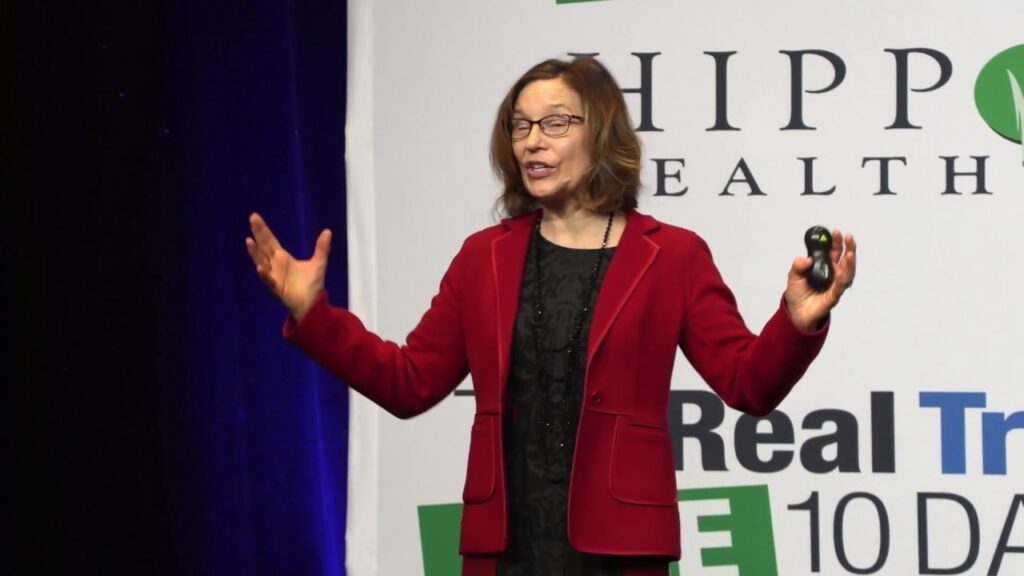
Brenda Davis, R.D. weighs the pros and cons of a whole food diet vs the paleo diet and why the paleo diet gains popularity over other alternatives.
Internationally acclaimed dietitian Brenda Davis explores the health benefits of vegan diets compared to other dietary choices; explains protein and amino acid requirements at various stages of life; describes fats and essential fatty acids and their value in plant-based diets; investigates carbohydrate facts and fallacies; reveals the truth about wheat, gluten, and grains; pinpoints where to obtain calcium, iron, zinc and other minerals without animal products; clarifies the importance of obtaining vitamin B12; and shows how to attain optimal nutrition during pregnancy and lactation and how to achieve and maintain healthy weights and exceptional fitness on a vegan diet.While much of the emphasis is on the health advantages that vegan diets offer. Plant-based nutrition truly benefits the entire planet, and every bite makes a difference.
Brenda Davis, registered dietitian and nutritionist, is a leader in her field and an internationally acclaimed speaker. She has worked as a public health nutritionist, clinical nutrition specialist, nutrition consultant and academic nutrition instructor. She is currently on a diabetes intervention research project in Majuro, Marshall Islands. Brenda spent 8 months in Majuro in 2006 and returns for 4-6 week periods every year or two. Brenda is a past chair of the Vegetarian Nutrition Dietetic Practice Group of the American Dietetic Association. In July 2007, she was inducted into the Vegetarian Hall of Fame. A co-author of nine books – award winners, Becoming Vegan: Comprehensive Edition(2014) and Becoming Vegan: Express Edition (2013), and the best-sellers, Becoming Vegan (2000), Becoming Vegetarian (1994, 1995), The New Becoming Vegetarian (2003) and Defeating Diabetes (2003), Dairy-free and Delicious (2001)and Becoming Raw (2010) and Raw-food Revolution Diet (2008). Brenda lives in Kelowna, British Columbia with her husband Paul. She has two grown children, Leena and Cory.
Connect with The Real Truth About Health
http://www.therealtruthabouthealth.com/
Passionate believers in whole food plant based diets, no chemicals, minimal pharmaceutical drugs, no GMO’s. Fighting to stop climate change and extinction.
so issue number two is the Paleo preference for meat ah you know paleo rationale that they should be eating all of this meat is meat that this is what they say meat is essential to health providing many nutrients that are not provided by plants like vitamin b12 and vitamin k2 and carnitine and taurine and conjugated linoleic acid eating meat results in higher protein lower carbohydrate intakes reducing our risk of chronic disease so those are the claims so let’s take a look at those claims nutrients necessary and meat do we really need meat for vitamin b12 well the answer is we can get b12 from fortified foods we can get b12 from supplements there’s even some evidence to suggest we could get b12 from some like chlorella and and blue-green algae so there are other sources of b12 but what paleo people probably don’t recognize is the Institute of Medicine and in countries around the world recommend that everyone over 50 years of age get their b12 from the same place as vegans get their b12 why because b12 is bound to protein in animal foods and when you reach 50 years of age plus the amount of enzymes and the amount of digestive acids you produce may not be sufficient to cleave the b12 off the protein it’s bound to and so you may end up thinking you’ve got a really good source of b12 but you can’t get the b12 from the animal products so the recommendation is that everyone over 50 get their b12 from fortified foods or supplements vitamin k2 well anybody with a healthy gut flora and what we know if you heard my first lecture is vegans have a healthier gut flora then then omnivores so we have a healthy gut flora if you have a healthy gut flora you should be able to do this little conversion of vitamin k1 that you get from plants into vitamin k2 which we need now if you’ve taken antibiotics then you may not be able to do that conversion for a while so you might want to take some k2 but we also can get it from do you say natto natto is the fermented soy or of course from supplements if we so choose so what about carnitine and taurine well both of these amino acids are adequately produced in most vegetarians we have a little bit lower levels but we still produce plenty and we have concerns about carnitine and TMAO production you don’t want to be eating massive amounts of carnitine so TMAO are you familiar with TMAO this is trimethylamine oxide and and trimethylamine n-oxide to be precise but but what this is is when people eat meat or eggs there are certain components of these foods and one being carnitine another being choline that that when they enter your gut you have microflora or omnivores have microflora in their gut that convert these things into something called tea MA and the tea ma get shuttled to the liver where it gets converted to TMAO and TMAO is highly atherogenic it causes us to lay down plaque in our blood vessels and increases our risk for heart disease and kidney disease and so TMAO is not something you want to be making a lot of what’s really interesting is vegans don’t make any even if you take a carnitine supplement you don’t make tea ma because you don’t have the bad bacteria in your gut to produce it so this is a you know one of the benefits of being vegan I would say but these amino acids are not to be concerned about conjugated linoleic acid or CLA the clinical evidence does not suggest any health advantage to consuming preformed CLA we don’t have to worry about it
what about the claim that you’ll get reduced disease risk well actually we do have a growing number of small clinical trials that suggest impressive short-term improvements in body weight satiety lipid profiles blood glucose insulin sensitivity inflammation blood pressure using paleo style diets why the favorable results well paleo diets significantly reduce foods that are linked to obesity and chronic disease so you’re eliminating refined grains refined sugar refined fats and oils fast foods fried foods processed meat like bacon ham wieners high-fat dairy products like cheese and ice cream and alcohol so if you remove all of those things you might get some you know some some good things happening however what you need to understand is clinical trial paleo diets do not equal popular paleo diets you saw the numbers when I analyzed the three days worth of menus they were getting 53% of calories from fat 19 percent saturated fat so they were getting a lot of not such good things the clinical trials they are very carefully designing these diets so that the fat is around 20 to 30% the saturated fat is low so this is you know a big clue here and and so and also they load the diets up with vegetables and fruits and nuts and seeds so paleo menus are just way less rigid for most people they’re using oil they’re using processed meat they’re using salt and definitely not the same as clinical trials the other thing we need to recognize is we’ve only got very short term clinical trials and in my view it’s short term gain for long term pain paleo diets induced weight weight loss and we see favorable lab results in the short term but there are really significant concerns to adopting such diets in the long term and so there’s one study from Harvard 2014 that looked at over 4,000 post heart attack survivors and this is in the Nurses Health Study in the health professional study and they found that those that were adhere to a low carbohydrate diet high in animal sources of protein this was this diet was associated with a 33% increase in all cause mortality and a 51% increase in cardiovascular disease mortality and they said that an increase in adherence to a plant-based lower carbohydrate diet was not associated with changes in all cause or cardiovascular mortality and there are many concerns with meat animal protein as you if you’ve ever read dr. Colin Campbell’s work if you’ve looked at any of the new research on animal protein I’ll talk a little I’ll tell you about some of it you’ll know that animal protein is not all it’s cracked up to be there are a lot of agro chemicals in in meat again the carnitine there’s endotoxins don’t endotoxins are these are toxins that meat has a lot is contaminated with a lot of bacteria and dead bacteria when it it it decomposes there are very significant toxins that are highly inflammatory and so these are endotoxins environmental contaminants persistent organic pollutants like dioxins and PCBs heme iron which is a pro-oxidant hormones and antibiotics a new 5g c which is a pro-inflammatory molecule in animal flesh foods nitrosamine x’ from processed meat products of oxidation when you cook the meat like heterocyclic amines polycyclic aromatic hydrocarbons advanced glycation end-products saturated fat and cholesterol and we see an upregulation of cancer promoting genes when meat is consumed there are a lot of concerns with meat there is a scientific consensus on meat the scientific report of the 2015 Dietary Guidelines Advisory Committee said that the the committee’s examination of the association between dietary patterns and various health comes revealed remarkable consistency in both findings and implications for all conclusions heart disease hypertension cancer diabetes etc with moderate to strong evidence higher intake of red and processed meat was identified as being detrimental to health that’s from the USDA if we look at the most recent meta analyses on red meat and mortality very consistently red meat and processed meat increase mortality from anywhere between you know ten five ten percent to forty four percent for processed meat meat and diabetes and not just red and processed meat but also total meat and poultry we see consistently they all increase diabetes risk and some profoundly a serving increasing risk by 51% for processed meat and even for unprocessed meat as high as as you know a twenty percent and for total red meat again as high as almost 50 percent in a couple of studies if we look at red meat and cardiovascular disease it’s the same story all over again you can see unprocessed meat less damaging than processed meat but both increasing risk if we look at unprocessed red meat in cancer again we see consistent increases of risk in every type of cancer colorectal cancer glioma or brain cancer bladder cancer breast cancer colon cancer non-hodgkins lymphoma lung cancer and you know it’s just the same story for for all of these types of cancers processed meat and cancer even higher numbers the current recommendations from the American Institute of cancer research and the World Cancer Research Fund is to limit intake of red meat and avoid processed meat they say people who eat red meat should consume less than 500 grams or 18 ounces a week or two point five ounces seventy grams a day very little if any to be processed in 2015 the World Health Organization declared processed meat a Group one human carcinogen and red meat a group or probable human carcinogen so this is you know this it I when I think about this I think you know we’ve got all of these cancer organizations and I can remember not so many years ago was probably three or four years ago walking by a cancer fundraiser and they were selling hotdogs it you know selling hotdogs it’s like selling cigarettes to raise money for cancer research so we know it’s in the same category now it’s in the same category is cigarette to alcohol asbestos and arsenic so this is this is something people need to be aware of there’s another study they have a Harvard health professional study that came out in 2016 over a hundred and thirty part participants that were followed for about thirty years and here’s what they found they found that if we replace we replace animal protein with plant protein and and just three percent of calories from animal protein with plant protein we would reduce risk of death by thirty four percent if we’re replacing just three percent of calories of processed meat with three percent of calories from plant protein 12% for unprocessed meat 19 percent for eggs eight percent for dairy six percent for fish six percent for poultry the author conclusion high animal protein intake is positively associated with mortality and high plant protein intake is inversely associated with mortality substitution of plant protein for animal protein is recommended there was another study in 2014 by Levine and he took over 6,000 participants this was eighteen year follow-up looking at people aged 50 years plus and people who were consuming at least 20% of their calories from protein so people of 50 to 65 years of age over 20% of calories from protein increase their risk of mortality by 74% increase the risk of cancer death by 433 percent that’s over four times increase their diabetes risk by three hundred and ninety three percent and this is what’s interesting the associations were abolished are greatly attenuated with plant protein which means this didn’t hold true if the 20% of protein was coming from plants it only held true if the protein was coming from animal foods and they looked at people 65 years plus and they found the higher protein intakes were actually an advantage except it increased risk of diabetes about 10 times so you might wonder why why did people 50 to 65 years of age why were they so much greater risk for disease and death with 20% plus of calories from protein whereas people over 65 weren’t I thought about that myself so I did a little bit of math and protein absorption first of all is significantly diminished in seniors so even if they’re eating more protein they’re not actually absorbing as much into their blood streams but even at 20% of calories from protein senior seniors don’t eat as much and so if you look at protein intakes of 20% you look at 1600 calories which a senior might be eating that’s 80 grams of protein that’s precisely what the Australian government says a man over 70 years of age should be consuming actually theirs is 81 grams of protein so 1,600 their bang on because they’re not absorbing you know they’re only absorbing 75% of that probably so they’re getting exactly what they need to get about 60 grams right well a younger man eating 2800 calories would be getting 140 grams of protein there’s a big difference there and he’s absorbing it well so that’s probably why they didn’t see the same kind of results with older people there was another study called his meat kill nos Mayo Clinic 2016 this is a very highly respected organization they reviewed six studies over three million participants they found a strong consistent association they found strong consistent evidence that increased intake of red meat especially processed red meat is associated with increased all-cause mortality and vegan diets and they use the word vegan vegan diets improves several parameters of health including reversal of cardiovascular disease decreased BMI decreased risk of diabetes and decreased blood pressure and their conclusion avoidance of red and processed meat and a diet rich in plant-based Whole Foods including fruits vegetables whole grains nuts and legumes is a sound evidence-based recommendation