Nutritional Studies Show Health Advantages Of Plant Based Diets In Both Children And Adults Alike by Brenda Davis, R.D.
Brenda Davis offers fresh insights on the treatment of animals in food production and other industries, the latest findings on the health benefits of a vegan diet and expanded the information on phytochemicals, Brenda’s information is extensive in scope, yet manageable for anyone who wants to easily understand how to construct a nutritionally balanced plant-based diet.
Here are the latest findings on: using plant foods to protect against cancer, heart disease, and other chronic illnesses; obtaining essential protein without meat, eggs, or dairy products; discovering “”good”” fats and where to find them; meeting dietary needs for calcium without dairy products; understanding the importance of vitamin B12; designing balanced vegan diets for infants, children, and seniors; and making the most of vegan pregnancy and breastfeeding.
This is a sound blueprint to follow for better health for yourself and the planet.
Connect with The Real Truth About Health
http://www.therealtruthabouthealth.com/
Passionate believers in whole food plant based diets, no chemicals, minimal pharmaceutical drugs, no GMO’s. Fighting to stop climate change and extinction.”
Intro
and so i want to take an uh look at the evidence at a glance the the most for particularly for the the people in the most vulnerable years so let’s talk about pregnancy well vegetarian including vegan pregnancy outcomes such as birth weight and pregnancy duration are similar
Pregnancy Outcomes
to non-uh vegetarian pregnancy outcomes and the differences reported are the following there is a lower risk of excessive weight gain in the vegetarians and the rates of pregnancy complications are generally lower among vegetarians the largest vegan study to date was done a long time ago it was done on the farm in 1987 and included 775 of vegan women the vegan diets did not affect the birth weights of the children but preeclampsia was .1 among the vegetarian women compared to 5 to 10 percent in the general population and the authors of this study concluded that it is possible to sustain a normal pregnancy on a vegan diet and that a vegan diet could alleviate most if not all signs and symptoms of preeclampsia so what about infant and child outcomes well we know for lacto-ovo vegetarians that there have been studies multiple studies over decades that have proven that lacto-ovo vegetarians are safe and adequate lacked oval vegetarian diets are safe and adequate for infants and children well what about vegan diets well there are far fewer cohorts and mostly we have dated studies we have consistently positive results
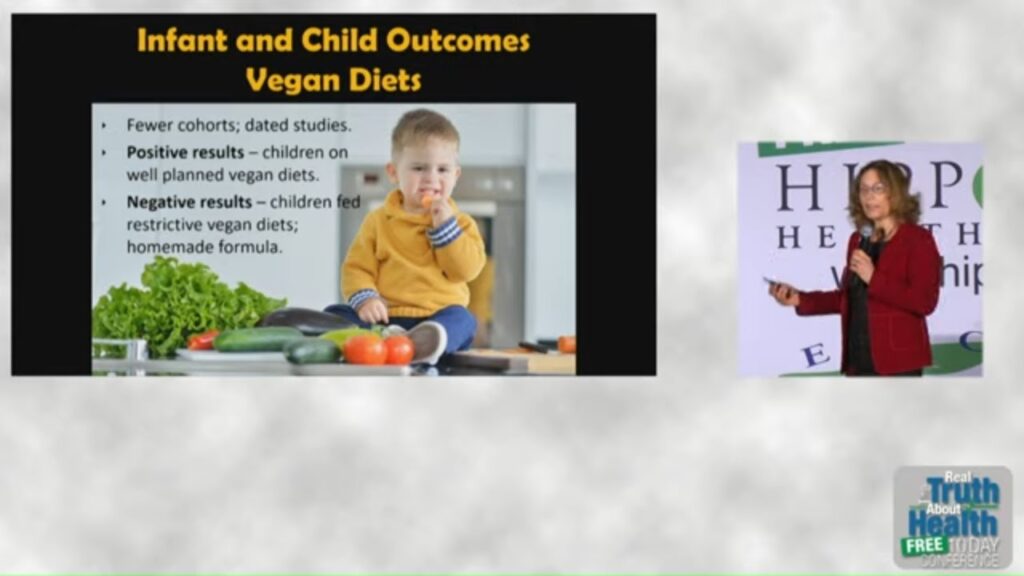
Infant and Child Outcomes Vegan Diets
on children being fed well-planned vegan diets we have also seen negative results on children fed very restrictive vegan diets and especially when parents are using homemade formulas instead of breastfeeding and there were a number of studies back in the 70s 70s and 80s of very grossly malnourished children who were being fed a formula that contained about 17 calories per hundred mils compared to about 70 if they were having breast milk so these children were essentially starving to death so that’s not a good plan every time we see a child who’s malnourished because they’re consuming a plant-based diet it sets us back 20 or 30 years it’s really important that we get it right and it’s not that difficult either so let’s talk about the vegan studies they’re really two classic studies one and and they they basically reported that well-designed vegan diets support normal growth and development the first was by saunders in 1988 this one was out of the uk and they followed 39 vegan children into adulthood and although they were slightly smaller and lighter than omnivores they were very healthy and then the bigger one was o’connell in the united states this is the farm study again 404 vegan children they had slightly slower growth between one and three years and that was because they were being breastfed and not being fed formula and but there were no differences after the age of five and those children did very well the take home message here is well-planned plant-based diets are safe and adequate at every stage of the life cycle but infancy and childhood are stages of of life where adequate growth and development are really the number one nutritional priorities the diets for children must be designed to meet the unique needs of infants and children they need to be a little higher in fat than they do for adults for example in the position paper the the academy of nutrition and dietetics outlines the advantages of well-designed plant-based diet diets for children and what we see in children being raised on plant-based diets is greater consumption of vegetables and fruits fewer sweets and salty snacks lower intake of of fat especially saturated fat reduced risk of overweight and obesity and the establishment of lifelong healthy eating habits and so there are many advantages for children so what about adults do adults eating mostly or entirely plant-based meat nutritional needs well
EPIC Oxford 2016
two there have been multiple studies looking at this but the two biggest are epic oxford in 2016 in the adventist health study in 2013 and i just want to show you the results because they’re they’re actually really quite surprising for people so an epic oxford they examined over 30 000 individuals and and they were all health conscious people bought with different dietary patterns so some were meat eaters some were vegetarian or vegan and the meat eaters had the highest intakes of protein vitamin b2 which is riboflavin b12 d zinc and iodine and the vegans had the highest intakes of fiber vitamin c and e folate magnesium iron copper and polyunsaturated fatty acids uh what about sub-optimal intakes well the meat-eaters about 50 were low in vitamin e and the meat eaters also at the highest calorie intakes the highest intakes of total and saturated fat and the lowest intakes of fiber all of which of course are not good now vegetarian and vegans tended to have low b12 levels about 17 percent of lactova vegetarians were low and vegans probably 85 to 90 percent were low in this study and iodine again the vegans over 90 were low in iodine so that’s something to consider the conclusion of these researchers was that compliance with dietary goals was high and the prevalence of inadequate nutrition was low among all the dietary groups the vegan diets appeared most protective against cardiometabolic diseases and the vegans however do need to use fortified foods or supplements to ensure sufficient b12 and iodine so the adventist health study too and this is this is where the surprise comes in they examined over 70 000 health conscious participants again with different dietary patterns the meat have the highest intakes of protein vitamin d zinc and sodium there were no shortfalls among the meat-eaters except for vitamin d and although they had the highest intakes it was still below the rda for vitamin d the vegans had the highest intakes of fiber vitamin c iron potassium and magnesium and they had no nutritional shortfalls except for vitamin d so that was kind of interesting and here just to give you an idea the non-vegetarians had the highest intakes of vitamin d and zinc but you can see that vitamin d recommended intakes are 15 micrograms per day they were only at 6.1 so they were still quite low they had uh the highest intakes of saturated fat they of of total fat of sodium and these are things that we are are not so desirable lacto oh sorry lacto-ovo vegetarians had the highest intakes of b6 b12 vitamin e and calcium so b12 isn’t that interesting they were even higher than the omnivores and the vegans you can see fiber and vitamin c and iron and potassium and magnesium were highest and and if you look you can see the the vitamin um b12 in the vegans was 6.3 micrograms per day which is well above uh the recommended unlike the uk where almost everybody was deficient and you can say vitamin d was was too low in both of those groups as well and then we have
Nutrient Composition of Whole Food Plant-based Diets
um a study that that looked at nutrition composition of whole food plant-based diets compared to standard american diets they looked at something called the healthy eating index and it was 88 over 100 for whole food plant-based eaters was 58 over 100 for people eating the usual american diet and compared to my plate which is recommended intakes by the us government people eating whole food plant-based had 180 percent more total vegetables 238 percent more green leafies 468 percent more legumes a hundred percent more fruit 132 percent more whole grains 200 percent more nuts and seeds 74 less refined grains and 146 percent more fiber so if you look at nutritional there was another study this one out of belgium looking at healthy eating index and the mediterranean diet scores comparing vegetarians vegans and and semi-vegetarians pascal vegetarians and omnivores and the people that had the highest scores on both healthy food healthy eating indicators were vegans um and and so that tells us something and i i didn’t mention but the differences between the uk and the adventist health study the adventist child study we saw problems with iodine and and b12 whereas we didn’t in or i’m sorry we didn’t see problems with the adventist health study but we did with epic oxford the reason for the differences are are actually because of the use of fortified foods and supplements by the adventists and not so much by by uk but we’ll we’ll talk a little bit more about that later so um are there any um health benefits and the answer is absolutely vegetarians and and vegans are reduced risk of of ischemic heart disease type 2 diabetes hypertension certain types of cancer and obesity and if you look at the numbers and we won’t go through this in any detail but the red bars are are the omnivores and these are health conscious omnivores so these are people that exercise the same amount smoke the same amount drink the same amount of alcohol as the vegetarians and vegans and they’re conscious about their diets as well but look at this if you look at the um the lacto-ovo vegetarians in blue here these numbers are the um are the the sort of the the uh the risk the reduction that we see in various diseases so when you see 0.45 for hypertension it means that they have 55 percent less hypertension than than the omnivores okay so these are risk ratios you can see for vegans it’s even better so for hypertension 75 percent lower because it’s 0.25 and and you can see for for cardiovascular disease and kidney disease the vegans and vegetarians are combined but more than 50 percent of a risk reduction for kidney disease and and about 32 percent risk reduction for cardiovascular disease and you can also see not quite as stellar results for cancer and mortality but still significant mortality was 15 percent lower among vegans and about nine percent lower among lactovo vegetarians in the adventist health study too