Maximize The Protective Components In The Diet, The Fiber, Phytochemicals, Antioxidants, Pre- And Probiotics by Brenda Davis, R.D.
Brenda Davis offers fresh insights on the treatment of animals in food production and other industries, the latest findings on the health benefits of a vegan diet and expanded the information on phytochemicals, Brenda’s information is extensive in scope, yet manageable for anyone who wants to easily understand how to construct a nutritionally balanced plant-based diet.
Here are the latest findings on: using plant foods to protect against cancer, heart disease, and other chronic illnesses; obtaining essential protein without meat, eggs, or dairy products; discovering “good” fats and where to find them; meeting dietary needs for calcium without dairy products; understanding the importance of vitamin B12; designing balanced vegan diets for infants, children, and seniors; and making the most of vegan pregnancy and breastfeeding.
This is a sound blueprint to follow for better health for yourself and the planet.
Connect with The Real Truth About Health
http://www.therealtruthabouthealth.com/
Passionate believers in whole food plant based diets, no chemicals, minimal pharmaceutical drugs, no GMO’s. Fighting to stop climate change and extinction.
Maximize The Protective Components In The Diet, The Fiber, Phytochemicals, Antioxidants, Pre- And Probiotics by Brenda Davis, R.D.
Brenda Davis offers fresh insights on the treatment of animals in food production and other industries, the latest findings on the health benefits of a vegan diet and expanded the information on phytochemicals, Brenda’s information is extensive in scope, yet manageable for anyone who wants to easily understand how to construct a nutritionally balanced plant-based diet.
Here are the latest findings on: using plant foods to protect against cancer, heart disease, and other chronic illnesses; obtaining essential protein without meat, eggs, or dairy products; discovering “good” fats and where to find them; meeting dietary needs for calcium without dairy products; understanding the importance of vitamin B12; designing balanced vegan diets for infants, children, and seniors; and making the most of vegan pregnancy and breastfeeding.
This is a sound blueprint to follow for better health for yourself and the planet.
Connect with The Real Truth About Health
http://www.therealtruthabouthealth.com/
Passionate believers in whole food plant based diets, no chemicals, minimal pharmaceutical drugs, no GMO’s. Fighting to stop climate change and extinction.
Intro
a step five is to maximize the
Maximize Protective Components
protective components in the diet the fiber the phytochemicals and antioxidants the pre and probiotics we’ll just go through these really quickly fiber how much is recommended
Recommended Intakes
well 38 grams a day for men twenty-five for women how much do we actually get well most people about fifteen to seventeen grams a day vegans 35 to 40 for women and forty-five to sixty for men anybody has her to get well I’m telling you here but how much people ate in Paleolithic times seventy to a hundred and fifty plus grams a day that was what people got back then and so what is optimal well probably optimal as at least 40 grams a day to you know forty to eighty grams a day somewhere in there and certainly vegans are at an advantage because all plant foods contain fiber all whole plant foods so how much well you get 10 to 20 grams in a cup of beans or lentils you get lentils are about 16 Navy beans are about 19 just for example avocados about 13.5 in one avvocato that’s amazing to me I would have never thought they were a really rich source and that’s not including the skin by the way you don’t have to eat that and grains about five to ten and a cop beries about three to eight and then fruits and vegetables and nuts and seeds other than berries would be in the two to five range per serving and of course only plant foods contain fiber the low
Low/No Fiber Foods
fiber foods are the refined carbohydrate foods fast foods highly processed foods and the no fiber foods are meat poultry fish dairy and of course oils and sugars so we want at least 12 to 20 grams of fiber per meal from a variety of whole plant sources phytochemicals and antioxidants we just need to be maximizing these in our diets because
Powerful Protection
they afford powerful protection against disease phytochemicals these are plant chemicals and antioxidants literally put a lid on inflammation and oxidative stress so we need them in our diet and one of the things I should mention here is is that if you take antioxidants or phytochemicals and you package them in a pill form they don’t do the same thing as they do when they come from food and as a matter of fact their intake in that form could backfire as it has in some studies do you remember in 1980s they found people with high levels of beta-carotene had low levels of lung cancer so they did several studies giving beta-carotene to people with with who are at risk for lung cancer smokers and what they found is the people who took the beta-carotene ended up with more cancer not less and so you’d go why how could that be well it could be because when you eat carotenoids from foods you’re eating 50 or 60 different kinds of carotenoids not just one and it may be that a variety of those carotenoids are needed to our need it in order to work synergistically to provide the protection and when you load your body up with just beta-carotene maybe you actually prevent the absorption of some of those others because your body thinks it’s got enough carotenoids so we don’t know for sure but it’s always better to be getting those those you know protective antioxidants and phytochemicals from Whole Foods and we know these compounds can help to reduce our risk of disease so how do we maximize intake well to start with we want to think variety so instead of always having the same grain or instead of always having the same nut or seed or the same vegetable mix it up because each one provides something a little different and so the whole works it’s not just fruits and vegetables that provide these antioxidants and phytochemicals it’s all of the plant
Think Color!
foods we want to think color so the richest sources are often the most colorful so instead of white onions choose purple onions instead of you know brown rice choose black her red rice instead of you know white beans choose red or purple beans or whatever and you you get the idea but generally even with lettuces you want deeper green rather than lighter green you always want to go for color when you can so if you’re buying quinoa you could buy the red or black it just gives more antioxidants and and certainly you it doesn’t mean you can’t eat the you know the bay you sure the white colored grains they’re fine too but just mix it up so you have a variety of colors in your repertoire so and with
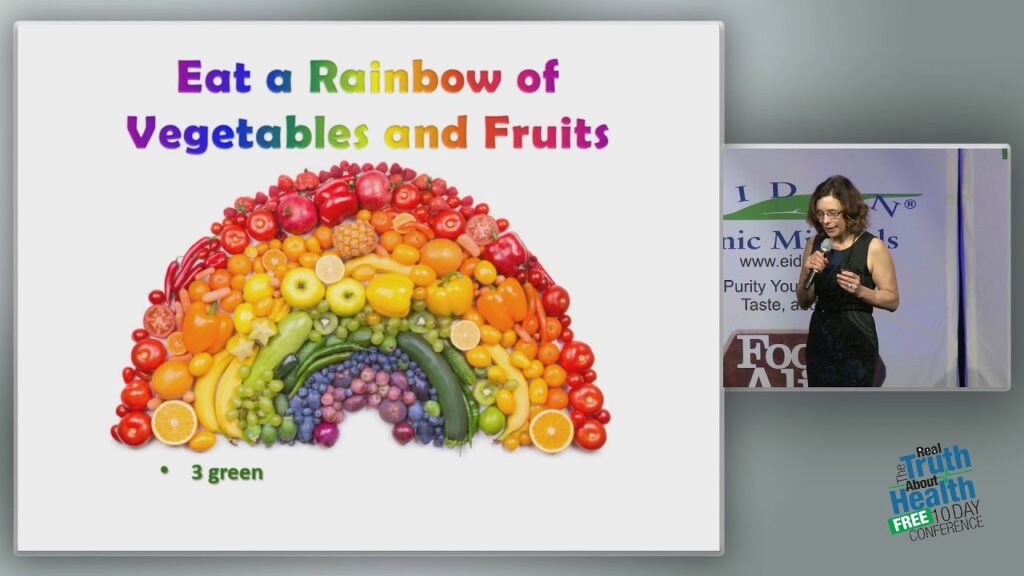
Eat a Rainbow of Vegetables and Fruits
vegetables and fruits you want to eat the whole rainbow I would say at least three green to orange yellow to red pink one purple blue and one white beige every day and and so when you make a salad one of the little goals you can have for yourself is to see if you can reflect the whole rainbow in your salad and even try to include things that have unusual colors like watermelon radishes that are this unique fuchsia pink you know try to get that mix of all sorts of different colors increase your intake of
Increase Raw Foods
raw foods and the reason we talked about plant enzymes but some plant enzymes help you to convert the phytochemicals and foods into their active forms what we call bioactive metabolites and so for example there’s my rose amazing cruciferous vegetables that helps to convert glucosinolates into isothiocyanates and isothiocyanates like are things like sulphur faintin for example are potent inducers of Phase two enzyme systems that help to convert inactive actually help to convert toxic compounds into water soluble compounds so you can get excrete them from the body so very very important function if you cook your broccoli you kill the rosin aids and you get less conversion okay so having some of these these cruciferous vegetables raw is helpful and it’s the same with the Allium vegetable there’s a enzyme called Alaniz that helps to convert Allen to allison which again is the active form so having some raw in a salad dressing or or even chopping it and letting it sit for 10 or 15 minutes before you throw it in your soup you’ll get more of the conversion happening and
Add Sprouts
then you want to add sprouts I saw some wonderful sprouts over here and just unbelievably amazing foods because what happens when you sprout a food is you’re sending a message to the seed that it’s time to let the phytochemical army explode because the phytochemicals are what he’ll what what protects the plant and so when that little seed it has to protect the plant it’s gotta multiply its army of protection so in some cases like in in broccoli sprouts the sulforaphane content is fifty two to a hundred times higher than it is in mature broccoli in a lot of greens it’s you know it increases a hundred two hundred three hundred four hundred five hundred percent when you sprout not only that but when you’re telling a seed to grow you do a couple things you reduce anti nutrients and you release the stored forms of nutrients so that the plant has the nutrients it needs to grow so it’s wonderful transformation in this plant when you sprout more phytochemicals less aunty nutrients so it’s all good and then you want to pile on the herbs and spices and this is something that we need to think more about it I think herbs and spices should
Pile on the herbs and spices!
be a food group in of themselves and and certainly we think about the the colorful herbs and spices the Reds and the the golden colors like in tumeric and these are some of the most potent anti-inflammatory compounds known to mankind they’re just incredible incredibly powerful and we need to use them in in your breakfast you can add you know cloves and nutmeg and cinnamon and all of these kinds or you can do a savory breakfast and include you know a wide variety but at every meal think about adding herbs and spices and then we’ve got plant-based probiotics and prebiotics probiotics are the microorganisms and food that take up residence in our gut and help to support a healthy gut flora and and if the you know if if our gut flora is healthy we reduce inflammation of course and prebiotics are the food for that flora so that’s what they would eat to keep themselves healthy and so there are a
Dietary Strategies to Shift the Balance
number of things we can do to shift our gut flora from unhealthy to healthy we can eat a plant-based diet rich in in prebiotics so prebiotics where are they well beans are a wonderful source Jerusalem artichokes bananas onions and you know all of the plant foods are sources of these indigestible fibers that feed our gut bacteria we want to eat food based probiotics such as yogurts like almond yogurt or coconut yogurt or any of these kinds of fermented foods fermented vegetables sauerkraut tempeh me so all of these probiotic rich foods we want to minimize our intake of refined carbohydrates processed foods meat fried foods that can damage our gut microbiota take probiotics if you’re taking antibiotics and minimize alcohol which are quite is is quite harmful to your gut microbial