Isn’t Cows Milk Necessary For Strong Bones? by Brenda Davis, R.D.
Brenda Davis offers fresh insights on the treatment of animals in food production and other industries, the latest findings on the health benefits of a vegan diet and expanded the information on phytochemicals, Brenda’s information is extensive in scope, yet manageable for anyone who wants to easily understand how to construct a nutritionally balanced plant-based diet.
Here are the latest findings on: using plant foods to protect against cancer, heart disease, and other chronic illnesses; obtaining essential protein without meat, eggs, or dairy products; discovering “good” fats and where to find them; meeting dietary needs for calcium without dairy products; understanding the importance of vitamin B12; designing balanced vegan diets for infants, children, and seniors; and making the most of vegan pregnancy and breastfeeding.
This is a sound blueprint to follow for better health for yourself and the planet.
Connect with The Real Truth About Health
http://www.therealtruthabouthealth.com/
Passionate believers in whole food plant based diets, no chemicals, minimal pharmaceutical drugs, no GMO’s. Fighting to stop climate change and extinction.
so finally our last nutrient is calcium and the big question here that always comes up is isn’t cow’s milk necessary for strong bones well we’ve seen the advertisements got milk and we’ve been taught this for years that you must have dairy for strong bones but we don’t need cow’s milk any more than we need moose milk cows milk has a lot of calcium it’s about 300 milligrams per cup moose milk has 600 milligrams per cup but yet we don’t consider it in essential food you know to me it defies rationality to assume that the milk of another species would be required for our survival every species every species makes milk to support the life and growth of their offspring and that milk is very specifically designed for that species we need cow’s milk as much as we need dog milk cat milk moose milk deer milk they are produced for their species so we’ve got to come up with better ways to get our calcium and in pre-agricultural populations human at humans actually average one to two thousand milligrams of calcium a day without a single drop of smell so how did they do it well we can do it the same way they got it mostly from wild plants so how much calcium do we need well the RDA is about a thousand milligrams for women 19 to 50 and and for men 51 to 70 years of age and no it should be for men 19 to to 70 years of age sorry and then for females 51 to 70 it’s 1,200 and from over 70 it’s 1,200 so what are our actual intake well you can see here this the first three graphs are the Adventist Health Study and you can see we’re all close to the thousand milligrams that vegans at about 933 vegetarians 1145 omnivores 1072 they were all getting plenty of calcium but in epic Oxford you see vegans at 582 compared to around a thousand for the other dietary groups in an epoch Oxford they found an increased risk of fractures in the vegans but not in the vegans that got more than five hundred and twenty-five milligrams of calcium a day they had the same rates as everybody else so when do need to get enough calcium now in the Taiwanese Buddhists the vegans actually consume more than the the meat-eaters why do you think that might be they don’t consume dairy right or very little and so the the vegetarians are eating more soy they’re eating more tofu they’re eating more greens and so those are primary sources of calcium in those populations so they would actually get more so and this is just showing the epoch Oxford study and you can see a 30 percent higher risk of fracture in the vegan group but then when adjusted and looking at the vegans that only consumed at least five hundred and twenty-five milligrams of calcium a day you can see the rates were actually even lower than the fish eaters and the lacto-ovo vegetarians so they were protected by getting a little more calcium in their diet and the take-home message here is the bone health of vegans may be compromised if calcium intakes are very low vegans need to consume at least five hundred and twenty-five milligrams of calcium per day and preferably they should meet the RDA for calcium
and this is my little show-off slide this is my personal experience I’m 60 years old I have a family history of osteoporosis my mom developed osteoporosis at about 50 and I’ve been vegan for thirty years and I had my bone density done after 20 years being vegan and my bone mineral density was two to two and a half standard deviations above normal for my age and osteoporosis is 2.5 standard deviations below normal for your age so my my bone density was actually so high they had to draw a little arrow at top of the chart because they couldn’t clot it my doctor was just stunned he said he said he’s good thank you he said I don’t believe it he said I thought for sure you’d have low bone density because you don’t consume dairy and your mom has osteoporosis but the deal is is I’ve always made sure that I have good sources of calcium in my diet and I exercise and exercise is key because you’ve got to keep telling your bones to stay strong weight-bearing exercise is a big sign to your bones that they need to kick building bone instead of tearing down bone and so that’s really important
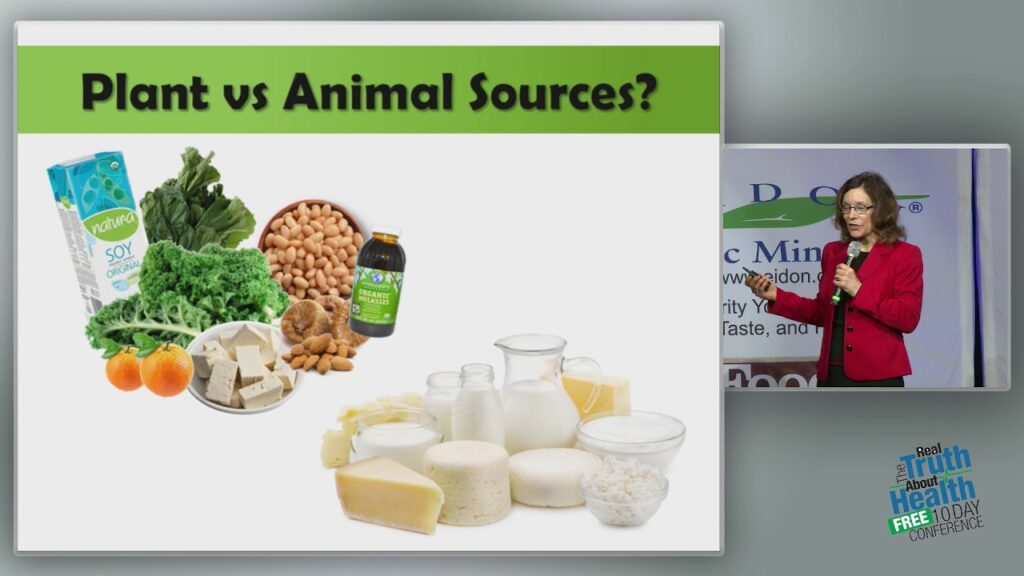
yeah so what are the best dairy-free calcium so this well leafy greens that are low in oxalate is the fortified non-dairy milks almonds figs tahini beans blackstrap molasses broccoli all of those foods actually hemp seeds are loaded as well especially with the shell on so if you look at this list you can see a cup of milk has about 300 cows milk has about 300 milligrams and if and that’s about the same as as fortified non-dairy milks exactly the same so if we look at you know tofu and blackstrap molasses and roasted hemp seeds they’re also very high kale and tahini and navy beans somewhere in the one in 200 milligrams in a serving and then lots of other plant foods have little bits it’s actually not that difficult to the thousand milligrams if you’re choosing your foods well and in fact this menu you can see oatmeal blueberries fortified non-dairy milk and a few almonds and then for breakfast lunch is a pita with hummus and a kale salad and an orange dinner is a stir-fry with tofu and Chinese greens and vegetables some brown rice and were at 1252 1591 milligrams of calcium depending on how high that the tofu was so in the vegan plate this is the food guide that we made in our in our becoming vegan you can see in the center of the guide the calcium rich foods within each food group and that’s how we help you sure that they do get enough calcium
so how do we absorb calcium from plant foods I can remember back in the 1980s the dairy industry in Canada had an ad that basically said you know sure there’s calcium in plant foods but you can’t absorb it and so they made people believe that they had to have milk because it was the only thing that would supply enough calcium but if you actually look at it you absorb a moderate amount of calcium from dairy products about 32% of the calcium in milk you absorb you absorb about the same from tofu from fortified soy milk you absorb a little bit less from legumes sweet potatoes around the 20 to 25 percent but you absorb significantly more from 40 to 63 or 64 percent from low oxalate greens like broccoli and Chinese greens and mustard greens and turnip greens and kale you absorb however very little about 5% from high oxalate greens like spinach and Swiss chard and beet greens these are wonderful foods they’re rich in folic acid and other nutrients but they’re not even though they’ve got a lot of calcium the calcium is not terribly available from them so what about plant versus animal sources of calcium well there are a lot of nutritional pluses from from plants so they’re low in saturated fat their cholesterol free the rich sources of fiber and antioxidants and phytochemicals and vitamin CK and folate and magnesium and potassium and boron all of which are important to bone health so you get all of that from plants which is purple the milk from mammals cultures around the world including long live populations like the people of Sardinia and Korea agrees do use the milk of some mammals however it doesn’t mean it’s necessary and we can survive there are some downsides to dairy so dairies rich in saturated fat natural and added hormones antibiotics igf-1 and told residues and so I just want to end it has some health risks so very quickly going through those cheeses for one source of saturated fat in the u.s. diet replacing five percent of calories from dairy fat with equal equal calories from polyunsaturated fat was actually associated with a 24% risk reduction in cardiovascular disease what about the hormones well cow’s milk contains natural hormones estrogen and progesterone in some countries like the u.s. synthetic hormones can also be added to increase milk production and drinking cow’s milk increases estradiol and and progesterone in the urine and blood of consumers we don’t really know for sure the outcomes of that increase antibiotics the use of antibiotics in cows to prevent infection and promote growth is very widespread in the industry and using antibiotics in animals without disease promotes the growth of antibiotic resistant bacteria which is not a good thing and these back to enter the environment through manure infect people and and and these are highly resistant to conventional treatment igf-1 I’m going a little quickly now because I know I’m running out of time is a hormone that promotes growth it’s very important during the growing years it’s important to bone strength but high levels of igf-1 increased risk of several cancers and can increase the growth of cancer cells there’s a strong link between animal product consumption especially milk and dairy products and serum igf-1 levels so reducing intakes can actually lower levels environmental residues like the persistent organic pollutants like dioxins accumulate in the fat of animals they can disrupt hormones they can increase cancer they can damage the nervous system then they can increase food sensitivities and even heavy metals damage the central nervous system and increase cancer risk and these are more concentrated in conventional milk than in organic milk but nonetheless are an issue and then we’ve got the health risks like lactose intolerance and prostate cancer in acne and type 1 diabetes lactose intolerance affects about 70 percent of the world’s population rates are lowest in northern Europe and highest in Asia and Africa and South America but it generally results in discomfort upset stomach bloating cramps diarrhea so it seems ridiculous to be trying to push milk on Asians which were doing right now when they’re so sensitive to it ah dairy intake is linked to increased risk of prostate cancer there was a 2018 study that showed whole milk increased risk of prostate cancer recurrence in overweight men and a 2017 study that showed that men who consumed three or more servings of high-fat milk a day had a 6 times higher risk of death from prostate cancer than men consuming less than one serving a day and acne is an issue there’s a positive link between milk intake especially skim milk and acne and there’s also a link between the severity of acne and milk type 1 diabetes there’s a link between a1 beta casein milk protein and type 1 diabetes and evidence the early evidence suggests that high fiber intakes can protect against type 1 diabetes now the beta aa1 beta casein and milk varies in different parts of the world depending on the type of cow’s so it’s not the same risk everywhere and I love dr. Michael clappers words of wisdom I don’t know if you were here to hear him but he said the purpose of cow’s milk it’s to turn a 65 pound calf into a 400 pound cow as rapidly as possible cow’s milk is baby calf growth fluid everything in that white liquid the hormones the fat the protein the grow factors the igf-1 every one of those is meant to blow that cow up to a grape bro that cow up to a great big Tower it wouldn’t be there loved it
so you know I wanna I want to just end by saying you know there are reasons are meat milk and fish nutritional necessities absolutely not when we get our nutrition from plants we all win and of this picture I think it’s so beautiful the planet wins you know the United Nations environmental program expert panel concluded that two activities have a disproportionately large effect on the its life-support systems number one animal agriculture especially livestock for meat and dairy and fossil fuels and their recommendation a global shift to a plant-based diet the Proceedings of the National Academy of Sciences found that if we followed recommended guidelines we’d reduce by 2050 our greenhouse gas emissions by 29 percent but if we all went vegan we would reduced by 70% their recommendation a global shift to a plant-based diet then we’ve got the eat The Lancet Commission summary report from 2019 Walter Willett was involved and he said transformation to healthy diets by 2050 will require substantial dietary shifts global consumption of fruits vegetables nuts and legumes will have to double consumption of foods such as red meat and sugar will have to be reduced by more than 50% a rich a diet rich in plant foods with fewer animal sources confers both health and environmental benefits and there are advantages for people human health impacts by 2050 deaths per year would be reduced by 5.1 million people if the global dietary guidelines were followed and by 8.1 million people if people all went vegan more than half the avoided deaths would be due to decreased red meat consumption and of course have showed this slide before but and the animals we would be benefit benefiting the animals when you think about the animals the the you know the 70 billion animals that are slaughtered for food every year the vast majority for those animals are raised in K phos confined animal feeding operations and I talked a little bit about the pigs yesterday but these animals when you think about eggs for example when when we you know we raise chickens to produce eggs all of the male chicks are of no use to the egg industry and guess what happens to them some of them are ground up alive and put back into the chicken feed some of them are just suffocated in bags they’re just needless byproducts of the industry what we do to animals as human beings is incomprehensible to me you know I love this quote by dr. Schweitzer he once said that the time is coming when people will be amazed that the human race existed so long before it recognized that thoughtless injury to life is incompatible with real ethics ethics in its unqualified form is extended responsibility to everything that has life I love this man when I look at his picture it almost brings me to tears I love this man he was really the father of compassion if you will and of reverence for life and and these words I think he would be amazed that it’s taking this long he was he was the winner of the Nobel Peace Prize in 1952 and we need to get this it’s time it’s beyond time Albert Einstein once said we have to do the best we can this is our sacred human responsibility and I think he was a very wise man and so thank you very much for your attention thank you for staying and shake that thank you thank you so much thank you I’m very humbled and honored thank you so much it’s just a privilege to connect with so many compassionate conscious human beings so thank you for everything that you do to make this world a better place