

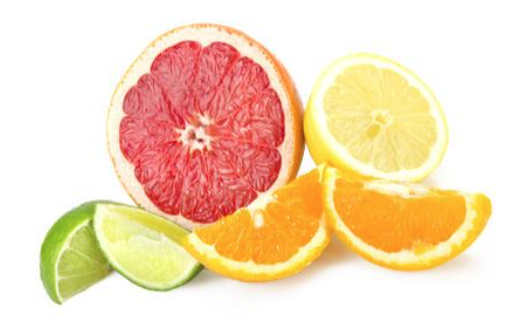
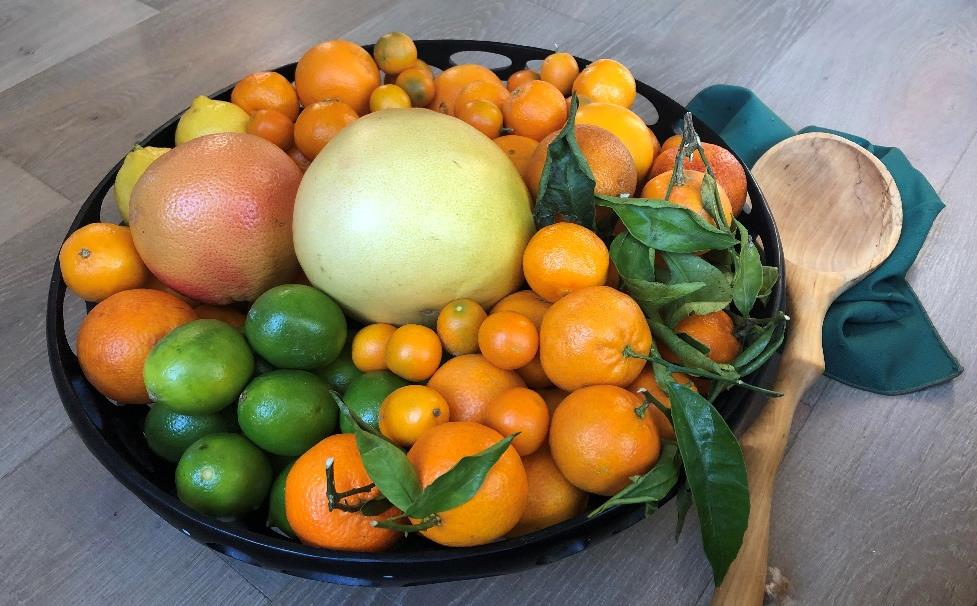
When you think of citrus fruits, what comes to mind? For most North Americans, oranges, mandarins, tangerines, grapefruits, lemons, and limes are standard fare. Some adventurous citrus eaters also include pomelos, kumquats, tangelos, blood oranges, and clementines. You might be surprised to learn that there are over 100 different varieties of citrus fruits. Evidence suggests that all of these varieties are hybrids of ancient species, including citron, mandarin, pomelo, and kumquat. Some citrus fruits, such as lemons and limes, are quite sour and are used mostly to flavor foods and beverages rather than being eaten as whole fruits. Others, like oranges and mandarins, can be very sweet. Citrus fruits appear to have originated in the Himalayan area of Southwestern China, northeastern India, and northern Burma, then spread to other parts of Asia and Oceania (Queensland and Australia). Citrus fruits came to Europe in about 310 BC.
What is it that determines whether or not a fruit belongs to the citrus family? Citrus is a genus of trees or large shrubs with five-petaled flowers that have a distinctive scent. The fruit is a hesperidium, which means a berry with a leather-like peel. The outermost part of the peel is commonly referred to as the zest. The middle layer of citrus fruit that provides a spongy barrier between the peel and the fruit is the pith. While often discarded, it can be consumed or added to smoothies, as it packs a lot of fiber, flavonoids, vitamin C, and calcium. The inner layer of the fruit has segments filled with juice vesicles, or pulp. The string-like hairs around each segment provide nourishment to the fruit as it grows. Some citrus fruits have been cultivated to be seedless and easy to peel. Citrus fruits are easy to hybridize, hence the large number of citrus varieties available today. For example, oranges and grapefruits are both crosses between pomelos and mandarins, with oranges getting more of their genetics from mandarins and grapefruits getting more from pomelos. Lemons are a cross between citrons and sour oranges, while limes are a cross between citrons and mandarins.
The Nutritional Attributes of Citrus Fruits
Citrus fruits are nutrition superstars with several unique properties. A medium orange provides about 65-70 calories and only about 0.2 grams of fat. Some of the most impressive nutrients provided by citrus fruits include: Vitamin C: Most people know citrus fruits are among our richest sources of vitamin C. Just one medium-sized orange or grapefruit will meet daily needs. Oranges average about 80 mg vitamin C, grapefruits about 90 mg, lemons about 45 mg, and limes about 20 mg. Vitamin C is necessary for forming blood vessels, cartilage, muscles, and collagen. It is also important for our immune systems, for healing, and for the absorption of nonheme iron. Vitamin C is also a powerful antioxidant, helping to protect us from free radicals. A severe vitamin C deficiency results in scurvy, a disease that causes bleeding gums, anemia, bruising and poor wound healing.Other Vitamins: Citrus fruits are good sources of several B vitamins, including thiamin, riboflavin, niacin, pantothenic acid, pyridoxine, and folate.
Minerals: Citrus fruits provide significant contributions to our potassium and calcium intakes. A medium-sized orange provides about 238 mg potassium and 60 mg calcium.
Fiber: Citrus fruits are good sources of both soluble and insoluble fiber. Fiber helps reduce the risk of chronic diseases and prevents constipation. An orange provides 3.4 grams of fiber.
Phytochemicals: Citrus fruits provide a host of protective phytochemicals. For example, a single orange provides over 170 different phytochemicals, which have anti-inflammatory, antioxidant, anti-tumor, and immune-enhancing activities. Oranges are especially rich in polyphenols, including more than 60 different flavonoids, such as flavanones, flavones, flavanols, and anthocyanins (in blood oranges). Other polyphenols in oranges include gallic acid, coumarins, and liminoids. Citrus fruits also provide carotenoids such as beta-carotene, lycopene, lutein, and zeaxanthin. Not surprisingly, eating citrus fruits can help reduce the risk of disease, particularly some cancers, heart disease, neurodegenerative diseases, kidney stones, and GI disorders.
One word of caution: Grapefruit can interact with medications. For example, if you eat grapefruit or drink grapefruit juice and take statins, too much of the drug may stay in your body, increasing your risk of muscle or liver damage. This is because statins are metabolized with the help of an enzyme in your small intestine. Grapefruit contains furanocoumarin, which binds to the enzyme, blocking its action and preventing the breakdown of some drugs. Surprisingly, other drugs, like Allegra (fexofenadine), used to treat seasonal allergies, are affected in the opposite direction. Consuming grapefruit or grapefruit juice can reduce the amount of Allegra that enters the bloodstream because it can block the action of the transporters that move the drug into the cells. Be sure to ask your pharmacist if grapefruit interacts with your medications.
Making the Most of Citrus in Your Diet
It is easy to add citrus fruits to your diet. Here are my top 5 tips for boosting your intake of citrus fruits:- Add citrus to your daily breakfast. Add an orange or grapefruit to your breakfast meal. Throw a few pieces of orange, mandarins, or grapefruit into your breakfast bowl. Make a citrus sauce for pancakes or waffles.
- Make citrus your go-to snack. Citrus fruits are economical, convenient, and portable. They are fun and easy to eat. One of my favorite movie snacks (at home) is a pomelo. It takes some work to open, but it is such fun to eat!
- Make citrus the base of your salad dressings. There is nothing like citrus to boost the flavor of salad dressings. Add freshly squeezed orange, mandarin, lemon, or lime juice to a whole food salad dressing. Don’t settle for the bottled stuff.
- Toss citrus into your salads. Add orange, blood orange, grapefruit, mandarin, or tangelo segments to a salad. Be sure to include citrus in fruit salads as well.
- Blend citrus into your smoothies. You can add any citrus fruit to a smoothie – orange, mandarin, lemon, and lime work especially well. Navel oranges or seedless fruits work best as the seeds can add quite a bitter flavor. Otherwise, remove seeds as best you can before putting them in the blender.
It is interesting to know that about a third of all citrus fruits are consumed as juices. Unfortunately, much of the fiber, along with other nutrients are lost in the processing of juices. As a general rule of thumb, it is best to eat our citrus fruits rather than drinking them. However, do enjoy citrus juices in food preparation, but squeeze the fruit yourself, and use the pulp when possible. Below you will find 2 healthy and
delicious citrus recipes. Enjoy!
Triple Citrus Teasecake
This is a wonderfully healthy cheesecake-like dessert. It is also gluten-free! Get creative with the toppings – try adding berries or other fruit, if desired. The cashews do not have to be soaked if you have a high-powered blender, but it does help make the filling a little creamier.Oatmeal Crust
- ¼ cup maple syrup
- ¼ cup nut butter
- 1¼ cups rolled oats
- ½ cup walnuts
- 1 teaspoon cinnamon (optional)
- ½ teaspoon salt
Filling
- ½ cup millet
- 2½ cups water
- ½ cup steamed dates
- 3 tablespoons orange juice
- 2 tablespoons lemon juice
- 2 tablespoons lime juice
- 1 teaspoon finely grated orange rind
- 1 teaspoon finely grated lemon rind
- 1 teaspoon finely grated lime rind
- ¾ cup raw cashews
- ¾ teaspoon salt
- 1 teaspoon vanilla
Topping
- 1 cup fresh-squeezed orange juice
- 1 tablespoon lemon juice
- 1 tablespoon maple syrup
- 1 tablespoon cornstarch
- 1 tablespoon water
- 2 oranges, peeled and sliced
- Thin slices of lemon and lime or lemon and lime rind (for decoration)
Directions
Oatmeal Crust- Preheat your oven to 350°F.
- Combine the maple syrup and nut butter in a medium-sized bowl.
- Blend or process the oats, walnuts, salt, and cinnamon to form a coarse crumb.
- Add the walnut/oat mixture to the maple syrup and nut butter and stir until combined.
- Press the mixture evenly into an 8- or 9-inch springform pan.
- Place in the preheated oven and bake for approximately 20 minutes, or until lightly browned. Remove from the oven.
Make the Filling
- Soak the cashews in water for 2 or more hours. Drain. (You can skip this step and just rinse the cashews if you have a high-powered blender, but soaking does improve smoothness.)
- Put the millet and water into a medium-sized pan. Bring to a boil, lower the heat, and cook for 30 minutes or until very soft.
- Steam the dates.
- In a food processor, process the orange, lemon, and lime juices and rinds, cashews, salt, and vanilla until smooth.
- Add the warm millet and dates and continue to blend until very smooth.
- Once the crust has been out of the oven for at least half an hour, pour the millet mixture into the springform pan, on top of the crust.
- Let the cake cool for about an hour.
Make the Topping
- Place the orange and lemon juice in a small pot. If you prefer a sweeter sauce, feel free to add a tablespoon of maple syrup.
- In a small bowl, stir the cornstarch and water together.
- Heat the juice. Add a little of the hot juice to the cornstarch mixture, then pour the cornstarch mixture into the juice and stir until the mixture thickens. Let cool.
- Decorate the cake with the orange slices.
- Pour the orange juice topping evenly over the cheesecake.
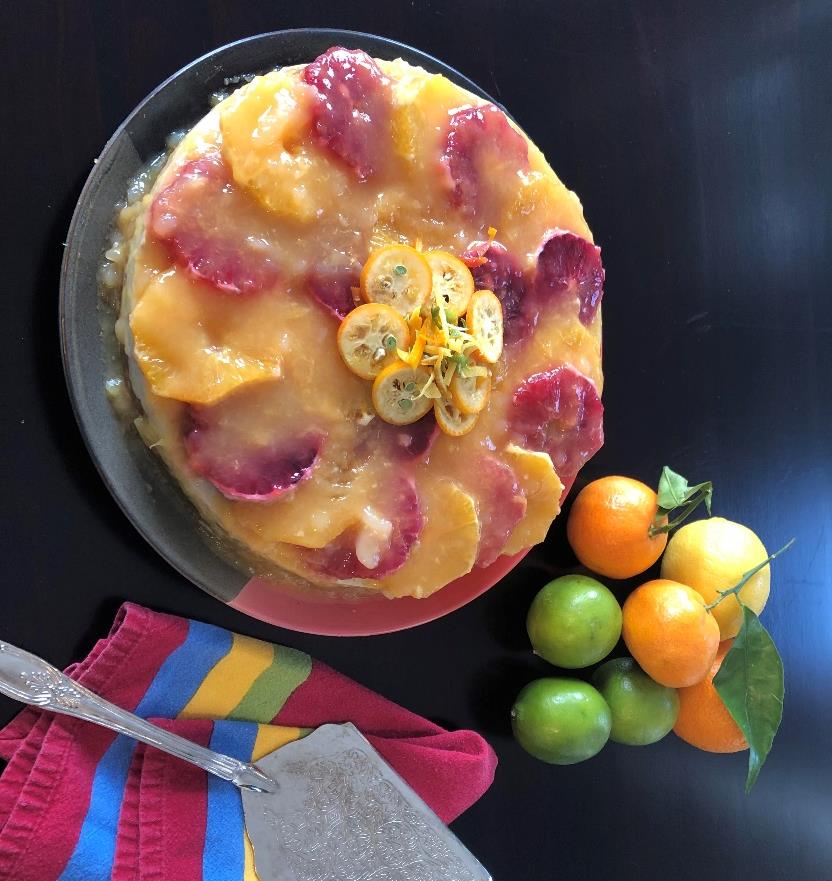
- Add a final decoration in the center of the cake, if desired. Use thin kumquat, lemon and lime slices or rind strips in the center of the cake. The cake pictured above is decorated with blood oranges and regular oranges, plus kumquats and citrus zest in the center.
- Place the cake in the refrigerator for at least 4 hours.
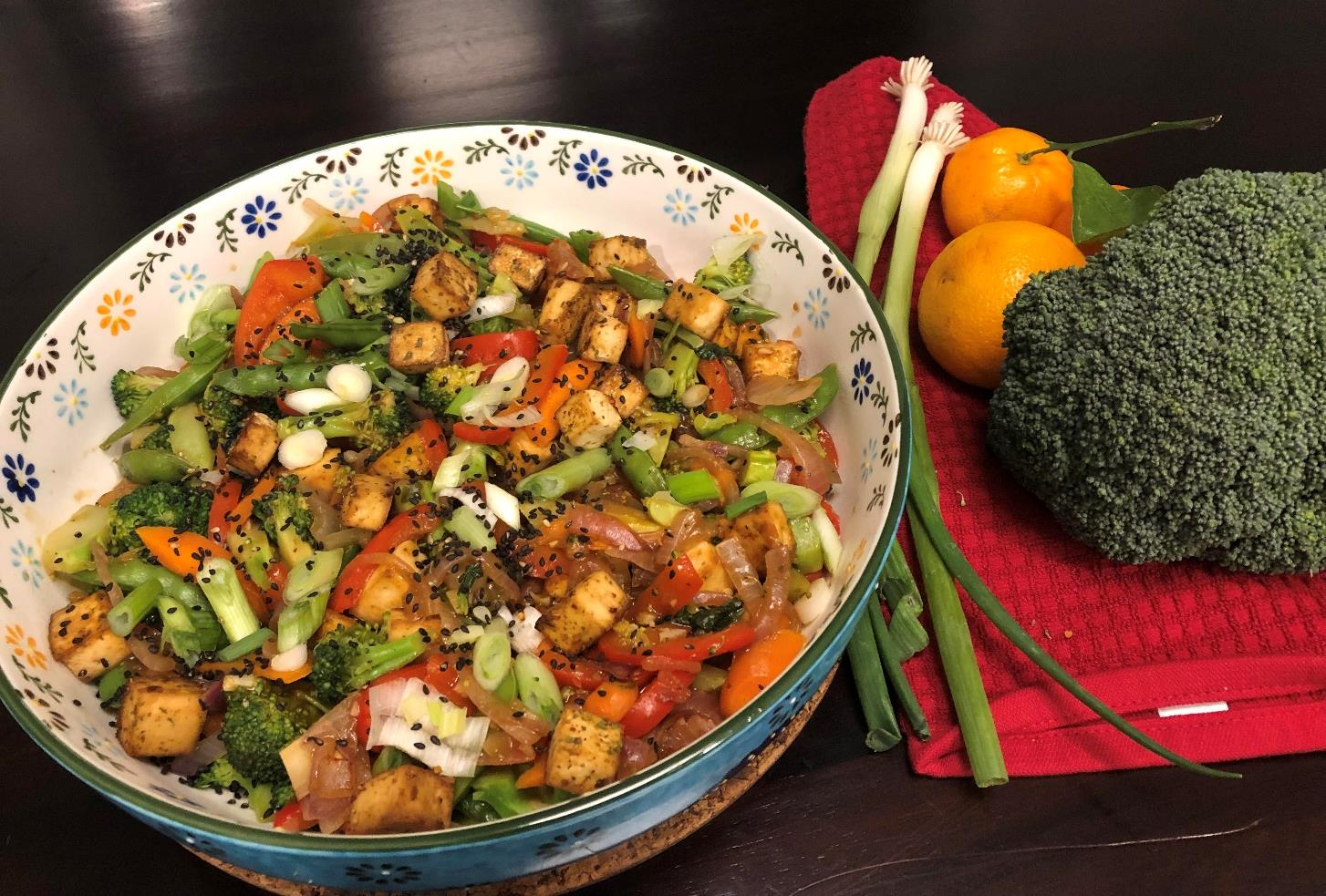
Crispy Tofu and Veggies with Orange Sauce
This is a delicious variation on a tofu stir fry. Feel free to adjust the chili to suit your palate. Vary the vegetables as you like. Just be sure to include some green and red in the mix! You can also air fry the tofu if you have an air fryer instead of baking. If you have a convection oven, bake on the convection setting.Directions
Prepare Tofu
- Dry the tofu with a clean cloth. Cut it into ¾-inch cubes.
- The tofu can be baked (use convection bake, if available) or air fried. If baking, preheat the oven to 350°F. Place the tofu on a cookie sheet lined with a silicone mat or parchment paper. Pour on the tamari and toss. Sprinkle with all-purpose seasoning. Bake for 25–30 minutes, or until crispy.
Prepare Sauce
- Place orange juice, cornstarch, tamari, rice vinegar, dates, ginger, and chili sauce in a blender. Blend on high speed until smooth.
- In a small pot, cook orange sauce on low heat until it thickens. Turn burner off.
Make Stir Fry
- In a large nonstick skillet or wok, heat the vegetable broth.
- Add the onions and carrots and cook for 4–5 minutes, stirring as needed.
- Add the broccoli, red pepper, pea pods, and garlic. Cook for another 4–5 minutes, stirring as needed. Add extra broth if needed.
- Stir in the orange sauce and hot tofu.
- Sprinkle with black sesame seeds and sliced green onions, if desired.
- Serve immediately with brown, black, or red rice, or quinoa.
This article was written for a PCRM Food for Life Instructors group called So Many Cooks in the Kitchen. This group meets online to provide amazing cooking and nutrition demonstrations that are free to share globally. For wonderful whole food, plant-based cooking shows, tune in to their monthly broadcasts. https://somanycooks.com/about/


Brenda Davis, RD is a plant-based pioneer and author/co-author of 13 books on plantbased diets. She is co-Author of Nourish: the definitive plant-based nutrition guide for families, Becoming Vegan: Comprehensive and Express Editions and Kick Diabetes Essentials.