

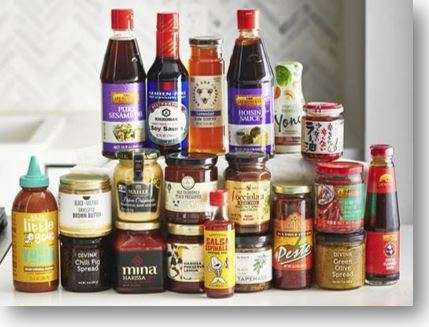
Oh sauces, how they elevate our foods! While they seem rich and a little indulgent, when they are made from whole foods, they boost both nutrition and flavor.
Sauces can be smooth, lumpy, or even semi-solid. They can be sweet, savory, or spicy. Some are served hot, while others are best cold. Today, many sauces are available premade – like pasta sauces, sweet and sour sauces, Worcestershire sauce, soy sauce, hot sauces, chili sauce, curry sauces, and so many more.
The one surefire way to ensure your sauces are healthful is to make them yourself – that is the focus of today’s So Many Cooks in the Kitchen show. Be prepared to expand your sauce horizons and add both flavor and flair to your meals! These sauces not only taste fabulous, but they are also surprisingly nutritious!
Every one of the world’s cuisines feature sauces – some that are unique to specific regions, and others that are shared among many cultures. Here is a sample of some of the most famous sauces from a number of global cuisines:
- Chinese – soy sauce, chili sauce, oyster sauce, plum sauce, sweet and sour sauce
- Japanese – soy sauce, miso, wasabi
- Korean – fermented soybean paste, red chili paste, fish sauce
- Thai – fish sauce, coconut sauce, peanut sauce
- Middle Eastern – garlic sauce, tzatziki, chermoula, harissa, tarator
- African – pepper sauce, hot sauce, awaze sauce, dongo-dongo sauce
- Indian – chutney, curry sauce, coconut milk sauce, tamarind sauce
- South American – salsas, mole, guacamole, chimichurri
- British – brown gravy, mint sauce, apple sauce, bread sauce
- French – béchamel sauce, hollandaise sauce, velouté sauce, tomato sauce
- German – mushroom gravy, cream sauce, hollandaise sauce
- Italian – Bolognese, pesto, carbonara, ragù
Many sauces contain animal products – milk, cream, butter, meat-based broth, and fish. Plant-based eaters can replace milk with non-dairy milks, cream with cashew cream or coconut cream, and meat-based broths with vegetable broth. While sauces traditionally add fat and salt to flavor foods, whole food sauces add less fat and more nutrition. Salt can be adjusted to suit certain palates or dietary needs.
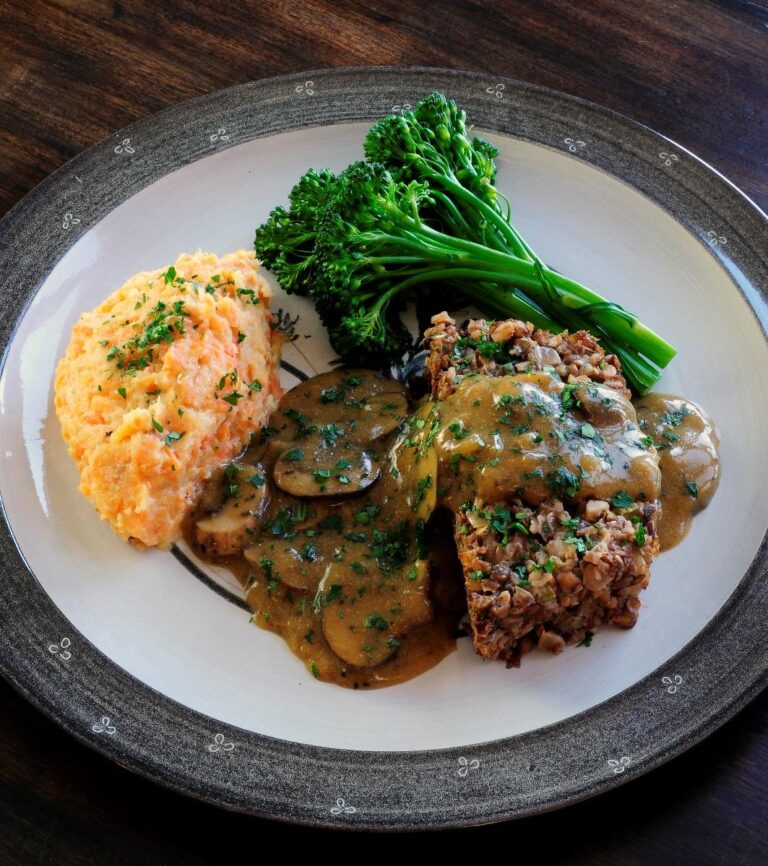
In this appendix, I am going to share three tasty, plant-based sauces – garbanzo gravy, maple tahini sauce, and spicy ginger peanut sauce. Enjoy!
Mushroom Gravy
Makes 2 cups (500 ml)
This is an old-fashioned mushroom gravy. Replace ½ cup of broth or water with wine (either red or white), if desired. Great on patties, loaves, potatoes, shepherd’s pie, and anything else you like gravy on! Omit miso if using salted broth.
- 2½ cups vegetable broth or water
- ½ onion, small dice
- 2 cups sliced mushrooms
- 2 garlic cloves
- 2 tablespoons regular or low-sodium tamari or soy sauce
- 1 tablespoon miso (optional)
- ½ teaspoon each of thyme, rosemary, and sage
- 2 tablespoons nutritional yeast (optional)
- 2½ tablespoons cornstarch or arrowroot starch
- 2½ tablespoons cold water
Place 1/4 cup of the broth, onion, garlic, and mushrooms in a saucepan over medium heat. Cook until the vegetables are soft, adding broth if needed. Add remaining broth, tamari, optional miso, thyme, parsley, rosemary, sage, pepper, and optional nutritional yeast to the saucepan. Turn heat to low and let simmer. In a small bowl, mix cornstarch and cold water. Stir into gravy and turn up heat until the gravy comes to a boil. Immediately reduce heat to simmer, stirring constantly, and cook until the gravy thickens.
Maple Tahini Sauce
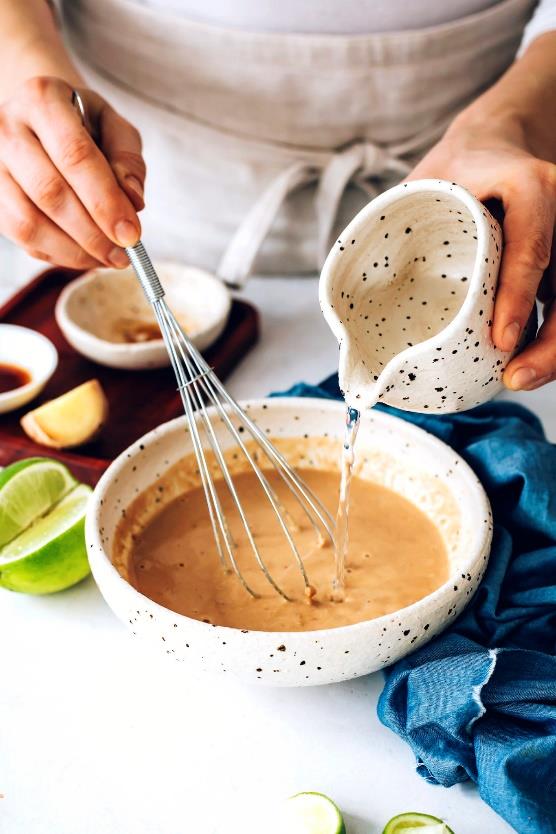
This sauce works beautifully on dinner bowls or as a stir fry sauce.- ½ cup tahini
- ¼ cup tamari
- 6 tablespoons lime juice
- 2 tablespoons maple syrup
- ¼ cup water
- 3 cloves garlic, minced
- 2 tablespoons grated ginger
- 1–2 teaspoons chili sauce (or to taste)
Place ingredients in a bowl and whisk well (can also be blended if you prefer).
Transfer to a jar and use within a week.
Spicy Ginger Peanut Sauce
Makes just over 1 1/2 cups (310 ml) or 4-6 servings
This spicy peanut sauce can be used on salads, on power bowls, or as a dip for wraps or rolls. Tahini replaces the more traditional sesame oil used in this sauce, and dates replace the sugar. Although tamarind paste is optional, it is a fun addition. If refrigerated, the sauce may thicken. Add a little water or unsweetened, unflavored non-dairy milk to achieve desired consistency before serving.
- 1/2 cup natural peanut butter
- 2 tablespoons tahini
- Juice from 2 limes (about 3 tablespoons)
- 3/4 cup boiling water
- 2 tablespoons tamari
- 1 teaspoon tamarind paste (optional)
- 2 Medjool dates
- 1/2-inch piece of ginger, washed and peeled, or more to suit your palate
- 2 cloves garlic, peeled
- 1–3 small hot peppers or hot sauce to taste
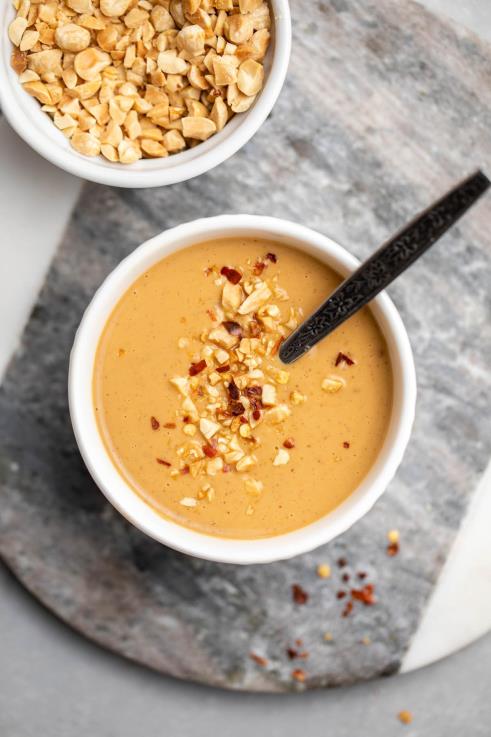
Place all ingredients in blender and blend on high until smooth. Refrigerate until using.
This article was written for a PCRM Food for Life Instructors group called So Many Cooks in the Kitchen. This group meets online to provide amazing cooking and nutrition demonstrations that are free to share globally. For wonderful whole food,
plant-based cooking shows, tune in to their monthly broadcasts. https://somanycooks.com/about/
Brenda Davis, RD is a plant-based pioneer and author/co-author of 13 books on plant-based diets. She is co-Author of Nourish: the definitive plant-based nutrition guide for families, Becoming Vegan: Comprehensive and Express Editions and Kick Diabetes Essentials www.brendadavisrd.com


