

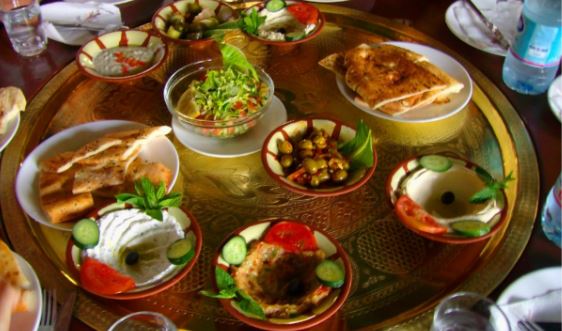
Did you realize that 18 countries are considered as part of the Middle East! They include Akrotiri and Dhekelia, Bahrain, Cyprus, Egypt, Iran, Iraq, Israel, Jordan, Kuwait, Lebanon, Oman, Palestine, Qatar, Saudi Arabia, Suria, Turkey, United Arab
Emirates, and Yemen. Although there is considerable variability in the cuisine of different Middle Eastern countries they share many similarities, with plant foods being front and center in each and every one. The primary meat is lamb, as pork is not consumed by Muslims or Jews. However, it is easy to design a 100% plantbased Middle Eastern menu.
When you hear the words, “Middle Eastern Foods”, what comes to mind? I tend to think of hummus, tabouli, flatbread, and dates. Middle Eastern Cuisine offers a treasure trove of dishes for plant-forward eaters. This article will introduce you to some super healthy versions of many Middle Eastern favorites.
There are several culinary traditions that stand out in Middle Eastern countries. The chart below provides a summary of some of the most common culinary customs.
| Food Category | Most Popular Foods | Traditional Dishes | Notes |
|---|---|---|---|
| Grains | Wheat, couscous (made from wheat), bulgur (cracked wheat), freekeh (immature green wheat), rice, barley, maize | Bread, flatbread, tabbouleh (salad with bulgur, parsley, tomato, lemon, olive oil), pilafs, rice casseroles, frik soup (made with freekeh) | Pita bread is served with most meals. These are fluffy, soft flatbreads. |
| Pulses | Chickpeas, black-eyed peas, fava beans, lentils, split peas | Ful mudammes (fava bean stew), falafels (chickpea balls), hummus | Ful mudammes is made of mashed fava beans and is often served at breakfast. It is also a popular street food. |
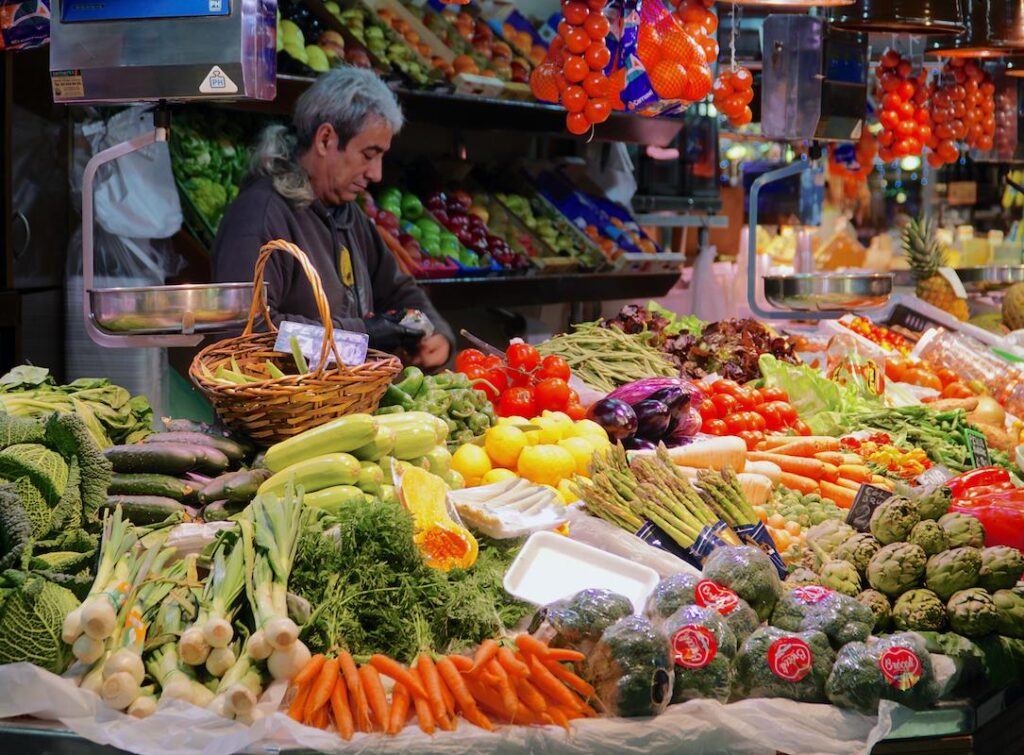
| Vegetables | Cabbage, chard, spinach, onions, garlic, eggplant, carrots, turnips, beets, cucumbers, tomatoes, squash, okra | Stuffed vegetables (grape leaves (dolma), peppers, chard, cabbage, squash, eggplant), baba ganoush (eggplant, tahini dip) | Cabbage accompanies many dishes and is often cooked slowly until soft or made into salad. |
| Fruits | Dates, figs, tamarind, pomegranates, grapes, citrus fruits, olives, mango, melons, mulberries, guava | Stuffed dates, cakes, puddings, and other sweets made with fruits | Most of the world's dates come from the Middle East. They are eaten fresh or dried. There are at least 10 types of dates. |
| Nuts/Seeds | Tahini (sesame seed paste), pine nuts, walnuts, pumpkin seeds, sunflower seeds, pistachios, almonds | Tahini (hummus, baba ganoush, falafel sauce), halva, tahini dressing, other nuts and seeds – salads, desserts, stuffed dates | Tahini is ubiquitous in many Middle Eastern dishes. Pistachios and walnuts are grown in many Middle Eastern countries. |
| Sweets | Baklava, puddings, pastries, stuffed dates, figs | Baklava (layered honey, syrup or honey and phyllo dough), honey cake, atayef (pancakes stuffed and folded into a half moon), revani (semolina cake), puddings, halva (nut and seed-based sweet), maamoul (cookies), fresh and dried fruits | While milk, eggs, and honey feature heavily in Middle Eastern desserts, these can be relatively easily replaced. 100% plant-based versions of almost every dessert are yours for the taking. |
| Beverages | Coffee, tea, juices | Strong coffee, lemon verbena, lemongrass, sage, and marjoram teas; jallab (deep red drink made from dates, grape molasses and rose water); tamarind juice; erk al-sous (made from the licorice plant and served cold) | Alcohol is banned in many predominantly Muslim Middle Eastern countries. |
| Flavorings/Spices | Olives, olive oil, butter, clarified butter, yogurt, sesame seeds, mint, parsley, anise, allspice, cardamom, caraway, cinnamon, coriander, cumin, nutmeg, turmeric, saffron, sumac | Main dishes, soups, salads, breakfast dishes, desserts | Baharat is a common spice blend used in many Middle Eastern countries. It includes black pepper, cardamom, cumin, cloves, coriander, cinnamon, nutmeg, and paprika. |
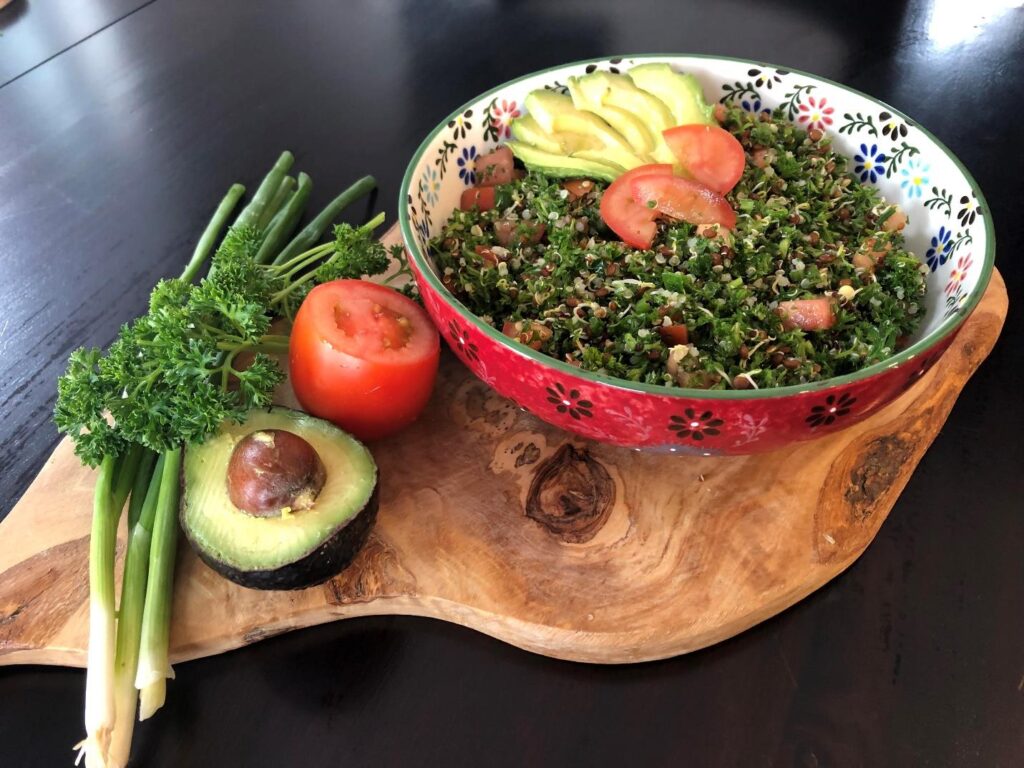
Tabbouleh with a Twist
Makes 9-10 cups
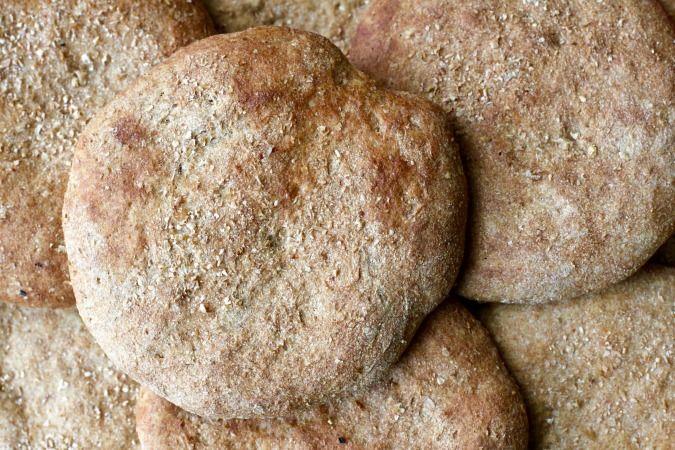
Tabbouleh is generally made with bulgur (cracked wheat), parsley, mint, tomatoes, garlic, lemon, and olive oil. This variation is more of a complete meal with the addition of a legume. In this variation, we omit the oil. Generally, a recipe like this would use about 1/3 cup of oil – which can be reduced for those who prefer to use a little bit. To add healthy, whole food fat, use avocado cubes or slices. Add the avocado to each dish just before serving rather than adding it to the whole salad. In the tabbouleh pictured here, sprouted French lentils were used. Serve tabbouleh with hummus and whole grain pita bread or flatbread (pictured below), if desired. This recipe can be cut in half if you wish.
- 4 cups finely chopped parsley
- 1 bunch chopped mint
- 2 cups cooked quinoa or bulgur
- 2 cups cooked or sprouted lentils
- 3 green onions, chopped
- 4 tomatoes, cubed
- 2 cloves garlic, minced
- ½ cup fresh lemon juice (about 3 lemons)
- ¾ teaspoon salt
- ½ teaspoon black cumin (optional)
- Pepper to taste
- Avocado cubes, for garnish
- In a medium-sized bowl, gently combine the parsley, mint, quinoa, lentils, green onions, tomatoes, garlic, lemon juice, salt, cumin, and pepper. Do not over stir. Refrigerate until serving.
- Serve tabbouleh with avocado cubes or slices.
Heartwarming Hummus
Makes 2 cups (500 ml)
Hummus is a staple in Middle Eastern cuisine. While there are subtle differences in flavorings, thickness, and smoothness, the ingredients vary only slightly. Hummus is made of chickpeas, tahini, garlic, fresh lemon juice, olive oil, and salt. Sometimes seasonings such as cumin are added. Hummus often accompanies breakfast and lunch but does make appearances at every meal. While it is popular for dipping pita and vegetables, it is also a great addition to a wrap or sandwich. This hummus recipe comes from The Kick Diabetes Cookbook, and it features a
basic, oil-free recipe, and 8 fun variations.
- 1½ cups cooked or canned chickpeas, drained and rinsed
- ¼ cup tahini
- ¼ cup lemon juice
- 2 cloves garlic, crushed
- ½ teaspoon salt
- ½ teaspoon ground cumin (optional)
- Pinch of cayenne (optional)
- ⅓ cup water, as needed
Put the chickpeas, tahini, lemon juice, garlic, salt, and optional cumin and cayenne in a food processor and process until smooth, stopping occasionally to scrape down the work bowl. Add water as needed to achieve the desired consistency. Stored in a sealed container in the refrigerator, the hummus will keep for 5-7 days.
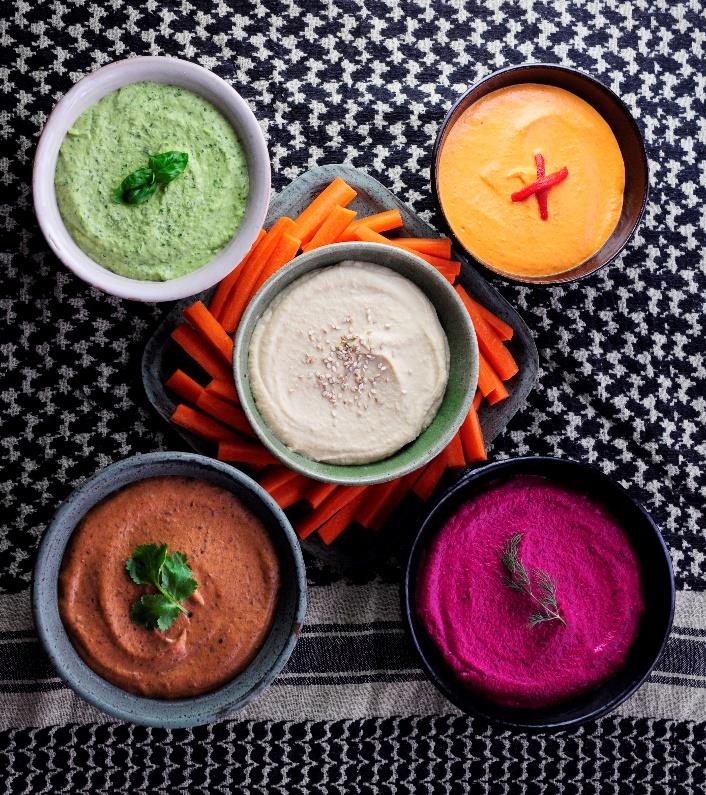
Variations
Black Bean Hummus: Replace the chickpeas with an equal amount of black beans. Blushing Beet Hummus: Omit the cumin. Add 1 boiled or roasted and chopped beet and 1 teaspoon dried dill weed.
Cheesy White Bean Hummus: Replace the chickpeas with an equal amount of cannellini or white beans. Add ¼ cup nutritional yeast flakes and ¼ cup jarred roasted red peppers.
Green Goddess Hummus: Add ½–1 cup fresh herbs such as basil, chives, cilantro, dill, or parsley, or a combination. Use additional herbs to garnish.
Lime Hummus: Replace the lemon juice with freshly squeezed lime juice.
Red-Hot Hummus: Add ½ teaspoon to 2 tablespoons chili paste or hot sauce, or ½–1 chipotle chili.
Roasted Red Pepper Hummus: Add ⅓ cup jarred roasted red peppers.
Sun-Dried Tomato Hummus: Put ½ cup sun-dried tomatoes in a heatproof bowl and cover with boiling water. Soak for 30 minutes. Drain, reserving the soaking water. Add the tomatoes to the other ingredients before processing and use the soaking water to thin the hummus as needed.
Pictured here are the Green
Goddess Hummus (top left),
Cheesy White Bean Hummus
(top right), Plain Hummus
(middle), Sun-Dried Tomato
Hummus, and Blushing Beet
Hummus.
Stuffed Dates
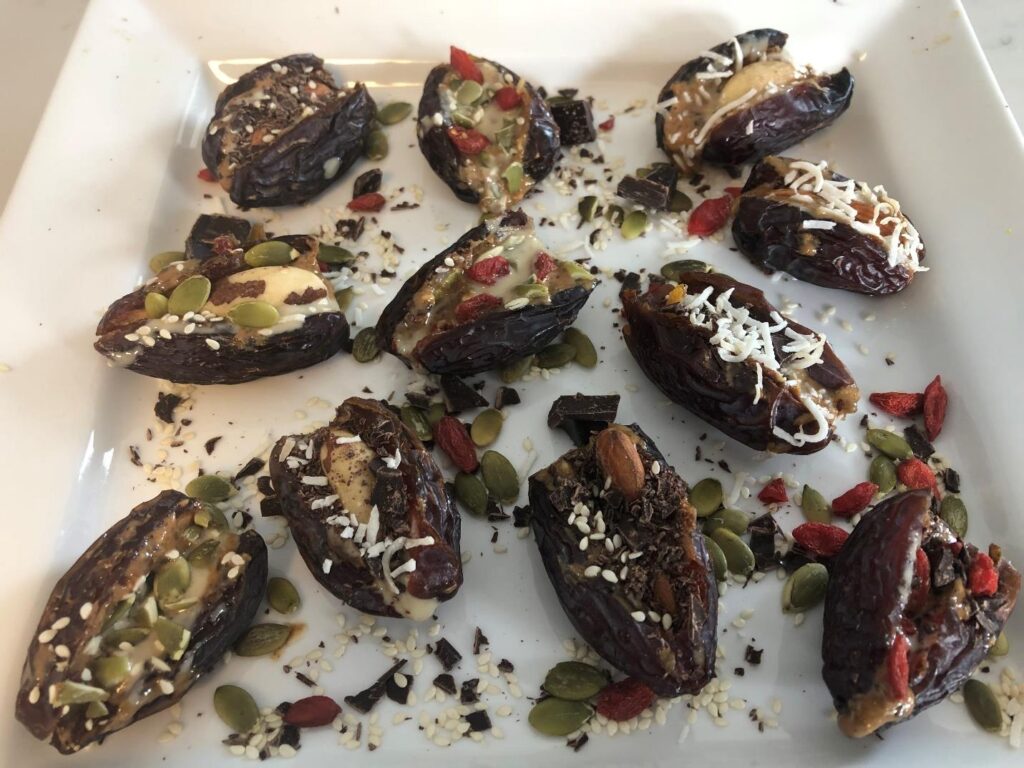
Stuffed dates may be the most popular Middle Eastern treat. The varieties of dates available are so amazing. If you are able to buy dates from a Middle Eastern market, try some of the less familiar ones. Use your imagination when filling dates. Make them fun and pretty.
Dates
- Medjool or other big soft dates
Fillings
- Walnut butter
- Tahini
- Cashew butter
- Pistachio butter
Toppings
- Chopped pistachios
- Whole almonds
- Chopped pecans or walnuts
- Unsweetened dried coconut
- Pomegranate seeds
- Dark chocolate chips or chunks
- Fresh dried berries, crushed
- Sesame seeds
- Pumpkin seeds
- Melted chocolate
- Goji berries
Spices
- Cardamom
- Cinnamon
- Ginger
- Nutmeg
- Coarse flaky salt


Brenda Davis, RD is a plant-based pioneer and author/co-author of 13 books on plant-based diets. She is co-Author of Plant-Powered Protein, Nourish: the definitive plant-based nutrition guide for families, Becoming Vegan: Comprehensive and Express Editions and Kick Diabetes Essentials.www.brendadavisrd.com