

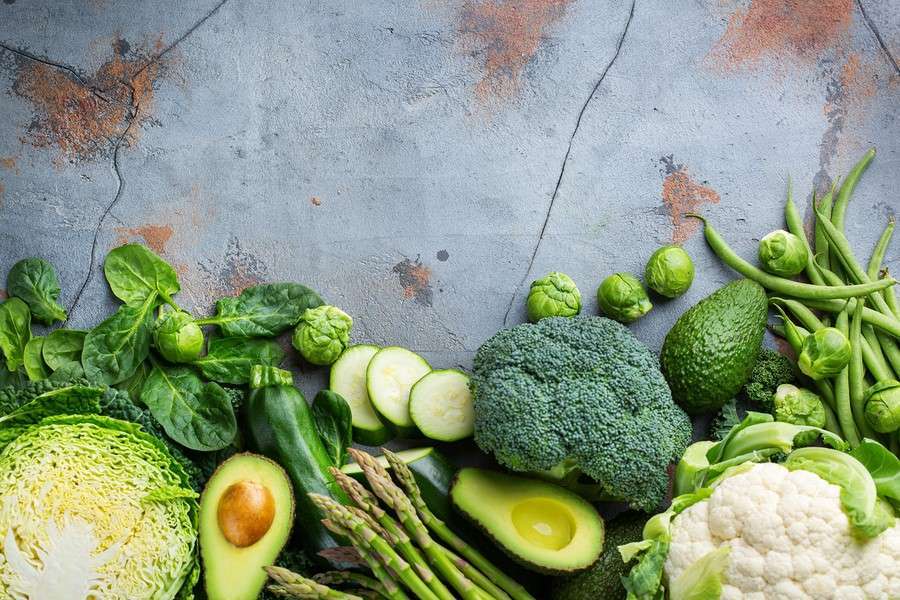
Every shade of green you can imagine can be found in whole plant foods. The green color in plants is because of a pigment called chlorophyll. Chlorophyll makes foods appear green because it reflects green-colored light and absorbs other colors. Darker green vegetables tend to have more chlorophyll. Plants use chlorophyll to make food during photosynthesis. Chlorophyll’s job is to absorb sunlight so it can be stored as energy and used to convert carbon dioxide and water into glucose. Plants use glucose and other nutrients to make leaves, and edible parts of plants.
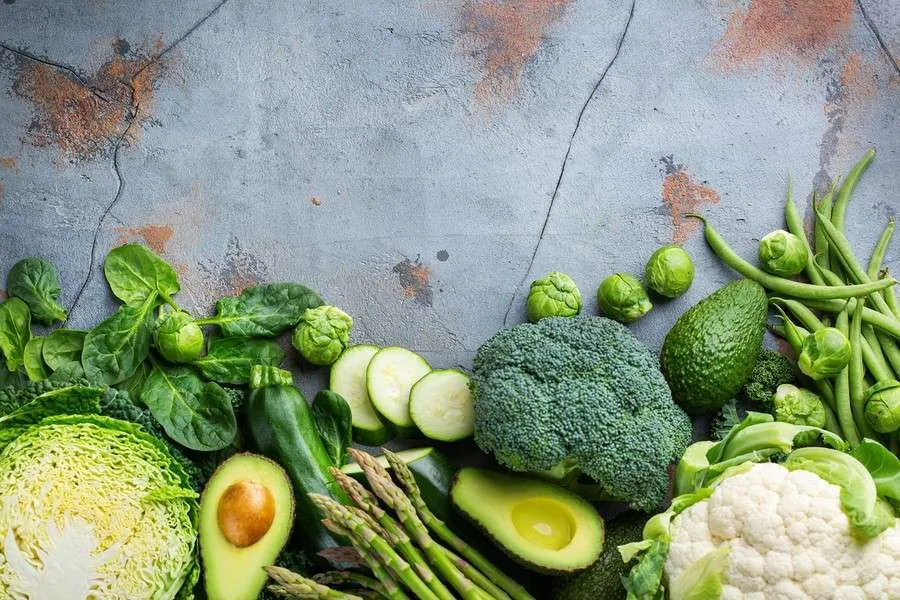
Most people think of vegetables when they think of green foods – things like leafy greens, asparagus, broccoli, celery, cucumbers, green peppers, and celery. Can you think of green foods in other food groups? There are lots of green fruits, like green grapes, green apples, kiwi, pears, honeydew melons, gooseberries, and avocados. There are green legumes such as peas, mung beans, edamame, green chickpeas, green lentils, and green lima beans. There are even green nuts and seeds such as pistachios and pumpkin seeds. Hempseeds also have green flecks in them. It is harder to come up with green grains, but freekeh, rye, and even brown rice can have a green hue. Generally, this greenish tinge just means that the grains are still immature. In this week’s show, So Many Cooks in the Kitchen will introduce you to So Many Green Foods that are worth singing about.
Why does the color change when I cook green vegetables?
Vegetables tend to lose their bright green color when they are overcooked or come in contact with acidic ingredients such as vinegar, lemon, or lime. Vegetables can turn an olive or yellowish green within about 10 minutes in boiling water. The longer you cook vegetables, the more chlorophyll is damaged, and the more the color changes. To preserve the color, cook green vegetables for no more than 5 to 7 minutes. Steam or cook them in as little water as possible. If they are starting to overcook, immerse them in ice water. As for acidic ingredients, if you can add these near the end of cooking or just before serving a salad, you will preserve color.
What’s so great about green?
Eating leafy greens, green veggies, and other green plant foods is highly protective to health. These foods reduce the risk of chronic diseases such as type 2 diabetes, heart disease, macular degeneration and many cancers. All green whole plant foods are healthful – NO exceptions!!! The most nutrient-dense green foods are dark leafy greens. This means that these foods contain the highest levels of nutrients per calorie. As a general
rule, the darker the green, the higher the nutritional value. Darker greens tend to have the highest amounts of vitamins, minerals, phytochemicals, and antioxidants. Dark leafy greens have been shown to provide protection against pancreatic cancer, while cruciferous vegetables tend to lower the risk of prostate cancer. Dark greens may also afford protection against eye disorders, arthritis, heart disease, hypertension, gum disease, and memory loss.
Should I avoid high oxalate greens?
Oxalates are organic acids in plants that can bind minerals making them unavailable for absorption. In most people, they are excreted in the stool or urine and are not a problem. However, in oxalate-sensitive individuals, high intakes can result in kidney stones and other health issues. Foods with the most oxalates are leafy greens such as spinach, beet greens, Swiss chard, and rhubarb. Other high oxalate foods are almonds, parsley, and cocoa powder. High-oxalate greens contain a lot of calcium, but because of the high oxalate content, only about 5% of the calcium can be absorbed. This compares to over 40% calcium absorption from low-oxalate greens. So, if you are relying on greens for calcium, or using greens in your smoothies, opt for low oxalate greens such as kale, Bok choy, and turnip greens. If you are at risk for kidney stones, you will need to limit your intake of oxalates. Most healthy people do not need to avoid nutritious whole plant foods that are high in oxalates.How can I increase green foods in my diet?
Adding green foods to your diet is fun and easy. Some of us are so used to including greens at most, if not all, of our meals, that a greens-free meal seems incomplete. Here are some simple ways of going green with your diet:- Think green as you make choices from each food group. For example, include pistachios or pumpkin seeds when you are shopping for nuts and seeds; opt for edamame, green chickpeas or green lima beans when selecting your legumes.
- Add green veggies to your meals
- Breakfast – add leafy greens to smoothies, broccoli and kale to scrambled tofu, spinach and asparagus to savory steel cut oats, or zucchini to muffins
- Lunch – have a full meal salad with leafy greens, broccolini, sprouts, pea pods, and edamame; add kale, spinach or other green veggies to soups and stews; use collard leaves instead of tortillas for wraps
- Dinner – add a salad to your meal; throw green veggies into soups, stews, casseroles, lasagna, or pasta dishes; make a creamy green veggie filling for crepes; enjoy a side dish of steamed green veggies plain or with a cashew red pepper cheese sauce
- Add greens to snacks – choose edamame, kale chips, green veggies with hummus, stuffed celery
- Add green foods to traditional favorites – add steamed greens and guacamole to black bean burritos; throw some broccoli into your spaghetti sauce; top your breakfast bowl with pumpkin seeds; add green chickpeas to your curry
- Drink greens – make or purchase a green vegetable juice; choose green or Macha tea
- Make it easier
- Buy triple-washed or ready-to-eat greens or green veggies
- Buy frozen broccoli, kale, edamame, peas, or green chickpeas for instant additions to soups, smoothies, and other dishes
- Select ready-made salads at the deli
- Order more greens at restaurants – ask for double the greens and half the rice in veggie bowls, select greens as a side dish, order a salad
- Pre-prep veggies – wash your broccoli so it is ready to use, made a big, undressed salad to last 3-4 days
Great Green Recipes
I have selected 3 recipes that are as green as can be. Your taste buds and your body will thank you.
Triple Green Smoothie Bowl
Makes 2 big smoothie bowls
Smoothie bowls make breakfast fun. Frozen peas may seem like an odd addition, but they add fiber, protein, and a gorgeous bright green color. Hempseeds provide an additional protein and omega-3 boost. Frozen ingredients are the key to thick, rich tasting smoothie bowls – make sure all other ingredients are very cold. Be creative with the smoothie ingredients (add a few slices of cucumber, broccoli, or some sliced celery), and with the toppings. To turn the smoothie bowl into a smoothie, increase the milk to 2 to 2 ½ cups (depending on how thick you like it). If you do not have a high-speed blender, this will work in a food processor. A regular blender is fine for the smoothie, but most will struggle with the thicker smoothie bowl.
- 3 cups greens (e.g., kale, power greens, sunflower sprouts, etc.)
- 1 ½ cups unsweetened fortified soy milk (or other non-dairy milk)
- 2 tablespoons hempseeds
- 2 tablespoons pumpkin seeds
- 3/4 cup frozen peas
- 2 frozen, sliced bananas
- 1 cup frozen kiwi, pineapple, or mango chunks
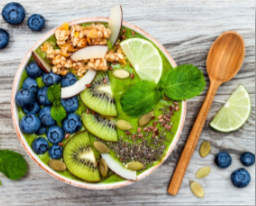
- Put ingredients in the order listed (always best to have the fresh ingredients in the bottom and the frozen ingredients on top) into a high-speed blender and blend on low speed, increasing speed slowly. Blend until smooth and creamy.
- Divide into 2 bowls. Decorate with rows of toppings side by side or create your own design.
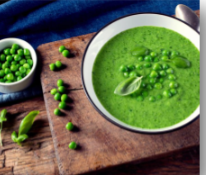
Queen of Greens Soup
Makes 10 cups This is a delicious and incredibly healthy dish. Get creative with seasonings, if you like – fresh ginger, mint, thyme, rosemary, and other herbs all work well. To make this soup extra special, steam 4 cups of green vegetables (e.g., chopped Brussels sprouts, small broccoli florets, coarsely chopped leafy greens, chopped green beans, thinly sliced leeks) and put about ½ cup (125 ml) on the top of each bowl of soup. Decorate with dehydrated colored peppers and pumpkin seeds.- 6 cups vegetable stock
- 1 white onion, coarsely chopped
- 4 cloves garlic, peeled and coarsely chopped
- 1 ½ cups cooked or canned cannellini beans (or other white beans), rinsed and drained
- 2 cups frozen peas
- 8 cups greens (washed and trimmed kale, spinach, collards, coarsely chopped)
- 3 cups broccoli, trimmed and coarsely chopped
- ½ cup fresh parsley, washed and coarsely chopped
- ¼ cup fresh basil (or 1 tablespoon dried)
- 2 cups unsweetened, unflavored non-dairy milk
- 1 medium ripe avocado or ½ cup cashews, soaked for 2-4 hours
- Juice of 1 lemon
- ½-1 teaspoon salt (optional)
- Freshly ground pepper to taste
Big Green Power Bowl
Makes 2 servings Power bowls make the perfect meal – satisfying, gorgeous and super nutritious. Black grains are suggested here for added phytochemicals, but you can substitute regular grains if you wish. Edamame is the protein addition in this dish, but other beans, lentils, chickpeas, tempeh, and tofu can be used. Vary the veggies to suit your taste – asparagus, beets, broccolini, green beans, mushrooms, green onions, and squash are excellent choices.- 1 cup cooked black quinoa, black barley, black rice, or wild rice
- 10 Brussels sprouts, sliced in half
- 2 cups broccoli, trimmed and chopped
- 1 cup snap peas or green beans
- 1 cup ½ inch beet or squash cubes
- 2 cups kale or collards, cut in thin strips, tightly packed
- 1 cup shelled frozen edamame
- 6 tablespoons of your favorite creamy
- dressing
- 1 cup sunflower or other sprouts
- 2 tablespoons pumpkin seeds
- Avocado slices
- Lime wedges
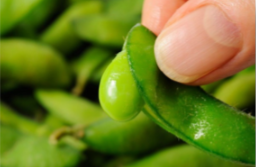
Steam vegetables. Begin by steaming the beets or squash cubes about 5 minutes; add the Brussels sprouts and steam another 5 minutes; add the broccoli and steam another 2 minutes; add the kale and snap peas and steam another 3 minutes. Boil edamame for 3-4 minutes. Drain. Place the warm grain in two wide serving bowls. Top each bowl, with steamed vegetables and ½ cup (125 ml) edamame. Pour dressing over the top and decorate with sunflower or other sprouts, a few slices of avocado, and a sprinkle of pumpkin seeds, if desired. Squeeze some fresh lime juice on top. Serve warm.
Guide to Steaming Vegetables
Steamed vegetables are a wonderful addition to any hot meal and are a cherished part of many power bowls. If steaming several different types of vegetables for one meal, begin with those that take the longest time to cook. While you can steam all vegetables, roasting or sautéing may be preferable for onions, garlic, mushrooms, and peppers for maximum flavor retention.
| Vegetable | Size | Time (in minutes) |
|---|---|---|
| Asparagus | Whole or 2-inch pieces | 7-10 - spears; 5-6 - pieces |
| Bean sprouts | As is | 1-2 minutes |
| Beans, green or yellow (wax) | Whole or 2-inch pieces | 6-10 - whole beans; 5-7 - pieces |
| Beets | ½ inch cubes; grated | 12-15 - cubes; 5 - grated |
| Broccoli, broccolini | Florets | 5-7 |
| Bell peppers | Strips or pieces | 2-3 |
| Brussels sprouts | Halved | 7-10 |
| Cabbage | Small wedges | 7-10 |
| Carrots | Thin slices; grated | 6-9 - slices; 3 - grated |
| Cauliflower | Florets | 5-7 |
| Celery | ½ inch slices | 5-7 |
| Daikon radishes | Peeled and sliced | 5 |
| Kale and collards | Trimmed and shredded or broken into pieces | 5-7 |
| Kohlrabi | ½ inch cubes | 5-8 |
| Greens (except spinach and kale) | Washed and chopped | 2-4 |
| Parsnips | Slices | 10-12 |
| Peas, sugar snap | Washed | 4-5 |
| Radishes | Halved | 5-7 |
| Spinach | Washed and trimmed | 2-3 |
| Squash | ¾ inch cubes | 7-10 |
| Sweet potatoes | ¾ inch cubes | 7-10 |
| Zucchini | Slices | 3-5 |
This article was written for a PCRM Food for Life Instructors group called So Many Cooks in the Kitchen. This group meets online to provide amazing cooking and nutrition demonstrations that are free to share globally. For wonderful whole food, plant-based cooking shows, tune in to their monthly broadcasts. https://somanycooks.com/about/
Brenda Davis, RD is a plant-based pioneer and author/co-author of 13 books on plant-based diets. She is co-Author of Nourish: the definitive plant-based nutrition guide for families, Becoming Vegan: Comprehensive and Express Editions and Kick Diabetes Essentials.


