


There is something soothing about a hot soup or stew, especially during the winter months. Soups and stews are a part of the cuisine of almost every culture, so exploring your options can lead you on a world food tour. While we all have our favorite go-to-recipes, seize the opportunity to expand your horizons by trying a few new dishes this season. One of the things that I love most about So Many Cooks in the Kitchen is that they make it fun and easy for followers to do just that!
3 Health Benefits of Soups and Stews
- They aid in weight loss.
High-water foods such as soups and stews generally have a lower calorie density (fewer calories per gram) than dry foods. This means you can be more generous with serving sizes for the same number of calories. Predictably, studies consistently show that soup consumption is protective against overweight and obesity. It seems that soups have powerful satiating properties. One study reported that eating soup as an appetizer decreased calorie intake at mealtime by 20%. A bowl of healthy soup often packs fewer calories than a fancy coffee or hot chocolate. As a bonus, soups provide far more fiber and micronutrients! - They boost intakes of vegetables in the diet.
Only about 9% of American adults meet the daily recommended intake for vegetables. That is less than 1 in 10 people! Soups and stews make increasing vegetable intake a breeze. Add a vegetable-based soup such as beet borscht, butternut squash soup, cream of broccoli soup, or tomato bisque to your lunch or dinner. Re-imagine a favorite stew with beans instead of beef, or chickpeas instead of chicken. When vegetables are cooked in soups or stews, most of the vitamins and minerals are retained because the broth is consumed. In addition, carotenoids in carrots, sweet potatoes, tomatoes, and squash are more efficiently absorbed. - They can help boost legume intake.
Less than 5% of Americans eat legumes (beans, lentils, split peas) daily, and about a third of Americans eat little or no legumes at all. Legumes are our most concentrated fiber sources, and fiber provides food for our vital gut microbes. One cup of bean or lentil soup can provide 8 to 10 grams of fiber! Legumes are also key plant sources of protein, iron, and zinc. They can serve as the featured ingredient in soups such as black bean, lentil, or pea, or as an addition to vegetable soups such as minestrone or vegetable-barley soup. Dig in.
Supercharging Soups and Stews
Soups and stews are only as healthy as the ingredients you add. When you use a variety of colorful vegetables, legumes such as lentils or beans, whole grains such as barley or quinoa, and plenty of herbs and spices, you are essentially supercharging your dishes. Opt for organic if it is accessible to you.
One of the easiest ways to boost the nutritional value of soups and stews is to add greens. Generally, this is best done in the last minute or two of cooking, depending on the toughness of the greens. Cook just until wilted. If you will not be eating the entire dish, add the greens only to the portion you will be eating. One easy way of doing this is to put some raw greens in your bowl and pour hot soup or stew over the greens – stir and enjoy.
While nuts and seeds may not come to mind when you think of supercharging your soups or stews, nuts and seeds can add creaminess and nutrition. Cashews and almonds can serve as a base for “cream” in soups and stews – simply blend nuts with water until smooth. Use in any “cream soup” to replace dairy cream or add to gravy in a stew. Dehydrated or toasted pumpkin or sunflower seeds can be sprinkled over soups or stews for texture, visual appeal, and nutrition.
Another worthwhile addition to soups and stews is a squeeze of fresh lemon or lime. Citrus adds vitamin C which can boost iron absorption. It is also an amazing flavor enhancer. Using citrus boosts flavor so much that it reduces the need for salt. In most cases, adding lemon or lime juice will allow you to cut salt by about 50%.
Finally, perhaps the most underrated secret weapons for supercharging soups and stews are herbs and spices. They add antioxidants, phytochemicals, and an incredible diversity of flavors. Of course, they are also essentially calorie-free. Use the freshest ingredients you can. Add oregano and basil to Mediterranean soups or stews; add cardamon, coriander, cumin, and turmeric to Indian soups; try allspice and fresh ginger in squash or pumpkin soups, and sprinkle smoked sweet paprika into a split pea soup. Let your imagination run wild!
Sidestepping Slippery Slopes
Not all soups and stews are nutrient-dense or low in fat and calories. Fortunately, the vast majority of plant-based soups automatically sidestep some rather slippery slopes. This is because the ingredients that tend to compromise the healthfulness of soups and stews are typically animal-based such as meat, ham, bacon, sausage, cream, and cheese. By choosing plant-based options, these ingredients are eliminated, keeping a lid on total and saturated fat and calories.
In plant-based soups there are two things be cautious of. The first is added fat. Generally, added fat is unnecessary in soups. Some recipes call for sautéing vegetables such as onions and garlic in oil, but it is easy to sauté in broth, water, or wine if you prefer. The second is salt and salty seasonings. Many soups contain 500-800 mg sodium per cup. You can easily cut sodium in half by simply going lightly on salt and salty seasonings such as soy sauce, tamari, and vegetable broths and bases. Remember that adding in lemon or lime can compensate for this reduction.
Easy Plant-based Swaps
Do you have a favorite soup that is typically made with animal products? You will be delighted to learn that all of these recipes can be re-created using plant-based ingredients. The table below provides suggestions for simple swaps in soups.| Type of Soup | Animal Product | Plant-based Replacements |
|---|---|---|
| Split pea | Ham | Smoked paprika, liquid smoke, veggie “ham” |
| Chicken noodle | Chicken | Chickpeas, seitan, tofu, veggie “chicken” |
| Cream soup | Cream | Cashew or almond “cream” (cashews or blanched almonds blended with water), non-dairy milk plus cornstarch, coconut milk, blended silken tofu and soymilk |
| Beef and barley | Beef | Beans, lentils, seitan, mushrooms, veggie “beef” |
| Crab or lobster bisque | Crab or lobster | Lobster mushrooms, hearts of palm |
| Taco soup | Ground beef | Firm tofu, crumbled and baked with taco seasoning, veggie ground round |
| Soup broth | Beef or chicken bones | Vegetable broth, vegetable bouillon, soy or tamari sauce, herbs, and spices |
Soups and Stews to Live Fo
In addition to the glorious soups and stews brought to you by So Many Cooks in the Kitchen, here are some of my favorites, including a lovely broth base.Better Broth Base
Commercial liquid vegetable broths work well for all the soup recipes but can be expensive and high in sodium. This better broth base provides a healthy alternative to broth cubes and powders. Adjust the herbs and spices to suit your palate. For a low or no-sodium version, decrease or eliminate salt.- 1 cup (250 ml) nutritional yeast flakes
- 1/2 cup (125 ml) dried onion flakes, or 3 tablespoons (45 ml) onion powder
- 2 tablespoons (30 ml) dried garlic flakes, or 1 tablespoon (15 ml) garlic powder
- 1 tablespoon (15 ml) salt
- 1 tablespoon (15 ml) oregano
- 1 tablespoon (15 ml) parsley flakes
- 2 teaspoons (10 ml) thyme
- 1 teaspoon (5 ml) black pepper
- 1 teaspoon (5 ml) turmeric
- 1 teaspoon (5 ml) paprika
- 1 teaspoon (5 ml) celery seed
Place all the ingredients in a medium bowl and stir until evenly distributed. Stored in an airtight container at room temperature, the broth base will keep for about 3 months. Use 1 tablespoon (15 ml) of the broth base in 1 cup (250 ml) of boiling water.
Black Bean, Corn, and Salsa Soup
Soup
- 1 onion, chopped
- 3 tablespoons vegetable broth
- 4 cups vegetable broth
- 2 cloves garlic, minced
- 1 teaspoon chili powder
- 1 teaspoon ground cumin
- 1 green pepper, chopped
- 1 14-ounce can crushed tomatoes
- 1 cup salsa (mild, medium, or hot)
- 2 14-ounce cans black beans, rinsed and drained
- 2 cups whole kernel corn
- Salt and pepper to taste
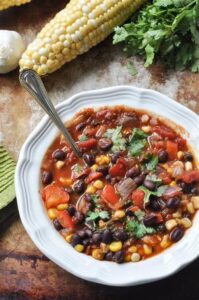
Optional Toppings
- Lime wedges (for squeezing on the hot soup just before eating)
- Fresh cilantro, chopped
- Avocado cubes
- Sliced green onions
- Sliced black olives
- Hot sauce
- Plant-based sour cream
- Baked tortilla chips
- In a large saucepan, sauté the onion in 3 tablespoons of broth for about 10 minutes, until the onion is softened.
- Stir in the garlic, chili powder, and cumin. Cook for another minute.
- Add 4 cups of vegetable broth, green peppers, crushed tomatoes, and salsa. Stir together and cook over medium heat until the broth comes to a boil. Lower the heat and simmer for about 15–20 minutes.
- Add the beans and corn. Simmer for another 15–20 minutes.
- Dish into individual bowls. Put out small bowls of additional toppings so each person can add the flavors they enjoy.
Curry in a Hurry Soup
This soup is very easy to make, and so tasty. Red lentils cook very quickly. Other types of lentils may be used but cooking time will need to be extended to an hour. If desired, add other vegetables such as cauliflower or additional greens, and fresh garlic, grated ginger, and turmeric. Curry paste makes this dish – our favorite is Patak’s mild curry paste. It is available at grocery stores and online. This recipe is from The Kick Diabetes Cookbook (Brenda Davis and Vesanto Melina, BPC, 2018)- 4 cups (1 L) vegetable broth or water
- 1 cup (250 ml) dry red lentils
- 1 onion, diced
- 2 cups (500 ml) chopped kale (stem removed) or spinach
- 1 tablespoon (15 ml) each of minced garlic and ginger
- 14 oz (398 ml) stewed or crushed tomatoes
- 1 1/2 tablespoons (22 ml) mild Indian curry paste, or more to taste
- ½–1 teaspoon (2–5 ml) salt
- Juice from one lime (optional)

In a large pot, place water, lentils, onion, and garlic. Bring to a boil and cook for about 20 minutes or until lentils are soft. Add tomatoes, greens, curry paste, salt, and pepper and cook for another 5 minutes or until greens are tender. If using, add lime juice just before serving.
Old Fashioned Bean and Vegetable Stew
- 1 large onion, diced
- 3 cloves garlic, minced
- 2 cups (500 ml) mushrooms, chopped or sliced
- 2 stalks celery, diced
- ½ cup (125 ml) white or red wine, or ¼ cup broth and ¼ cup wine vinegar
- 4 cups (1 L) vegetable broth
- 3 tablespoons (45 ml) tamari
- 2 bay leaves
- 1 tablespoon (15 ml) thyme
- 1 teaspoon (5 ml) savory
- 1 teaspoon (5 ml) rosemary
- ½ teaspoon (2 ml) turmeric
- 3 potatoes (sweet, white, red, or purple), chopped
- 1 small turnip, cut into cubes
- 2 medium-sized carrots, sliced
- ½ head cabbage (about 4 cups/1 L), chopped
- 3 cups (750 ml) cooked or canned beans (2 cans), drained and rinsed
- 2 cups (500 ml) green beans, cut into 1-inch (2.5 cm) pieces and steamed for 7 minutes (or until tender)
- 2 cups (500 ml) unsweetened, unflavored non-dairy milk
- 6 tablespoons (75 ml) cornstarch mixed with 6 tablespoons water
- Fresh ground pepper to taste

In a large saucepan, sauté onion, garlic, mushrooms, celery in wine (or broth and wine vinegar) on medium heat for about 10 minutes or until soft. Add tamari, bay leaves, savory, thyme, rosemary, potatoes, turnips, carrots, and cabbage. Cook for 45 minutes or until vegetables are tender. Stir in the cooked or canned beans and simmer another 15 minutes. Add steamed green beans, non-dairy milk, and cornstarch/water mixture. Stir until the gravy thickens. Remove bay leaf. Add pepper and serve hot with a squeeze of fresh lemon, if desired.
This article was written for a PCRM Food for Life Instructors group called So Many Cooks in the Kitchen. This group meets online to provide amazing cooking and nutrition demonstrations that are free to share globally. For wonderful whole food, plant-based cooking shows, tune in to their monthly broadcasts. https://somanycooks.com/about/


Brenda Davis, RD is a plant-based pioneer and author/co-author of 13 books on plant-based diets. She is co-Author of Nourish: the definitive plant-based nutrition guide for families, Becoming Vegan: Comprehensive and Express Editions and Kick Diabetes Essentials. www.brendadavisrd.com