


Brrr, it is cold outside! We are definitely approaching winter. I live in Calgary, Alberta, Canada, and here it can go down to -20 F or colder in the winter months. When it is that cold, we seek ways to stay warm. We can increase our body heat by exercising, wearing warmer clothes, taking a hot bath, adding an extra blanket to the bed, or by eating warming foods. But can foods really make you feel warmer? You bet they can.
Let’s explore some of the ways foods can take the chill off.
- Hot foods can add warmth to the body. Eating or drinking hot foods can dilate blood vessels, improve blood flow, and warm the body. A hot cup of herbal tea, some steamy chai, or a bowl of lentil soup can help take the chill off.
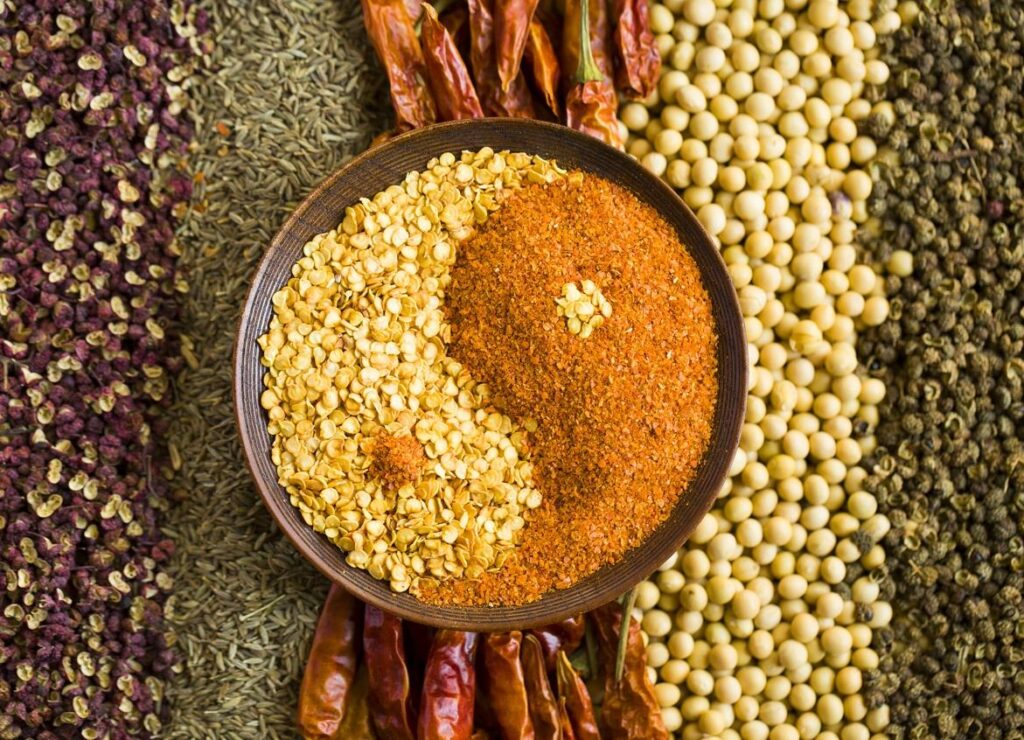
- Spices can deliver heat. Cinnamon has thermogenic properties and can help increase body temperature, as can garlic, ginger, and turmeric. Cayenne contains capsaicin, which increases blood flow to the gut, also generating body heat.
- High-fiber foods take longer to digest, keeping you warmer for longer. All foods produce heat during digestion, but foods that take longer to digest can keep us warm longer. Cooked grains and roasted root vegetables (with the skin on) are excellent choices.
- High-protein foods, such as legumes, provide nutrients like iron that help with blood flow. One of the signs of iron deficiency is cold intolerance and having cold hands and feet. When you boost iron intake, it can result in a warmer body.
5. High fat whole foods such as nuts and seeds provide concentrated calories and trace minerals that workto keep you warm. While you don’t want to overdo fat, you do want to get some healthy fats in your diet, and nuts and seeds are among the most healthful choices. We would be remiss if we did not acknowledge the central role that warming and cooling foods play in Traditional Chinese Medicine (TCM). TCM is based on the ancient philosophy of two opposing but complimentary forces – yin and yang. It is believed that good health is the product of a perfect balance between yin and yang in our bodies – and that balance is related to body temperature. The theory is that each individual has a unique manifestation of yin and yang and a deficiency or excess of either force triggers illness. Yin is cold, feminine, soft, and passive,
and yin foods are considered cooling foods. Yang is hot, active, positive, masculine, and restless, and yang foods are considered warming foods.

If the body has an excess of yin, eating more yang foods is encouraged. If yang predominates, adding yin foods is recommended. In this tradition, yang foods tend to be spicy, pungent, or sweet, while yin foods tend to be bitter or salty. Examples of yang or warming foods include alcohol, beef, lamb or deer, chicken, cinnamon, coconut, fatty fish, fried foods, flour, garlic, ginger, hot peppers, oats, onions, peanuts, pepper, pumpkin, shellfish, sweet potato, walnuts, and wheat. Examples of yin or cooling foods include apples, bananas, beans, bean sprouts, cabbage and other leafy greens, celery, cauliflower, cold water, grapes, leeks, mushrooms, pears, pork, seaweed, soybeans, squash, tofu, turnips, watermelon,
and yogurt.
According to this practice, warming foods increase the body’s yang by increasing energy and boosting circulation, while cooling foods increase the body’s yin by reducing body heat and eliminating toxins. As plant-based eaters, we lean more heavily towards yin foods. TCM practitioners might suggest that we add yang foods to the diet by using more garlic, onion, ginger, turmeric, cinnamon, walnuts, sweet potatoes, squash, and berries.
While the scientific data supporting the yin-yang theory of warming and cooling foods is limited, being aware of these theories is helpful to understanding food selection in Asian cultures. For example, many Asians, especially women, avoid drinking cold water. It is believed that drinking warm water nourishes the yang in the body.
Below are some wonderfully warming foods. These are three of my favorite recipes for chilly days. I hope you enjoy them too.
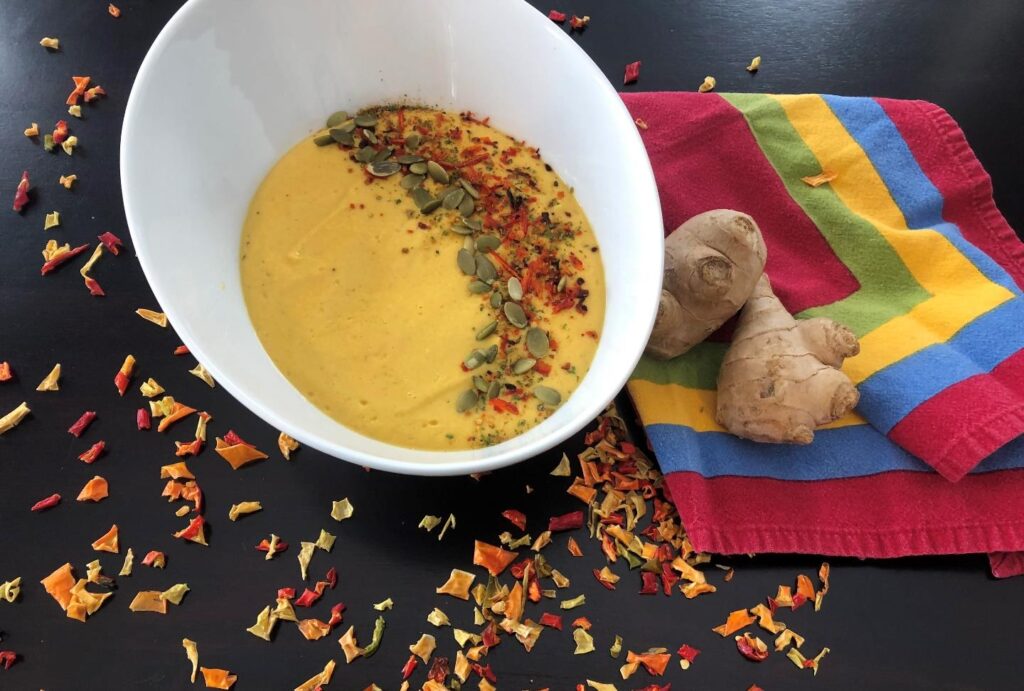
Pumpkin-Ginger Soup
Makes 8 cups
This soup, adapted from the Kick Diabetes Cookbook (Brenda Davis and Vesanto Melina) is the perfect warming food. Butternut squash works beautifully in this recipe. Roasting pumpkin or squash makes peeling a breeze (peeling pumpkin is optional – just be sure it is washed and blemishes are removed).
- 3 pounds fresh pumpkin or squash, or 2¼ cups (550 ml) mashed cooked pumpkin
- 4 cups vegetable broth or water
- 1 large onion, chopped
- 2 tablespoons light miso
- 2 tablespoons peeled and grated fresh ginger
- 1 tablespoon mild Indian curry paste
- ½ red chili, seeded and diced, or ⅛ teaspoon cayenne (optional)
- ½ teaspoon ground turmeric
- 1 cup unsweetened non-dairy milk
- 3/4 cup raw cashews
- Salt and ground black pepper, to taste
- Preheat the oven to 375°F (190°C). Line a baking sheet with parchment paper or a silicone baking mat.
- Cut the pumpkin or squash in half from the stem to the bottom. Scoop out and discard the seeds and membranes. Bake for about 1 hour, or until tender. To reduce the cooking time, cut the halves into wedges and arrange them in a single layer on the prepared baking sheet. Bake for about 40 minutes, or until tender.
- Scoop out the flesh (discard the skin) and transfer it to a large soup pot. Add the water, onion, miso, ginger, curry paste, optional chili, and turmeric.
- Cook over medium heat, stirring occasionally, for 30 minutes. Transfer the mixture to a blender and process until smooth. Pour it back into the soup pot.
- Place the non-dairy milk and cashews in the blender and process until smooth and creamy. If your blender is not high-powered, soak the cashews for a couple of hours, drain, and then blend. Pour the cashew cream into the soup and stir to combine. Cook over medium heat for 2–3 minutes, or until warmed through. Season with salt and pepper to taste. If desired, garnish with herbs, pumpkin seeds, dried colored peppers, or a swirl of reserved cashew cream. Serve hot.
Stove-Top Baked Beans
Makes 4 cups (1 L)
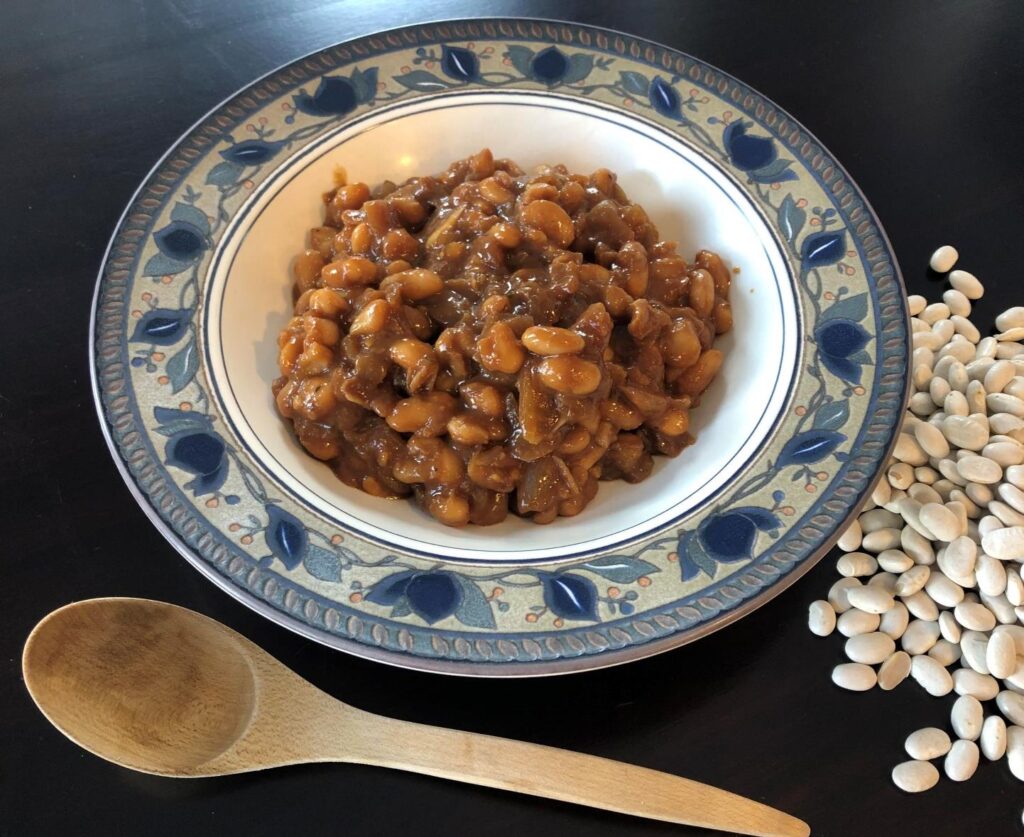
Classic recipes for Boston baked beans use navy beans, but any white beans work well – my favorite are Great Northern. You can play around with seasonings. Add a teaspoon of smoked paprika, thyme, savory, parsley, or Vegan Worcestershiresauce.
Add ¼ teaspoon cloves, cayenne, or hot sauce.
- 1 large onion, diced
- 3 garlic cloves, minced
- 1 cup broth, water, or liquid used to cook beans
- 3 tablespoons organic blackstrap molasses
- 3 tablespoons tomato paste
- 1 tablespoon apple cider vinegar
- 1 teaspoon dry mustard powder
- 3 cups cooked white beans (e.g., Great Northern, navy, or cannellini), or 2 (15-ounce) cans white beans, drained and rinsed
- ½ teaspoon salt, or to taste
- ¼ teaspoon freshly ground black pepper, or to taste
- Put the onion and garlic in a large, heavy saucepan over low to medium heat. Cook, stirring constantly, until the onion is slightly caramelized, about 7–10 minutes. If the vegetables begin to stick to the pan, add a little broth or water.
- In a small bowl, stir together the molasses, tomato paste, vinegar, and mustard powder.
- Add the broth and the molasses mixture to the onions. Bring to a boil and stir well.
- Add the beans, salt, pepper, and any other seasonings of your choice.
- Reduce the heat to low and simmer, stirring occasionally, until the liquid has thickened into a sauce, about 30–40 minutes. Serve hot.
Rainbow Veggie Fajitas
Makes 6 cups (1.5 L) filling, 8 tortillas
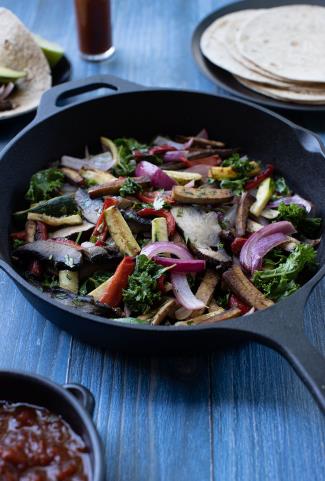
Fajitas are as fun to prepare as to eat! This version is from Plant-Powered Protein (Brenda Davis, Vesanto Melina, and Cory Davis, 2023). It was created by Brenda’s dear friend, Liliana Vallejo. It provides abundant protein with vibrant colors and textures.
Fajitas
- 12 ounces firm or extra-firm tofu, cut into 2-inch × ¼-inch (5 cm × 0.6 cm) strips
- 2 tablespoons tamari
- 4 teaspoons homemade or commercial fajita seasoning mix or Tex-Mex seasoning mix (see below)
- 2 cups sliced mushrooms
- 1 large red onion, sliced
- 8 cloves garlic, thinly sliced
- 3 tablespoons nonalcoholic or regular sherry, wine, or low-sodium or regular vegetable broth
- 1 small eggplant or 1 large zucchini, cut into 2-inch × ¼-inch strips
- 1 large red bell pepper, cut into 2-inch × ¼-inch strips
- 3 cups chopped kale or other greens
- ½ cup chopped fresh cilantro or parsley, packed
- 2 tablespoons freshly squeezed lime juice
- 8 whole-grain or gluten-free tortillas
Optional Additions
Hot sauce
Hot chiles
Guacamole
Sliced avocado
Shredded vegan cheese
Vegan sour cream
Lime wedges
- Preheat the oven to 350°F (177°C).
- Line a large baking sheet with a silicone baking mat or parchment paper, or lightly coat the baking sheet with cooking spray.
- Arrange the tofu on the prepared baking sheet. Brush the tofu with 1 tablespoon of the tamari and sprinkle it with 2 teaspoons of the fajita seasoning mix. Bake for 20 minutes, or until the tofu is slightly crispy.
- Put the mushrooms in a large skillet or nonstick pan over medium heat and cook, stirring constantly, until lightly browned, about 5 minutes.
- Add the onion, garlic, and sherry, and cook, stirring frequently, for 5 minutes.
- Add the eggplant, bell pepper, the remaining 1 tablespoon of tamari, and the remaining 2 teaspoons of the fajita seasoning mix. Cook, stirring frequently, until the eggplant is tender, about 10 minutes.
- Add the kale and cook, stirring frequently, for 3 minutes. Gently stir in the tofu, cilantro, and lime juice.
- Assemble the fajitas by placing about ¾ cup of the fajita mixture lengthwise in the center of each tortilla. Top with any optional additions of your choice. Squeeze optional lime wedges generously over the filling, fold each side of the tortilla toward the filling, and serve.
Homemade Fajita Seasoning
- 2 teaspoons (10 ml) chili powder
- ½ teaspoon (2 ml) ground cumin
- ½ teaspoon (2 ml) smoked paprika
- ½ teaspoon (2 ml) garlic powder
- ½ teaspoon (2 ml) onion powder
Put all the ingredients in a small jar, seal tightly, and shake well to thoroughly combine.


Brenda Davis, RD is a plant-based pioneer and author/co-author of 13 books on plant-based diets. She is co-Author of Plant-Powered Protein, Nourish: the definitive plant-based nutrition guide for families, Becoming Vegan: Comprehensive and Express Editions and Kick Diabetes Essentials. www.brendadavisrd.com