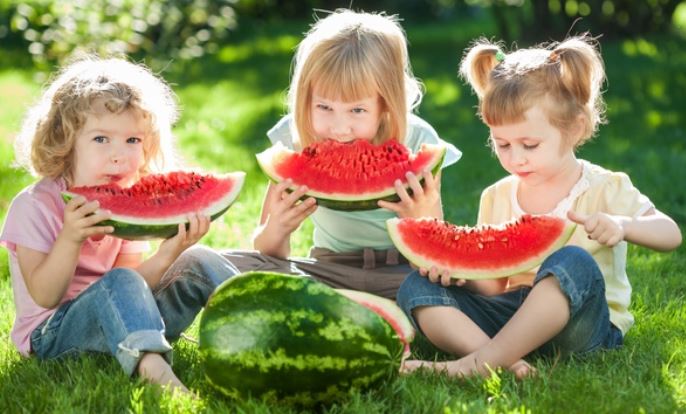
As summer temperatures rise and the heat of the season becomes more intense, cool desserts are a welcome treat. However, many popular favorites such as ice cream bars, ice cream sundaes, milkshakes, and strawberry shortcake are laden with sugar, saturated fat, colors, flavors, and preservatives. Fortunately, there are numerous ways to enjoy delicious summer treats that not only help beat the heat, but also add to our health and well being! Below you will find two of my top summer dessert pics.
Here are seven simple tips for creating healthy, cool, summer desserts. By following these guidelines, you can create healthy plant-based summer desserts that not only satisfy your sweet tooth but also nourish your body with the amazing flavors and textures that nature provides. As a bonus, you will help to inspire others to experiment more with delicious plant-based recipes.
- Focus on whole foods. Use unprocessed ingredients as the foundation of your plant-based summer desserts. Incorporate fresh fruits, vegetables, nuts, seeds, whole grains, and natural sweeteners such as dried fruits. Fruits are nature’s candy, and they play a key role in the creation of healthy desserts.
- Embrace fresh, seasonal ingredients. One of the things that summer brings is fresh produce grown close to home. If you are able to grow berries or have a fruit tree in your yard, that is a big bonus. Support your local farmers markets and enjoy the bounty local farmers provide. It is amazing how much better food tastes when it is fresh from your garden or a nearby farm.
- Minimize added sugars. While it is OK to use a little natural sweetener such as maple syrup, add as little as possible. Instead, rely on the natural sweetness of fresh or dried fruits or use spices such as cinnamon or pure vanilla extract to enhance sweetness. Another option is monk fruit sweetener. It is about 200–300 times sweeter than table sugar, so you don’t need much, and it is essentially calorie-free. Be aware that hyper-sweet sugar substitutes can induce cravings for sweet foods, so keep intake moderate. Processed foods have more sugar than you might imagine. A single cup of fruit-flavored yogurt (dairy or nondairy) contains about 9–11 teaspoons of sugar, ¾ cup of nondairy ice cream has about 7 teaspoons of sugar, and a regular popsicle has about 4 teaspoons of sugar.
- Add healthy fats. The healthiest fats come from whole foods such as nuts, seeds, nut and seed butters, avocado, and tofu. Fresh or dried coconut can also make a nice addition. Replace eggs with ground flax or chia seeds.
- Replace refined flours with healthy alternatives. So many desserts rely on white flour as a base. Instead, use a whole-grain flour such as stone-ground whole wheat, kamut, or spelt, or an alternative flour such as almond, coconut, oat, or buckwheat.
- Choose nutrient-dense ingredients. Of course, vegetables and fruits do well in this regard, but legumes, nuts, seeds, and whole grains also do well on this front. Think black bean brownies, chickpea peanut butter cookies, or adding hemp, chia, or flax to your recipes.
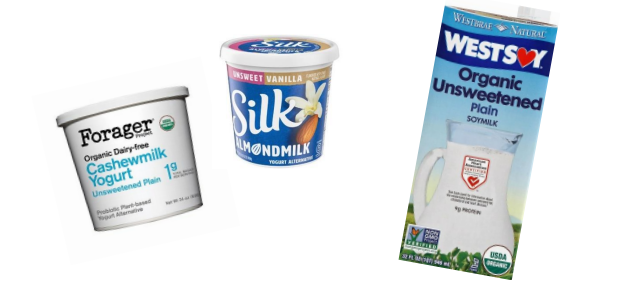
- Replace dairy with nondairy alternatives. Many recipes call for milk, yogurt, or cream cheese. There are plant-based alternatives for all of these. Soy, almond, cashew, oat, or hemp milks make great replacements for dairy milk and yogurt. While commercial cream cheeses often have coconut or other oils added, it is easy to make your own using almonds or cashews.
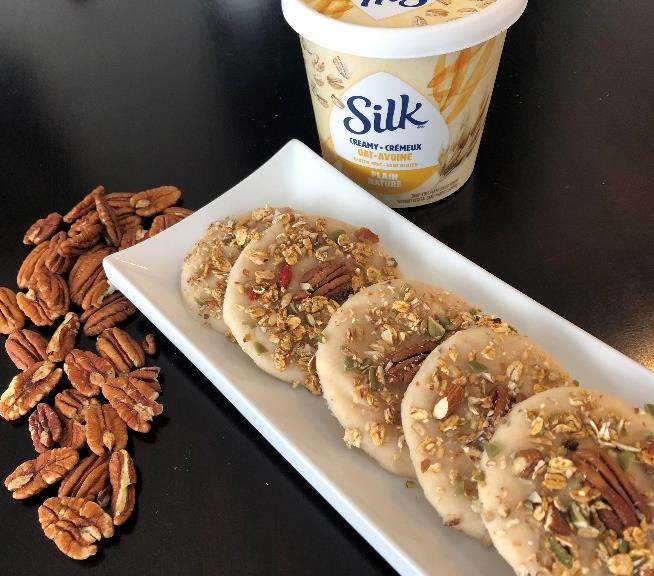
Dairy-free Yogurt “Cookies”
Makes 8 “Cookies”
Frozen yogurt “cookies” are a super fast and easy summer dessert. This version is made with plain plant-based yogurt. It works beautifully with soy, oat, almond, or coconut yogurt. Get creative with toppings – add chocolate chips, coconut, dried fruits, or whatever you think might be a fun addition.
Ingredients:
- 1 cup plain non-dairy yogurt (the thicker, the better!)
- 1 tablespoon maple syrup
- ½ teaspoon pure vanilla extract
- 1/3 cup granola
- 1/4 cup lightly roasted and chopped nuts (e.g., almonds, pecans, walnuts) and/or seeds (e.g., pumpkin or sunflower seeds)
Instructions:
- Line a baking sheet with a silicone mat or parchment paper.
- Stir together the yogurt, maple syrup, and vanilla.
- Pour about 2 tablespoons of the yogurt mixture onto the prepared mat for each cookie. Spread with the back of a spoon to form a circle.
- Sprinkle each “cookie” with granola and the nuts and seeds.
- Freeze for at least 4 hours.
- Remove from the silicone mat and enjoy immediately. (Do not allow the “cookies” to thaw!)
Variations:
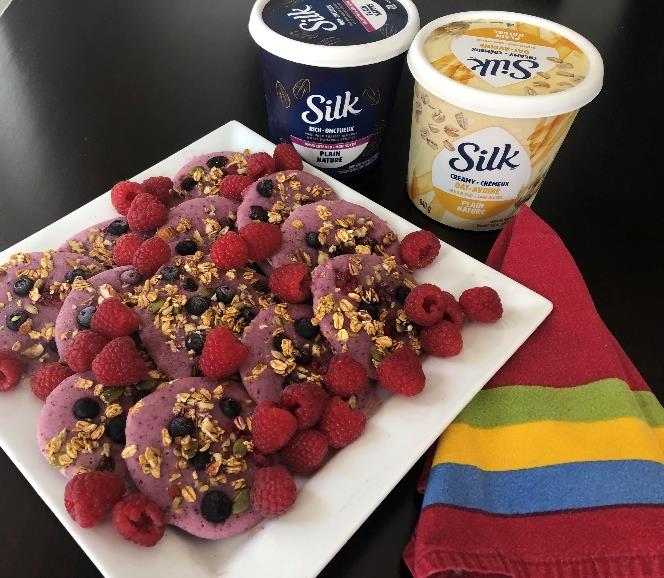
- Berry Good Yogurt “Cookies”. Blend 1 cup nondairy plain yogurt with 2 tablespoons healthy, low sugar jam or ½ cup berries (using fresh or frozen berries makes the “cookies” a little icy in texture). Spread the mixture over a silicone mat on a cookie sheet. Sprinkle with chopped fresh or frozen berries, and a few nuts or seeds. Freeze at least 4 hours.
- Peanut butter and Banana Yogurt “Cookies” – blend 1 cup nondairy plain yogurt with 1 banana. Spread the mixture over a silicone mat on a cookie sheet. Drizzle the yogurt with peanut butter (thin with a little yogurt if too thick). Top with roasted peanuts and chocolate chunks, if desired.
- Yogurt Bark. Instead of making cookie rounds, simply spread the yogurt on the silicone mat (on a cookie sheet). Top as desired and freeze. Break apart the frozen yogurt as you would a chocolate “bark”.
Pineapple Banana Soft Serve
Ice cream is the quintessential summer treat. For plant-based, dairy-free eaters, there are always commercial ice creams, but they are not terribly healthy choices as they are generally very high in sugar and fat. My favorite vegan “ice cream” is made with frozen bananas and other frozen fruit. One of my top picks is pineapple – there are just 2 ingredients – pineapple and bananas. Feel free to replace the pineapple with frozen mango or to simply add a mango to the mix.Ingredients:
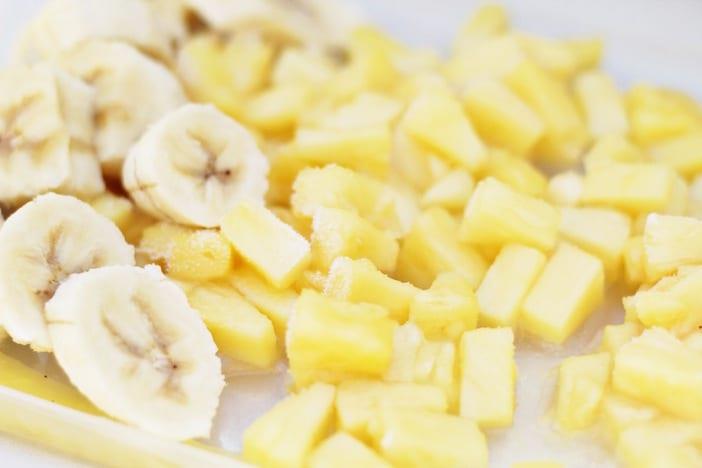
- 2 ripe bananas, peeled, chopped into a few chunks and frozen
- 1 cup chopped frozen pineapple
- Using a Yonanas* machine or an ice cream-making juicer (e.g., Champion or Green Star), put the fruit through the machine and enjoy. If you do not have one of these machines, you can use a food processor or high-powered blender. If using either of these, add about ¼ cup plant-based milk, as it needs the liquid to enable blending. Add a little more if needed.
- Serve the ice cream immediately. Top with peanuts, nuts, seeds, coconut, granola, or berry sauce, if desired.
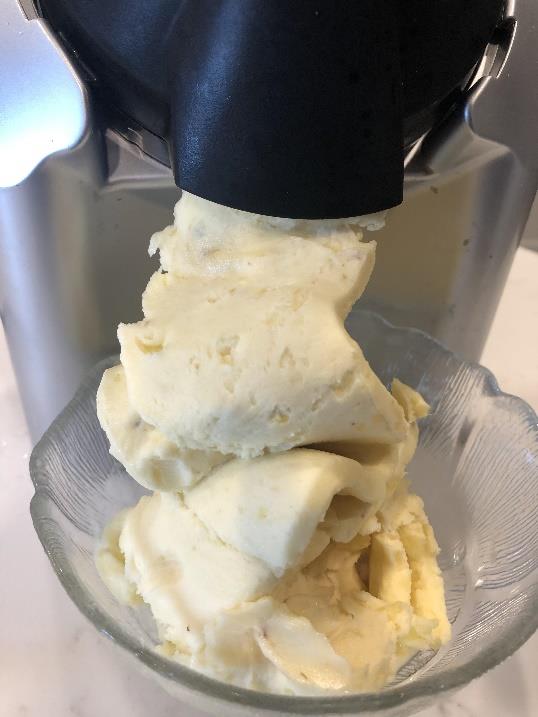
*A Yonanas machine is a special machine designed to turn frozen fruit into ice cream. It is super easy to use and is fairly inexpensive. New Machines cost between $40-$100. I found a very new looking machine at a thrift store for $7.00!
This article was written for a PCRM Food for Life Instructors group called So Many Cooks in the Kitchen. This group meets online to provide amazing cooking and nutrition demonstrations that are free to share globally. For wonderful whole food, plant-based cooking shows, tune in to their monthly broadcasts. https://somanycooks.com/about/


Brenda Davis, RD is a plant-based pioneer and author/co-author of 13 books on plantbased diets. She is co-Author of Plant-Powered Protein, Nourish: the definitive plantbased nutrition guide for families, Becoming Vegan: Comprehensive and Express Editions and Kick Diabetes Essentials. www.brendadavisrd.com