
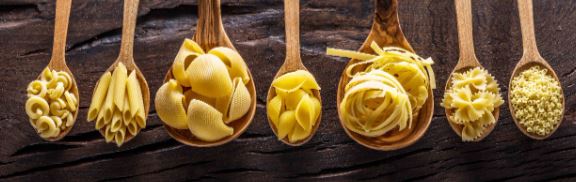
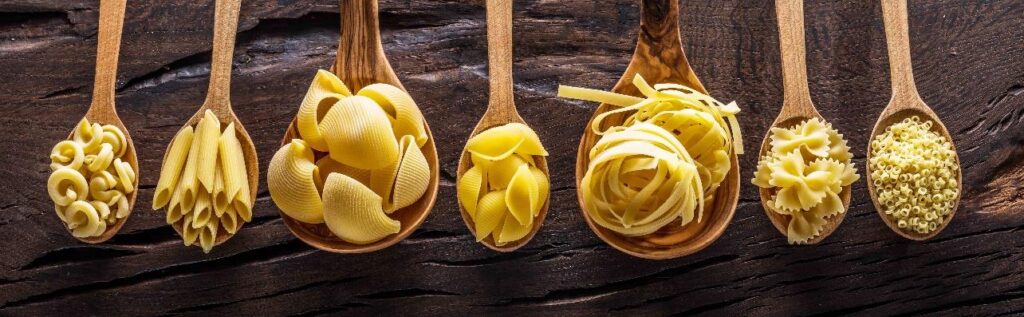
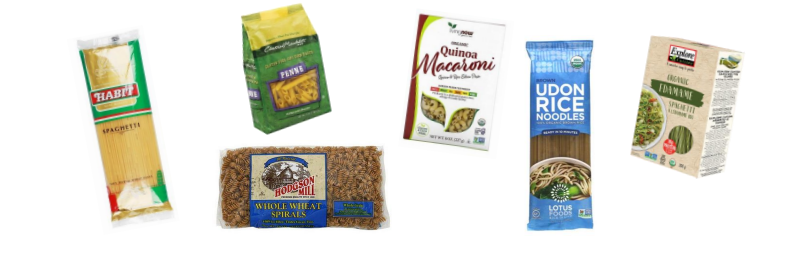
Kids LOVE pasta, and most of us never outgrow our affinity for this fun staple. Pasta is a beloved comfort food in every corner of the world. Pasta is cherished for its versatility and ability to pair with a wide range of sauces and ingredients. There are countless varieties of pasta, each with its own unique shape, texture, and culinary purpose. There is no pasta shape that cannot used to make plant-based dishes. While pasta can come in the form of letters, stars, or trees, some of the most popular shapes from A to Z include:
- Angel Hair: Also known as capellini, this pasta is shaped like spaghetti, only very thin and delicate, making it ideal for light or broth-based sauces.
- Bowtie: Known as farfalle or butterfly pasta, bowtie pasta is a fun shape for kids. It is perfect for light sauces or pasta salads.
- Fettuccine: These are wide and flat noodles often used in creamy sauces like Alfredo. Its broad surface area allows for a luxurious coating of the sauce.
- Gnocchi: These are small potato dumplings with a unique, dense texture. They are served with various sauces, including pesto and creamy sauce.
- Lasagna: A flat pasta sheet traditionally layered with cheese and tomato sauce to create a rich, baked dish. Plant-based versions using cashew cheese or vegan mozzarella and lots of vegetables are more nutritious and can be every bit as delicious.
- Linguine: Similar to spaghetti but wider, linguine is often used with pesto-based sauces. Its flat shape provides a delicate texture.
- Macaroni: Pasta shaped in narrow tubes and sometimes curved (hence also called elbow-shaped) and cut into short lengths. The most common use is for macaroni and cheese, although many delicious vegan versions are available.
- Manicotti: Large, cylindrical pasta tubes that are typically stuffed with ricotta cheese and baked in marinara sauce. Of course, vegan ricotta can be made from tofu!
- Orzo: Resembling grains of rice, orzo is used mostly in soups and salads. Its small size and unique texture make it especially appealing.
- Penne: This pasta has a cylindrical shape with diagonal cuts at the ends, creating a versatile and sturdy pasta that works well with both creamy and tomato-based sauces. It is also a good choice for pasta salad.
- Ravioli: Square or round pasta pockets filled with a variety of ingredients that can easily be plant-based—butternut squash or mushroom fillings are favorites. They are typically served with flavorful sauces.
- Rotini: This corkscrew-shaped pasta is great for trapping sauces and ingredients within its spirals. It’s an excellent choice for pasta salads as it holds up well and is very attractive.
- Seashells: Also called conchiglie, this seashell-shaped pasta cradles sauces, making it a popular choice for baked dishes. They come in various sizes, from small to jumbo.
- Spaghetti: Perhaps the most popular pasta of all, spaghetti is made of long, thin, cylindrical noodles that you can swirl around your fork. While it is often eaten with tomato sauce or pesto, spaghetti can be enjoyed with any sauce you like.
- Tortellini: This ring-shaped stuffed pasta comes in various fillings, but most include meat or cheese. However, some vegan choices are available, such as spinach or plant-based cheese. They are typically served in broths or with creamy sauces.
- Ziti: Similar to penne but with straight-cut edges, ziti is commonly used in baked pasta dishes and pairs well with robust sauces.
Today’s So Many Kids in the Kitchen show will provide you with some yummy plant-based pasta dishes that kids love to make. This appendix also provides 2 plant-based pasta entrees you will love!
What is Pasta Made Of?
Pasta is traditionally made from wheat, but it can be made from other grains such as buckwheat, corn, quinoa, or rice. Pasta is made by mixing flour (grain or legume flour) with water to form a dough, which is then kneaded and shaped into various pasta forms. Sometimes beet or spinach powder are added for color. The type of flour used will affect the water to flour ratio. The pasta is then shaped. To make commercial
dried pastas, the pasta is dried at a low temperature for several days until the moisture is gone. This gives the pasta great shelf stability
Semolina durum wheat is the preferred choice for making dried pasta because of its high gluten content, which gives pasta its elasticity and allows it to hold its shape during cooking. Semolina is a coarse flour that gives pasta its characteristic yellow color, firm texture, and ability to hold sauces well.
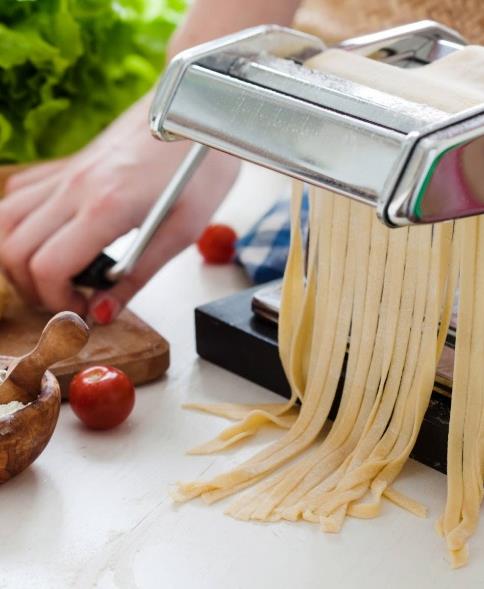
A lower protein durum wheat, which is more finely ground, is often used in the production of fresh pasta, providing a smoother, softer texture than what is seen in most dried pastas. Sometimes, all purpose or soft wheat flour is used, especially for homemade pasta. This results in a softer, less firm texture compared to durum wheat pasta.
Traditional wheat-based pastas are common in Europe and North America, while rice and buckwheat pastas are more common in Asia. In Western nations, alternative grain pastas have become popular as many are gluten-free (e.g., corn,
quinoa, and rice; buckwheat is gluten-free but some buckwheat pasta also contains wheat).
Legume-based pasta is a pasta alternative made of legume-based flour. The most common legumes used for this type of pasta are black beans, chickpeas, edamame, lentils, and peas. Legume-based pasta is more protein and nutrientdense than grain-based pasta.
Pasta Nutrition 101
Pasta can add fun, flavor, and nutrition to any diet. Here are some of the wonderful nutritional benefits of pasta:Carbohydrates: Grain pastas are high in carbohydrates, which are essential for providing energy to the body, especially for active individuals and growing children. Whole grain pastas are more nutrient-dense than refined pastas.
Legume-based pasta is much lower in carbohydrates.
Protein: While pasta is not considered a high protein food, a cup of cooked wheat pasta has about 8 grams of protein. Legume-based pasta is much higher in protein, often providing 15-24 grams of protein per cup of cooked pasta. Of
course, the protein content of pasta dishes can easily be boosted by adding tofu, beans, lentils, nut or seed cheeses to the sauce or fillings.
Fat: Pasta is naturally low in fat, making it a good choice for individuals seeking lower-fat meal options.
Fiber: Pasta is a good source of fiber, with legume-based and whole-grain pastas
providing the most.
Micronutrients (vitamins and minerals): Pasta, especially whole wheat versions, contains essential nutrients like B vitamins (thiamin, riboflavin, niacin), iron, and magnesium. These nutrients are important for overall health, including energy
metabolism and maintaining healthy red blood cells. Legume-based pasta is higher in iron and potassium, and although figures are not available for many other minerals, the mineral content will be similar to the legumes it is made from,
so we can expect it will be higher in zinc as well.
Glycemic Impact (GI): Pasta has a much lower GI than most other flour-based foods because it is dense rather than light and fluffy. The longer it is cooked, the higher the GI becomes.
A Nutritional Comparison of Various Pastas (per 1 cup cooked pasta)
| Nutrient | Wheat (refined, enriched) |
Wheat (whole) |
Corn | Quinoa | Rice | Edamame* |
|---|---|---|---|---|---|---|
| Calories | 237 | 225 | 176 | 252 | 233 | 210 |
| Protein (g) | 8.7 | 9 | 3.7 | 5.4 | 5.9 | 22 |
| CHO (g) | 46 | 46 | 39 | 52 | 54 | 22 |
| Fat (g) | 1.4 | 2.6 | 1 | 3.4 | 2.8 | 3.5 |
| Fiber (g) | 2.7 | 5.9 | 6.7 | 5.5 | 2.9 | 17 |
| Iron (mg) | 1.9 | 2.6 | 0.35 | 1.2 | 0.9 | 6.7 |
| Magnesium (mg) | 27 | 82 | 50 | 68 | 61 | N/A |
| Potassium (mg) | 66 | 145 | 43 | 105 | 42 | 952 |
| Selenium (mcg) | 40 | 55 | 3.9 | 3.7 | 19 | N/A |
| Zinc (mg) | 0.7 | 1.9 | 0.9 | 1.2 | 1.4 | N/A |
| Thiamin (mg) | 0.41 | 0.24 | 0.07 | 0.2 | 0.16 | N/A |
| Riboflavin (mg) | 0.21 | 0.15 | 0.03 | 0.15 | 0.14 | N/A |
| Niacin (mg) | 2.6 | 4.7 | 0.78 | 0.75 | 2.5 | N/A |
| B6 (mg) | 0.07 | 0.14 | 0.08 | 0.08 | 0.13 | N/A |
| Folate (mcg) | 110 | 31.7 | 8.4 | 13.3 | 6.8 | N/A |
Source: US Department of Agriculture, Agricultural Research Service. FoodData Central, 2019.
https://fdc.nal.usda.gov/
*Nutritional composition data limited for legume-based pasta. N/A = Not availabl
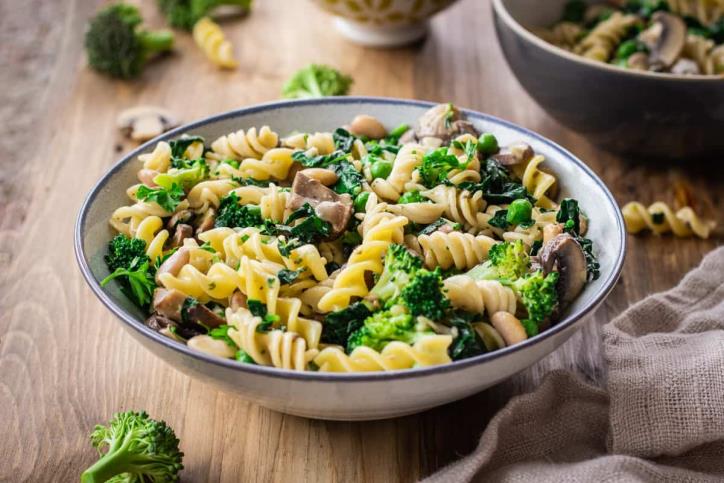
Lemony Chickpea Pasta with Mushrooms and Broccoli
Serves 4
This pasta dish comes together for a quick weeknight meal. You can double the recipe to have extra for lunchboxes. The chickpea pasta has a nice hearty flavor and my kids actually love the texture. Whenever I use citrus in a recipe, I like to use the zest as well. It adds amazing flavor and I prefer not to throw it out. This recipe was created by Reshma Shah and is adapted from Nourish: The Definitive Plant-Based Nutrition Guide for Families (Reshma Shah and Brenda Davis).
- 8-ounce package of chickpea pasta (shells, elbow, or rotini work well)
- 2 Tbsp vegetable broth
- 1 medium onion, diced
- 2 garlic cloves, minced
- 2 Tbsp tamari sauce
- Pinch of red pepper flakes (optional)
- ½ pound sliced mushrooms
- 1 large head of broccoli, cut into small florets
- 2–3 cups spinach
- Zest of 1 lemon
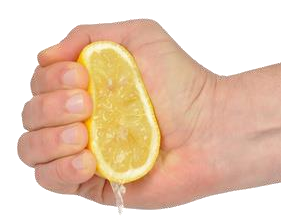
- Juice of 1 lemon
- Pepper to taste
- Chopped fresh parsley
- Vegan parm (see recipe below)
Directions:
- Bring a large pot of salted water to a boil for the pasta.
- Heat a large skillet or pan (make sure it is large because the pasta will also go into this pan). Warm the broth, then add a pinch of optional red pepper flakes and the onions. Sauté until golden brown.
- Add the garlic and sauté for another minute or so.
- By this time, the water should be boiling. Add the pasta to the boiling water.
- Add the sliced mushrooms and tamari to the onions. Sauté until the mushrooms are caramelized and tender, adding a little more broth if they begin to stick to the pan. Finally, add the spinach and cook until wilted. If the pasta is still cooking, turn off the heat and set the pan aside.
- When the pasta is almost cooked, add the broccoli florets directly to the pot and cook for another 3–5 minutes, until both the pasta and broccoli are tender.
- Drain the pasta and broccoli, then transfer them to the pan with the mushrooms. Toss to combine. Add the lemon zest, a squeeze of lemon juice, pepper to taste, and the fresh parsley. Top with vegan parm and serve.
Bonus Vegan Parm
- ¾ cup roughly ground almonds, cashews, sunflower seeds, or a combination
- ¼ cup nutritional yeast
- 1 teaspoon onion granules
- 1 teaspoon garlic granules
- ½ teaspoon sea or kosher salt
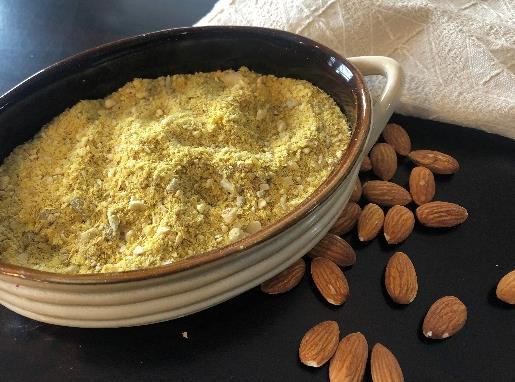
Mix to combine in a mason jar. Great over pastas, soups, salads, and popcorn.
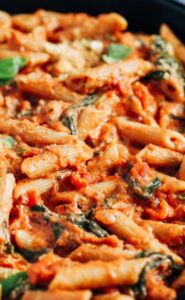
Creamy Tomato Pasta
Serves 4
This is an easy pasta dish that kids love. It is fast and easy to make! Serve with a protein dish such as tofu or add tofu or beans to the pasta.
Ingredients:
- 12 ounces of pasta (penne or rotini work well, but any pasta will do)
- 2 Tbsp vegetable broth
- 1 small onion, finely chopped
- 2 cloves garlic, minced
- 1 (14-ounce) can crushed tomatoes
- ½ tsp dried basil
- ½ tsp dried oregano
- 1 cup unsweetened nondairy milk (e.g., cashew, oat, or almond)
- 3 Tbsp cornstarch mixed with 3 Tbsp water
- 4 cups spinach
- Salt and pepper to taste
- Fresh basil and parm for garnish
Directions:
- Heat a large pot of water. Cook the pasta according to the package instructions until al dente. Drain, rinse with cold water, and set aside.
- In a large skillet, heat the vegetable broth, then add the onion and garlic and sauté until soft. Stir in the crushed tomatoes, dried basil, oregano, salt, and pepper. Simmer for 10–15 minutes.
- Reduce the heat and add the nondairy milk and the cornstarch mixed with water. Stir until the sauce thickens. Add the spinach and cooked pasta, stir gently to combine, and cook until the spinach is wilted and the pasta is heated through.
- Serve with vegan parm, a few sprigs of fresh basil, and a green salad. If you prefer a one-pot meal, add the spinach during the last minute or two of cooking.
This article was written for a PCRM Food for Life Instructors group called So Many Cooks in the Kitchen. This group meets online to provide amazing cooking and nutrition demonstrations that are free to share globally. For wonderful whole food, plant-based cooking shows, tune in to their monthly broadcasts. https://somanycooks.com/about/


Brenda Davis, RD is a plant-based pioneer and author/co-author of 13 books on plantbased diets. She is co-Author of Plant-Powered Protein, Nourish: the definitive plantbased nutrition guide for families, Becoming Vegan: Comprehensive and Express Editions and Kick Diabetes Essentials.www.brendadavisrd.com