What is your favorite way to eat sweet potatoes? I absolutely love stuffed sweet potatoes such as Southwestern Sweet Potatoes (see recipe below). I also love sweet potato wedges baked in the oven or simple baked sweet potatoes with celebration dinners. Sweet potatoes are also delicious in puddings, pies, soups, stews, curries, and even muffins and brownies. Today, So Many Cooks in the Kitchen features some incredible sweet potato recipes – including both savoryand sweet offerings. Enjoy!

You may be surprised to learn that sweet potatoes are not related to regular potatoes. They belong to the morning glory family, not the Solanum tuberosum family of our traditional potatoes. Sweet potatoes have long been a staple food in tropical and subtropical areas. Most sweet potatoes grow well in warmer climates although there are a few hardy varieties that withstand colder temperatures.

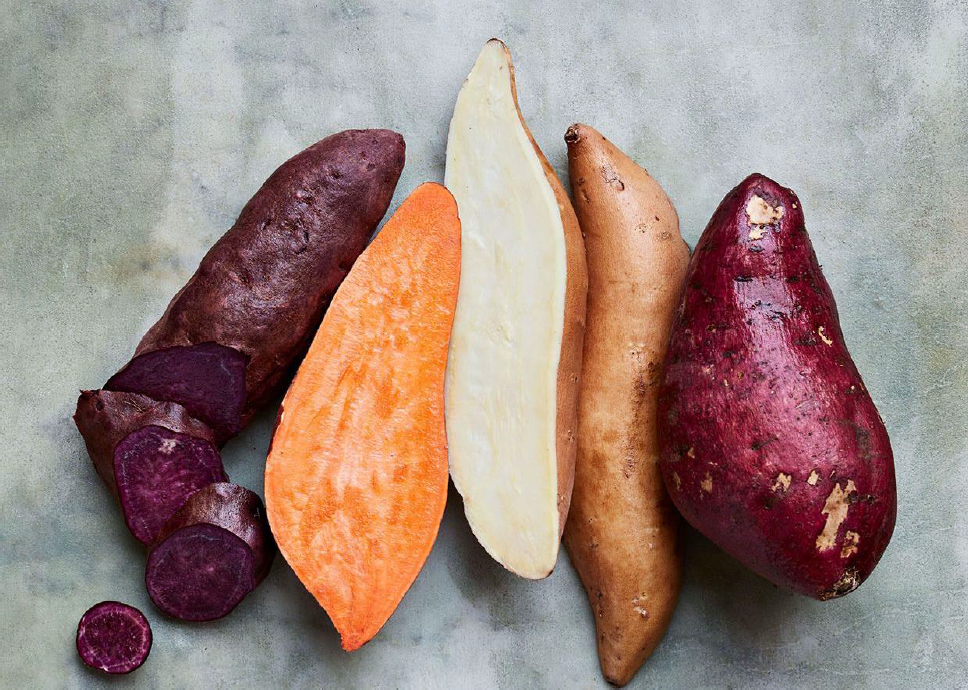
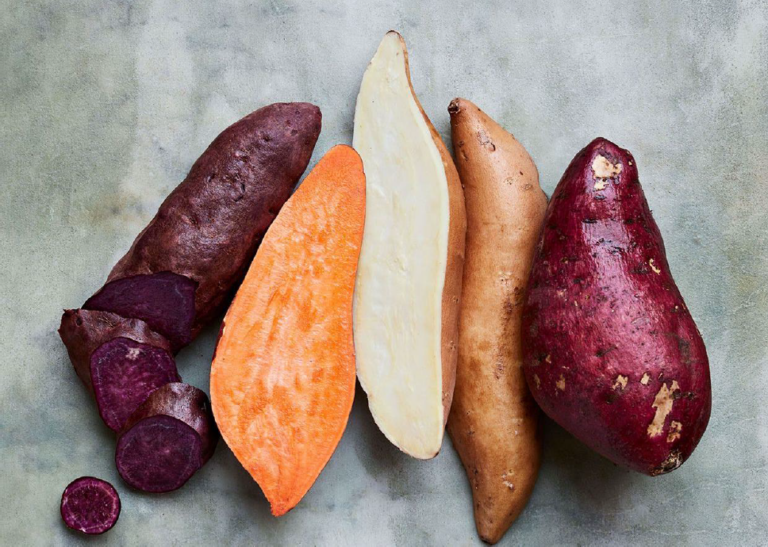
Various types of sweet potatoes and yams are displayed on a textured surface. The image shows purple, orange, and pale yellow varieties, both whole and sliced, perfect for any vegetarian or plant-based diet, highlighting the vibrant color contrast and variety in texture.
Types of Sweet Potatoes
There are over 400 varieties of sweet potatoes in the world. The table below highlights some of the most common varieties in North America.
Variety Image Skin color Notes
Orange Flesh
Beauregard Beauregard sweet potato Dirty orange to reddish orange Most common variety. Flesh is slightly stringy and moist. Great for mashing and using in baked goods.
Jewel Jewel sweet potato Light orange to reddish orange Common variety. Less sweet than Beauregard; can be used in the same way. Very moist.
Garnet Garnet sweet potato Reddish-purple skin Savory flavor and watery texture.
Purple Flesh
Stokes Purple Stokes Purple sweet potato Dirty purple Less sweet and less moist than orange sweet potatoes, but moister than Okinawa sweet potatoes.
Okinawa Okinawa sweet potato Creamy beige Dry, starchy potato with a mild sweet flavor.
Yellow Flesh
Hannah Hannah sweet potato Tan Sweet taste. Similar in texture to a regular potato. Dense, creamy, and moist.
Japanese Japanese sweet potato Purplish Much denser than orange sweet potatoes. Creamy, moist, and delicious.
Nutrition Notes

Sweet potatoes are nutrient-dense starchy vegetables. Like regular potatoes, sweet potato flesh comes in a variety of colors, including orange, yellow, cream, and purple. The colors help to determine their antioxidant and phytochemical content. While orange varieties boast large amounts of carotenoids, purple sweet potatoes are brimming with anthocyanins. Both phytochemical families are potent antioxidants.

A medium-sized 200-gram sweet potato provides about 180 calories, almost 7 grams of fiber, and almost no fat. Sweet potatoes, especially orange-fleshed ones, are among our most concentrated sources of beta-carotene, a pro-vitamin A carotenoid (a type of carotenoid that is converted to vitamin A in the body). One sweet potato provides over 700% of the daily value (DV) for vitamin A. It also serves up 65% of the DV for vitamin C, 50% for manganese, 29% for vitamin B6, and 27% for potassium.

Sweet potatoes and their extracts have been reported to have anticancer, antiulcer, anti-inflammatory, antidiabetic, and antimicrobial activities. They help support healthy vision and cardiovascular health.

Common Questions
Are sweet potatoes and yams the same thing?

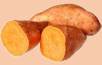
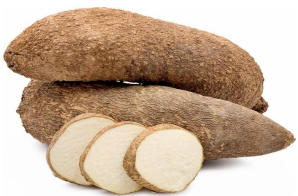
No – sweet potatoes are not the same as yams. In our culture, we often call orange-fleshed sweet potatoes yams, but technically, that is not accurate. Yams and sweet potatoes are both starchy edible roots, but a true yam has a bark-like dark skin and white flesh, while true sweet potatoes are what we typically see in our North American stores and markets. A yam is not in the same family as sweet potatoes, but rather is part of the Dioscorea genus. It is generally imported from Africa. Yams are also less sweet than sweet potatoes and starchier.

The reason we so commonly call sweet potatoes yams is that when sweet potatoes were first introduced, they were referred to as yams to distinguish them from regular potatoes. US federal regulations require that when sweet potatoes are labeled as yams, they must also include the term sweet potato for accuracy.

YAM
SWEET POTATO
Are there any advantages of sweet potatoes over regular potatoes?
Yes, sweet potatoes are more nutrient-dense with higher amounts of pro-vitamin A carotenoids and other protective phytochemicals. Sweet potatoes also have a lower glycemic index than regular potatoes.
Favorite Sweet Potato Recipes
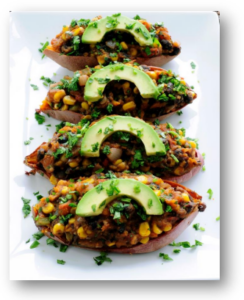
Southwestern Stuffed Sweet Potatoes
Makes 4 servings
Sweet potatoes are among the most nutritious and delicious of all the starchy vegetables. Use sweet potatoes with the bright orange flesh for this recipe from the Kick Diabetes Cookbook. If you are a spice lover, add a finely diced hot pepper or a little hot sauce.
Ingredients
4 medium-sized sweet potatoes
Filling
  • 1/4 cup vegetable broth
  • 1 medium onion, diced
  • 1 small green pepper, diced
  • 3 cloves garlic, minced
  • 1 1/2 cups cooked black beans (or one 15 oz can, drained)
  • 1 1/2 cups corn kernels (fresh or frozen)
  • 1 1/2 cups diced fresh tomatoes
  • Sweet potato pulp from the baked sweet potatoes
  • 1/4 cup cilantro (or parsley), chopped
  • 1/4 teaspoon smoked paprika
  • 1 teaspoon each cumin and chili powder
  • Salt and pepper to taste
  • 1 lime, juiced
  • 1–2 avocados, sliced
  1. Wash sweet potatoes and pierce with a fork. Bake at 350 degrees F until soft (45 minutes to an hour or more, depending on size and variety).
  2. Prepare the filling for the potatoes. Heat vegetable broth on medium heat and add onions, peppers, and garlic. Cook for about 5 minutes or until the vegetables are tender.
  3. Add black beans, corn, tomatoes, and seasonings. Turn the heat down and simmer for about 15 minutes.
  4. While the mixture is simmering, remove the cooked sweet potatoes from the oven and slice each potato in half lengthwise. Using a spoon, scoop out about half the flesh from each potato, leaving enough potato so the skin remains firm and holds its shape.
  5. Put the hollowed-out potatoes back in the oven to keep warm.
  6. Stir the sweet potato flesh into the black bean and corn mixture and cook for another 5–10 minutes so the spices are evenly distributed. Turn off the heat.
  7. Add cilantro and lime juice.
  8. Remove the potatoes from the oven and pile the filling back into the potato halves. Decorate with sliced avocado.
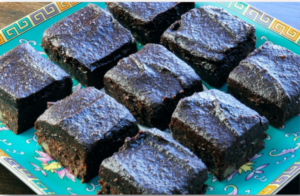
Sweet Potato Brownies with Fudgy Frosting
Sweet potatoes add moistness and nutrition to these delicious brownies.
  • 1 cup pureed baked or cooked sweet potatoes
  • 1 cup dates, packed
  • 3/4 cup water
  • 1/2 cup nut butter (mixed, peanut, almond, etc.)
  • 1 tsp vanilla extract
  • 1/2 cup cocoa powder
  • 1/2 tsp salt
  • 1 tsp baking powder
  • 2/3 cup oat flour
  • 1/2 cup chopped walnuts or pecans
  • 1/2 cup dark chocolate, chopped into small pieces
  1. Preheat the oven to 350 degrees F.
  2. Puree the sweet potatoes in a food processor or blender, or mash by hand until smooth.
  3. Cook the dates in water until soft. Mash.
  4. In a medium to large bowl, stir together the sweet potatoes, dates, nut butter, vanilla, cocoa powder, salt, baking powder, and oat flour.
  5. Fold in the walnuts and chocolate pieces.
  6. Transfer the mixture to a 9 × 9-inch pan lined with parchment paper or lightly sprayed.
  7. Bake for 30 minutes.
  8. Cool and spread with fudgy frosting.
Fudgy Frosting
  • 1/2 cup chopped dates, packed
  • 3/4 cup boiling water
  • 1/4 cup cocoa powder
  • 1/2 cup nut butter
  • 1 tsp vanilla

Soak dates in the boiling water until soft (about 15 minutes). Blend all ingredientsuntil smooth and creamy (use a blender or food processor).

This article was written for a PCRM Food for Life Instructors group called So Many Cooks in the Kitchen. This group meets online to provide amazing cooking and nutrition demonstrations that are free to share globally. For wonderful whole food, plant-based cooking shows, tune in to their monthly broadcasts. https://somanycooks.com/about/

Brenda Davis, RD is a plant-based pioneer and author/co-author of 13 books on plant-based diets. She is co-Author of Nourish: the definitive plant-based nutrition guide for families, Becoming Vegan: Comprehensive and Express Editions and Kick Diabetes Essentials. www.brendadavisrd.com