

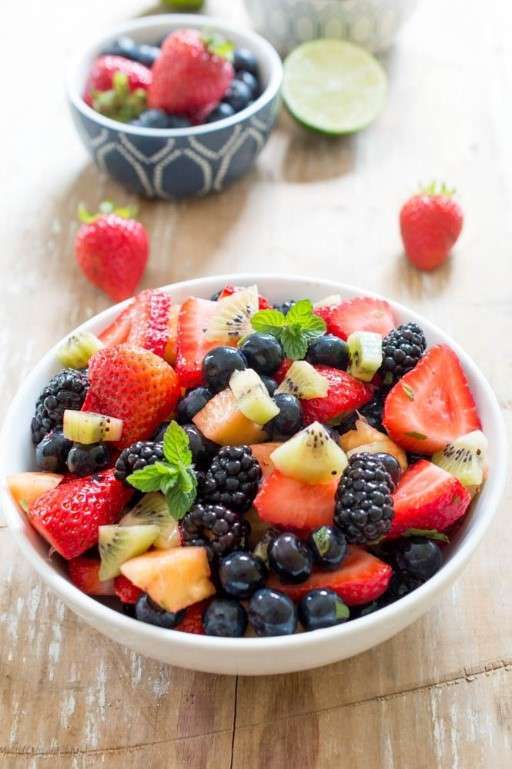
Ah, dessert, a part of the meal we too often relish and regret all at the same time. It is little wonder when we think of the ingredients that are at the foundation of these tasty treats – sugar, butter, or other fat, and white or other refined flour. This is not good news for those who are watching their weight, trying to reduce risk for disease, or trying to reverse an existing chronic disease. Fortunately, there are many ways to transform standard desserts into healthful additions to our meals.
Ditching Refined Sugars
Humans have a soft spot for sweets. We were born that way, and for good reason. In nature, sweetness generally signals safety, while bitterness serves as a warning flag. It would be difficult to consume excessive sugar when eating foods as grown. Yet when sugars are extracted and concentrated, then added to ultra processed foods, our hardwiring for sweets becomes unhinged. Our satiety signals fail to protect us from overconsumption.In 1700, annual per capita sugar consumption averaged 1.2 teaspoons per day. American adults now consume about 17 teaspoons per day – teens consume more. The American Heart Association suggests no more than 6 teaspoons of sugar per day for women and no more than 9 teaspoons per day for men. Sugar itself is not inherently harmful. In fact, when it is naturally present in the matrix of a whole food, it is a valuable source of energy. It is excess sugar that is the issue, particularly when it comes from concentrated sweeteners. Sugar is particularly problematic when consumed in the absence of fiber, as is the case with beverages and many ultra-processed foods. Diets containing a high proportion of calories as concentrated sugars increase risk of overweight and chronic disease.
So how do we replace sugar in desserts? We replace them with sweet foods from nature –

fresh and dried fruits. Dates make exceptional sugar replacements and provide far more fiber and nutrients than any concentrated sweetener. Other stellar choices are dried prunes, dried pears, raisins, and dried apricots. If fresh or dried fruits will not work in your recipe, use as little
natural, concentrated sweetener, such as blackstrap molasses, maple syrup or date sugar, as possible.
Cutting Concentrated Fats and Oils
Fats and oils give baked goods and other desserts richness and a sought-after mouth feel. However, they also add concentrated calories, with very few nutrients. A half cup of oil adds almost 1000 calories to a recipe. To improve the nutritional quality of a dessert, you can replace oil with nut or seed butters, applesauce, pureed prunes, mashed banana, or pumpkin. Another option is to reduce the oil in a recipe to a bare minimum by using mostly pureed fruit or nut or seed butter and just a tablespoon or two of oil.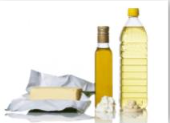
Replacing Refined Flours
Replacing white flour or other refined flour with whole grain flour is easy. Generally, swap out 1 cup white flour for ¾ or slightly more whole grain flour. You can also add an extra 2-3 teaspoons of liquid if using whole grain flour. To make oat flour, simply grind oats in a blender.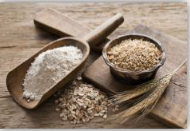
Transforming Dessert into a Healthy Part of Your Meal
Dessert can be a healthful part of your meal. One of the easiest desserts on the planet is fruit. It is an ideal sweet treat, providing significant advantages over added sugars. Fruit is rich in fiber, phytochemicals, antioxidants, and a host of vitamins and minerals. It is convenient and relatively economical. Eat fruit whole; chop it into a fruit salad, slice it and serve with a little nut butter, freeze it, and turn it into “ice cream”, or bake it whole or as part of a crumble. Step outside of your comfort zone and try fruits that are new to you. To add pizzaz to fresh or baked fruit top it with cashew pear cream
Recipes
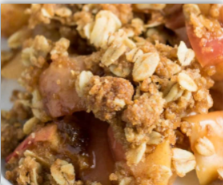
Apple Crisp
Makes 8 servings This apple crisp is a healthy version of a comfort food that is often laden with butter and sugar. Once the chopping is done, this dessert pulls together in just a few minutes. If you prefer, the maple syrup can be replaced with date paste – use double the amount of date paste when substituting for maple syrup. A little maple syrup or date paste can be added to the filling if you prefer it sweeter. Top each serving with cashew pear cream, if desired.Filling
- 8 apples, washed, cored, quartered, and thinly sliced (no need to peel)
- 2 tablespoons lemon juice
- 1 teaspoon ground cinnamon
- 1/2 tsp fresh grated nutmeg
- 1 teaspoon pure vanilla extract
- 1 tablespoon cornstarch
- pinch of salt
Topping
- 3 tablespoons maple syrup
- 3 tablespoons cashew or almond butter
- 2 tablespoons non-dairy milk
- 1 teaspoon vanilla extract
- 1 cup old-fashioned rolled oats
- 1/4 cup whole wheat flour, almond or other flour
- 1/3 cup chopped walnuts or pecans
- 1 teaspoon cinnamon
- pinch of salt
- Preheat the oven to 350° F.
- In a large bowl, toss apples with lemon juice, maple syrup, cinnamon, vanilla, cornstarch, and salt.
- In a medium bowl, stir together maple syrup, nut butter, non-dairy milk, and vanilla. Add in oats, flour, walnuts, cinnamon, and salt. Stir until nicely combined.
- Spray or oil a large deep casserole dish. Put the apple mixture in the dish and flatten. Sprinkle the topping evenly over the apple mixture and press down with a spatula or moistened hands to flatten.
- Bake for about 40 minutes or until golden brown.
Variation:
1. Peach or berry crisp. Follow instructions for apple crisp but replace the cornstarch with ¼ cup whole wheat flour.Cashew Pear Cream
Makes 3.5 cupsThis cream is an excellent topping for fruit crisps, baked fruit, fruit salad, breakfast bowls, pancakes, and healthy pies or cakes. To make a thicker cream that is suitable to use as a whipping cream substitute on pumpkin pie or other desserts, use 1 ¾ cups (435 ml) cashews, and for a thinner cream sauce, use 1-1 ¼ cups (310 ml) cashews. If you have a high-powered blender, you can just rinse the cashews before blending, although soaking is preferred. Recipe can be cut in half using a 14 oz jar of pears, if you want a smaller batch.
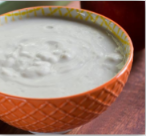
- 1 jar or can (28 oz) pears in water or juice
- 1 ½ cups (375 ml) cashews, soaked 4-6 hours, rinsed and drained
- 1 tsp (5 ml) vanilla
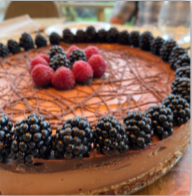
Triple Layer Chocolate Caramel Cheesecake with Raspberry Sauce
Makes 16 servings.- 1 ½ cups nuts (e.g. almonds, hazelnuts, pecans, walnuts, or a combination)
- 1 ½ cups soft dates (if hard, steam to soften)
- ¼ cup cocoa powder
- ¼ cup unsweetened, shredded coconut (optional)
- Pinch of salt
Salted Caramel
- 1.5 cups (packed) dates
- ¾ cup nut butter (cashew or mixed nut butter are great)
- ½ tsp sea salt
- 1 tsp vanilla
Chocolate Cheesecake Filling
- 3 cups cashews, soaked in water 4-8 hours, drained and rinsed*
- 1 cup non-dairy milk (cashew or almond work well)
- 200 grams dark chocolate (60 – 80% depending on sweetness you prefer)
- Juice of 1 lemon
- 1 tsp vanilla
- Pinch of salt
- Raspberry Sauce
- 1 bag frozen raspberries (12 oz or 300 g?)
- 1/3 cup water
- 2 teaspoons cornstarch + 2 Tbsp water
Directions
- Prepare crust. Place all ingredients in a food processor and pulse until the mixture is still crumbly but well combined. If it holds together when pressed between your fingers, it is ready to use. If not, pulse a little more. Press into a 9-inch springform pan. Refrigerate or freeze.
- Prepare caramel. Place all ingredients in a food processor and process until very smooth. Remove from processor and carefully spread over the crust. Refrigerate or freeze.
- Prepare cheesecake filling. Melt chocolate on low heat stirring frequently. While chocolate is melting, blend cashews, milk, lemon, and vanilla in a high-powered blender until very smooth. Add melted chocolate and blend into the cashew mixture – first on low speed, gradually increasing speed until thoroughly combined. Pour on top of caramel layer. Chill until firm – ideally overnight or a minimum of 4 hours.
- Raspberry sauce. Over low heat, place raspberries and 1/3 cup water. Heat to boiling and then combine cornstarch with 2 Tbsp water and stir into the raspberries. Keep stirring for about 3-4 minutes until cornstarch thickens the mixture. Pour into a jar to cool. Use to decorate the plate or simply pour a little over each slice of cake.
- Decorate. An easy way to decorate this cheesecake is to melt about 50 g chocolate and pour swirly lines over the chilled cake. Add raspberries or blackberries around the edge of the cake and in the middle color. For a fancy birthday cake, you can add a 4th layer of chocolate fudge frosting (or replace the caramel with fudge frosting) and reserve some frosting to pipe around the cake. If using as a fourth layer, make this layer number 2 after the crust and the caramel layer number 3. For extra points, sprinkle a little cocoa powder on the plate before serving.
Chocolate Fudge Frosting
- ½ cup pitted soft dates, packed
- ½ cup boiling water or hot non-dairy milk
- ½ cup nut or seed butter
- ¼ cup unsweetened cocoa powder
- 1 teaspoon vanilla
Directions
Put the dates in a heatproof bowl. Add the boiling water and let soak until soft, about 10 minutes. Transfer the dates and the soaking liquid to a food processor. Add the nut butter, cocoa powder, and vanilla extract and process until smooth, stopping occasionally to scrape down the work bowl. Use immediately or store in a sealed container in the refrigerator. Bring to room temperature before using. This article was written for a PCRM Food for Life Instructors group called So Many Cooks in the Kitchen. This group meets online to provide amazing cooking and nutrition demonstrations that are free to share globally. For wonderful whole food, plant-based cooking shows, tune in to their monthly broadcasts. https://somanycooks.com/about/


Brenda Davis, RD is a plant-based pioneer and author/co-author of 13 books on plant-based diets. She is co-Author of Nourish: the definitive plant-based nutrition guide for families, Becoming Vegan: Comprehensive and Express Editions and Kick Diabetes Essentials.www.brendadavisrd.com