There is nothing quite like walking through a farmers’ market surrounded by big old trees in bright hues of yellow, orange and red. The cool fresh air, the crunchy leaves beneath your feet, and the bounty that covers the market tables is all quite exhilarating. It is a time for warm drinks and hot eats. It is a time for pumpkin, squash, corn on the cob, Brussels sprouts, beets, potatoes, apples, and pears. This week, So Many Cooks in the Kitchen will provide you with recipes that celebrate wonders of autumn foods.
In this appendix, we will review the most impressive nutritional attributes of 7 autumn harvest stars – pumpkin, corn, Brussels sprouts, beets, potatoes, apples, and pears. Celebrate these foods by trying at least one new recipe for each of these delicious foods.
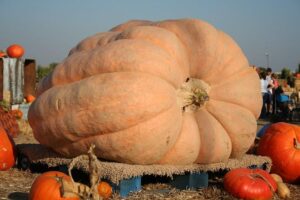
Pumpkin – pumpkin is the quintessential autumn food. It serves as a Thanksgiving decoration, a Halloween jack-o-lantern, and of course, as a base for soups, curries, muffins, and cookies. While the traditional pumpkin is round and orange, pumpkins can vary in color, shape, and size. The world’s biggest pumpkins have topped the scales at over 2,500 pounds – the size of a small car!
Pumpkin is a type of winter squash, and it is absolutely brimming with goodness.
It is relatively low in calories (about 44 calories per cup boiled and 83 calories per cup canned). One cup of canned pumpkin provides 7 grams of fiber, 3 grams of protein, over 200% of the Recommended Dietary Allowance (RDA) for vitamin A (as pro-vitamin A carotenoids), almost 40% of the RDA for vitamin K, over 20% of the RDA for copper and vitamin E, and almost 20% of the RDA for iron. It also supplies at least 10% of the RDA for magnesium, riboflavin, vitamin B6, vitamin C, and potassium. Fresh pumpkin is lower in calories as it is higher in water than canned pumpkin. Never discard pumpkin seeds – they are nutritional powerhouses. Just one-quarter cup provides about 10 grams of protein. It is also a good source of trace minerals such as iron, zinc and other trace minerals.
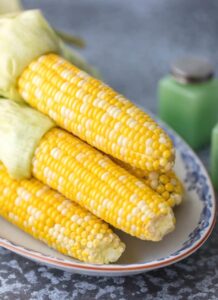
Corn – corn (also known as maize) is a staple food in much of the world. It is also a major animal feed crop, and source of sweeteners. In its natural form – on the cob, or frozen niblets, it is a high fiber, nutritious food. Nothing beats corn-on-the cob just picked from a garden. Corn is one of the best dietary sources of lutein and zeaxanthin, two carotenoids that are good for your eyes. Of course, highly processed corn products such as corn syrup have few of these beneficial nutrients remaining. One of the most popular ways of eating corn is as popcorn. Popcorn is a fun and healthy snack if it is topped with nutritional yeast, herbs, spices and just a light sprinkling of salt, instead of the mounds of butter and salt that are commonly added. Steer clear of less healthy popcorn options such as commercial bags of microwave popcorn and packaged popcorn containing a lot of added oils.
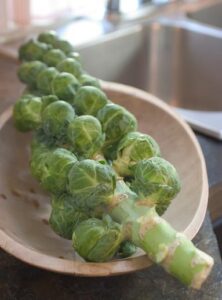
Brussels Sprouts – have you ever purchased a Brussels sprouts stalk with multiple small heads neatly aligned in rows? It is a fun vegetable to show children. Brussels sprouts are cruciferous vegetables, and as such, are known cancer fighters. A cup
of boiled or steamed Brussels sprouts provides about 56 calories, over 4 grams of fiber, 4 grams of protein, and over 100% of the RDA for vitamins C and K. Brussels sprouts are also good sources of vitamin A, vitamin B6, thiamin, and folate. They are a vegetable that people seem to either love or hate. If you are not fond of these little gems, it may be because of their bitterness. This can be reduced by cutting the Brussels sprouts in half and soaking them in salted water (and draining) before cooking them.
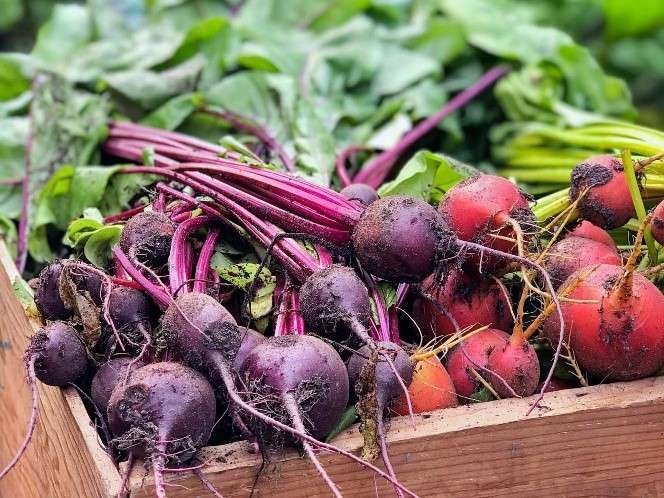
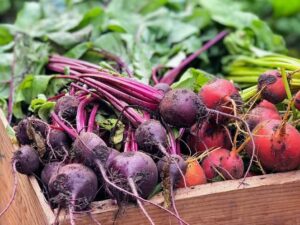
Beets – beets provide two vegetables in one. They boast a delicious, colorful root and super nutritious greens. The root is most commonly red, but there are golden, white, and striped varieties as well. Sugar beets (an extra sweet variety) are cultivated to produce sugar. Two 2-inch beets (100 grams/3.5 ounces) provide 44 calories, 2 grams of fiber, about 20% of the RDA for folate, 16% of the RDA for manganese, and over 5% of the RDA for vitamin C, potassium, and magnesium. Beets are also loaded with phytochemicals, including phytosterols, betalains, carotenoids, and nitrates. Betalains such as betanin have powerful antioxidant and anti-inflammatory activities. Nitrates from vegetables are converted to nitric oxide which have blood-pressure lowering effects, and performance-boosting potential. Beet greens provide about 39 calories per cup of cooked greens. They also provide about 35% of the RDA iron, and over 75% of the RDA for vitamin A (as pro-vitamin A carotenoids). They also provide about 7 times the RDA for vitamin K. Beets have multiple culinary uses. They can be grated and eaten raw in salads, or boiled, roasted, or pickled.
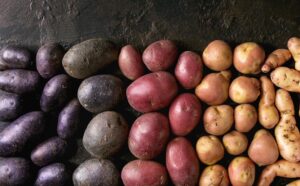
Potatoes – potatoes are often vilified by health authorities because evidence suggests that high consumption is associated with adverse health effects. However, what is often missed when pondering the pros and cons of potatoes is that the vast majority of potatoes consumed in the Western world are eaten as French fries or potato chips. When you soak potatoes in hot oil before eating them, it alters their health effects! When you take a good sized 150 calorie potato and turn it into French fries, you now have about 500 calories, 350 of which are fat. Take that same potato and turn it into potato chips, and you now have about 800 calories, 650 of which are fat. Often when people are eating baked potatoes they are smothered in butter, bacon bits and sour cream before they are eaten. So, don’t blame the humble potato for its adverse health effects! Instead of soaking potatoes in oil, butter and sour cream, pour on a cashew red pepper sauce or a spicy black bean sauce. Potatoes are extremely low in fat, and are good sources of potassium, vitamin C, folate, and vitamin B6. Although potatoes are not high in protein (about 3 grams per 156-gram potato), their amino acid profile is really impressive! In addition, potatoes come in a variety of colors, with purple potatoes being much richer in protective phytochemicals.
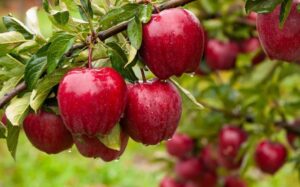
Apples – most of us have access to apples year-round, as apples can be stored for up to a year. However, fall is hands-down the best time to eat them as freshly harvested apples are crispy, crunchy, and incredibly flavorful. Experts estimate that over 7,500 varieties of apples exist, although only about a dozen varieties are commonly available in our stores and farmers’ markets. While the saying “an apple a day keeps the doctor away” may be a bit of an exaggeration, there are many reasons to indulge. A medium-sized apple (200 g) provides about 100 calories and 5 grams of fiber! It also contains about 15% of the RDA for vitamin C,
and over 5% of the RDA for potassium and vitamin K. Apples are good sources of antioxidants called polyphenols. They are also rich in a type of fiber called pectin which serves as a prebiotic that feeds our beneficial gut bacteria. Eating apples may help to protect against overweight, heart disease and type 2 diabetes.
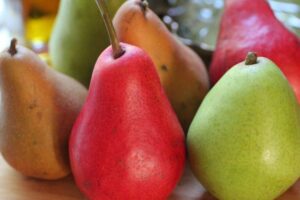
Pears – the largest producer of pears globally is the United States. Pears are part of the rose family and have a history extending to about 1000 BC. Although there are about 3,000 pear varieties, the most popular are Bartlett, red Bartlett, Anjou, red Anjou, Bosc, Concorde, and Asian. When it comes to pears and apples, much of the fiber and nutrition are in the skin, so eating these fruits with the skin on means greater health benefits. A medium sized pear (180 g) provides about 100 calories and 6 grams of fiber. The fiber is a wonderful mix of both soluble and insoluble with plenty of prebiotic fiber for our gut flora. Pears contribute to our intakes of vitamin C, vitamin K, potassium, and copper. Pears are good sources of flavonoids which have anti-inflammatory and antioxidant activities. Red pears contain anthocyanins which may help to support healthy blood vessels. Pears are highly versatile, and add wonderful flavor to breakfast bowls, salads, and desserts. They are also the base of a whipped cream replacement called pear cashew cream (see recipe below). Flavor-wise, it is even better than whipping cream!
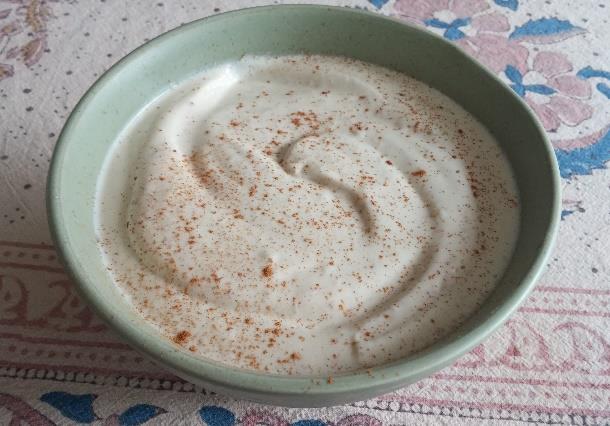
Cashew Pear Cream
This cream is an excellent topping for fruit salad, breakfast cereal, pancakes, or with desserts such as puddings, baked fruit, or fruit crisps. To make a thicker cream that is suitable as a whipping cream substitute on pumpkin pie or other desserts, use 1 ¾ cups (435 ml) cashews, and for a thinner cream sauce, use 1-1 ¼ cups (310 ml) cashews. If you do not have a high-powered blender, soak cashews before making the pear cream.- 1 14-15 oz can pears packed in water or juic
- 1 cup (250 ml) cashews, rinsed or soaked, rinsed and drained
- 1 tsp (5 ml) vanilla
If you are soaking cashews, put them in a bowl or glass measuring cup and cover them with water (use enough water to have at least an inch of water on top of the cashews). Let them sit for about 2-3 hours, then drain and rinse using a colander. Put drained pears (reserve juice), cashews, and vanilla in a blender and blend on high speed for 1-2 minutes, adding juice as needed to achieve the desired consistency (note that the cream thickens a little in the refrigerator). Blend until very creamy and smooth. Serve immediately, or store in a glass jar in the refrigerator. Pear cream will last about 3-4 days in the refrigerator. Sprinkle with cinnamon, if desired. Use as a topping for a breakfast bowl, a fruit crisp, pudding, or pie.
Pumpkin Parfait
Serving Ideas
- 1 14–15-oz can pure pumpkin
- 1/4 cup soft dates, packed
- 1 teaspoon cinnamon
- 1/2 teaspoon ground ginger
- 1/4 teaspoon cloves
- 1/4 teaspoon nutmeg
- ½ cup non-dairy nut milk
- 3 cups chilled cashew pear cream, divided
- 3/4 cup granola, walnuts or pecans, or a combination of granola and nuts

- Using a food processor or a Vitamix (with plunger), process pumpkin, soft dates, cinnamon, ginger, nutmeg, cloves, nut milk, and 1 cup of cashew pear cream until very smooth and creamy.
- Assemble parfaits. Spoon about 3 Tbsp pumpkin mixture into bottom of each glass, then sprinkle 2 teaspoons granola or nuts and top with about 2 tablespoons pear cream. Repeat layers two more times, ending with cream and a sprinkling of granola or nuts.
- Chill and serve.
This article was written for a PCRM Food for Life Instructors group called So Many Cooks in the Kitchen. This group meets online to provide amazing cooking and nutrition demonstrations that are free to share globally. For wonderful whole food, plant-based cooking shows, tune in to their monthly broadcasts. https://somanycooks.com/about/
Brenda Davis, RD is a plant-based pioneer and author/co-author of 13 books on plant-based diets. She is co-Author of Nourish: the definitive plant-based nutrition guide for families, Becoming Vegan: Comprehensive and Express Editions and Kick Diabetes Essentials. www.brendadavisrd.com


