

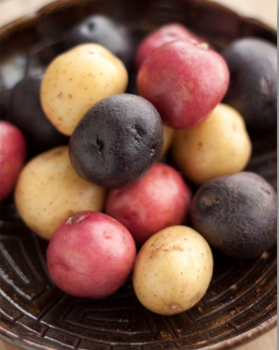
Potatoes are the most popular vegetable on the planet. On average, Americans eat 126 pounds of potatoes a year. Yet, despite our love for potatoes, they are one controversial vegetable! Some people say that they are fattening and cause spikes in blood sugar. Others say we can eat potatoes to our heart’s content because they are whole plant foods. So, which is it? Are potatoes health allies or enemies? Today we will answer these questions and provide a balanced look at this humble vegetable.
The truth about potatoes is that their healthfulness is determined by their variety and color, but most importantly, the way in which they are prepared. Generally, more colorful purple and red potatoes provide more micronutrients and phytochemicals. But the biggest factor that determines the healthfulness of potatoes is the method used to prepare them. Unfortunately, the vast majority of potatoes people eat are in the form of French fries or potato chips. These products are prepared by soaking the potatoes in hot oil prior to eating them. A 150-calorie potato quickly escalates to about 300 calories, and the added calories are all fat. People who eat fried potatoes just 2-3 times a week double their risk of death. Likewise, if you remove the skin, mash potatoes, and add cream and butter, you are removing nutrition and adding fat. While a baked potato can be a great choice, if you add butter, sour cream, and bacon bits, that potato takes a nutritional nosedive.

It is true that potatoes have a lot of carbohydrates, and that they have a high glycemic index and load. Having a lot of carbohydrates is NOT a bad thing, unless those carbohydrates are processed and the protective components such as fiber and phytochemicals are removed. Carbohydrates from whole plant foods are consistently protective to health. On the other hand, potatoes are a higher glycemic index (GI) and glycemic load (GL) food. That means that they can cause a sharp rise in blood glucose as they have abundant, available carbohydrate. So, people who have type 2 diabetes, prediabetes, or who are overweight are well advised to be selective in their potato choices and to moderate portion sizes.
Here are some effective ways of reducing the glycemic impact of potatoes:
- Select colorful or waxy potatoes. Purple or blue potatoes tend to have a somewhat lower glycemic index and load. Waxy potatoes such as fingerlings and red potatoes have a lower glycemic impact than starchy potatoes such as Russet or Idaho potatoes.
- Eat potatoes with lower GI foods. Eat your potatoes with beans or lentils and include some fat such as nuts, seeds, or avocado with your meal.
- Control your portion size. The glycemic load of a baked potato is 33; a GL of 20 or more is high. If you eat only half of a baked potato, the glycemic load is also cut in half.
- Eat the skin. The skin has more nutrients than the inside of the potato, and most of the fiber is in the skin.
- Eat your meal with acidic foods. Acidic foods such as lemon juice, lime juice, or vinegar are effective in reducing the glycemic impact of your meal.
- Cook and cool. When you cook and cool, you change the structure of the starch and increase resistant starch. This reduces the GI by 30–40%! Even if you reheat, the GI remains reduced.
For potato lovers, the good news is that potatoes ARE healthy foods! They provide antioxidants and phytochemicals, both of which are more concentrated in colorful potatoes. Potatoes are also sources of fiber, including resistant starch. This type of starch feeds healthy gut bacteria helping to protect our gut microbiome. Potatoes also contain many micronutrients, including vitamin C, vitamin B6, potassium, manganese, magnesium, niacin, and folate. When prepared in healthful ways, potatoes are a healthful addition to your diet. Today, your instructors at So Many Cooks in the Kitchen will teach you how to prepare potatoes in the healthiest ways possible.
So Many Varieties!
You may be surprised to learn that there are over 200 varieties of potatoes offered in our local grocery stores and farmer’s markets. The most common potatoes are white and yellow potatoes such as Yukon Gold, Russet, and Idaho, and red-skinned potatoes which have 2-3 times more antioxidants than white or yellow potatoes. Less common purple
This article was written for a PCRM Food for Life Instructors group called So Many Cooks in the Kitchen. This group meets online to provide amazing cooking and nutrition demonstrations that are free to share globally. For wonderful whole food, plant-based cooking shows, tune in to their monthly broadcasts. https://somanycooks.com/about/


Brenda Davis, RD is a plant-based pioneer and author/co-author of 13 books on plant-based diets. She is co-Author of Nourish: the definitive plant-based nutrition guide for families, Becoming Vegan: Comprehensive and Express Editions and Kick Diabetes Essentials. www.brendadavisrd.com