
The Dark Side Of Science And What It Means To Your Health
with Brenda Davis, R.D., David Katz, M.D., T. Colin Campbell Ph.D., Caldwell B. Esselstyn Jr, M.D., Walter C. Willett, M.D., Pamela A, Popper, Ph.D., Alan Goldhamer, D.C.,
Connect with The Real Truth About Health:
http://www.therealtruthabouthealth.com/
Passionate believers in whole food plant based diets, no chemicals, minimal pharmaceutical drugs, no GMO’s. Fighting to stop climate change and extinction.
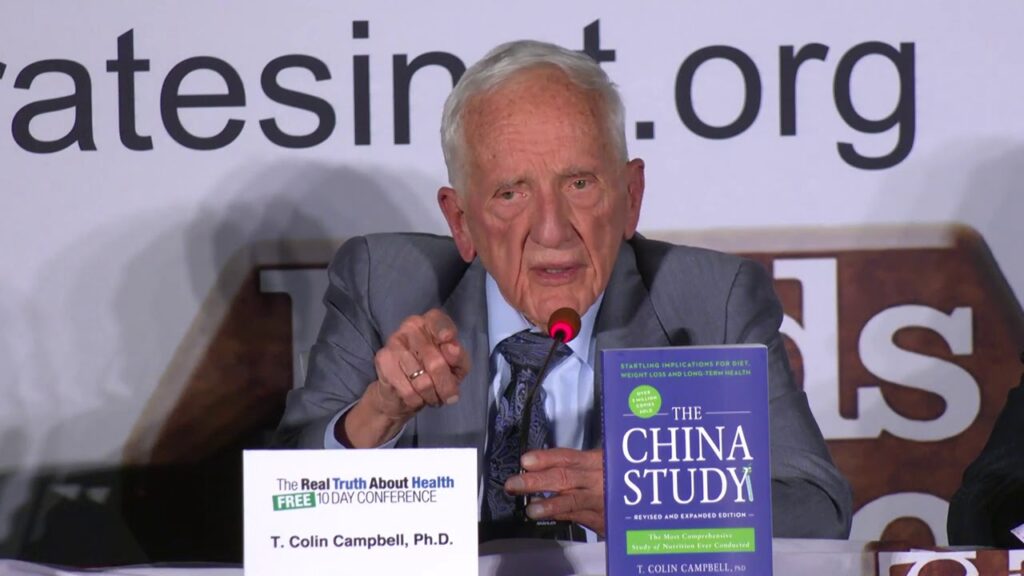
um in your book the china study chapter 13 um you the title was called science the dark side what did you mean by that well first off let me say i’ve enjoyed a career in science and i love science i love the the basic customs and the rules and regulations if i can call them that practices um i just like the concept of science because for me it if we do it right uh do it as well as we can it really is a it’s a force that just drives toward being honest for one thing being objective just one person wants help to live that way so i i think of science in a classical sense as being a really delightful sort of discipline to work in i enjoyed a great deal but what i have seen unfortunately over the years particularly having been involved in policy activities for some pretty intensively for about 20 years i’ve just come to realize unfortunately that we confuse the word science with technology the public tend to think of scientific evidence in a sort of a singular way it’s either evidence or it’s not evidence when in fact what i find is that so much of the thing that we call evidence scientific evidence particularly in the media and so forth really is detect a lot it’s technology in a sense people are doing work to prove a certain point which in many ways doesn’t exactly square with what science is all about uh science to me is the art of observation you see something you see something possibly interesting and so there at that point if you’re really into research you sort of start asking some questions and always be prepared to get either one answer or the other answer being prepared to be wrong and admit it being prepared to offer your findings to others to criticize i mean i like that whole engagement of the back and forth and that sort of thing and unfortunately especially having been in the policy community for pretty intensively for quite some years i see the corporate sector i see the hand of the corporate sector becoming ever so strong so strong and so in that particular case people for whatever reason consciously or unconsciously paid or unpaid tend to really want to prove a point want to prove a point and so too often those points be improved if if you will are very specific items of information they’re missing the big story and uh i i find just for example the conversation we’ve been just having here tonight to some extent uh is really very very you know nice conversation on one hand but i think we we have to worry a little bit about getting caught in the weeds getting caught in the weeds talking about you know specifically saturated fat for example saturated fat is is the the bad guy in the and the block has been for a long time supposedly unsaturated fat for plants is a good thing but in reality the saturated fat story i think has been vastly overdone it’s one just don’t use it as the example uh we’re just putting our finger on saturated fat or cholesterol whatever over a hundred years ago it was shown in the laboratory that saturated fat was not the key determinant of the level of cholesterol in the blood for example it was animal protein it was animal protein and that research started in 1909 with an observation by a russian fellow but then continued for the next 15 years i think it was several research groups looking at that question finally in 1923 and again 26 there came a sort of a a statement from the group at the university of michigan claiming it has been beyond proof essentially i mean he said it very strongly that group said it very strongly saturated fat was not the cause of high cholesterol levels consuming saturated fat it really was protein which animal protein in particular that in turn energized me to some extent because uh then when it starts to ask questions well how does such how does protein really work we’re looking at some mechanisms and so forth how does it intervene in the synthesis of cholesterol and that kind of thing and you pretty soon you start getting lost in the weeds and then all of a sudden we realize that that the animal protein at least seen in epidemiological studies is an indication of a much larger change in our dietary scope so when we start thinking then about the right relationship between diet and disease heart disease cancer and so forth and so on um the just the mere notion just the mere notion for people to say i want to eat animal protein i need it much means in turn you know eating animal-based foods which then distorts the diet so it sort of for me at least it stretches my thought pattern into a much larger scope and trying to put my hands on something i can say but really has breadth to it everybody has breadth to it and so that’s coming back to the scientific question again i i i just find too much of the science that’s being done in our institutions in our academic institutions in particular being compromised by the influence of the corporate sector and i think it’s getting worse