Here are the latest scientific findings on proven benefits to your Health from a Whole-Plant-Based Diet
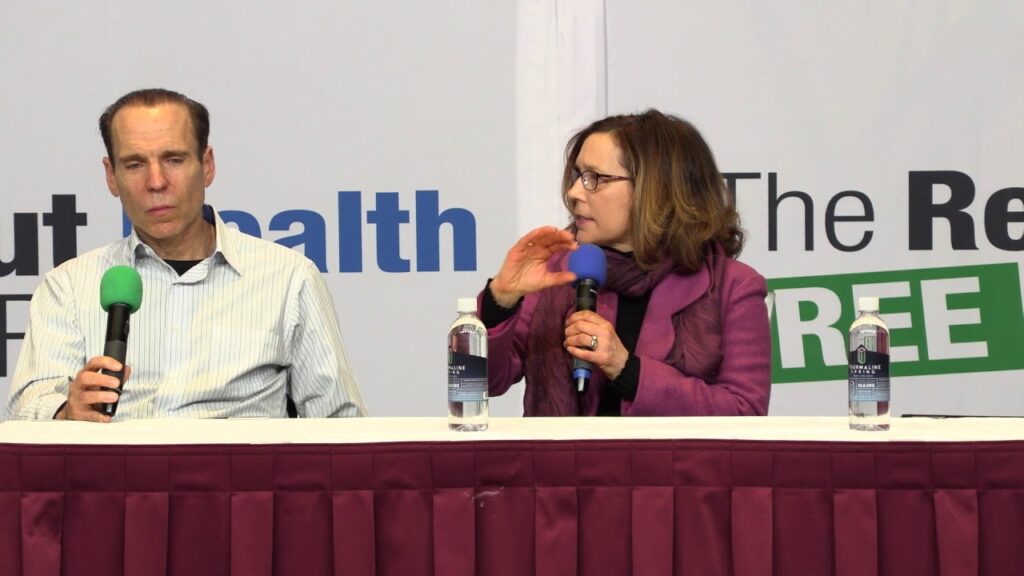
Panel Participants: Anna Maria Clement, Ph.D., L.N., Brian Clement, Ph.D., L.N., Joel Fuhrman, M.D., Brenda Davis, R.D.
Connect with The Real Truth About Health
http://www.therealtruthabouthealth.com/
Passionate believers in whole food plant based diets, no chemicals, minimal pharmaceutical drugs, no GMO’s. Fighting to stop climate change and extinction.
I saw all of your lectures today and I thought they were great I thought they seemed very scientific and you guys seemed very intelligent I’m very impressed but the problem is the United States Department of Agriculture the USDA is saying something different from you and it seems like they probably would know more than you mean that the United States Department of Agriculture I assume it’s the smartest people with the most experience my uncle reads it and you know if the USDA says something it seems like they would have the best smartest people so what you know how do we rectify that you’re saying one thing that’s different the USDA is saying I should have dairy and cheese who should we believe like why should we think that you’re accurate as opposed to them well my opinion is I think we should should not have a good guy bad guy view cowboy and Indian view black-and-white view of any of this stuff that you have to understand that there’s vested interest behind what I do and behind what the people at the agricultural department does my vested interest is to bring truth and history and science and 62 years of experience at Hippocrates to the public their view is to regurgitate in their work what they learned at university at the agricultural school they went to and remember this is a revolving door between the agricultural community Monsanto’s etc and working for the US Department of Agriculture it’s the same thing with the FDA it’s a revolving door between they in the pharmaceutical industry and the food industry and the most interesting conversation I had was at a conference similar to this in front of physicians years ago when I met dr. Kessler who I really wasn’t that fond of I liked everyone I didn’t like him very much he was a former head of the FDA and he came up to me and said I used to think guys like you were quacks no more I said why didn’t you lose leave the FDA he said because it was so corrupt I couldn’t take another day and he was an honest good doctor who basic we wanted the best for people and I knew it because now what he’s doing is working on childhood obesity which scares me more than all the other things when it comes to disease that we’ve talked about today because if you think we’re sick you wait you just wait until the next generation that are over 70% overweight obese or morbidly obese so I don’t think they have to be looked at as the bad guys we’re the good guys I think it’s knowledge wisdom and we’ve got to find a way to change the economy like Russia fell not because Ronald Reagan and America made them fall they ran out of money so if we say no to the people who are on the march for death dying and disease and cut off the money by saying we’re not going to buy those products I promise you there won’t be a war it’s going to be Mahatma Gandhi all over again and we’re gonna end up everyone living this way I know that all of you do a lot of research so should we consider the information we get on health nutrition died in medicine from the scientific studies accurate like if it says in the paper there was a scientific study done or you know who’s quoted in the newspaper um is that accurate or is there someone’s financial interest behind it like how do you decide when you see a study whether you decide to accept it as credible or you decide that it was an industry funded study and therefore you don’t give it credence education to know how to interpret studies but basically we did learn that years ago most of the studies were done by medical schools and independent authorities but in today’s in the last 50 years almost all the studies on drugs for example are paid for by the drug manufacturers themselves and there and they can publish the ones that they feel are favorable and not publish the ones that are unfavorable we already know that most of the studies produced in this country are not excellent science the majors only say this one more time that the majority of studies and medical journals are not non biased they are definitely biased and almost all doctors recognize that and are taught that as well and that’s why they have independent research groups like the Cochran in our an Scandinavian group that looks at studies on mammograms or on the or flu vaccines or on antibiotics for strep throats because they’re not tied with the drug industry they’re not the drug industry paying for the study and they can give you because we know in this country the American Cancer Society is financially tied to the mammogram companies and we know that this and all these things are based on on economic benefit to the producers of them to the medical profession or the pharmaceutical companies so the real reality is that we have to see who publishes the study whether it’s um whether the analysis is called a meta-analysis we’re pooling many studies together what are the studies in the pooled studies how long we talking about whether the studies are short-term studies where they go on long enough to see the long term dangers of a particular program including medications we know that we medications are on the market for 20 years before we really fully recognize the dangers associated with them and most medications eventually get pulled off the market after they’re around for decades and decades cuz we find out they’re dangerous as we put them on the market early on so weakened so there’s much to be skeptical of in the scientific literature and evidence-based medicine is basing your decisions on very scant evidence so we really have to be selective in what we’re accepting as valuable evidence and that takes some training and knowledge to be able to how to interpret studies and to recognize who’s done the study who’s paid for it when and and other factors were discussing so a good example is the is whether is the fact that in spite of the fact that let’s say the American Task Force or the preventive medicine task force no longer recommends mammograms between us in the ages of 40 and 50 it’s still recommended by other groups because they’re affiliated with the mammogram companies and too much outcry and and protests about people not making money on them and women want them because they’re so brainwashed ins Bertha that’s gonna save lives so it everything is political and social and and with our government – this is a political system and we and it represents what the majority of people believe and the studies are set up to support what people want to do and what when where the economic interests lie and as you were saying and as you were saying Brian as our society changes and many more people are demanding different type of care and different type of evidence and then we’ll have government with electing officials and we’ll have doctors who are more or have practices that support what the populations want but the change has to come from the mass of people educating themselves it’s not going to come from the economically and politically powerful who want to maintain the status quo not usually that’s not usually the case it’s certainly not going to come from within the medical profession itself because they’re entrenched in what they’re doing at the present to make a living and I’d like to add a few things one just getting back to the USDA and and some of the governing bodies that develop nutrition policy and just to recognize that a lot of the scientific advisory boards actually do a really good job they they’re looking at the science and then once the interests of industry you know they get their voices in the things change a little bit by the time it comes to the public because the agricultural of course USDA is a voice for farmers they’re also a voice for scientists and to try to please everybody there’s going to be compromises and unfortunately those compromises sometimes mean mean a compromise in the in the bottom line final message but do do be aware the USDA nutrient database is a wonderful resource they have the USDA has really a quite excellent summaries of nutrients and professional summaries and consumers that there’s some resources that are really quite exceptional and so it’s important to to recognize that and then in terms of scientific literature well we have to be evidence-based in what we say what are we using to be evidence-based it’s got to be scientific studies and of course dr. Fuhrman was saying we we need to be somewhat selective but we also need to recognize that what you see in the headlines is not always what the scientists were trying to say in their papers and I’m going to give you an example because I think this is really important for you to understand so in 2014 a meta-analysis came out by Chowdhury a tell you no this was a meta-analysis about saturated fat and their effects on on cardiovascular disease risk and basically the Chowdhury trial showed saturated fat intake I mean that this is what the researchers you know ended up saying didn’t really have an influence on cardiovascular disease risk and so of course the headlines were butter is back you know eat eat all the lard you want it was basically that’s that’s what the media took from those studies so I i’m looking at this study and and there were so many flaws so many flaws that you know Walter Willett from Harvard and his team came out with sort of a list of the flaws and they were comparing people who were consuming you know within countries similar amounts of saturated fats with people consuming just slightly more saturated fats so there wasn’t going to be a huge difference in the risk but if they compared between populations there were huge differences like the people from Japan they’re saturated fat intake ranged from I can’t remember was four to seven percent versus the people and you know in some of the European countries twelve or fourteen percent in the risk in in cardiovascular disease was just absolutely hugely different but the story I wanted to tell you is I noticed the third author on that trial was a lady by the name of Francesca crow and if you’re familiar with epic Oxford the epic Oxford studies that followed the you know the the cohort that had about a third of the people vegetarian and vegan she’s one of the key authors she was the author on the cataract study I believe that that showed you know 40 percent lower risk and in vegans and she she did a lot of epic Oxford she was involved a lot of epic Oxford and I thought it just didn’t make sense to me that she was involved in that study so I contacted her and I said you know dr. Crowe what is how are you explaining the findings of this study and she said well first of all I was quite involved in this study until I think she moved and then she said we actually we actually submitted the study to a journal and what our findings were is that people eating the most saturated fat had about a nineteen percent increased risk of cardiovascular disease relative to those eating you know height higher amounts and she said our study was turned down because it didn’t show anything new so we’ve always known saturated fat increases LDL and it increases risk of heart disease so what they what the senior author did was he reworked the data removed certain things until he got a different outcome which was showing no difference and so she said it was resubmitted to another journal and she said she only found out about it a week before it was actually released and she had no ability to change anything but she said what you need to know is this study changes nothing about what we’ve known about saturated fat and heart disease for 50 50 plus years the clinical research is very clear saturated fat intake increases LDL and increases risk of cardiovascular disease period and she was one of the authors of that study so just so you know even when the media comes out with these big pronouncements it’s you really have to understand that they don’t necessarily understand the findings of these scientific studies and they’re not always clear so what that study actually showed was if you replace and want many studies that have suggested saturated fat isn’t an issue all they’re really showing is if you replace saturated fat with refined carbohydrates you are at no you have no improved of cardiovascular disease refined carbohydrates and saturated fats are not much different in different in terms of your risk of heart disease one last thing pertinent for this conversation in 1988 here in the United States which by the way in 1988 we led the world what America science gave the world followed we actually were going to radically change the food pyramid in fact the Congress said this is it and they were about ready to tell people to eat plant-based diets this was extremely clear the meats and the dairies Treacher rated to the bottom the vegetables and fruits went to the top the grains went above the meats and they halted it the industry stepped in the lobbyists stepped in in nineteen eighty eight I think it was going to be published in January and they hold it until April it came back and it was pretty much the same whole thing with a few token vegetables thrown in on top of it so I haven’t agreed with both of them I think the thing that I Anna Marie and I read the most is meta studies where there’s been 10 20 30 50 100 studies and then you sort of see the thread that is equal among them and then maybe there’s some semblance of truth in this not always maybe yeah exactly we all are bested interests all my books like support with studies that I like in Canada we are just on the cusp of a new food guide and new nutritional recommendations and they are very strongly plant-based oh that and so the industry right now is having their say and not very happy with sort of what the final version is so we shall see if the same thing happens but there are many many people on you know that have been writing to the government to say please do not change a thing so it keep your ears tuned we may have quite you make sure is at the top of that