

by Brenda Davis, R.D., Paleo And Ketogenic Diets? Are They Safe?Brenda Davis offers fresh insights on the treatment of animals in food production and other industries, the latest findings on the health benefits of a vegan diet and expanded the information on phytochemicals, Brenda’s information is extensive in scope, yet manageable for anyone who wants to easily understand how to construct a nutritionally balanced plant-based diet.
Here are the latest findings on: using plant foods to protect against cancer, heart disease, and other chronic illnesses; obtaining essential protein without meat, eggs, or dairy products; discovering “good” fats and where to find them; meeting dietary needs for calcium without dairy products; understanding the importance of vitamin B12; designing balanced vegan diets for infants, children, and seniors; and making the most of vegan pregnancy and breastfeeding.
This is a sound blueprint to follow for better health for yourself and the planet.
Connect with The Real Truth About Health
http://www.therealtruthabouthealth.com/
Passionate believers in whole food plant based diets, no chemicals, minimal pharmaceutical drugs, no GMO’s. Fighting to stop climate change and extinction.
Introduction
good morning everybody thank you so much here this green ism start tell I’ll start telling stories while we’re waiting so this morning I’m going to be talking about keto and paleo diets and I can remember first becoming really aware of these diets probably about 10 years ago especially the Paleo diet about 10 years ago because at the gym I was going to it was the diet everybody was on I think every single fitness instructor at the gym was doing paleo and I can also remember when keto started to gain some favor in the you know just we saw more and more people switching to taquito and I see people at the gym all the time on the keto diet
and and I can also remember one of my very favorite instructors probably about five years after he started paleo switching to a more plant-based diet and he told me that the reason he was making the switch was because so many of his colleagues had it’s the several of the most well-known leaders in the fitness world had developed cancer and I thought that was so interesting and so he said and they shared this book that they’re starting to use and it was called how not to die of course I got a big smile on my face I thought isn’t that interesting so there they were starting to understand that there was a connection between what they were eating and the risk of these chronic diseases
so I thought to myself it concerned me to see so many people moving in the direction of a more meat heavy diet especially in the early days of paleo and so I thought I need to learn more about this and find out enough to be able to talk with with with some authority on the subject and so that’s why I am going to be talking about that today and so I’m going to just give you a little bit of an outline so the first thing we’re going to talk about is a little bit about the history of low carbohydrate diet so we’re talking about keto and paleo which are kind of the two extremes of low carbohydrate diets so we’ll talk a little bit about the history then I will define keto and paleo diets talk a little bit about the similarities and the differences between these types of diets
then we’ll dig a little deeper into some of the claims that are made by both camps the keto and paleo camps and then we’ll compare a little bit about plant-based versus low carb diets and how people do long term on these diets and we’ll finish finish off talking about the good the bad and the ugly of low carbohydrate diets
so a little bit about the history and this is just a couple of slides I think maybe three slides that goes through at the time it’s sort of timeline of the beginnings of these diets and and so ketogenic diets first we started using them in the 1800’s to treat type 1 diabetes and this made a lot of sense because at that time of course there was no insulin so diabetes was a death sentence in fairly short order and so a ketogenic diet would provide an alternative fuel for people that couldn’t use sugar
and then in 1921 ketogenic diets began to be used to treat epilepsy and and the way that happened was there was some evidence that fasting could help reduce epileptic seizures and of course fasting causes ketosis and and so because you start to use your body stores and you produce this other energy source and so the thinking was well we can’t obviously starve these little kids who who have epilepsy but could there be another way of producing ketosis to reduce epilepsy and so that’s how they started using these diets back in 1921
and then in 1958 we started to see interest in using ketogenic diets for weight loss and there was a book that came out or not ketogenic here it was just a low-carb diet for weight loss and this was a weight loss book back in 1958 and then the reason I put this one on is I just thought it was really funny it’s a low carbohydrates up to 60 grams of carbohydrate which is like two apples a day that’s it that’s all the carbs you’d be allowed and daily alcohol so it was called the drinking man’s diet and funny
and then in 1967 many of you may remember this I sure do but it was the Stillman diet another low carb diet and then in 72 really we have we had the release of the book that launched the low carb craze and that was the dr. Atkins diet revolution and everybody knows about dr. Atkins and then in 1975 the first kind of Paleo style diet appeared and it was called the Stone Age diet and then in 78 the Scarsdale died at another low carb diet and then in 92 Atkins revised his stuff a little with the dr. Atkins new diet revolution and then in 2002 the sort of king of paleo dr. Loren Cordain put out his book called the Paleo diet and that made paleo quite popular and then in 2003 the South Beach and then all of the books and articles by Gary Taubes
and then in 2013 the paleo diet actually reached number one in the Google in Google search as the most popular diet and then in 2018 keto diets actually snatched the crown and became number one in the search for the most popular diet so they’re the reigning king
What is a ketogenic diet
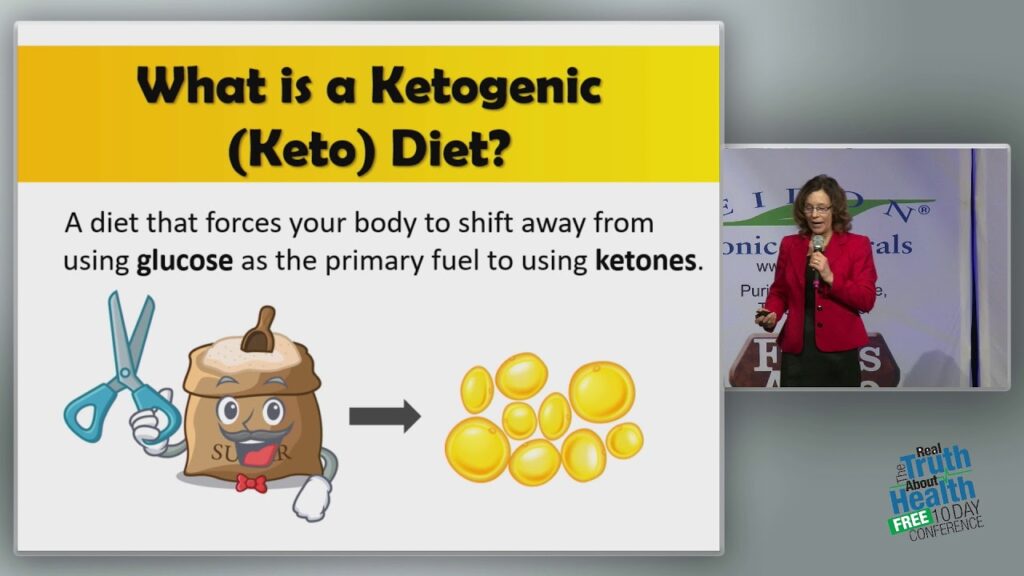
well it’s basically a diet that forces your body to shift away from using glucose as the primary fuel to using more ketones and so why does the body shift well number one could be starvation fasting or very severe food restriction so you’re eating either nothing or maybe six or 800 calories a day and your body needs to find some other form of fuel so it relies on ketones and the second thing that can cause the shift is a diet that’s mostly fat so you’re not getting enough carbohydrates to fuel your body so your body has to shift over to using something else and so it starts to use ketones
so what are key tones well ketones are the acids that are produced by the liver from fatty acids so instead of using carbohydrate you’re using fat and when you use fat we first of all we constantly produce ketones everybody produces ketones there in our bodies all the time but in very tiny amounts we use it as a as a small bit of our total fuel when you’re deprived of glucose however ketone your body’s ketone production just ramps up and you reach a metabolic state called ketosis meaning that you’re using a lot of ketones
so does ketosis equal ketoacidosis many people get the two confused and in fact in ketosis the amount of ketones in your blood is higher than normal but it’s not high enough to cause acidosis in ketoacidosis and remember ketones are acidic okay so they’re acidic when in ketoacidosis the ketones go so high that it causes your blood levels of acids of ketone as acidic ketones to be so high that it’s dangerous to your life and in fact people who develop ketoacidosis about two to five percent actually die
so and it’s most common in in type 1 diabetics who don’t give themselves their insulin injections and so that your body levels of ketones just go through the roof but we’ve also seen interestingly some case studies of women who are lactating so they’re breastfeeding so their energy needs are really high they go on a super low carb or ketogenic diet and actually go into ketoacidosis so it’s it that can happen as well that’s more rare most ketoacidosis is in people who have type 1 diabetes
so is ketosis now we know ketoacidosis is not safe but is ketosis safe well it’s generally thought to be relatively safe in the short term but I think it can have some fairly negative consequences in the long term and we’ll talk later about some of those but just as an example think about your body being acidic for a extended period of time your body has to buffer the acid and of course we as we have this amazing storehouse of buffer called our skeleton and so we use the calcium from our skeleton as a buffer for the acid so long term it could actually injure our bones
so how long does it take for the body to shift from using glucose to using ketones well it usually takes about one to three days of not eating like fasting or eating a very low carbohydrate diet first what happens is we use up our stores of sugar which are called glycogen then once our glycogen stores are gone we make glucose via a process called gluconeogenesis so Genesis is the generation neo new and then gluco for glucose so creating new glucose and we what do we use to create glucose well when we break down fatty acids and triglyceride form part of that molecule is a glycerol backbone which we can use to make glucose we can use lactate which is byproduct of glucose metabolism to make glucose we can even use certain amino acids to make glucose so we have a number of things we can use to do this process of gluconeogenesis and then as glucose reserves are depleted the body just ramps up the ketone production as well
so can all our cells and this is really important can all the cells in the body use ketones the answer is absolutely not so up to 50% of our basal energy needs and up to 70% of our brain energy needs can be supplied by ketones however the balance will have still have to come from glucose now the other thing to know is that their cells need two things to be able to use ketones they need mitochondria and they need certain enzymes for the process of producing ketones some cells actually don’t have them and one of the cells that doesn’t have one of the types of cells that that doesn’t have them is red blood cells red blood cells actually lack mitochondria they must have glucose or they will not survive that’s their energy source and the other is surprisingly our liver cells lack the necessary enzymes for the conversion so liver cells can’t use ketones for energy either those cells absolutely must have glucose
so are there any physiological benefits to ketosis well in fact there are and and particularly we have a number of studies looking at using fasting or modified fasting such as the fasting mimicking diet and they’ve reported a fairly favorable effects like reduced blood pressure cholesterol blood glucose levels we’ll of course when you’re not eating you get those those kinds of results but this is the one that I think is most interesting when you’re fasting your body is trying to survive so it gets rid of deranged cells cells that aren’t working properly that could be cancerous even it just tries to get rid of those cells and something happens that your your stem cells actually get boosted and new growth of new cells start to starts to occur which can be very very healing in some cases
so that’s important of course you get weight loss and you get reduced visceral fat and you get lower igf-1 levels as well which as you know can cause the growth of sometimes unwanted cells and and so these are you know we also get reduced inflammation and so you’ve heard if you’ve heard about True North for example in some of these places that use fasting therapeutically they have really quite wonderful success so there may be benefits in in those regards but our focus today is going to be on high-fat low-carbohydrate diets and the these diets and they’re producing ketosis and is that good or bad and why or why not
Keto Diet
so the keto diet has really become just wildly popular as a weight-loss diet and and it’s gaining ground as a diet that could be used therapeutically to treat disease so we’re gonna address those
Macronutrients
so let’s look now at at the macronutrients in a keto diet this is a keto weight loss diet so it’s generally about 75% of calories from fat about 20% protein and about 5% carbohydrate or less so you can see it’s a very very low in carbohydrates and we see a range you know it can go up to 80% of calories from fat a little less in protein but what really sticks no matter what is it is not more than 5% of calories from carbohydrates
now this is the classic ketogenic diet that was used for epilepsy and still is used for epilepsy it’s 90% fat only six to eight percent protein and only two to four percent carbohydrate okay so this is a diet that is extremely high in fat and low in both protein and carbohydrates so it’s stricter than the ketogenic weight-loss diet it would produce more ketones than what what the weight loss diet would
so what foods are actually permitted on this diet well you can see the base of the pyramid is meat poultry and fish then eggs and dairy then fats and oils and then green vegetables and some non green non starchy vegetables and then at the top you’ve got a few nuts and seeds and berries what’s not allowed as you can see is all the high carbohydrate foods like bread and pasta and sugar and and fluid milk I mean we do allow some they do allow dairy but it’s the high fat dairy like cheese and and cream and butter and no corn or beans or rice or any of the non-sterile any of the starchy vegetables either and the basic you know theme would be eat fat eat meat poultry eggs and fish the fattier the better and eat non starchy vegetables so that’s kind of the diet in in a sentence
Keto Recipe
here’s a sample recipe to give you a flavor I got this from one of the popular keto websites and you can see here this recipe has three pounds of ground fati ground beef 2 cups of pepper jack cheese 4 cups of Colby and Monterey cheese Jack cheese and then 2 cups of frozen pepper strips and that’s that’s that’s it so 1/8 of the recipe has almost 800 calories 61 grams of fat about 70% of calories from fat 30 grams of saturated fat 7 grams of cholesterol are behind rate 49 grams of protein 250 ml of 205 milligrams of cholesterol and less than half of a gram of fiber so there’s almost no fiber there at all
Paleo Diet
so let’s look at the Paleo diet and how it compares to this so the Paleo diet is essentially a pattern of eating that attempts to mimic the diet of our Paleolithic ancestors other names you see our caveman diet Stone Age diet primal diet and the basic premise is that what humans a DIN creator cultural times is the diet best suited to our genetic makeup the shift from a hunting-gathering diet rich in wild meat and wild plants to an agricultural diet rich in grains and legumes gave rise to our obesity and chronic disease epidemics so that’s what’s believed in the paleo world
Paleo Macros
so what do the Paleo macronutrients look like well it’s about 50% fat about 30% protein and about 20% carbohydrate so it’s a low carbohydrate diet but not nearly as low as the ketogenic diet so what foods are permitted well you can see it looks really similar to the keto diet pyramid here’s meat at the bottom then fruits and vegetables in the middle and then nuts and berries at the top and of course there’s no beans there’s no there’s no grains there’s no one of the differences of course there’s no dairy here as well and here’s a sample recipe it’s very similar half the recipe is 643 calories 37 grams of fat 54 of protein so it’s even higher in protein but it’s got more carbohydrate about 24 grams 147 milligrams of cholesterol and it’s got more fiber about 8 grams
Similarities and Differences
so let’s compare the Paleo and the keto diets so the similarities are in blue the differences are in pink here so let’s look at the similarities first meat poultry fish and eggs are high in both of these diets nuts and seeds are included in both diets green vegetables are included in both diets legumes are excluded in both diets grains are excluded in both diets okay so here’s the differences so in the Paleo diet there is no dairy whereas in the keto diet there’s quite a bit of dairy mostly cheese and very high fat dairy products other non starchy vegetables are included in the Paleo diet pretty generously and they’re included but limited in the keto diet which I’ll show you in a minute starchy vegetables are limited in paleo and they’re excluded in keto there is no there are no potatoes or squash or any of those kinds of vegetables in a keto diet but in a paleo diet they’ll fit in a sweet potato here or there something like that and then fruits are moderate in the Paleo diet and they’re minimized in a keto diet because they have a lot of carbohydrates and then concentrated fats and oils are fairly moderate in a paleo diet and they are extremely high in a keto diet
so again the macronutrients in keto about 75 percent fat 20% protein 5% carbohydrate whereas paleo is 50 percent fat 30 protein 20 Carbohydrate carbohydrate so let’s talk a little bit about the carbohydrate restriction and what we’re really talking about here so keto diet is less than 5 percent of calories from carbohydrate other low-carb diets are about 6 to 20 percent of calories from carbohydrates so paleo is actually at the highest end of low carb diets whereas keto is at the lowest end of the range of low carb diets
so how many grams of carbohydrates are we talking about well keto diets are 20 grams for most keto diets some will go as high as 30 grams but it’s usually they try to keep the lid at 20 grams so they try to eat less than 20 grams of carbohydrate whereas for Paleo it’s about a hundred grams so it’s much more generous
Carbohydrate Percentage
so let’s take a look at the percentage of calories from carbohydrates in plant foods so fruits are about 92% starchy vegetables about 90 legumes about 70 non starchy vegetables about 60 58 or so and nuts and seeds are about 12 ok so so think about these numbers and then remember a keto diet is less than 5% of calories from carbohydrates and a paleo about 20 well the vast majority of plant foods range from about sixty to about ninety percent of calories from carbohydrates how many of those foods can they afford to eat if they’re trying to get less than five percent or even less than 20% of calories from carbohydrates not a whole heck of a lot
so we really need to understand that plant foods are predominantly carbohydrates with one exception and that exception is nuts and seeds that’s where we get our essential fats from okay and and otherwise they are predominantly carbohydrate
so how much carbohydrate in non starchy vegetables so a lot of people say oh keto diets we can have lots of non starchy vegetables but if you look at it an avocado has 12 grams of carbohydrate if you’re only allowed 12 20 grams of carbohydrate for the day how many avocados can you have maybe one turnips twelve for a cup Brussels sprouts eleven for a cup and and then we’ve got sort of the medium non starchy vegetables like eggplant cabbage carrots asparagus broccoli peppers with somewhere between six and nine and then the lower carb vegetables like the leafy greens which might only have 1 gram of carbohydrate per cop so you could eat more of those but you certainly couldn’t eat a lot of the other non starchy vegetables just so you know that there really is a limit on how much they can consume
now if you look at the carbohydrate content of other foods and remember the lid is 20 grams for a keto diet you know take a look at any of the grains or starchy vegetables a serving of a cup of granola 66 grams of carbohydrate a bagel is 56 a cup of beans is 41 Apple is 30 the limit for keto diet is 20 these people ought to say I heard somebody at the gym the other day say I just realized how bad apples are for me you know can you imagine and and so this is the thinking that these foods are bad because there’s this black and white thinking if a food contains carbohydrates it’s bad you know if it doesn’t it’s good so that’s the thinking
so what are they eating while they’re eating a lot of this stuff down at the bottom of this of this chart here they’re they’re eating cream cheese sour cream cheese butter meat chicken fish eggs those are the things that don’t have carbohydrate so by definition this diet is a diet of this stuff ok so just so you get that
Which Is Better
so which is more healthful a keto diet or Paleo diet well a paleo diet is definitely healthier than a keto diet because a keto diet is the most extreme of low carb diets it’s mainly fat on meat plant foods are heavily restricted whereas a paleo diet is the least extreme of the low carb diets it allows a much more liberal intake of plant foods about 5 times more than a keto diet so it has more of the protective nutrients that we need to protect our health like like fiber and phytochemicals and antioxidants and pre and probiotics and plant sterols and all of those things it’s about five times higher in a paleo than than keto diet