
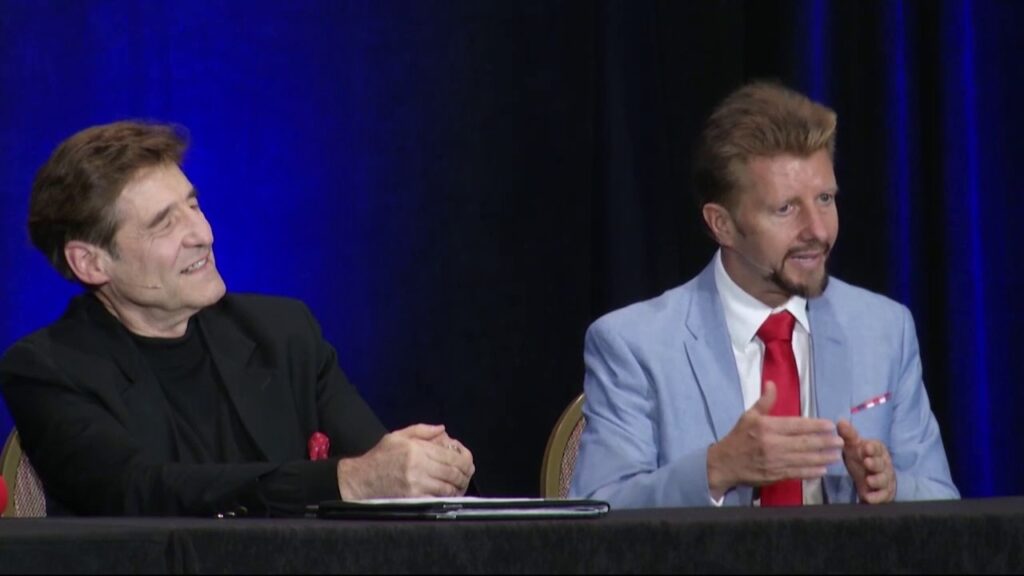
Panel Participants: Gabriel Cousens, M.D., Joel Fuhrman M.D., Brenda Davis, Hans Diehl, DrHSc, MPH, FACN, Brian Clement, Ph.D., L.N.
Gabriel Cousens – offers an innovative approach to the prevention and healing of what Dr. Gabriel Cousens calls chronic diabetes degenerative syndrome. A leading medical authority in the world of live-food nutrition, Dr. Cousens exposes the dangers of excess glucose and fructose as the key causes of this seemingly unstoppable epidemic that affects more than twenty-five million Americans and 347 million people worldwide. Cousens presents a plan that focuses on a moderate-low complex carbohydrate, live food, plant-source-only diet that reverses diabetes to a physiology of health and well-being by resetting the genetic expression of a person’s DNA.
Joel Fuhrman – At last, a breakthrough program to combat the rising diabetes epidemic and help millions of diabetics, as well as those suffering with high blood pressure and heart disease. Joel Fuhrman, M.D. Research director of the Nutritional Research Foundation, shows you how to live a long, healthy, and happy life—disease free. He offers a complete health transformation, starting with a diet with a high nutrient-per-calorie ratio that can be adapted for individual needs. Dr. Fuhrman makes clear that we don’t have to “control” diabetes. Patients can choose to follow better nutritional guidelines that will control it for them, even before they have lost excess weight. The end result is a medical breakthrough—a comprehensive reversal of the disease.
Brenda Davis – offers real hope and real solutions to those with type-2 diabetes. Recent health studies have confirmed that a low-fat, vegan (meat- and dairy-free) diet works best to not only manage but reverse the symptoms of type-2 diabetes. Brenda guides you through the practical steps you need to take to construct a diet and lifestyle that really work.
Hans Diehl – shows in case after case, that health derelicts can become dynamos by simplifying their diet, eating unrefined foods, using natural remedies such as hot and cold water treatments, and exercising. Through powerfully motivating stories of changed lives Hans Diehl conveys the rules for vibrant health, as well as how to shed bitterness, find new peace of mind, and recover a close connection with God.
Brian Clement – Hippocrates Institute director Brian Clement shows how the Hippocrates LifeForce program implements the use of raw living foods to help people maintain a healthful weight and stimulate natural immune defenses against other chronic illnesses. Discover how to develop the positive frame of mind that supports good health, learn how to make the transition to eating raw living foods at home, while dining out, and when traveling.
Connect with The Real Truth About Health
http://www.therealtruthabouthealth.com/
Passionate believers in whole food plant based diets, no chemicals, minimal pharmaceutical drugs, no GMO’s. Fighting to stop climate change and extinction.
Intro
so the first question is we called this panel the cause and solution for diabetes but when I read your books when I read um the end of diabetes and there is a cure for diabetes and I’ve looked at and Hans and Brian’s books as well um it seems like there’s really not one diet for diabetes and then a different diabetes for all other diseases so would it be fair should we change the name of this panel or is there really a very specific protocol for diabetes or would you say the protocol for diabetes actually would be appropriate for other health
The unitary diet
issues you know when I took uh my nutrition courses at l a few years ago we had the textbook that was this thick of how to take care of the various diseases and there was a different diet with a different emphasis on just about every disease and gradually in the 1980s and ’90s there was a a movement uh there was a unitary dietary concept that was emerging that if you can take care of heart disease uh you may find that people that have heart disease and diabetes and hypertension and are overweight they improve on all these areas and this was sort of the beginning of the unitary concept that there is a therapeutic diet that is not just helping one disease but that has multiple applications and so I think that’s where we are today uh and that simplifies everything and it makes um it much easier for dietitian I think to be more effective by moving towards one dietary concept that’s interesting because that was in is this on go ahead uh in uh
The unified dietary guidelines
1999 the unified dietary guidelines actually came out and it was I think the American Heart Association the American dietetic Association the American Pediatric Association there were five American Cancer Society and and the overarching theme of that entire unified dietary guidelines was uh and this was Dr deckle bomb who said it and he said exactly what Steve just said there is not one diet to cure diab or to treat diabetes and another to treat cancer and another to treat uh heart disease one diet cuts across all of these categories and that diet is a more plant-based diet and this was in 1999 and these were the most mainstream health organizations in America so so we’ve known this for a
Clinical research
long time I guess I guess uh we’ve done clinical research to prove that since 1956 uh we weren’t uh well endowed enough to know that you should give different diets to different people so we picked one good diet and of course in 1950s 1960s 1970s and a little bit in the 80s the only people that would come to us are people who are seriously ill and nobody else would ever think of changing unless they were facing something eminent and so we have seen in a clinical setting uh with our medical team collecting uh blood profiles and blood samples during the person’s stay at the beginning the end of their stay and then of course for the rest of a person’s life once they graduate from hypocrates uh Grace for free our medical team evaluates their blood test when they send them back in so we’re acing all of this data now there’s nuance as you heard Gabriel speak last there’s Nuance in what you would do with diabetes versus what you may do with somebody suffering from a sore toe but overall what you’ve just said is actually true that if you get away the nonsense uh the polluters and you put the builders into the body and you’re eating it in the organic state where you’re not adding extra chemistry to it it’s going to help the immune system you know the problem is the human human mind is not really that endowed with intelligence so what we do is we specialize you know we compartmentalize and we specialize the body doesn’t think like that it says I have one need and the need is to be nourished with high nutrients low calories and that’s the plant-based diet I want to what do we all have to
Healing vs maintenance diets
comment well no but I’m going to comment um as it’s evolved this is nothing new
Under the Sun
and so the diet that we’re talking about which is a vegan diet but at least in my world a healing diet is is close to 100% live food because that there are certain properties to it that really enhance the healing is part of it and 80% at least as an overall kind of Maintenance so so I I do make a little distinction and this is a little what Brian’s saying about the Nuance um between a healing diet and a maintenance diet so we we kind of start there for a little bit then we also have an issue that even though in my experience 99% of the people are can be successful on a vegan live food diet so we’ll start there there are genetic variations we have 20 to 30,000 genes and there’s newer research a whole field called neutr genomics which actually says in chromosome 19 being a little bit more specific it gives us the programs of whether how much carbohydrate how much protein and how much fat we need to have now people have known that there are variations according to your Constitution for thousands the years the ortic system talks about that so in the context of saying a plant-based diet we’re all going to be in agreement okay that’s fine and most of us about the live food we’re going to be in agreement and then according to our constitution we have to organize it or at least the research I’m talking about so that we can optimize our energy production on an in cellular level called ATP it’s not a Native American thing ATP we’re talking about adidon triphosphate and so you need to eat in a way that will maximize your production of ATP and different combinations make a difference what I have found is for in general uh carbohydrate 25 to 45% protein 10 to 20% and um fat 25 to 45% is a a pretty wide range we’re talking about live raw plant-based food that according to Constitution people then can adjust to optimize the way they are genetically programmed to utilize energy and that’s a cleansing diet and it also goes for a maintenance diet but cleansing is a little bit different and but just a little bit differ in terms of how you Nuance it in terms of diabetes I will use less of the carbohydrate um in terms of the healing and in my track record of doing this for 40 years it’s I’m I kind of come up to a certain um way where I’ve seen that the less carbohydrates people have the sooner their blood sugars are going to go down and they’re leap in and Insulin uh resistance will fade away so there are nuances but generally we all talking the same
Questions
thing I wonder if can we raise some questions uh among ourselves here on the panel is that uh sure part of yeah um I’m here as a as a student myself and U I have been very interested in your chromosome 19 concept this is something new to me and I wondered if you could help me to understand this better because apparently there are some uh decisions that are being made according to this chromosome 19 in terms of how you design the diet for different people is that correct yes well really for thousands of years we’re going to talk about people kind of looked at the clinical diet that best worked for them MH so from orotic we talk about aafa p and Vata diets and people according to their constitution picked the diet that was best going to help them function um so that’s kind of a the key thing so it’s not exactly a new concept as we’ve gotten more sophisticated research has come out and this new field is beginning to arise neutrogenia which is now beginning to trace our dietary program as programmed by the particular chromosome now other people when we talk about fil oxidizer they’re talking about the DNA and the mitochondria and that’s uh inherited from the mother are you testing for that yeah I’m not doing DNA testing no but we we do certainly kind of clinical testing uh to help people optimize the right combination interesting and what what are your par what are the parameters you’re looking at for this when you say parameters so oh okay so clinically the parameters are how do you feel when you eat it how long is your energy sustained so what we what I for an example uh a people person needs a higher protein diet they often drop out of the low protein High complex carbohydrate thing oh no I have to go back to meat all they’re saying is I need more protein they get confused you know so we give more protein and suddenly their minds are functioning better the bodies are functioning better and that’s a a criteria it’s more of a clinical criteria but it’s a big one anotal you know it’s so we don’t have number parameters that we look at because I’d be interested in this myself is is there a testing that we can do yeah yeah so why don’t why don’t we why don’t we i’ like to do that you know you should do I’ll do some and we could work together on that that the testing that at least I’m talking about are kind of interviews and and and so forth when Dr walal worked with the slow and fast oxidizer diet you know 20 years ago he had a 5,000 question year 5,000 okay we have it down to 30 okay how and you know are you are you more drawn to vegetables are you more drawn to protein then how sustainable so if you’re for example if you’re what we call a person that’s a higher protein person you’re just going to have vegetables you you you’re going to get hungry in two hours I’m a slow exer I can go all day I can have a you know a salad and go for hours and hours well that’s a different metabolism intracellular and so that’s all been kind of worked out but it’s clinical it’s not it’s not the same thing as is there a biochemic test I don’t think there really is at that at a practical level all right that’s good yeah