
Is Salt Okay As Part Of A Healthy Diet? Here are the latest scientific findings on proven benefits to your Health from a Whole-Plant-Based Diet
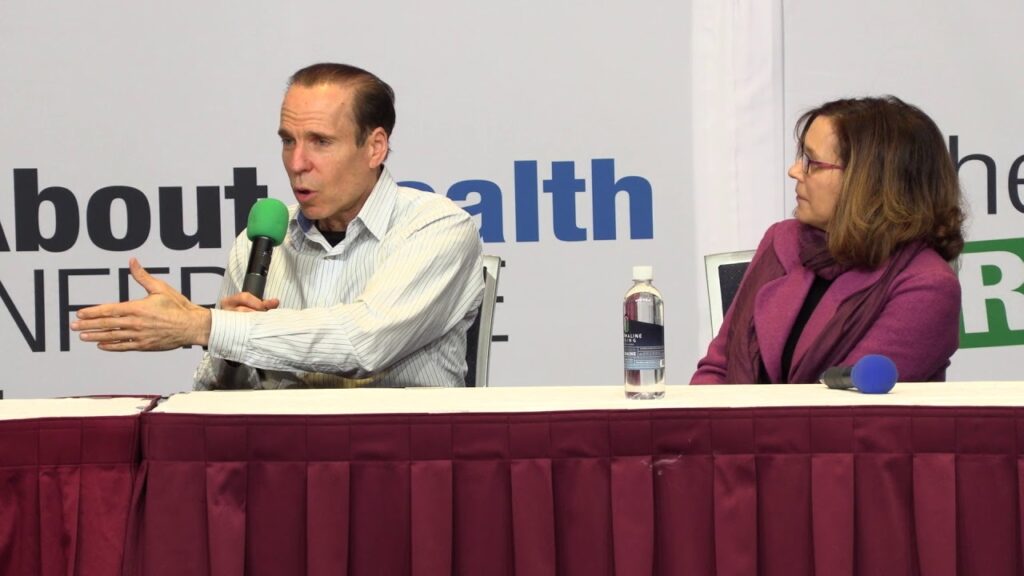
Panel Participants: Brian Clement, Anna Maria Clement, Ph.D., L.N., Ph.D., L.N., Joel Fuhrman, M.D., Brenda Davis, R.D.
Connect with The Real Truth About Health
http://www.therealtruthabouthealth.com/
Passionate believers in whole food plant based diets, no chemicals, minimal pharmaceutical drugs, no GMO’s. Fighting to stop climate change and extinction.
I’m regarding salt salt on bad dog with bad food and with good foods a lot of times I feel like I think I’m eating healthy but I noticed my guacamole from Whole Foods has salt my salsa has salt my dehydrate flax crackers have salt my chickpea croquettes that a dehydrated have salt and my sauerkraut has salt and I tell myself that it’s okay because I’m eating a lot of healthy things and somehow I’ve justified that salt is okay so one salt on healthier diets and two salt in fast food on how Shoei saying be careful with animal products how should we think about salt both in the healthy diet and on the unhealthy diet
I challenge most of the health people on this one frankly because all of these salts even with fancy names Celtic salt crystal salt our sodium chloride now we can’t change that sodium chloride is sodium chloride I don’t care if you get it from the ocean or below the ground in Arkansas where there’s salt mines or if you get it from somebody oming in Russia in a cave on this if sodium chloride is not a healthy salt although sodium without it we die it’s actually what is the antiseptic for your lymphatic fluid so we need it but you should get it through food and that would be my first choice now we use salt when people have their getting weak and their electrolytes go down and often when we’re aiive iing whole food supplements into them so we actually use crystal salt the same thing I’m telling you is bad for you
I agree with what you just said the fact that all these sodium’s where the way you get them from still expose you to an excess amount of sodium but let me address one aspect of your question because let’s say you’re eating healthier does that make the salt less damaging because salt excessive amounts of sodium matter what it’s where source is coming from excessive any type of salt can cause micro vascular hemorrhaging and increase in risk of autoimmune conditions it’s pro-inflammatory what I’m saying right now is it damages the endothelial of your blood of the lining of your blood vessels weaken the structural foundation of your blood vessels and predisposing them to having a hemorrhage and a hemorrhagic stroke and not dependent on your blood pressure I’m saying solve damages people by raising blood pressure and blood pressure damages brain cells increases risk of heart attacks and strokes but I’m also saying salt directly damages the endothelium outside of its effect and raising blood pressure now why is it that people with lower cholesterol have higher rates of hemorrhagic stroke why is it the people in Asian countries have higher risk of hemorrhagic stroke and lower rates of ischemic or embolic stroke which is caused by a clot or all the same things that cause a heart attack and the answer is because when you eat the cheese and the burgers and the meats that increase your risk of atherosclerosis and increase the risk of having a heart attack or a embolic stroke it thickens the blood vessel wall with atherosclerosis protecting the fragile blood vessels in the brain from the effect of from the effects of having a hemorrhagic stroke what I’m saying right now is a person on a healthy diet or a vegan type diet lowers their risk of heart attacks and ischemic or embolic strokes but if they’re still eating simplement of salt they can be at a significant increased risk of hemorrhagic stroke over the person who eats meat so now what we’ve done in the Asian populations whoever high salt consumers if we’ve lowered the rate of heart attack and increase the risk of stroke to make up for the people that are not dying heart attacks will be their overall lifespan is just as bad as there is in America and all we’re doing among certain vegan populations is weak to stand the risk of embolic stroke and increase the risk of hemorrhagic stroke because they’re still eating on a salt in your diet I proposed that salt is more dangerous to a vegan than it is to a meat-eater because your cuz your action peeves your blood vessels are not gonna be coated with with the plaque and thickening no protect right there’s no protection so why not protect against all these diseases
and when you’re on a low salt diet chronically or you know taking less than a thousand a day or something from you know what natural foods give us natural food gives us about 500 to 700 a have a couple of hundred extra you still under a thousand when you’re on that low salt diet your body learns to hold on to sodium it doesn’t excreted in the urine it doesn’t extreme the sweat and now when you’re running marathons or playing tennis in the heat or so you’re not pushing out salt and your body is more stable you don’t have your salt or sand fluctuate up and down and then when you don’t eat salt your taste gets stronger for salt now let us taste better and vegetables have more flavor so you rights and so you can taste the natural flavors of food people are used to eating on a salt nothing has any taste anymore and I have to solve things to get flavor and I’m saying it doesn’t in crit in increase your pleasure all that salt eating has lessened your ability to enjoy the subtle flavors in natural foods that are so much stronger when your taste is not deadened by sodium by so much sodium remember before we had refrigeration which wasn’t long ago they used to preserve meats with salt so this is part of why we got into this process
so diem and low chloride like in a blood test you should be like 135 and up with sodium a lot of people come in like 129 and then you think you need salt No and so our experiences these people have used a lot of salt in their diet before they came and and they’re not able to detoxify they’re not eliminating like this shirt and then we don’t give them salt but they get a lot of sodium in the juices it’s celery all the vegetables and seaweeds and things like that by the time we have in the next block this they have perfect sodium
just for a second I think and help you is that because I’ve seen this and tested over years with people in blood tests is that when you’re consuming a high amount of salt let’s say 3,000 to 4,000 a day your body has to keep homeostasis by keeping the sodium in the blood stream content consistent so your urine gets trained and learns how to excrete a huge amount of sodium yeah and your sweat is excreting sodium and your recitations are excreting sodium as well so your body is pushing out sodium all the time when this person goes from a high sodium diet immediately to a very low sodium diet their kidney in their urine and their and their sweat and their breath is still secreting high amounts of sodium and they’ll become hyponatremic their sodium become too low it takes weeks for the body to learn how to hold on to sodium and the same thing is true the opposite with me I don’t need hardly any sodium if I go to have some Chinese vets restaurant or eat an olive or something with sodium my body’s not used to excluding the sodium I’m holding onto my sodium now that’s what really good health is you hold on to Lisl cuz when you’re holding on to sodium you’re maintaining your electrolytes in your body and with the sodium not you’re saving the mineral content of your body you’re not put using and requiring so much but in any case the point I’m making is there’s a temporarily lowering the sodium when sweet people switch from a high sodium diet to a very low sodium diet and sometimes you have to take it down more gradually or you have to you know give it to tell them they’re gonna be okay and reassure them they can be a little bit feeling the week for a for a week or so but it does resolve itself with time and your body accommodates and gets used to the amount of sodium you consistently consume I think what we need to do is when people get married put sodium in both of them so they stick together okay
can I take one of the microphones to give to the audience Shirley please just ask one question no follow-up and I prefer not to be a health consultation just ask a direct question of the speakers thank you your thoughts about vaccinations across the age spectrum please
well we have four children seven grandchildren we chose not to vaccinate any of our children our children chose not to vaccinate most important book I’ve read on the subject out of dozens and dozens of books was authored by Robert F Kennedy jr. who’s a an environmental attorney but it was really put together by a Harvard and a Tufts University physician it’s called ethylmercury and I think anyone should read it it was a very quick read I thought I’d take three weeks to read it I read it in a few hours so it it’s very concise very and what I love about it there’s not saying I’m anti vaccines what they’re saying is by the way why don’t we make vaccines that don’t have ethylmercury that don’t have ala minion in it and you know because vaccines have it’s a double-edged sword there’s no question that save millions and millions of people’s maybe billions of people’s lives and there’s no question that’s implicated with some disorders today
well look I mean it’s well known among scientists and physicians and researchers that every medical intervention has risks associated with it you don’t get something for nothing there’s risks and the problem is in one of the major problems in the medical profession is that the drug company studies don’t look at long-term risks they only consider immediate or short-term risks so there’s so much about vac so much potential risk in vaccine that nobody is looking at the come the combining of 21 vaccines in the first six months of life and whether that increases autoimmune disease or cancer risks 20 years later and a teenage year so in other words there’s so much about vaccines that we don’t know we really can’t accurately ascertain the risks because in this country nobody’s putting money to look at that and to see what the real benefit versus risk ratio no we’re not only this country no we’re in the world now if you want to look at maybe get an outside opinion you can’t even look at studies done by universities with people in this country if you want to look at to get a more impartial view of like that’s safe to you flu vaccine is really effective you got to go outside this country to see people like in the Cochrane analysis looking at what we’re doing in a more non biased sense and we get a more impartial view to learn how relatively ineffective they are compared to the marketing we get over the airways and all the day with them and the idea that people are dying or left and right and we got to take Tamiflu and we got to take them you know whatever the point I’m making is that it’s very hard for even us to know the facts because we don’t have the data to be able to answer the questions accurately because the studies aren’t even done so we need you know so it’s it’s unfortunate it is unfortunate
are there any countries in the world that had taken on these plant-based nutrition as a serious a health policy I’m referring specially even to a Brenda Davis’s Donnell work in a Marshall island where some of the smaller Pacific nations or any countries indeed has taken on this
well yeah I mean I’ve been working I’m sorry but I sometimes get into work emergencies with people but I’m not 100% sure what you’re saying but yes I’ve worked with the government of Jamaica for example and I’ve been looked at worked on their food plate and sore there and they adopted some of their foods pure I’m not their food plate from part of my work and they’re trying to advocate people eat what they grow and not take in the fast foods in the Frank and who’s coming from other countries so there are countries in smaller countries the world who recognize that the healthcare at reducing health care costs and protecting the health of their population from the damaging effect in the American influence and actually we’re finding out that we’re working with you know with people that know what’s happening around the world we’re actually we’re having politicians and government and health professionals working together that are doing much more advocacy for their population to live a healthy life that goes on in this country definitely I mean if you look at a country like Germany now in Germany over half the population I think 57% to last I read consciously choose teeth for vegan meals a week now that’s a major in a place like Germany where when I used to go to health restaurants there 40 years ago all I got is potatoes so it’s a wild shift in the right direction and I worked with the Indian government but again what happens is the administration’s change and so I worked with the Egyptian under Sadat I worked with his government and the Irish government when somebody came in reversed disease who was part of it but it’s unfortunately so short-lived until we had a policy in place in one of these governments nobody’s done long-term serious things that I’m probably the same with Jamaica you go there and somebody’s enthusiastic about it somebody’s voted in and before you know it that’s out the window but the country that does it as Denmark has decided to be the first country that gets off the grid which we’ll do in the next thirty years is going to be the country that will lead the world in health care