
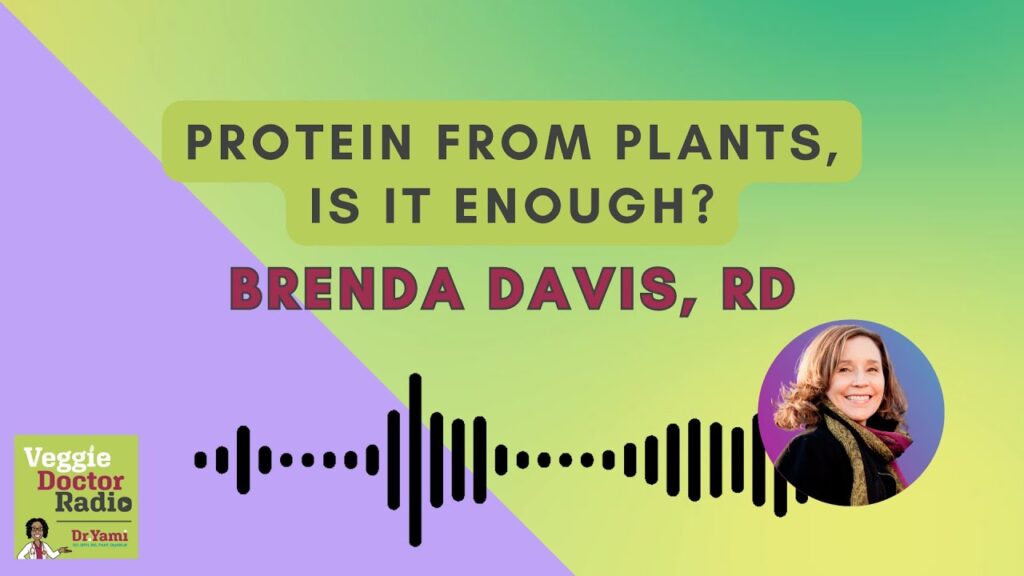
In this episode of Veggie Doctor Radio, we learned from prolific plant-based dietitian and author, Brenda Davis, about the advantages of plant protein, and how to ensure that we are getting enough at various stages of life.
Ad-free episode: https://plantscription.substack.com/s…
Thank you TriMed EHR for sponsoring this episode! Request a demo today: https://landing.trimedtech.com/reques…
Disclaimer: The information on this blog, website and podcast is for informational purposes only. It is not meant to replace careful evaluation and treatment. If you have concerns about your or your child’s eating, nutrition or growth, consult a doctor.
BRENDA DAVIS
https://brendadavisrd.com/
Mentions:
Plant-Powered Protein: Nutrition Essentials and Dietary Guidelines for All Ages by Brenda Davis, Vesanto Melina, Cory Davis: https://amazon.com/Plant-Powered-Prot…
Intro
you are listening to Veggie doctor radio and this is episode number 256.
[Music] welcome to Veggie doctor radio I am your host Dr Yami board certified pediatrician certified lifestyle medicine physician certified health and wellness coach author speaker mother wife and human being I passionately believe in the power of diet habits and mindset in sparking and sustaining well-being and joy in our lives this podcast combines expert interviews and thoughtful monologues to explore plant-based nutrition lifestyle medicine parenting mindset and other exciting and fun topics I hope that these episodes inspire you uplift you and equip you with the knowledge and tools to live your best life are you ready to get started let’s do it
Who is Brenda
foreign lovers what a fantastic plantastic episode I have for you today with the legend Brenda Davis she is here today to talk about her book plant powered protein that she co-authored with her son and vasanto Molina so before I tell you about Brenda I just want you to remember that the information on this podcast is for informational and educational purposes only it is not meant to replace careful evaluation and treatment by a healthcare professional so if you have concerns about you or your child or another family members eating nutrition or growth please consult a health professional
okay so Brenda has been on the podcast before to talk about the book nourish which is was written for children so look that episode up she did that with Dr reshma Shaw but now she is on to talk about her newest book plant powered protein which I highly recommend for those of you who need a little bit more reassurance and information about getting sufficient protein from plants
so who is Brenda Davis if you don’t already know she is a registered dietitian is a world leading plant-based Pioneer and an internationally acclaimed speaker she has been featured speaker at Medical Nutrition and dietetic conferences in 25 countries on six continents that’s amazing as a prolific nutrition writer Brenda has authored or co-authored 13 books with nearly a million copies in print and 15 languages her latest book plant-powered protein taught off the press this month April 2023
Brenda has also authored and co-authored numerous professional and lay articles and his past chair of the vegetarian nutrition dietetic Practice Group of the American dietetic Association she was the lead dietitian in a diabetes intervention research project in the Marshall Islands and on her last trip in November of 2017 she developed a nutrition education curriculum for kindergarten through grade six and trained teachers in all public schools Brenda was the seventh recipient of the plantrician Project’s luminary award and she is amazing kind and warm knowledgeable so full of information
this podcast is really great as an introduction to protein and protein derived from plants so if you keep getting that same question or if you have those questions about where do you get your protein am I getting enough protein do I need more protein do my kids need more protein this is the episode to listen to
so what do we talk about we talk about her journey as a plant-based vegan dietitian why why a book about protein now why is there so much controversy around protein even among experts is plant protein inferior or incomplete versus animal protein are there advantages to consuming plant protein over animal protein spoiler alert yes how much protein does the typical American adult need and how do they determine what’s sufficient for them specifically
we talk about athletes do they need more we talk about seniors do they need more we also talk about children and if people need to track their protein intake or how can they determine if what they’re consuming is sufficient so like I said this is a good introductory episode about protein especially if you are a plant-based person who wants to make sure that you’re getting enough this is the episode for you veggie lovers thank you so much for being here thank you for coming week after week I appreciate you I’m so grateful for you I’m just so happy to be here creating these episodes for you getting the opportunity to interview these amazing experts people that are dedicated and compassionate and loving and really care about helping other people so thank you for making this possible for me and thank you for being you so without further Ado let’s welcome Brenda Davis Rd
Brenda Davis plant-based vegan icon welcome to Veggie
Why did you write this book
doctor radio oh it’s wonderful to be back with you I’m excited yes and I’m excited to talk about this topic because as you know probably the reason you wrote this book it’s a very hotly debated discussed topic but before we get to that I would love for you to tell my listeners a little bit about your journey as a vegan dietitian and why you wrote this book focusing on protein now
well absolutely I I actually got interested in nutrition and plant-based diets when I was in high school and I became a registered dietitian in 1983 and and I I had plant-based leanings at that time but I wasn’t completely plant-based until 1989. at that time I was a public health nutritionist and I’d actually only met one real life vegetarian in my whole life I I was I was really intrigued though with books like more with less and diet for a small planet and Laurel’s kitchen I even remember reading diet for a new America and and I just desperately wanted to understand the consequences of our food choices both for human health but beyond human health and I was just so impressed by the strength of the link between diet and disease and by the profound impact that food food has on animals and on the environment and the more I dug into what was going on in our world looking at that sort of bigger picture the more I was compelled to take a stand and I just became committed to promoting eating patterns that both support and protect human health while minimizing pain suffering and death and other creatures and helping to protect the Earth’s very fragile ecosystems
and and to be really honest I was scared because in those days vegetarian diets were considered risky vegan diets were considered downright dangerous and I I thought I was going to just be ousted from my profession so you know I I was bound and determined that I would do everything I could to make sure everything I said was evidence-based and that I was very very very professional in my communications respectful of my colleagues and so it didn’t turn out quite as badly as I thought it might in fact my colleagues embraced the information that I was providing to help them with their their vegetarian and vegan clients so it ended up all being good
but in terms of the plant powered protein book this is actually my 13th book and this one has a really special place in my heart because my son Corey was a co-author he actually did the environmental section and and that was just so much fun to write something with him and my my traditional writing partner for Santo Molina and I decided to write about plant protein because as he said protein is something that people are obsessed with and in our culture people often view animal products as the only real protein sources and everyone who goes plant-based get gets asked the question where will you get your protein and we wanted to write a book that would lay this question to rest uh sort of once and for all and Tackle all of the other protein misconceptions uh in our culture so that’s kind of in a nutshell
Ah that’s amazing well thank you so much thank you so much for your dedication and your persistence and your attention to detail because we need all of that so I’m very grateful for you as forging that path and doing the piece that some of us may not be able to so I appreciate that and I definitely appreciate this book because you’re right this is a question I get asked almost every single day and not even just because people want to eat a plant-based diet it’s a question for everybody I’m a pediatrician so parents are always so stressed that their kids are not eating enough protein so they’re so stressed about it but then yet there’s very little understanding about where protein is derived from what it’s used for how much you need so so let’s get into that why is there so much controversy around protein it seems like even among the scientists above the experts it’s hotly debated how much you need how much you don’t need they’re still experts out there saying that you have to consume animal products to get sufficient proteins so why is this such a big issue
How much protein do you need
well you know partly it’s because we don’t have all the answers yet and we’re still trying to figure out how to assess the quality of protein appropriately and you know the big controversy is really surround two key key issues that revolve around how much protein we need and what are the best quality proteins um so in terms of you know how much protein we need we have to look at differences in different stages of the life cycle for athletes and there’s a lot of disagreement about also about what protein sources provide the highest quality protein and as you can imagine I think everyone knows protein is really big business so there are a lot of stakeholders in this conversation
determining optimal protein intakes at different life stages and for athletes actually has been pretty challenging and even you know the leading protein experts in the world don’t always agree on you know what we need but we do have rdas for protein and and these rdas are are you know we have estimated average requirements which are fairly low but only cover probably half the population then the rdas are set to cover 97 to 98 of the population but some people still argue that the rdas aren’t high enough and we know athletes need more than the rdas
so the rdas are point 0.8 grams per kilogram for adults or of course more for you know 1.05 for for toddlers And 0.95 for for children 0.85 for teens but but athletes need probably 1.2 to 2 grams of protein per kilogram body weight but they eat a lot more so it’s actually pretty easy for them to achieve those numbers
now seniors it’s a whole other story because we’re now seeing seniors you know they have a diminished ability to absorb indispensable or essential amino acids and and so they they probably need a little more than 0.8 grams per kilogram maybe one to one point two and and that’s hard for seniors because they eat less adult athletes eat a lot more seniors eat less and so for them to meet those needs on fewer calories uh is it can be challenging um it’s it’s also possible that some plant-based eaters need a little more if they eat a really high fiber diet because the digestibility of protein from Whole plant Foods if they’re high in fiber is a little bit lower
but where quality is concerned at one time the arguments were completely one-sided the evidence for the superiority of animal protein seemed really solid based on the accepted measures of protein quality at the time and the measures of protein quality we used you know when when you think about the protein efficiency ratio we use you know baby rats that are fur bearing animals that need a lot of sulfur-containing amino acids and humans you know we finally realized with newer measures of protein quality that that humans aren’t forbearing animals and and that we probably underestimated the quality of plant protein using those old old measures
but but what we what we know and what what I think is often forgotten in this conversation is that the different types of or the different protein sources have different impacts on our our morbidity and mortality and and plant-based proteins um actually are consistently associated with Better Health outcomes and so in in this quality question you know whereas we’ve always judged quality based on amino acid profile we’re now starting to recognize that we need to expand the definition of protein quality and include other aspects of protein quality like the impact it’s going to have on on our risk of death and disease and also I think we need to factor in the ecological burden of various protein sources as well if we’re going to really determine quality for humans humans can’t survive without a healthy planet and and so we’re not quite at the stage yet where where we’ve done a really good job at weaving all of that in together to determine protein quality but I think we’re taking steps in that direction and that’s really important
wow yeah that’s that’s a lot Brenda you’re just your brain is too full of information I want to take a step back and deviate a little bit from the next question I was going to ask because there’s something I think that’s fascinating about this whole history of our obsession with protein so I think there probably was a time in our history in the world and in the United States where there was a significant amount of people that were not getting enough calories in general they weren’t getting enough access to to nutrients in general right
Are people getting enough calories
and I know that this came up especially when we were recruiting people to the military and everybody was like starving to death and there wasn’t enough people you know and so there was this Con concern that we need to get people nutrients specifically protein that kind of thing so now I feel like we’ve shifted the opposite direction right and there’s not that many people that don’t have enough access to calories in fact it’s probably the opposite and whenever you look at people’s diets and how much they consume even though I would say that the quality of the standard American diet is not as high as we’d like it to be as far as micronutrients and things like that people are getting a significant amount of protein and as you were saying before too like when it comes to athletes and just your typical American eating the amount of food they want to eat to be satisfied they’re usually getting enough protein even if it’s just coming off from plants but there was a time in our history where people weren’t and I remember learning in medical school especially about certain micronutrient deficiencies and there was this what you call the tea and toast the little old woman who didn’t have much of an appetite it was just basically just having her tea and Toes three times a day and you know you get the B12 deficiency and all of these things but whenever you’re referring to some of these populations especially like seniors is that still an issue in 2023 where people are under eating and getting not getting enough calories in general or it like how much of it was was that issue just not getting enough calories in General versus we have to get extra protein
yeah so it it that’s a really important question and I love that you brought that up because for so many years hunger and malnutrition were really serious public health concerns and and government policies were really directed towards the elimination of those diseases and and and the shortfalls and nutrition education campaigns were all really about eat more messages eat more protein eat more calcium you know all of those things and and governments came up with sort of the meat and milk solution you know protein quality you sort of favored animal protein and we just thought that eating more animal Foods would help to overcome these micronutrient gaps in the protein Gap and all of that
um but but what what we fail to recognize is is that all of the eat more messages uh in the end kind of backfired because now the greatest malnutrition Menace on the planet is over consumption and you know most people get twice the protein they need it’s you know they’re they’re a lot of faces of malnutrition over consumption is one of them just like hunger or micronutrient deficiencies so we need to recognize that you know we you know getting enough calories is not an issue for very many people in the developed world we still have a lot of hunger in the world and malnutrition in the world but not not you know in North America for example in North America 70 of us will die of diet-induced chronic diseases that are really entirely preventable and so but but it’s true Dr Yami that some seniors don’t eat enough and for people that don’t eat enough uh calories uh protein is a bigger issue if if you’re eating enough calories and you’re you know you’re you’re eating a reasonable variety of plant Foods uh protein is is not generally a problem
okay thank you so much for that because I think a lot of people don’t realize that that’s part of the issue too is just the general volume of the amount of food you consume that will probably never be an issue for me because no for me either I love to eat so it’ll be fine for me okay so let’s talk about this issue of complete versus incomplete protein what is that debate about and is plant protein inferior or incomplete for humans compared to protein derived from animal flesh
Complete vs incomplete protein
well this is one of the issues that that irks me as as a registered dietitian because you know it was way back in the early 80s I think that that a diet for a new America you know we you know that that Francis marlappe suggested that combining Greens and Beans would help to provide like a complete protein more similar to animal protein and so people you know started getting really careful you know calculating making sure that they always ate you know certain foods together to get complete proteins and and in fact you know plant protein is not inferior it’s not incomplete uh in the you know old sense of the word one of the things that I think few people actually realize is that animals don’t make indispensable or essential amino acids they’re they’re actually made by plants we we get them from Plants either directly by eating plants or indirectly by eating animals that ate plants or very indirectly by eating animals that ate other animals that ate plants they come from plants they’re made by plant it makes no sense to think we can’t get them from Plants it’s where they come from then
and so the idea that plant proteins are incomplete is really just about that in indispensable amino acid profile in plant Foods so basically we look at the amount of each you know there are nine indispensable or essential amino acids and plant foods and and we have a recommended intake at different stages of Life per gram of protein that we consume I mean if you need 30 grams of protein then then we would look at each of those 30 grams would need to have a certain amount of indispensable amino acids and if we Compare the numbers to estimates at various life stages we find that some plants can and fall short of certain proteins for example grains tend to be lone lysine some legumes are a little bit low in methionine plus cysteine actually a lot of them aren’t but some are and this would be an issue for people if we ate only one food
so so I wanna you know I I thought about this um I’ve thought about this for a long time and I actually did some calculations to help people to understand this so for example if you had 136 pound adult who needs 50 grams of protein 0.8 grams per kilogram body weight and the only thing you eat is white rice or this person is eating as white rice they eat nothing else they would need 11 cups of rice to get enough protein however to meet their needs for lysine as an adult at 38 milligrams per gram of protein or 1900 milligrams of Lysine they would actually have to eat 12 cups of rice so they could still don’t need all of those needs but they’d have to eat a little more rice
now for a preschool child who actually needs more lysine they need 58 milligrams per gram of protein the difference is a little more so they would require to get their 13 grams of protein that’s recommended if they weigh 20 pounds they would need to eat about four and three quarter cups of rice to get enough lysine they would only need to eat three cups of rice to meet to get that 13 grams of protein so they’d need an extra one and three quarter cups of rice to get all the lysine they need
but if we look at legumes for example we always say they’re short of you know methionine insisting you take the same 136 pound adult who who needs 50 grams of protein and all they ate is black beans they would have to eat three and a third cups of black beans to get enough protein to meet their needs for methionine insisting they’d only need 2.4 cups of black beans because actually black beans don’t fall short at all on methionine insisting for adults um so for adults most legumes have sufficient of all essential amino acids
however for a preschool child who weighs 20 pounds needs 13 grams of protein they would have to eat 0.85 cups of black beans that’s 13.5 tablespoons to get their 13 grams of protein however to meet their needs from methionine insisting they’d actually have to eat .92 cups of black rice or 14.7 tablespoons that means to get all the methionine and cysteine they need they’d need to eat an extra 1.25 tablespoons of black beans so it’s this is tiny bit extra to to meet their needs and that’s just eating a single food so the point I’m trying to to get at is is truly if you’re eating a variety of foods it’s easy you know if you’re eating a single food it’s pretty easy but eating a variety of foods you’re getting a mix of all essential amino acids that plant Foods produce the key things are the variety of foods and meeting your caloric requirements those are you know Keys animal proteins do contain all of the indispensable amino acids but it doesn’t make them a superior to plant protein sources because plant protein sources offer so many been health benefits the fiber the phytochemicals the antioxidants all of these things whereas animal products are high in saturated fat and cholesterol and you know new 5gc and produce tmao and all of the things that have downsides where disease is concerned so to me it just makes so much more sense for for people to be getting their protein from plants
that’s beautifully said and yes we got to think about the package that the protein comes along in right like it’s not just the protein itself but what else comes with that protein that might be producing that higher burden of morbid morbidity mortality what are some other advantages to consuming plant protein over animal protein I mean you’ve said so many but if you were to kind of summarize it for us so that people really see the difference of like okay maybe I should be choosing more plant protein sources versus animal protein sources what would you say to them
well I would say there there are so many studies that have looked at you know risk of of mortality and morbidity different diseases and there was a study in 2020 from the United States that reported a 10 reduction in mortality when just three percent of calories from animal protein were replaced with plant protein and just to put this into perspective because people have no idea what those numbers probably mean but it means in a 2 000 calorie diet or kind of a typical diet it’s 60 calories it’s about one ounce of meat or less than an egg an egg is 70 or 80 calories so one ounce of meat or a small egg you know if you replaced that with plant protein you would reduce your risk of death by ten percent now imagine if you replace three ounces of meat um with plant protein you would be tripling that you would be reducing mortality by 30 percent
So based on this study and many other studies that would you know that show similar results in this particular study actually Quantified impacts of various foods and when red meat was replaced with plant protein wrist dropped 13 for men and 15 for women and we’re talking still three percent you know three percent of calories when dairy products were replaced it was an eight percent decrease in mortality when eggs were replaced with plant protein wrist drop 24 for men and 21 for women so triple that if you’re eating three eggs that would be you know it would be close to 75 for men and you know it’s just it’s a lot so if you if you do the math on this replacing one large a to two ounces of meat and a cup of milk could reduce risk of mortality by about 54 percent that pretty impressive and we got even more stunning stats out of Japan in 2019 mortality dropped 34 when three percent of calories from red meat were replaced with plant protein and 46 percent when three percent of calories from processed meat were replaced with with plant protein again that’s just 60 calories from these foods and for most chronic diseases including cardiovascular disease type 2 diabetes and cancer the findings are really similar
and I just want to give you a couple of examples there was a study in 2020 in the U.S that reported heart failure risk was 251 percent two and a half times greater in the highest versus lowest quintile of animal protein intake and 56 percent lower in the highest versus lowest intake of legumes and then for type 2 diabetes there was a 2017 study out of Finland that reported type 2 diabetes wrist dropped 18 percent when just one percent of calories from animal protein one percent that’s 20 calories were replaced with plant protein then there was another study um on cancer from Japan that reported a 39 drop in cancer mortality when three percent of calories from red meat were replaced with plant protein and a 50 drop in cancer mortality when three percent of calories from processed meat were replaced with plant protein and of course in the book we have you know many other studies listed but just to give you a flavor of the kinds of results we’re seeing this is really pretty impressive
wow that’s incredibly dramatic and I think that goes a long way in showing people that it doesn’t have to be All or Nothing Even if they can just get started in including more plants in their diet that could make a huge difference for them for them as far as their long-term Health and Longevity and all of that which is something that I’m a big advocate for and very passionate about so that’s very very powerful I love that it’s not all or nothing one step at a time whatever you do that you know improves your diet or moves you more towards um you know plants in that direction uh will will provide incredible benefits yeah that’s beautiful
well let’s talk a little bit about amounts you’ve kind of mentioned before the amount as far as like grams per kilogram but the typical non-athlete human which is probably the typical adult American right the majority of us how much do we need to consume if we’re eating an exclusively plant-based diet for our normal day-to-day function we’re healthy adults you know no chronic disease of any kind and then beyond that how do you determine what’s sufficient for a person individually so if you could just give us a ballpark of how much food is that what kind of foods would that be to make sure that we’re getting enough
How much protein do we need
yeah so so generally our recommendations in plant powered protein is to to aim if you’re plant-based to aim for the RDA plus 10 to compensate for reduced digestibility of protein from Whole plant foods and plant Foods because they contain fiber that can carry out a little bit of the protein in Foods so adding 10 percent brings us up to that 0.9 grams per kilogram body weight so but if you consume a lot of lower fiber protein rich foods like tofu and soy milk and peanut butter and you know some Veggie meats you probably don’t have to do that a 10 increased adjustment um so in terms of total protein so so generally the RDA when they talk about the RDA for a man the RDA for a woman they use a 126 pound woman and 154 pound man and the RDA would be 46 grams for a woman and and and 56 for a man if you add that 10 it would be 50 grams for a woman and 62 for a man
now what you need to to realize and a lot of people don’t is that the RDA is based on a healthy body weight so if someone is 30 pounds overweight for example that excess weight that they’re carrying is not include included to calculate protein requirements so let’s say the woman weighs 156 pounds but her ideal weight is 126. we we calculate her protein needs based on the 126 pounds so that’s important so so how do you get you know you know 50 grams of protein for a woman 62 for a man it’s it’s actually not very difficult because first of all we need probably 10 to 15 percent of calories from protein almost everything that we consume contains at least that amount
so for example um you know it’s it’s just really interesting when you’re looking at uh the amount of protein in various food groups so for example in in um uh legumes for example you’re getting about 20 to 40 percent of calories from protein in uh in in grains uh you’re getting about 10 you know you know somewhere between 7 and 17 but usually 10 to 12 at least non-starchy vegetables a 10 to 40 percent of calories from protein um the seeds are about 11 to 24 or 25 percent of calories from protein um you know veggie meats are 30 to 65 or 70 percent of calories from protein soybeans tofu tempeh are around 35 to 45 nuts and seeds somewhere 8 to 14. the only foods that that fall at all below that 10 percent number are fruits and some start to vegetables most starchy vegetables are around the 10
but it it you know when you think of that the foods that are super low in protein are sugars so added sugars and fats like oils don’t have any protein so if you’re eating a variety of plant foods with you know knowing all of those numbers and you’re getting enough calories you’re going to be somewhere around 12 to 15 percent of calories from protein for most people so you’re you’re really bang on that you run into problems when you eat mostly sugar and fat uh when you know Syria eating a junk food diet and when you’re not getting enough calories so someone who has anorexia nervosa or who is sick and can’t eat enough or a tea and toast senior those kind of fruitarians may not get enough protein so there there are some exceptions but generally if you eat enough food you eat you know a variety of foods you’re getting enough calories you’re getting enough protein and indispensable amino acids acid very well thank
I feel like this is going around social media so much right now so I’d love to hear your opinion on this so we talked about how a long time ago there’s a lot of people that are malnourished didn’t get enough calories now it’s like the opposite so there’s a lot of people that are constantly dieting right so there’s a lot of people trying to cut their calories and be on a calorie deficit and what I have seen going around social media are plant-based coaches saying if you’re on a calorie deficit you must have protein supplementation either in protein powders or some sort of TVP or some sort of um you know more condensed protein sources because if you’re on a calorie deficit you need even a greater percentage of protein so what is your what are your thoughts on that um and is that accurate or not
Protein supplementation
well I I would say that it’s you know it’s a little bit of both so definitely you still need the same amount of protein maybe even a little more if you’re trying to conserve your muscle mass right when you’re when you’re losing weight you’re in a caloric deficit you want to retain muscle mass and so you want to get at least the amount of protein you need so I would say shooting for a gram of protein per kilogram body weight is is really quite reasonable now now that having been said if you’re that um you know um uh you’re you’re a 126 pound woman who needs 50 grams of protein um you might need 55 grams of protein or something like that but you’re eating fewer calories so you don’t need to necessarily add protein powders or anything like that but I would say you do need to be a little more conscious of including protein Rich choices at your meals so you might want to be having soy milk instead of almond milk with your breakfast you might want to be having lentil soup instead of vegetable soup at lunch you might want to be having you know extra tofu with your Stir Fry at supper or something like that you just want to make sure you’ve got protein with each you know each of the meals that you are eating if you’re making smoothies and you’re replacing any a lot of people on weight loss diets will replace a meal with a smoothie or even two if you’re doing that you want to make sure that you’re adding things like hemp seeds and soy milk and and even frozen peas you can do it with Whole Foods no question but you want to be adding some of those protein choices into that smoothie and not just having you know sort of a water fruit and green smoothie you want to get some protein in there
okay great that cleared up a lot of the question I had which is it can be done with Whole Foods I just feel like everybody’s I’m just taking it personally I’ll just be honest Brenda because beans are amazing and I feel like beads are being demonized because everybody’s like beads are not enough you must have protein powders or these things to get enough protein and I I don’t necessarily agree with that but also full of beets beets are amazing beans are amazing and and they’re they’re not only are they great sources of protein but they’re great sources of iron and zinc and many other micronutrients but they’re also our primary sources of the kind of fiber that you know the fermentable viscous fiber that are microbi you know our microbes in our gut um like to use for food and so they help to support a healthier gut protein powders don’t do that you know they just don’t they don’t have of those things and so I think it’s it’s um you know far better to rely on Whole Foods than protein powders and there’s you know the issue with protein powder is also a lot of protein powders are are not contaminant free some have been found to have you know certain quantities of heavy metals and can you know just be have things added that are not so desirable for health there are I you know admittedly some very good companies that produce a cleaner uh pure products um but you know most people don’t need that I’ve never used a protein powder in my life I think they taste I’ve tasted them at these shows I think they taste horrible um but I know that for some people for some athletes for some seniors um it may they may have a place and so I wouldn’t say never ever consume them nobody should use them but I would say most people don’t need them
person so that’s what brings me to my next question is now we have our athletes uh people at different life stages like you said seniors things like that so can we talk a little bit about first of all the athletes how do we determine how much protein is needed for an athlete and there’s so many different kinds of athletes too which I think is important you know we have our endurance athletes that are running marathons and Ultra marathons and then we also have our people that are doing power lifting and bodybuilding which is something that I am getting into right now is the power lifting is super fun but how does a person that wants to engage in those kinds of activities determine how much protein is ideal for them
How much protein is needed for an athlete
yeah so so right off the you know right off the front or right out of the gate it’s really important to recognize that unless you’re a serious competitive athlete your protein needs do not increase by much even if you’re doing you know wait two or three times a week and getting more serious into trying to build muscle you you may need a gram of protein per kilogram body weight but you don’t need what a competitive athlete needs so competitive athlete you’re looking at somewhere between 1.2 and 2 grams um per kilogram body weight and and you know most of these athletes are consuming so much food that it’s just not an issue for them to reach those numbers um of course muscle building athletes need more they need a little more Branch chain amino acids and so they you know their their diets need to be designed so that they’re getting really good protein at each meal and perhaps in you know a smoothie during the day that that’s um fortified with the you know either with hemp seeds and and you know frozen peas and soy milk and things like that or if they want to use a bit of protein powder that’s higher in branched chain amino acids that’s another option
um but endurance athletes probably don’t need a lot of extra Branch chain amino acids they they you know need a a certain amount but but probably not quite as much as a as a um you know resistance uh trained athlete but generally for the average Joe like you or I that’s you know trying to stay fit and I exercise an hour sometimes two a day um and I do do some weights and I’d like to keep my my muscles strong I’m probably you know good at a gram per kilogram body weight uh it’s the serious athletes that need more and and so you know I think that’s that’s the bottom line is that is that we don’t need to be doubling our protein intakes like so many people and most people get double what you know that there was a study um looking at um protein intakes in similar health conscious individuals eating different dietary patterns in the United States and and the Vegeta the vegans were I think at 71 grams per per day the the vegetarians at 73 in the and and the omnivores at 75. um and we were all you know probably one and a half times what what we need uh it was the same in there was a study in Germany called the vetchi study looking at intakes in toddlers And and they were all getting over double uh the RDA uh and so we tend to get significantly more protein than than what we need so for most people an increase even with increased activity um you know their their bases are covered anyway um but for athletes it’s a little bit of a different story and they do need to make sure that they’re within because not all athletes are eating 4 000 calories a day or even 3 thousand calories a day some athletes trying to you know stay super lean are eating fewer calories and for those athletes they’re definitely going to need to to make sure they have good good sources of protein at every meal and during and with their snacks as well and it’s good information
and for people that might be falling short on their protein requirements what kind of symptoms are they experiencing especially for like athletes is it that they’re getting fatigued you’re not recovering what what are they going to be feeling
Symptoms of falling short on protein
all of the above so so but the biggest thing is is they’re not going to be able to retain their muscle mass as as well but they you know we we see those kinds of things like that you know fatigue and and um and just a failure to recover as efficiently lactic acid build up that that doesn’t go as efficiently things like that we see um what I see more I don’t see a lot of that with athletes because they’re so focused on protein they don’t usually fall short but where I’m seeing people fall short is seniors and and so I’ve I’ve looked at a number of seniors who complain about um you know the sarcopenia their their muscle wasting their their bone density is is um you know not good they’re they’re their skin feels like it’s you know get get so thin and easily injured and doesn’t recover well their hair is falling out um you know there are a lot of things um going on and when I look at their diet and calculate their protein intake sometimes they’re eating 30 or 40 grams a day and um it’s not enough it’s just they’re not eating enough um and and sometimes they’re eating enough calories but but they you know they’re not they’re not eating enough they don’t they don’t want to eat beans because they cause gas or the you know things like that and and so that can be a real challenge to get the protein they need in there and and in some cases and and I know there are some people that won’t like this but in some cases it could make good sense for them to add a bit of Veggie meat um because it’s super digestible high quality protein and they like it it’s familiar it’s you know it’s just easy for them to eat and that can boost their protein in a heck of a rush in one you know veggie sausage um there could be 25 grams of protein and that could get them to where they need to go pretty quick
I think that makes sense for a lot of people too for some people when they’re getting to those older later stages in life as things are changing in your body your appetite goes down and so for some of these you know more processed foods that palatability might also can really have urge to eat a little bit more so we have to be mindful of individual differences and differences in life stages and what makes sense you know I don’t think we need to just put these different foods and categories and be like this is bad you should never eat it I think it definitely has its place and we have to be mindful of that um absolutely and the other thing I want to say Dr Yami is is just for some people being able to just take that out of the freezer and prepare it so easily it just it just makes life easier for them and so you know sure have some pea soup have some lentil soup if you’re having a hard time with digesting beans have more pureed um like homeless and and these you know these kinds of foods the one thing we do need to be conscious of is for some people who are very sodium sensitive these foods are higher in sodium so we do have to take that into consideration
what about satiety it you know it goes around all the time you need to eat more protein for society more protein for satiety I guess this kind of goes back a little bit to the people that are trying to be on a calorie deficit but is that really true um protein definitely there definitely is research showing that protein helps with satiety um but that having been said it doesn’t mean you have to be excessive in your intake of protein humans have a requirement for protein it’s super important so we’re hardwired to seek Out protein in our foods and so um so you know definitely it helps with satiety but it’s it’s you know it doesn’t justify eating double what you need um I think it just means that with our meals we don’t want our meals to just be fat and carbohydrate we want our meals to be you know have all three macronutrients in a reasonable proportion uh the the macronutrient we need in the smallest proportion is probably protein at about 10 to 15 percent um you know we’re we’re looking for a lot more carbohydrate that’s our primary energy source and for fat well it depends on your health status but I would say you know for children you want a little bit more so you’re looking at 30 percent or so and for young children even a little bit more than that for adults you know I I like to aim for around 20 from mainly Whole Foods because that gives us enough to allow for maximizing absorption of fat soluble nutrients and phytochemicals and when you get much below 15 you can compromise the absorption of those nutrients however that having been said for people with coronary heart disease we have really good research suggesting those very low intakes of fat may help to reverse you know atherosclerosis so there there’s an application there great information and then as far do people need to track their protein intake or it seems to me like you’re gonna say no maybe there’s certain populations like athletes or seniors that are struggling with getting enough but for everybody else what’s a simple way to determine if your intake is sufficient
Tracking protein intake
yeah so people absolutely do not need to track protein intake we need to focus more on food than on specific nutrients and just by by eating a variety of Whole Foods having a mix of foods eating regular meals you know we’re we’re managing so what we need to focus on is is you know including a decent source of protein with our meals so for example if you’re eating cold cereal or oatmeal or something like that at breakfast with a banana on top or a few berries if you have that with almond milk and that’s it you might get five or six grams of protein in that meal you could you know easily up that to 20 grams of protein by choosing soy milk over almond milk by what I do is I cook lentils in with my my grains so by adding a little lentils in there by sprinkling I always have a seed mix I sprinkle on top with him hemp seeds and chia seeds and and and you know I do a pretty high protein dehydrated granola that has a lot of seeds in it and a little of that on top and my breakfast bowl is easily 20 25 grams of protein so we’re eating you know both of us are eating a bowl of cereal if you will um but there’s a 20 gram difference in protein content just because of what in your what you’re eating with it and and so it’s the same at lunch I mean you could eat a salad um you know with a with some sort of you know uh dressing and some croutons and and be getting almost you know maybe seven or eight grams of protein at most but but if you add some beans and you add some quinoa and you add a you know I always make my dressings with tahini and hemp seeds and you know these high nutrient you know dense foods my salad easily has 25 grams of protein
um so it’s those kinds of things you can have pasta and marinara sauce for dinner and be getting you know seven or eight grams of protein in the meal but if you add or you switch your pasta to um you know black bean pasta or edamame pasta or something like that you instantly add 20 grams of protein to that meal there’s so many ways of ensuring that you’ve got a decent source of protein at each meal that I think that’s that’s sufficient if you’ve got those bases covered um that’s sufficient and as you said there may be some athletes that are you know very elite leads who are really trying to fine tune their game that may want to do some calculations there are some seniors that I like to calculate their protein intake because often they can fall short but generally if you’re doing that and you’re including you know you’re you’re making those kinds of choices at each meal um your bases are covered
yeah I love that that’s great and I’m definitely going to go to your house to eat a meal because sounds amazing sufficient protein at your house that’s for sure all right Brenda what do you wish more people knew
well I I guess I wish people knew that humans don’t need to eat animals to get enough protein relying on animals to meet human protein needs is not only unnecessary but it’s associated with an increased risk of death and disease animal agriculture is our you know one of the biggest contributors to to climate change and environmental degradation and I think it’s important for people to know that it causes tremendous suffering for billions of animals who are raised and slaughtered for food every year it’s you know estimated 70 to 80 billion animals a year it’s just unbelievable plants provide plenty of protein for people and protein Rich plant foods provide a more healthful more ecologically sustainable in a Kinder way of providing protein to a very rapidly Rising human population in yeah so beautiful
do you have a morning routine and if so can you share it with us
Brendas daily routine
well I do and it kind of changes depending on what’s happening but my preferred routine is um to do about an hour of exercise um and then I do a few chores and have my breakfast and then I get to work and some days I do admit I do chores and have breakfast first because I go to classes at the gym I go to yoga classes and hit classes and boxing classes and step classes and those kinds of things which I really quite enjoy I also like to get outside every day and and so either for a walk or run or a ski or something and so sometimes that’ll be the first thing I do in the day and in the in the summertime that’s much more frequent than when it’s minus 30. but and and I you know I just really try to have a balance in my life to I you know getting exercise in every day is critical for me I I think of it as I think of eating or sleeping I always make sure I get enough sleep seven or eight hours at least and you know they’re on average and you know I get Fitness in and I eat a healthy diet and and I have a lot of Joy with my family I you know I have three grandchildren that live a couple blocks away I have you know my husband and my mom lives close by and so doing things with the family and just having that balance in life I think is really important too
uh you have the perfect recipe for longevity right there you’re living it you’re living the blue Zone’s lifestyle love it well Brenda tell us where listeners can connect with you and where they can find your latest book
Connect with Brenda
right so they can connect with me on my website brendadavisrd.com uh email me at Brenda Davis telus.net I’m not I’m not terribly active on social media actually I’d like to have someone help me with that because I think it’s my generation or something but I do post on Facebook and people can connect with me via LinkedIn as well um and um you know I do the odd consults but I I have to be honest I focus more on writing and speaking and creating courses for health professionals and the public and so I don’t do as much Consulting as I used to um and the the book is available on Amazon it was published by the book publishing company but it’s it’s available at Major bookstores as well awesome yeah and I think it’s very important for people to read this especially for those that are particularly concerned about protein read the book for sure okay thank you last question Brenda leave us with your top three ways to ensure that we are consuming sufficient plant protein
Top 3 ways to ensure sufficient plant protein
okay so this is actually a really nice summary of what we just talked about so I would say number one ensure that you’ve got some sort of protein-rich choice at each meal and and you know when I say a protein Rich choice I mean beans or lentils split peas tofu tempeh and a mommy uh you know even you know veggie meats can be thrown in the mix once in a while say 10 if you’re not sensitive to gluten protein Rich seeds like hemp seeds and pumpkin seeds are all good nuts are are um also a source but they’re not quite as concentrated and it’s interesting grains provide the world with about half the protein that is available and so some grains are actually surprisingly good sources of protein like kamut and spelled berries provide you know about 12 grams per cup I believe so 11 to 13 I would say on average But but so they’re you know quinoa is a reasonable source so some of those Foods certainly contribute as well
um and then the other thing to do is to especially for children and seniors include some lower fiber choices in the mix so it means things like tofu soy milk peanut butter seitan you know the occasional veggie Meats which are very low in fiber generally in the mix means that you know you’re adding that very digestible protein to the diet and then number three I would say you know get a little bit familiar with the amount of protein in different foods and compare options within categories at least some of the time and I think one of the most important examples especially for children is um the non-dairy milk so there are some non-dairy milks that have almost no protein like rice milk almond milk might have a gram per cup whereas other milks like soy pea and some of the Fortified protein fortified melts may have you know somewhere six to ten grams per cup and if a person is consuming two cups of non-dairy milk a day having a protein Rich milk well you just think about a child if they’re consuming two cups of milk with eight grams of protein um you know per cup they’ve actually met their protein requirements if they’re a toddler that who needs 13 grams of protein a day just from the milk alone so it can make quite a difference and for seniors as well it’s just makes so much sense to be choosing a one of the milks that’s a little bit higher in protein and then even with grains when you compare grains if you look at you know wheat chemot spelled amaranth quinoa they’re significantly higher in protein than rice barley Millet so you know it’s it’s great barley has the lowest GI of all grains It’s a Wonderful grain to use it’s very high in soluble fiber so it’s a it’s a wonderful brain to use but it’s much lower in protein so you want to mix it up you don’t want to rely on one grain all the time there are a lot of cultures that are very rice based and to mix up the grains can actually improve the quality of protein in the diet you can also choose some of the higher protein nuts or seeds like almonds are higher in protein than pecans for example and hemp seeds and pumpkin seeds are you know sort of at the upper end in the seed category so those are just a few of the you know sort of practical tips if you need to boost your protein which most people probably already get enough so they don’t have to worry too much
I love it those are wonderful tips and I think that variety is important for so many different things not just protein but also for the different fibers that we’re consuming the different micronutrients vitamins everything so it’s probably good to every once in a while just be mindful hey I’m gonna mix it up a little bit I’m gonna change the type of grain I’m using for a little bit because we do get into our familiar comfortable ones right I just got back from a trip from Panama Panamanian and my husband is definitely not Panamanian he’s from Texas and so every meal we have it’s like literally corn cooked in a different way because corn is like our number one staple and he’s like how many different ways can you cook corn like believe me this is just scratching the surface of all the different ways we make corn and Panama but it is important to mix it up so that you can get exposure to different percentages of protein different fibers different you know micronutrients so yes absolutely and and you know when I cook grains for breakfast for example I have two mixes I do one with Oak Roots quinoa and small lentils and then I do another one with um camo berries uh barley and and the bigger lentils and that one I make more of a you know so that it can be sprinkled on a salad it can be used in a in a bowl a you know a dinner bowl or a breakfast bowl for that matter and the other one I make creamier so I’ve got maybe some diced prunes in it and some seasonings like cinnamon and Nutmeg and so forth and and so you know just in that mix I’ve got quite a few different grains and I do you know vary it from time to time even above and beyond that so yes that’s awesome
well Brenda thank you so much for your time today thank you for all the work that you’ve done and thank you for continuing to dedicate yourself to providing us this information and educating us and and reassuring us that this is a good path for those of us that have decided to align our values our lifestyles with eating plants I appreciate you so much thank you so much for all that you do and I hope that you have a very fantastic day
oh well I appreciate you so much as well and and your your balance and and sensibilities and and I’m so grateful for what you’re doing and for me it’s just been such a privilege to be in this space for so many years and to see the changes over the years is just unbelievable I would have never believed 30 years ago we’d be where we are today and have so many Physicians and dietitians on board uh it’s really reassuring in other health professionals as well it’s really reassuring and it’s very exciting to be here at this time and place so I’m very grateful
[Music] hey veggie lover I hope that you loved today’s episode will you take a second and do me a huge favor please subscribe to my podcast so that you never miss an episode you’re the reason I’m here and I want to share it all with you thank you for listening and have a fantastic day foreign